Language model alignment is a critical step in training modern generative language models. Alignment targets to improve win rate of a sample from the aligned model against the base model. Today, we are increasingly using inference-time algorithms (e.g., Best-of-N, controlled decoding, tree search) to decode from language models rather than standard sampling. We show that this train/test mismatch makes standard RL framework sub-optimal in view of such inference-time methods. To this end, we propose a framework for inference-aware alignment (InfAlign), which aims to optimize inference-time win rate of the aligned policy against the base model. We prove that for any inference-time decoding procedure, the optimal aligned policy is the solution to the standard RLHF problem with a transformation of the reward. This motivates us to provide the calibrate-and-transform RL (InfAlign-CTRL) algorithm to solve this problem, which involves a reward calibration step and a KL-regularized reward maximization step with a transformation of the calibrated reward. For best-of-N sampling and best-of-N jailbreaking, we propose specific transformations offering up to 3-8% improvement on inference-time win rates. Finally, we also show that our proposed reward calibration method is a strong baseline for optimizing standard win rate. [GRAPHICS] .
We study the problem of classification with a reject option for a fixed predictor, applicable in natural language processing. We introduce a new problem formulation for this scenario, and an algorithm minimizing a new surrogate loss function. We provide a complete theoretical analysis of the surrogate loss function with a strong $H$-consistency guarantee. For evaluation, we choose the decontextualization task, and provide a manually-labelled dataset of $2\mathord,000$ examples. Our algorithm significantly outperforms the baselines considered, with a $\sim\!\!25\%$ improvement in coverage when halving the error rate, which is only $\sim\!\! 3 \%$ away from the theoretical limit.
Prompting language models to provide step-by-step answers (e.g., "Chain-of-Thought") is the prominent approach for complex reasoning tasks, where more accurate reasoning chains typically improve downstream task performance. Recent literature discusses automatic methods to verify reasoning steps to evaluate and improve their correctness. However, no fine-grained step-level datasets are available to enable thorough evaluation of such verification methods, hindering progress in this direction. We introduce Reveal: Reasoning Verification Evaluation, a new dataset to benchmark automatic verifiers of complex Chain-of-Thought reasoning in open-domain question answering settings. Reveal includes comprehensive labels for the relevance, attribution to evidence passages, and logical correctness of each reasoning step in a language model's answer, across a wide variety of datasets and state-of-the-art language models.
KL-regularized reinforcement learning (RL) is a popular alignment framework to control the language model responses towards high reward outcomes. We pose a tokenwise RL objective and propose a modular solver for it, called *controlled decoding (CD)*. CD exerts control through a separate *prefix scorer* module, which is trained to learn a value function for the reward. The prefix scorer is used at inference time to control the generation from a frozen base model, provably sampling from a solution to the RL objective. We empirically demonstrate that CD is effective as a control mechanism on popular benchmarks. We also show that prefix scorers for multiple rewards may be combined at inference time, effectively solving a multi-objective RL problem with no additional training. We show that the benefits of applying CD transfer to an unseen base model with no further tuning as well. Finally, we show that CD can be applied in a blockwise decoding fashion at inference-time, essentially bridging the gap between the popular best-of-$K$ strategy and tokenwise control through reinforcement learning. This makes CD a promising approach for alignment of language models.
We explore the use of long-context capabilities in large language models to create synthetic reading comprehension data from entire books. Previous efforts to construct such datasets relied on crowd-sourcing, but the emergence of transformers with a context size of 1 million or more tokens now enables entirely automatic approaches. Our objective is to test the capabilities of LLMs to analyze, understand, and reason over problems that require a detailed comprehension of long spans of text, such as questions involving character arcs, broader themes, or the consequences of early actions later in the story. We propose a holistic pipeline for automatic data generation including question generation, answering, and model scoring using an “Evaluator”. We find that a relative approach, comparing answers between models in a pairwise fashion and ranking with a Bradley-Terry model, provides a more consistent and differentiating scoring mechanism than an absolute scorer that rates answers individually. We also show that LLMs from different model families produce moderate agreement in their ratings. We ground our approach using the manually curated NarrativeQA dataset, where our evaluator shows excellent agreement with human judgement and even finds errors in the dataset. Using our automatic evaluation approach, we show that using an entire book as context produces superior reading comprehension performance compared to baseline no-context (parametric knowledge only) and retrieval-based approaches.
Most recent coreference resolution systems use search algorithms over possible spans to identify mentions and resolve coreference. We instead present a coreference resolution system that uses a text-to-text (seq2seq) paradigm to predict mentions and links jointly. We implement the coreference system as a transition system and use multilingual T5 as an underlying language model. We obtain state-of-the-art accuracy on the CoNLL-2012 datasets with 83.3 F1-score for English (a 2.3 higher F1-score than previous work [Dobrovolskii, 2021]) using only CoNLL data for training, 68.5 F1-score for Arabic (+4.1 higher than previous work), and 74.3 F1-score for Chinese (+5.3). In addition we use the SemEval-2010 data sets for experiments in the zero-shot setting, a few-shot setting, and supervised setting using all available training data. We obtain substantially higher zero-shot F1-scores for 3 out of 4 languages than previous approaches and significantly exceed previous supervised state-of-the-art results for all five tested languages. We provide the code and models as open source.(1)
Large neural models have brought a new challenge to natural language generation (NLG): It has become imperative to ensure the safety and reliability of the output of models that generate freely. To this end, we present an evaluation framework, Attributable to Identified Sources (AIS), stipulating that NLG output pertaining to the external world is to be verified against an independent, provided source. We define AIS and a two-stage annotation pipeline for allowing annotators to evaluate model output according to annotation guidelines. We successfully validate this approach on generation datasets spanning three tasks (two conversational QA datasets, a summarization dataset, and a table-to-text dataset). We provide full annotation guidelines in the appendices and publicly release the annotated data at https://github.com/google-research-datasets/AIS.
We present Expected Statistic Regulariza tion (ESR), a novel regularization technique that utilizes low-order multi-task structural statistics to shape model distributions for semi- supervised learning on low-resource datasets. We study ESR in the context of cross-lingual transfer for syntactic analysis (POS tagging and labeled dependency parsing) and present several classes of low-order statistic functions that bear on model behavior. Experimentally, we evaluate the proposed statistics with ESR for unsupervised transfer on 5 diverse target languages and show that all statistics, when estimated accurately, yield improvements to both POS and LAS, with the best statistic improving POS by +7.0 and LAS by +8.5 on average. We also present semi-supervised transfer and learning curve experiments that show ESR provides significant gains over strong cross-lingual-transfer-plus-fine-tuning baselines for modest amounts of label data. These results indicate that ESR is a promising and complementary approach to model-transfer approaches for cross-lingual parsing.1
Large language models (LLMs) have been shown to perform well in answering questions and in producing long-form texts, both in few-shot closed-book settings. While the former can be validated using well-known evaluation metrics, the latter is difficult to evaluate. We resolve the difficulties to evaluate long-form output by doing both tasks at once -- to do question answering that requires long-form answers. Such questions tend to be multifaceted, i.e., they may have ambiguities and/or require information from multiple sources. To this end, we define query refinement prompts that encourage LLMs to explicitly express the multifacetedness in questions and generate long-form answers covering multiple facets of the question. Our experiments on two long-form question answering datasets, ASQA and AQuAMuSe, show that using our prompts allows us to outperform fully finetuned models in the closed book setting, as well as achieve results comparable to retrieve-then-generate open-book models.
Explainable question answering systems should produce not only accurate answers but also rationales that justify their reasoning and allow humans to check their work. But what sorts of rationales are useful and how can we train systems to produce them? We propose a new style of rationale for open-book question answering, called \emph{markup-and-mask}, which combines aspects of extractive and free-text explanations. In the markup phase, the passage is augmented with free-text markup that enables each sentence to stand on its own outside the discourse context. In the masking phase, a sub-span of the marked-up passage is selected. To train a system to produce markup-and-mask rationales without annotations, we leverage in-context learning. Specifically, we generate silver annotated data by sending a series of prompts to a frozen pretrained language model, which acts as a teacher. We then fine-tune a smaller student model by training on the subset of rationales that led to correct answers. The student is "honest" in the sense that it is a pipeline: the rationale acts as a bottleneck between the passage and the answer, while the "untrusted" teacher operates under no such constraints. Thus, we offer a new way to build trustworthy pipeline systems from a combination of end-task annotations and frozen pretrained language models.
We propose Composition Sampling, a simple but effective method to generate diverse outputs for conditional generation of higher quality compared to previous stochastic decoding strategies. It builds on recently proposed plan-based neural generation models (Narayan et al, 2021) that are trained to first create a composition of the output and then generate by conditioning on it and the input. Our approach avoids text degeneration by first sampling a composition in the form of an entity chain and then using beam search to generate the best possible text grounded to this entity chain. Experiments on summarization (CNN/DailyMail and XSum) and question generation (SQuAD), using existing and newly proposed automatic metrics together with human-based evaluation, demonstrate that Composition Sampling is currently the best available decoding strategy for generating diverse meaningful outputs.
The current state-of-the-art for few-shot cross-001 lingual transfer learning first trains on abundant 002 labeled data in the source language and then 003 fine-tunes with a few examples on the target 004 language, termed target-adapting . Though this 005 has been demonstrated to work on a variety of 006 tasks, in this paper we show some deficiencies 007 of this approach and propose a one-step co-008 training method that trains on both source and 009 target data with stochastic gradient surgery , a 010 novel gradient-level optimization. Unlike the 011 previous studies that focus on one language at 012 a time when target-adapting, we use one model 013 to handle all target languages simultaneously 014 to avoid excessively language-specific models. 015 Moreover, we discuss the unreality of utilizing 016 large target development sets for model selec-017 tion in previous literature, and further show 018 that our method is development-free for tar-019 get languages and also able to escape from 020 overfitting issues. We conduct a large-scale 021 experiment on 4 diverse NLP tasks across up to 022 48 languages. Our proposed method achieves 023 state-of-the-art performance on all tasks and 024 outperforms target-adapting by a large margin 1 , 025 especially for languages that are linguistically 026 distant from the source language, e.g., an aver-027 age of 7.36% absolute F1 improvement on the 028 NER task, up to a gain of 17.60% on Punjabi. 029
The paper presents an approach to semantic grounding of language models (LMs) that conceptualizes the LM as a conditional model generating text given a desired semantic message formalized as a set of entity-relationship triples. It embeds the LM in an auto-encoder by feeding its output to a semantic parser whose output is in the same representation domain as the input message. Compared to a baseline that generates text using greedy search, we demonstrate two techniques that improve the fluency and semantic accuracy of the generated text: The first technique samples multiple candidate text sequences from which the semantic parser chooses. The second trains the language model while keeping the semantic parser frozen to improve the semantic accuracy of the auto-encoder. We carry out experiments on the English WebNLG 3.0 data set, using BLEU to measure the fluency of generated text and standard parsing metrics to measure semantic accuracy. We show that our proposed approaches significantly improve on the greedy search baseline. Human evaluation corroborates the results of the automatic evaluation experiments.
Large language models (LLMs) have shown impressive results while requiring little or no direct supervision. Further, there is mounting evidence that LLMs may have potential in information-seeking scenarios. We believe the ability of an LLM to attribute the text that it generates is likely to be crucial in this setting. We formulate and study Attributed QA as a key first step in the development of attributed LLMs. We propose a reproducible evaluation framework for the task and benchmark a broad set of architectures. We take human annotations as a gold standard and show that a correlated automatic metric is suitable for development. Our experimental work gives concrete answers to two key questions (How to measure attribution?, and How well do current state-of-the-art methods perform on attribution?), and give some hints as to how to address a third (How to build LLMs with attribution?).
While many methods purport to explain predictions by highlighting salient features, what aims these explanations serve and how they ought to be evaluated often go unstated. In this work, we introduce a framework to quantify the value of explanations via the accuracy gains that they confer on a student model trained to simulate a teacher model. Crucially, the explanations are available to the student during training, but are not available at test time. Compared to prior proposals, our approach is less easily gamed, enabling principled, automatic, model-agnostic evaluation of attributions. Using our framework, we compare numerous attribution methods for text classification and question answering, and observe quantitative differences that are consistent (to a moderate to high degree) across different student model architectures and learning strategies.
We describe a parser of English effectuated by biologically plausible neurons and synapses, and implemented through the Assembly Calculus, a recently proposed computational framework for cognitive function. We demonstrate that this device is capable of correctly parsing reasonably nontrivial sentences. While our experiments entail rather simple sentences in English, our results suggest that the parser can be extended beyond what we have implemented, to several directions encompassing much of language. For example, we present a simple Russian version of the parser, and discuss how to handle recursion, embedding, and polysemy.
Vidhisha Balachandran, Bhuwan Dhingra, Haitian Sun, Michael Collins, William Cohen. Proceedings of Deep Learning Inside Out (DeeLIO): The 2nd Workshop on Knowledge Extraction and Integration for Deep Learning Architectures. 2021.
Decoding of phrase-based translation models in the general case is known to be NP-complete, by a reduction from the traveling salesman problem (Knight, 1999). In practice, phrase-based systems often impose a hard distortion limit that limits the movement of phrases during translation. However, the impact on complexity after imposing such a constraint is not well studied. In this paper, we describe a dynamic programming algorithm for phrase-based decoding with a fixed distortion limit. The runtime of the algorithm is O(nd!lhd+1) where n is the sentence length, d is the distortion limit, l is a bound on the number of phrases starting at any position in the sentence, and h is related to the maximum number of target language translations for any source word. The algorithm makes use of a novel representation that gives a new perspective on decoding of phrase-based models.
Here x is an input, y is a “label”, v ∈ Rd is a parameter vector, and f(x, y) ∈ Rd is a feature vector that corresponds to a representation of the pair (x, y). Log-linear models have the advantage that the feature vector f(x, y) can include essentially any features of the pair (x, y). However, these features are generally designed by hand, and in practice this is a limitation. It can be laborious to define features by hand for complex problems such as language modeling, tagging, parsing, or machine translation. Neural networks essentially allow the representation itself to be learned. In practice, this can significantly decrease the amount of human engineering required in various applications. More importantly, empirical results across a broad set of domains have shown that learned representations in neural networks can give very significant improvements in accuracy over hand-engineered features. In the remainder of this note we first introduce multi-class feedforward networks. In a later note we will describe how these models can be trained, using stochastic gradient descent in conjunction with the backpropagation algorithm for calculation of gradients.
Dual encoders perform retrieval by encoding documents and queries into dense lowdimensional vectors, scoring each document by its inner product with the query. We investigate the capacity of this architecture relative to sparse bag-of-words models and attentional neural networks. Using both theoretical and empirical analysis, we establish connections between the encoding dimension, the margin between gold and lower-ranked documents, and the document length, suggesting limitations in the capacity of fixed-length encodings to support precise retrieval of long documents. Building on these insights, we propose a simple neural model that combines the efficiency of dual encoders with some of the expressiveness of more costly attentional architectures, and explore sparse-dense hybrids to capitalize on the precision of sparse retrieval. These models outperform strong alternatives in large-scale retrieval.
 Chris Alberti合作论文数Google11
 Terry Koo合作论文数MIT CSAIL11
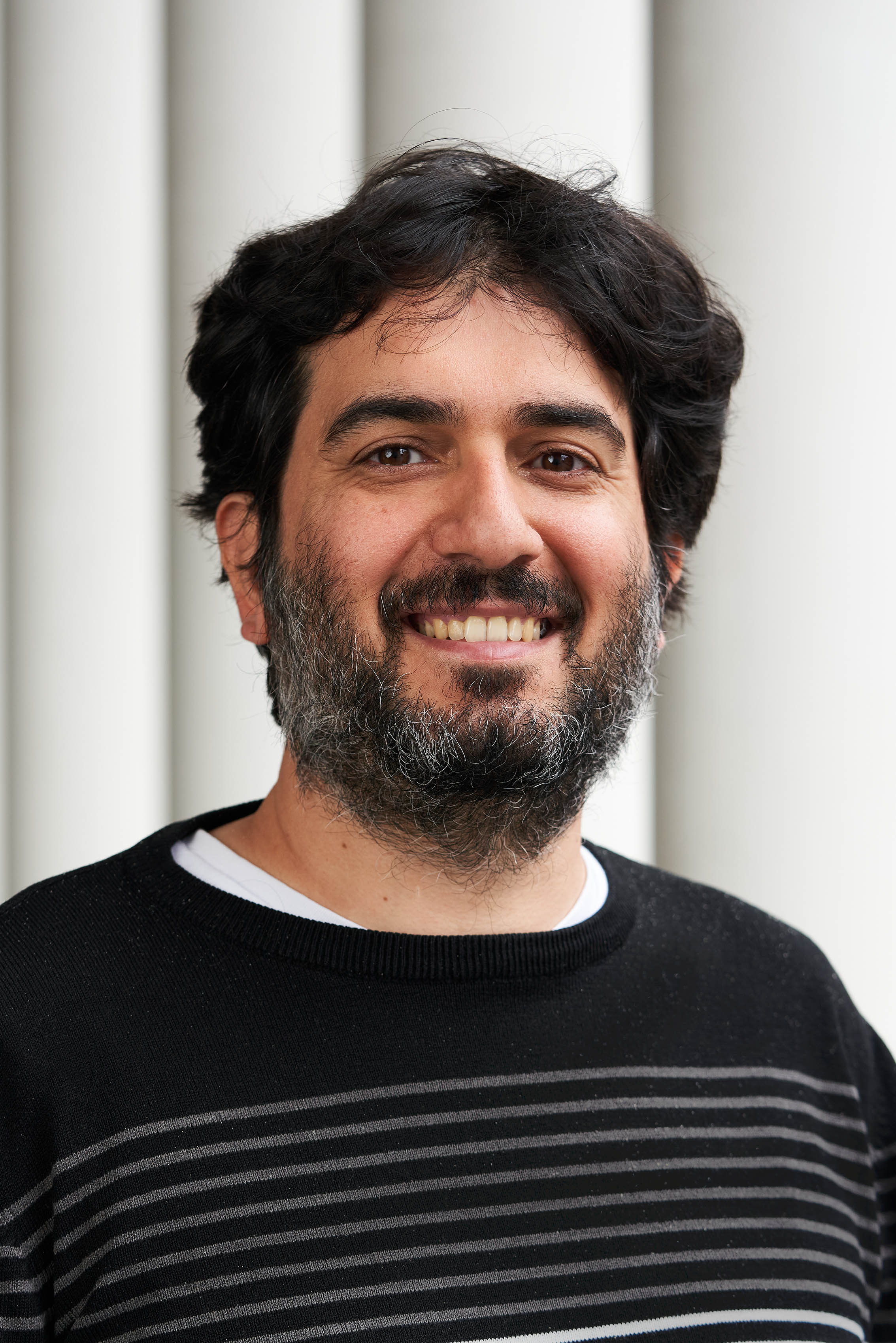 Shay Cohen合作论文数Institute for Language, Cognition and Computation, School of Informatics, University of Edinburgh10
 Xavier Carreras合作论文数DMetrics;Institut d'Investigació en Intel.ligéncia Artificial, CSIC10
 Karl Stratos合作论文数Essential AI10
 Dean P. Foster合作论文数Amazon;Department of Statistics and Data Science, The Wharton School, The University of Pennsylvania8
 Trevor Darrell合作论文数Department of Electrical Engineering and Computer Science, University of California, Berkeley8
 Brian Roark合作论文数Google, Inc.8
 Ariadna Quattoni合作论文数LARCA Research Group, Dept. LSI, UPC8
 Sasha Rush合作论文数Computer Science Department, Cornell University;Cornell Tech, Cornell University;Cursor8
 Tom Kwiatkowski合作论文数Google7
 Mirella Lapata合作论文数Institute for Language, Cognition and Computation, School of Informatics, The University of Edinburgh7
 Daniel Andor-Ardó合作论文数Google7
 Lyle Ungar合作论文数Department of Computer and Information Science, School of Engineering and Applied Science, University of Pennsylvania;Department of Psychology, School of Arts and Sciences, University of Pennsylvania;School of Medicine, University of Pennsylvania;Operations, Information and Decisions Department, The Wharton School, The University of Pennsylvania7
 Kenton Lee合作论文数Google6
 Slav Petrov合作论文数Google DeepMind6
 Dipanjan Das合作论文数Google Deepmind6
 Kristina Toutanova合作论文数Google Research6
 Eunsol Choi合作论文数Center for Data Science, New York University6Jennimaria Palomaki合作论文数Google5
 Yin-Wen Chang合作论文数Massachusetts Institute of Technology5
 Bernd Bohnet合作论文数Google5
 Clifford Stein合作论文数Department of Computer Science, Columbia University5
 Massimo Poesio合作论文数School of Electronic Engineering and Computer Science, Queen Mary University of London5
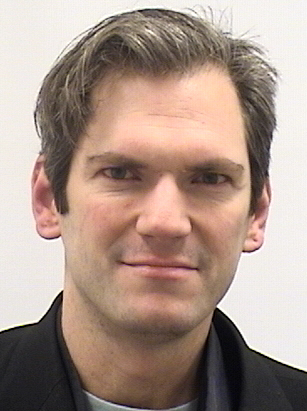 Philipp Koehn合作论文数Department of Computer Science, Johns Hopkins University;Omniscien Technologies5
 Daniel Hsu合作论文数Department of Computer Science, Columbia University;Data Science Institute, Columbia University5
 Philip Resnik合作论文数Department of Linguistics, College of Arts & Humanities, University of Maryland;Department of Computer Science, University of Maryland;Institute for Advanced Computer Studies, University of Maryland5
 Michael Strube合作论文数Natural Language Processing Group, Heidelberg Institute for Theoretical Studies;Computational Linguistics Department, University of Heidelberg5
 Richard Sproat (史伯樂)合作论文数Sakana AI5Andrei Simion合作论文数University of Bucharest;Mathematics and Computer Science5
 George Foster合作论文数Google5
 Julia Hockenmaier合作论文数Department of Computer Science, University of Illinois Urbana-Champaign;Siebel School of Computing and Data Science, The Grainger College of Engineering, University of Illinois Urbana-Champaign5
 Kevin Knight (武凯文)合作论文数Didi Global5David Weir合作论文数4Mark-Jan Nederhof合作论文数4Mark Johnson合作论文数4
 Arvind Neelakantan合作论文数Google DeepMind4
 Avner May合作论文数4
 Emiel Krahmer合作论文数Department of Communication and Cognition, School of Humanities and Digital Sciences, Tilburg University4
 Pascale Fung (冯雁)合作论文数Centre for Artificial Intelligence Research, Hong Kong University of Science and Technology;Department of Electronic & Computer Engineering, Hong Kong University of Science and Technology;AMI - Advanced Machine Intelligence4
 James Pustejovsky合作论文数Volen Center for Complex Systems, Michtom School of Computer Science, Brandeis University;Department of Computer Science, Brandeis University4
 Amanda Stent合作论文数Bloomberg4
 Harold Somers合作论文数School of Computer Science at The University of Manchester4
 Brian Kingsbury合作论文数IBM T. J. Watson Research Center4
 Gerald Penn合作论文数Faculty of Arts and Science, University of Toronto;Department of Computer Science, University of Toronto;International Computer Science Institute, University of California at Berkeley4
 Jacob Eisenstein合作论文数Google4Thorsten Brants合作论文数Google4
 Antal Van Den Bosch合作论文数Language and Speech Technology at Radboud University4
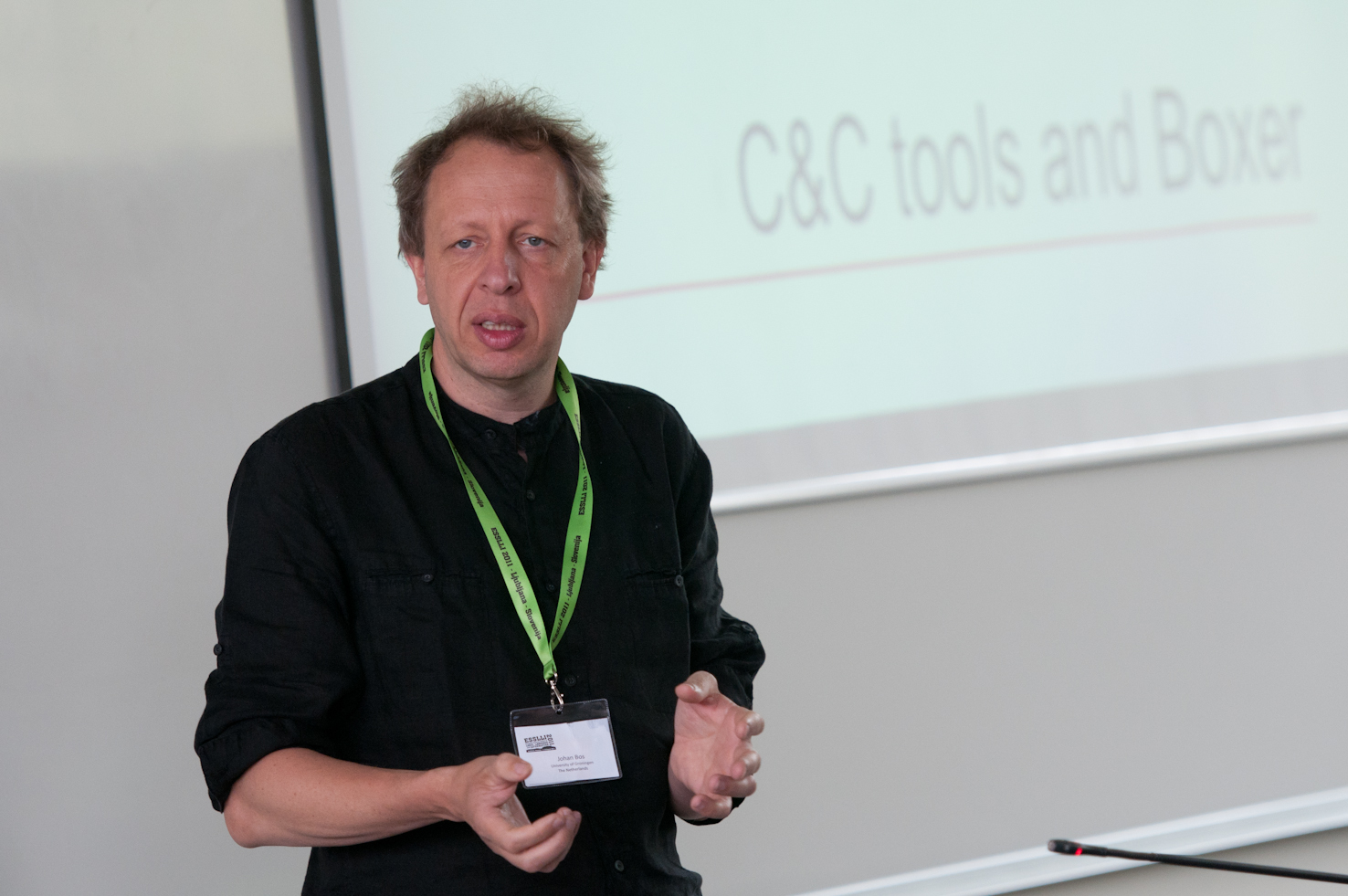 Johan Bos合作论文数University of Groningen4