The decades following the Second World War witnessed enormous advances in the security and efficiency of farmers in the developed countries. Scientific research establishments developed hybrid cereals that were high yielding, and the result of these and other advances were rapidly passed on to farmers. The problem with referring to sustainable development is that, like so many terms in the development lexicon, its very strength is its vagueness: sustainable development means different things to different people. The most important proximate causes of accelerated soil erosion are incorrect land use and bad land management, through land being worked in a way that exceeds its capacity. Throughout history fishing communities have been practising what the people now term 'sustainability'. The principle that local people should participate more in the management and conservation of genetically-important resources represents a new and important departure, which must be encouraged.
When the Club of Rome1 coined the term, ‘The Global Problematique’, for the environmental crisis of the early 1970s, it was intended to capture the connections and dynamic interactions between the various aspects of the problem – those linkages and knock-on effects that reverberate throughout the world (Reid 1995; Rockstrom et al. 2009). The institutional roots of the crisis, with its social, political and economic dimensions and the associated cultural, spiritual and intellectual implications, can be traced back to the emergence of the capitalist economy from the scientifi c and industrial revolutions in England (Merchant 1980; Capra 1983; Spretnak and Capra 1985; Carley and Christie 1992). Central to the changing world-view was the shift in attitudes towards nature wrought by the ideology of the Enlightenment, leading to nature’s ‘disenchantment’ and the dissipating of its power over physical and spiritual aspects of human life (Merchant 1980; Eckersley 1992).2 The new scientifi c paradigm at the core of the Enlightenment that transformed the human-nature relationship, combined with the capitalist model of production and consumption, produced a degree of change and scale of degradation not previously possible (Merchant 1980). Along with this, the Northern3 process of domination, effected through colonization in pursuit of resources, markets and land – and later extended through the globalization of trade, technological expertise, the money market and communications (The Ecologist 1993) – eventually resulted in global impacts on nature and the lives of people. Two decades ago, Vitousek et al. (1986: 1861) stated: ‘any clear dichotomy between pristine ecosystems and human-altered areas that may have existed in the past has vanished’. Today, the Earth is beyond the point where boundaries can be ascribed to environmental problems and the associated social impacts. However, the sharing of the impacts is not equitable, as the eco-justice movement underlines: the poor disproportionately shoulder the consequences of environmental degradation (Faber and O’Connor 1989; Dobson 1998; Agyeman et al. 2003; Martinez-Alier 2003). These social and environmental impacts and the struggle to deal with them led to the coining of the concept of ‘sustainable development’ and its appearance on the international agenda in the 1970s (Carley and Christie 1992).
This chapter analyses the development of Marxist theory towards agriculture in general, and simple commodity production in particular. It reviews the problems which historical cases have presented for Marxist theory and examines the consequences of these theoretical refinements for an understanding of contemporary agrarian change in developed economies. The chapter examines some attempts to define the structural position of the capitalised family farm under capitalism, and attempt to theorise, in a more convincing fashion, the relationship between technology and the rural labour process in the Western industrialised countries. The 'pure' or ideal case of simple commodity production is predicated on the central, virtually exclusive role of self-employed household members in meeting the technical requirements of labour. These requirements, which are enforced by competition, correspond with the household labour supply, so that 'simple commodity production has no class relations within the enterprise'.
Argues that environmental problems need to be looked at internationally, in terms of the global economic system, and that the degradation of the environment is not natural', but an historical process which is intrinsically linked and shaped by economic and political systems.
La creación de espacios existenciales, como parte del tejido de la historia medioambiental, se ve claramente en las cuentas de la costa caribeña de México, el estado actual de Quintana Roo, conocido como Riviera Maya.A lo largo del tiempo observamos: en primer lugar, una “naturaleza salvaje” descubierta por los arqueólogos; en segundo lugar, un “recurso natural” frontera de la extracción de chicle para la manufactura comercial del producto; tercero, un “espacio abandonado” identificado y explotado por los primeros empresarios turísticos y, en cuarto lugar, un “paraíso tropical” promesa de escapada para los turistas internacionales y convirtiendo la naturaleza en bien de consumo, parque temático, complejo de ocio y de actividad crucerística. El artículo nos lleva a cuestionar “espacio” y “lugar” dentro del léxico del turismo global, y a sugerir la importancia del contexto histórico en la explicación del consumo del espacio.
In this chapter we want to examine what it is that makes places ‘sustainable’, both from a conceptual perspective and through the use of case material from the Mexican Caribbean. Within most of the geographical canon ‘space’ has been given much closer attention than ‘place’. As McDowell suggests, this is because place is best seen as contextual: “the significance of place depends on the issue under consideration and the sets of social relations that are relevant to the issues” (McDowell 1997, 4). As we will argue later, place is frequently used in a way that takes on meaning from the context in which it is employed, rather than conveying meaning itself. Modern science tended to disregard place by equating it with lack of generality (Casey 1997). In physics, geography, and social sciences the use of coordinates, maps, statistics, and other simplifying and objectifying pictures dominated the representation of places in spatial terms. The dimensions of, and actions in, space have similar meanings for everybody. Consequently, space allows scientists to adopt a role of outside observers of places, while the modern concept of “region” is often taken as a natural unit of spatial and social organization (Curry 2002). In social theories, space was assumed to be featureless and undifferentiated and was often used for predicting patterns of land-use and economic activities without describing place in any real sense except as a product of historical accident (Johnson 2002). However, spatial representations of place were problematized during the second half of the twentieth century. Lefebvre (1974) and Foucault (1986) questioned the definition of absolute space in terms of Euclidean geometry, and claimed that regions are socially constructed. The human dimension of spatiality was emphasized and the notion of place acquired a renewed relevance not only among the disciplines which traditionally deal with place (e.g. geography, planning, chorography, and philosophy), but also among less related disciplines (e.g. anthropology, cultural studies, ecology, psychology, and phenomenology). Significant efforts for defining the concept and formulating an adequate theory of place have been developed from these disciplines. Although it is not clear whether the adoption of a unique definition would be either possible or desirable, these multiple perspectives of place agree that places are more than geographic settings with physical or spatial characteristics; they are fluid, changeable, dynamic contexts of social interaction and memory (Harrison and Dourish 1996, Stokowski 2002). In a path-breaking work Tuan (1977) argued that experiences of places involve perception, cognition, and affection. Similarly, Relph (1976) identified three components of place: physical setting, activities and meanings. According to these authors, a place cannot simply be described as the location of one object relative to others. The concept of place has to integrate both its location and its meaning in the context of human action. As Tuan (1977) puts it: “place is space infused with human meaning”.Working on similar lines, Agnew (1987) studied the relationship between place and human behavior and proposed a compositional view of places as being constituted by economic, institutional, and socio-cultural processes. Agnew identified three basic elements of place: location, locale and sense of place. Location is the role a place plays in the world-economy;
Part 1: History and Evolution of the Concept of Sustainable Development 1. Introduction: History and evolution of the concept Delyse Springett and Michael Redclift Part 2: Institutional Dimensions of Sustainable Development 2. Does illegality enable or undermine the sustainability of the globalising economy? Ray Hudson 3. Global Change, Islands and Sustainable Development: Islands of Sustainability or Analogues of the Challenge of Sustainable Development? Michael Hall 4. 'Uncertainty' in the professionalization of sustainable development - The case of the Intergovernmental Panel on Climate Change (IPCC) Annika Skoglund and Tommy Jensen 5. Population Health, a Fundamental Marker of Sustainable Development Tony McMichael 6. Education for Sustainable Development: Challenges of a critical pedagogy Delyse Springett Part 3: Environmental Dimensions Of Sustainable Development 7. Biodiversity and Sustainable Development Stewart Lockie and Hedda Ransan-Cooper 8. Water and Sustainable Development Naho Mirumachi 9. Sustainable Architecture Keith Bothwell 10. Sustainable Design: Concepts, methods and practices Martina Maria Keitsch 11. Is managing ecosystem services necessary and sufficient to ensure sustainable development? Mark Mulligan and Nicholas Clifford 12. Conservation, Sustainability and Economic Growth William Adams Part 4: Social Dimensions of Sustainable Development 13. Sustainable Development: Joining Sustainability and Environmental Justice Robin Morris Collin and Robert W. Collin 14. Indigenous Perspectives: Non-Anthropocentric Sustainable Development and the Right to Self-Determination Oscar Forero 15. The Politics of Sustainable Consumption Emma Hinton 16. Advances in Sustainable Tourism Development Tony Johnston 17. Food and Sustainable Development Colin Sage Part 5: Economic Dimensions Of Sustainable Development 18. Ecological Economics and Sustainable Development: Building a Sustainable and Desirable Economy-in-Society-in-Nature Robert Costanza, Gar Alperovitz, Herman Daly, Joshua Farley, Carol Franco, Tim Jackson, Ida Kubiszewski, Juliet Schor and Peter Victor 19. Sustainable development and the economic crisis under austerity: the experience of the United Kingdom Michael Redclift and Emma Hinton 19. Indicators for Sustainable Development Joachim Spangenberg 21. Sustainable Business: A Critique of Corporate Social Responsibility Policies and Practices Tim Luke 22. Urban Transport and Sustainable Development Peter Newman, Annie Matan and James McIntosh 23. Chinese Sustainability in Transition: Which direction to take? Arthur Mol Part 6: Sustainable Development - Future Challenges 24. Agroecology as post-development discourse and practice Graham Woodgate 25. The social and political dimensions of sustainable development in climate change Marco Grasso 26. Sustainable Development or the Creeping Incubation of Disaster? Raymond Murphy 27. Women's 'right to sustainable development': integrating religion and a rights-based approach Yamini Naranayan 28. From Sustainable Development to Governance for Sustainability Ashwina Mahanti and David Manuel-Navarrete
ABSTRACTIn this paper we argue that one way of viewing the relationship between sustainable development and nature is to explore the extent to which human‐made capital can be substituted for nature (‘natural capital’). It is suggested that this substitution/replacement exposes societies to different risks and uncertainties. Our point of departure is to distinguish sociologically between different ‘natures’, which reflect different levels of human/natural capital substitution and degrees of hybridity: First Nature, Second Nature, Third Nature and Fourth Nature. This approach to sustainable development – through investigating the co‐existence of human‐made and natural capital, and the effects of this process on risk and uncertainty – is used to explain the vicissitudes of much of the ‘sustainable development’ debate. Focusing on sustainable consumption and ecological modernization, the paper also suggests that regulation theory might help to explain how different environmental policy options are chosen, and the limitations of these options. Copyright © 2013 John Wiley & Sons, Ltd and ERP Environment.
This paper argues that ecotourism with effective management and planning strategies can contribute to the Greening of industry in China. A case study of Hong Kong Wetland Park demonstrates the way in which ecological modernisation is utilised to minimise environmental impacts. One facet of this is environmental education, which is adopted as an effective tool to convert tourist experiences into ‘transformative values’, which encourage changes in tourists’ behaviour and lifestyles and the adoption of more environmentally friendly practices. In order to achieve a sustainable development strategy, it is argued that it is necessary to ‘Green’ both external environments and the tourists’ mind. The case study of Hong Kong Wetland Park may serve as a model for other tourist sites in China which are increasingly looking to ecotourism as a Green development strategy.
Contents: 1. Introduction 2. The Dynamics of Coastal Urbanisation 3. Nature and Space in the 'Discovery' of the Mexican Caribbean 4. The Development of Mass Tourism in Mexico 5. Human Security and Governance 6. Governance as Process: the Evolution of 'Power Spheres' and Climate Change 7. Lived Experiences on the Coast: Holbox and Mahahual 8. Conclusion
 David Manuel-Navarrete合作论文数Department of Geography;College London;Department of Geography, King ' s College London18
 j n lekakis合作论文数15David Goodman合作论文数15g p zanias合作论文数13
 Graham Woodgate合作论文数Institute of the Americas, University College London13
 Mark Pelling合作论文数Department of Risk and Disaster Reduction, University College London;Institute for Risk and Disaster Reduction, University College London;King's College London13b kasimis合作论文数10h de haan合作论文数7
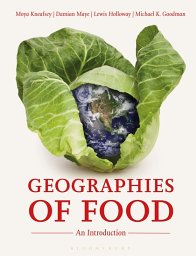 Michael K Goodman合作论文数Department of Geography, King’s College London4
 Colin Sage合作论文数Department of Geography;University College;Department of Geography, University College Cork3
 David E. Ervin合作论文数Department of Agricultural and Resource Economics;Oregon State University;Department of Agricultural and Resource Economics, Oregon State University3
 Emma Hinton合作论文数Department of Geography;College London;Department of Geography, King ' s College London3robert g cushing合作论文数2david goodman合作论文数2p a juchem合作论文数2allan p dusen van d合作论文数2dumanski j pushparajah e latham m elliot c r合作论文数2o lewis合作论文数2wibe s jones t合作论文数2d anton合作论文数2rao a anderson m b overholt c a合作论文数2southgate d whitaker m ortizcrespo f合作论文数2charles h wood合作论文数2bryant d henninger n mangani j tunstall d合作论文数2a adriaanse合作论文数2maryanne hammer合作论文数2friedmann j rangan h合作论文数2goethert r hamdi n gray s slettebak a合作论文数2challinor d frondorf m h合作论文数2a straszak合作论文数2
 Robert D Bullard合作论文数Barbara Jordan-Mickey Leland School of Public Affairs, Texas Southern University;Environmental and Climate Justice Center, Texas Southern University2Bruce Steve合作论文数2
 Richard T. Carson合作论文数Department of Economics, University of California, San Diego2
 Richard Swedberg合作论文数Department of Sociology, College of Arts & Sciences, Cornell University2
 Edward Page合作论文数Politics and International Studies, Faculty of Social Sciences, The University of Warwick2
 Douglas L. Anderton合作论文数Department of Sociology, McCausland College of Arts and Sciences, University of South Carolina2Ina Horlings合作论文数2
 Nikos Alexandratos合作论文数2
 Jeroen Huising合作论文数Makerere University;Institute of Environment and Natural Resources;Macaulay Land Use Research Institute;Macaulay Land Use Research Institute, Makerere University2Howard Newby合作论文数2Oscar Forero合作论文数2G. Weinschenck合作论文数1C Sage合作论文数1k r miller合作论文数1j a dixon合作论文数1y ahmad合作论文数1r k pachauri合作论文数1meherhomji v m gupta s合作论文数1
 Lemuel Guerra Sobrinho合作论文数1




