ABSTRACT:Class, race, and culture all have to be part of any overall explanation of the rightward turn—not only for the United States but also for center-left parties in Western Europe. There has to be a left response on all these fronts. It may make sense politically to focus on domestic issues—the economy, stupid!—but that leaves leftists with nothing coherent to say about American jingoism abroad. Furthermore, there has to be a politics that combines inclusion, the fight for equal citizenship within the current system, with redistribution, a fundmental restructuring of the current system.
One of the historical tasks of the left in the present period is to help hold the center. The defense of civil liberties and civil rights in the name of the constitution—this is a centrist politics. We should work closely with anyone who believes in civil discourse, who respects the truth, and who is ready to live with political and religious disagreement. Does she defend the social hierarchy? Does he think that free enterprise is the be-all and end-all of economic life? Are they more ready than we are to use force abroad? Those are arguments we need to have and should not give up, but we still have to join with people like these wherever we find them—so that the center holds. The survival of a vital center is also the precondition of an active left. We have to stand in the center and on the left at the same time. That may be complicated, but it is our historical task.
In the three and a half decades since the Iranian revolution, I have been watching my friends and neighbors (and distant neighbors) on the left struggling to understand—or avoid understanding—the revival of religion in what is now called a “post-secular” age. Long ago, we looked forward to “the disenchantment of the world”—we believed that the triumph of science and secularism was a necessary feature of modernity. And so we forgot, as Nick Cohen has written, “what the men and women of the Enlightenment knew. All faiths in their extreme form carry the possibility of tyranny.”
Asymmetrical warfare poses many problems for soldiers and insurgents who would like to fight in accordance with current understandings of just war theory and the internationally recognized rules of engagement.Members of both groups complain that they cannot win if they stick to the rules.In fact, the rules, rightly understood, are consistent with military success.But, given the political character of modern warfare, it is important that public opinion is shaped by that right understanding so that just conduct is recognized and reinforced.
Relief and repair, the primary forms of global justice, are never finished, but we can imagine at least a rough agreement on the principles that guide them. And we can imagine a world in which all the existing states are capable of self-help, so that mutual aid and reparative justice are only intermittently required or required only to a modest degree. I say that the imagining is easy, but obviously we are very far from that world, very far from the global justice that people need right now. At the same time, many men and women are already engaged in the pursuit of local justice and in the unending arguments about social goods that it requires. One way of describing the political project that I am advocating here is to say that everyone should have the justice they need right now so that they are able to pursue the justice they will never finally have.
I am thinking slowly about the disaster of November 2. No message leaps out of the available statistics, though I have read many instant analyses. I am unsure what went wrong, despite the many suggestions that have been printed and posted. I am not engaged by the debates about whether the Democrats have to move right or left or stand their ground (if they can find it). I am sure that it is too early to say how they should move, even if we are thinking only of political tactics. And I am not interested, not yet, in who will be their/our candidate for president in 2008—even though I know (and regret) that the candidate and his or her entourage will be more important than the party and its platform.
At this moment, the outcome of the uprisings across the Arab world is radically uncertain. The massive demonstrations and the early successes in Tunisia and Egypt were exhilarating, and the courage of the Syrian demonstrators is inspiring—even though we know almost nothing about who they are. This is a revolutionary moment in the Middle East, and in most of the countries in upheaval, the rebels seem to be strongly committed to nonviolence and, at least in their public statements, to democracy. But the counterrevolution is close on the heels of the revolution, and no one knows what will happen next.
Comment une armée régulière, qui agit sur un territoire dont son État n’a pas la maîtrise, doit-elle traiter les populations civiles qui se trouvent sur le terrain d’opération ? Peut-elle privilégier la sécurité de ses propres soldats ou peut-on plaider, même dans les actions antiterroristes, pour le maintien de la distinction entre combattants et civils ?
People get killed in wars. Soldiers get killed, as do civilians--not only when they are deliberately targeted but also when they are trapped in a combat zone or happen to be in the immediate vicinity of a bunker or munitions factory under attack, or when they are used as cover by nonstate militants. They are bystanders who are simply standing too close. We mourn the soldiers who die in battle, but we are especially horrified by civilian deaths. That horror seems universal; we find it expressed in all the major civilizations and in almost every religious tradition. Catholic war theory, which categorically rules out any deliberate attack on noncombatants, is sufficiently well-known. Less familiar but entirely similar are the Jewish and Muslim traditions. One of the clearest Jewish statements comes from the first-century Alexandrian philosopher Philo: When [the Jewish nation] takes up arms, it distinguishes between those whose life is one of hostility and the reverse. For to breathe slaughter against all, even those who have very or nothing amiss, shows what I should call a savage and brutal soul. (1) A similar, and very early, Muslim tradition goes something like this: Umar wrote to the commanders to fight in the way of Allah and to fight only those who fight against them, and not to kill women or minors, nor to kill those who do not use a razor. (2) Today, we call civilians because they are not involved in the fighting or because they have, as Philo stated, done very little for the war effort. Even though they may be fervent supporters of the war, it is the doing that counts when we think about innocence. That word is especially applicable to the children in a particular population, who have nothing at all. Children have an obvious, palpable, insurmountable innocence. The easiest way to impress upon society the awfulness of war is to show pictures of the children killed in its course. Sometimes these pictures are used to persuade us to condemn a particular conflict, one that is currently under way--one that should be stopped, right now, because these children have been killed and many more like them remain at risk. Everyone has seen pictures like that, designed to influence the viewer. They were plentiful during the 2006 Lebanon war and more recently during the conflict in Gaza. Curiously, we are rarely shown pictures of dead or wounded children from Afghanistan, though the war against the Taliban is not entirely different from the Wars against Hezbollah and Hamas; again, civilians have been killed. Those pictures make the best possible argument for stopping the fighting; nothing can be more persuasive. Arguing Against Conflict The difficulty with an argument against conflict is that it can be made against any conflict, whether it is a war of aggression or a war of self-defense, whether it is fought to conquer another people or to rescue them from conquest, whether its purpose is to defend an empire or stop a massacre. Children die in all these wars. The only exceptions are wars that consist entirely of tank battles in the remote desert or naval battles on the high seas, but there are not many conflicts like that. And some of the wars that are not as limited and precise as those are just wars, which means that one side is fighting rightfully. From a moral standpoint, perhaps, this is a war that should be fought--because of the character of the enemy, whose success is a prospect more fearful than war itself. What if stopping the conflict now means victory for a conquering army; or the triumph of a government bent on mass murder; or the brutal repression of religious minorities; or the survival-in-strength of a militarist or terrorist force that fully intends to renew the fighting? Should we still be persuaded by the pictures? It is because of its terrible cost in innocent life that war is abhorrent. …
This article is about the war on terror as an actual war and as police work — and then as something in between these two. The in-between space, where special forces operate, is critically important. We don't have clear standards that apply to it, and we need to begin to think about what those standards might look like.
On the occasion of the November 2006 annual meeting of the Israeli-Palestinian Science Organization (IPSO), we, the members of IPSO's International Scientific Council, noted with considerable satisfaction the receipt of 71 proposals for joint scientific research between Palestinian and Israeli
The experts have apparently agreed that it wasn't values that lost us the last election. It was passion, and above all, it was the passion of fear. But maybe frightened people look for strong leaders, whose strength is revealed in their firm commitment to a set of values. Fear politics and value politics may turn out to be closely related. So what is wrong with the liberal-left? Do we really look weak, uncommitted, value-free-tacking to the wind, whichever way it blows? And is this just a matter of appearance, a failure of public relations; so that what we need is a little rhetorical uplift, cosmetic surgery, some improvement in our posture? Stand straighter! Talk tough!
 K BOWMAN合作论文数7Bb Siegel合作论文数3Murray Albert合作论文数2Ida Nicolaisen合作论文数2Michael Atiyah合作论文数2Francois Jacob合作论文数2
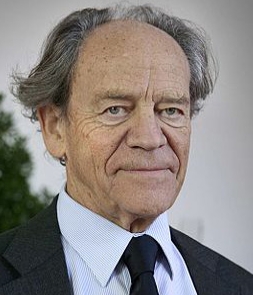 Torsten N. Wiesel合作论文数Shelby White and Leon Levy Center for Mind, Brain and Behavior, Rockefeller University2
 Abdallah S. Daar合作论文数Dalla Lana School of Public Health, University of Toronto;Sandra Rotman Centre, University Health Network2
 Daniel Kahneman合作论文数School of Public and International Affairs, Princeton University2
 Kenneth J. Arrow (肯尼斯·约瑟夫·阿罗)合作论文数Stanford University2
 Edouard Brezin合作论文数Pierre and Marie Curie University;Laboratory of Theoretical Physics, Ecole Normale Superieure2John Sulston合作论文数2
 Yoav Shoham合作论文数Department of Computer Science, Stanford University;AI21 Labs2F. F. Charfi合作论文数2Menahem E Yaari合作论文数2
 Claude Cohen Tannoudji合作论文数Departement de Physique, Laboratoire Kastler Brossel2Peter Beinart合作论文数1benjamin barber合作论文数1Martin J. Sherwin合作论文数1Kai Bird合作论文数1Eh Walzer合作论文数1Ra Chait合作论文数1Melanie Chastang合作论文数1damien freville合作论文数1I GLAZER合作论文数1Deborah Dash Moore合作论文数1
 Benjamin Wolozin合作论文数Department of Pharmacology, School of Medicine, Boston University1Irving Gray合作论文数1WISEMAN R D合作论文数1STROYMAN S合作论文数1Christian Haas合作论文数1John M. Lee合作论文数Department of Mathematics, University of Washington1S Livingston合作论文数1L. Mccarthy合作论文数1
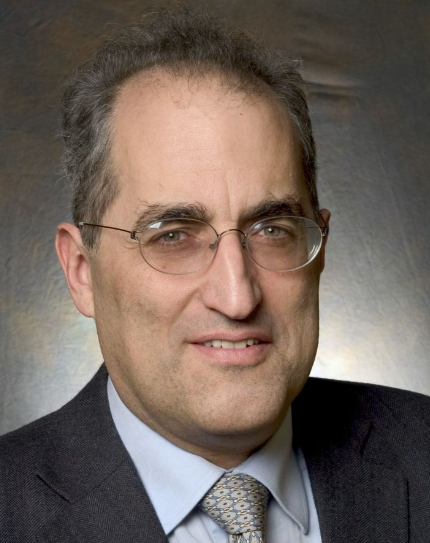 Edward Witten合作论文数School of Natural Sciences, Institute for Advanced Study1Avishai Margalit合作论文数1I. Gray合作论文数1Hyman Sherman合作论文数1Max Harten合作论文数1Mark Frasier合作论文数1M GROLNICK合作论文数1
 Amitai Etzioni合作论文数Department of Sociology, Elliott School of International Affairs, The George Washington University1DJ MAGNUSON合作论文数1




