In Aotearoa New Zealand, Maori have prepared their own impact assessments for three decades. Yet, there has been no evaluation of effectiveness. Asking practitioners and experts to reflect on their experiences with Cultural Impact Assessment (CIA), we addressed the question 'how far do CIA go to deliver outcomes Maori define as positive'? Interweaving Indigenous lived experiences with Indigenous theory, we undertook a critical analysis of CIA effectiveness. We found that CIA are delivering positive outcomes, but these are highly variable, and fall short of substantial outcomes consistent with the partnership and the dual planning framework envisioned by the Treaty of Waitangi.(1) To be effective, CIA functions best when it is Indigenous-led and - in the wider Aotearoa New Zealand planning and impact assessment framework - also Treaty-led. The Maori experience contributes to the developing international field of Indigenous IA.
As a member of an Indigenous community myself, my research is necessarily undertaken through an emancipatory Indigenist methodological approach. Indigenous methodologies seek to deconstruct Western paradigms of investigation and understandings that perpetuate the invalidation of Indigeneity, and instead attempt to constitute paradigms centred on Indigenous worldviews. However, Indigenous researchers often work with communities that are not their own. In my case, I have collaborated in a small amount of research with Indigenous groups outside of my own country. But, the majority of my research has been with New Zealand Māori communities other than my own. Key for me, has been the development of personal strategies aimed at keeping me culturally safe in my research with other Indigenous communities, while being secure in my own Indigenous identity. I seek to be culturally respectful in the space of others - safeguarding local Indigenous research sovereignty.
Our ancestors are master story tellers. They interweave our past, present and future for us. They deliver our genealogy, connecting people and their environment, conveying identity and obligation. Can you hear their voices in the city as you move along its waterways and paths and through its structures? In recent decades there has been a resurgence in the use of Indigenous languages, knowledges, culture and stories in urban areas. For some of us, there is a sense of optimism that comes from the success of initiatives that reassert the potency and integrity of Indigenous worldviews in the urban setting. Initiatives that contribute and re-remember a richer story. In this paper, I explore how Indigenous-led urban strategies in central Ōtautahi|Christchurch are serving to prize open a space for Indigenous stories in the settler-colonial city and thereby support Indigenous peoples to be and see themselves through the resulting reconnection to place, culture, history and kin.
This paper contributes to deliberations about wellbeing in relation to home spaces by considering how professional expectations and everyday experiences of the neighbourhood, as an extension of home, relate to the cultural situatedness of individuals in Sweden. To do so, it presents and discusses findings from a case-based investigation of two developments in Stockholm that represent contemporary urban design and neighbour-hood planning efforts influenced by New Urbanism. Building on the work of Lefebvre, Massey and others, our findings reveal a particularly Swedish construct of place that allows for and celebrates the interplay between an individual's cosy home environment extending into the public and communal spaces of their neighbourhood, with more complex or challenging urbanity beyond. Future research could examine neighbourhoods situated elsewhere to understand the extent to which similar experiences or social meanings exist outside of the Swedish context, and what impacts on community formation and human wellbeing result.
•Housing and urban development in Aotearoa New Zealand.•Response to Government Policy Statement on Housing and Urban Development (GPS-HUD).•Wellbeing benefits of collectively-oriented housing and transport models.•Co-housing and papakāinga as transformational housing typologies.•Multi-year and multi-scale community-based research programmes.
There is potential to strengthen impact assessment as a tool for Indigenous community use in environmental management. The present research contributes to this discussion by examining the report product that has resulted from 20 recent Cultural Impact Assessments (CIA) in Aotearoa New Zealand. These reports are reviewed based on Vanstone et al.’s structured approach, which allows for a systematic evaluation of the content of reports. The research demonstrates that Cultural Impact Assessment reports can tend to place greater emphasis on cultural values than on impacts of proposed projects, indicating a difference between CIA practice and other forms of impact assessment. CIAs often appear to be less about impact analysis and more about providing an opportunity for Māori concepts and worldviews to be recognized in decision-making. This finding has implications for how CIA report quality should be evaluated in the future and contributes to our understanding of the unique purpose of CIA.
This article investigates the widely implemented compact neighbourhood type and aims to stimulate fresh thinking in Anglo-American urban enquiry by building on the work of Massey and others to illuminate relational complexities between sociality and space. The authors present findings from research in Stockholm, which reveal spatial porosity and novel social meanings existing between polarised notions of connectedness and separateness. Such insights may be overlooked without adequate recognition of agency in relational investigations. Thus, renewed emphasis on agential capacity in both people and built form would benefit planning efforts. The neighbourhoods investigated foster patterns of “just right” (lagom) urbanity in which individuals find temporary reprieve and sociospatial mediation amidst wider metropolitan challenges. Future research could determine if neighbourhoods situated elsewhere foster similar interrelations, and – if so – what impacts on human well-being result. The authors urge theorists to undertake more-than-relational research in other contexts and with other neighbourhood types.
Impact assessment faces a number of key challenges. One area singled out as needing attention is community-based impact assessment. Impact assessment related to Indigenous communities is a particular case in point. We lend an Indigenous voice to this conversation. The emerging field of Indigenous impact assessment is under-developed compared to other forms of IA, particularly in terms of its theoretical foundation. In the article we address that gap by highlighting the current conundrum in Indigenous practice, exemplified in the context of Aotearoa New Zealand. Then we base our deliberation in an Indigenous worldview, applying Indigenous planning theory to impact assessment. Indigenous planning theory has an explicit decolonising agenda that supports communities to reclaim traditional planning approaches. We provide key parameters for establishing a theoretical and practical space for Indigenous IA, and for conceptualising the relationship between Indigenous IA other forms of IA. We argue for a ‘third space’ that facilitates co-existence of different forms of IA activity rather than integration of Indigenous endeavours into broader IA types. In doing so, we demonstrate the potential of Indigenous planning theory to connect international dialogue and case studies on Indigenous impact assessment, and to broaden and deepen IA theory and practice.
Contextual relativities in the diversifying expression of New Urbanism are increasingly important. In this article, we explore the significance of context using a Scandinavian setting as example. We examine two embodiments of the Swedish realisation of New Urban neighbourhoods. Important in our exploration are the relationalities with contemporary contexts and belief systems, since every effort to create space becomes “an elaboration of the beliefs and values of some collection of people, expressed and fostered in their promotion of a preferred reality” (Stokowski, 2002, p. 374). The findings from the study demonstrate that the Swedish New Urban neighbourhood—no matter how meaningful as a communicative form mediating between agents and structures—cannot effect social cohesion or isolation. Rather, form communicates or evokes meaning in a variety of complex ways, suggesting the importance of “look[ing] to multiply…our readings of the city” (Leach, 1997, p. 158), particularly high-level readings that echo notions of the common good. Those concerned with New Urbanism’s embodiments should deliberate on relational fluidities and thereby strike a balance between conceptualising such urban design as either deterministically exceeding its power (Lawhon, 2009) or as side-lined to the whimsical relativity of particular consumers (Latham, 2003; Smith, 2002).
This paper examines Indigenous property development, drawing on research into the development of treaty settlement lands in Manitoba, Canada, and Canterbury, New Zealand. It highlights two contradicting ways of understanding this work: Indigenous peoples as self-determining, with authority to develop their own urban planning approaches, and Indigenous peoples as conventional property developers, subject to the same rules as any other private interest. This contradiction is used to expose a need for alternative, decolonial ways of understanding relationships between the 'planner' and the 'planned', grounded in the recognition of overlapping governance roles and responsibilities which Indigenous peoples are now (re)claiming in the urban environment.
In the paper, we address the need to make visible the presence of Indigenous groups in the built environment that has developed on their traditional territories. We examine two recent approaches that have been used in Aotearoa New Zealand to manifest Indigenous histories and values in the city of Ōtautahi|Christchurch. The first involves the Indigenous group acting as urban developer. The second exemplifies Indigenous integration into local urban design decision-making processes. The result of both approaches is a significant urban transformation whereby Indigenous cultural aspirations are given voice in the city.
Remote rural areas have encountered significant change and the need for renegotiation of economic and social priorities in the late 20th and early 21st century. In our broader research, we ask how have such communities been responding to this change? What role have different organisations and agencies played? And, how have they acted on the aspirations of marginalised communities? In this paper we examine these issues through a case study of Westland District on the west coast of Aotearoa New Zealand's South Island. We probe the general shift towards prioritising tourism in the District, and highlight particular experiences in regard to Indigenous endeavour in tourism. We find that those engaged in leading local development and tourism have not collaborated strategically across the sector and have not established meaningful partnerships with the community that recognise both economic and socio-cultural aspirations.
Solicited diaries/journals are increasingly popular as an innovative qualitative method in the social sciences for better understanding people's everyday lived experiences. In this article we create a framework for maintaining rigour while using such diaries. First, we systematically evaluate 43 research papers focusing on the method, drawing on Baxter and Eyles' (1997) seminal evaluation of rigour in qualitative human geography research. We ascertain that significant improvements could be made to procedures for obtaining and analysing diary content. Second, we develop a framework to encourage rigour in diary research. We test our framework by evaluating research conducted by two of our authors who employed solicited diaries with street vendors in Vietnam. We propose that our analysis and framework can help social scientists improve the rigour of solicited diaries as a research method, and provide a model for enhancing rigour in other emerging qualitative approaches.
We provide a perspective based on a gradual and spontaneous organic landscape perception of how and where Indigenous identity emerges and is nurtured. We interweave our work into Evelyn Stokes’ call for distinctive New Zealand geographies that embrace our locational and contextual specificities, but we attempt to do this outside of any colonial tainting by Eurocentric framings (so far as that is possible) using a Kaupapa Māori approach. We elaborate Indigenous‐derived perspectives on understanding intimate and enduring bonds between place, space, landscape and identity – as framed by Māori researchers engaging in the co‐production of knowledge with local Indigenous communities.
Indigenous peoples throughout Canada and New Zealand have long lived and continue to live within the urban environment, where they are commonly physically disconnected from their ancestral homelands. Indigenously grounded urban design and development principles provide an opportunity to bring Indigenous cultural connection into the urban environment. However, there remains a gap in the incorporation of Indigenous values and traditions within planning processes. Moreover, when Indigenous values are recognised in planning it is primarily at the tribal or nation scale, therefore commonly neglecting the more pan-tribal values of the urban Indigenous diaspora. This paper explores the gap from a First Nations and Māori perspective. It draws on data from four First Nation communities in Vancouver, Canada and a predominantly Māori community in the Waiwhetū papakāinga in Wellington, New Zealand. The research illustrates how Indigenous cultural values can be utilised in the development and design of spatially just urban environments aimed at respectful co-existence. The authors argue that planners should allow for and encourage Indigenous communities to be decision makers in their urban environment and enable them to drive their own projects according to their own values, traditions and customs.
There is growing momentum in planning research, education and practice as to the commitment these fields must make to a more just and respectful relationship with Indigenous peoples. One dimension of this is the collective efforts towards defining and understanding the concepts and practices of Indigenous planning (see for example Jojola, 2008; and contributions to Walker, Jojola, & Natcher, 2013), recognising distinctive practices of planning that derive from an “indigenous world-view, which not only serves to unite [Indigenous planning] philosophically, but also to distinguish it from neighbouring non-land based communities” (Jojola, 2008, p. 42). There is relatively little opportunity, however, to actually share what it means to try and practice the principles of Indigenous planning, and for non-Indigenous planning to practice making space for Indigenous planning, on the terms of sovereign first peoples. At the Association of Collegiate Schools of Planning Conference in 2016, a group of researchers and practitioners got together to discuss what it means to practice differently in light of the principles and ethics of Indigenous planning. Our discussion, engaging both Indigenous and non-Indigenous scholars and practitioners, helped clarify some of the dimensions and dilemmas with which the field of planning might need to engage to enable a new relationship to be built with Indigenous planning. In this Interface, we bring together that discussion to think more deeply about what it means to practice the principles of Indigenous planning and the decolonising agenda it suggests. Contributions from both Indigenous and non-Indigenous people follow, bringing perspectives principally from the settler-colonial states of Aotearoa-New Zealand, Australia, Canada and the USA. The contributions cover the ethics, pedagogy and principles of Indigenous planning, the links to health, community development, housing and design, and the theoretical and pedagogical implications of Indigenous planning for mainstream Western planning.
The paper explores the degree to which Indigenous groups perceive that resource management plans they develop are able to help deliver outcomes they seek through formal planning systems. It does this by a case study of practice in Aotearoa New Zealand. Some Indigenous groups are concerned they are being encouraged to devote considerable effort to production of major planning documents for use in interaction with environmental agencies, yet in practice, such plans can appear to have a limited role in bringing about desired change or affecting wider planning processes. The research contributes a New Zealand dimension to this international debate.
 Callum Riddle合作论文数4Crystal Victoria Filep合作论文数4
 Crystal Olin合作论文数NZ Centre for Sustainable Cities, University of Otago3
 Janice Barry合作论文数Univ Waterloo3
 Sophie Bond合作论文数Planning Programme, University of Otago3Hirini Matunga合作论文数2Lyana Patrick合作论文数2Dana Moraes合作论文数2Alex Kitson合作论文数2hauauru rae合作论文数2Jovan James Mokaraka-Harris合作论文数2
 Katharina Ruckstuhl合作论文数Otago Business Sch, Univ Otago2
 Sarah Turner合作论文数Department of Geography, Faculty of Arts, McGill University2
 Claire Freeman合作论文数2Chris Mason合作论文数2
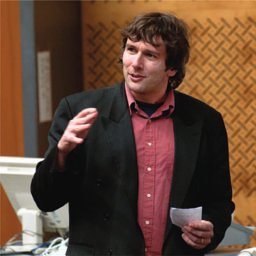 Antoni Moore合作论文数University of Otago2
 Peter A. Whigham合作论文数Department of Information Science, University of Otago2
 Libby Porter合作论文数Centre for Urban and Regional Studies;University of Birmingham2
 Sean J. Fitzsimons合作论文数Department of Geography, University of Otago2
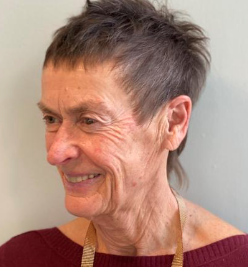 Leonie Sandercock合作论文数School of Community and Regional Planning, The University of British Columbia2
 Leela Viswanathan合作论文数Faculty of Environmental Studies;York University;Faculty of Environmental Studies, York University2Christina Ergler合作论文数School of Environment, The University of Auckland2Jacinta Ruru合作论文数2Ryan Walker合作论文数2Dyanna Jolly合作论文数2Sean Connelly合作论文数2Rachelle Alterman合作论文数1V. Goodstadt合作论文数1Mark Shucksmith合作论文数1Lawrence Lai合作论文数1Richard Cowell合作论文数1Yvonne Rydin合作论文数1Vanessa Watson合作论文数1Ananya Roy合作论文数1John Friedmann合作论文数1nathan stocker合作论文数1James Berghan合作论文数1
 Renaud Mathieu合作论文数1Amanda Yates合作论文数1
 Jenny Ombler合作论文数NZ Centre for Sustainable Cities, University of Otago1
 Noelani Eidse合作论文数Dept Geog, McGill Univ1
 Tanya Zack合作论文数1Paul Selman合作论文数1
 Yasminah Beebeejaun合作论文数The Bartlett School of Planning, The Bartlett Faculty of the Built Environment, University College London1
 Lance Freeman合作论文数Graduate School of Architecture, Planning and Preservation, Columbia University1
 Duncan Scott合作论文数1
 Andrea Frank合作论文数School of Geography, Earth and Environmental Sciences, College of Life and Environmental Sciences, University of Birmingham1
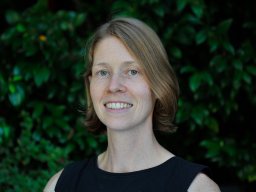 O'Sullivan Kimberley C合作论文数Department of Public Health, University of Otago - Wellington1
 Aidan While合作论文数Department of Urban Studies and Planning, Faculty of Social Sciences, The University of Sheffield1




