Computational social science represents an interdisciplinary approach to the study of reality based on advanced computer tools. From economics to political science, from journalism to sociology, digital approaches and techniques for the analysis and management of large quantities of data have now been adopted in several disciplines. The papers in this JCOM commentary focus on the use of such approaches and techniques in the research on science communication. As the papers point out, the most significant advantages of a computational approach in this sector include the chance to open up a range of new research opportunities: from the study of technical and scientific controversies to citizen science, from the definition of new norms and practices for science journalism to open science issues. On the other hand, difficulties are shared with other areas of application. The main risk is that the large quantity of data available can overwhelm the importance of theory. Instead, as the papers in this commentary demonstrate, big data should push scientists to pursue a deeper epistemological and methodological reflection also in the research on science communication.
Preprint manuscript, to be published in Albagli, S, Maciel, ML, Abdo, AH (eds.). Open Science, Open Issues. Rio de Janeiro: IBICT; Unirio, 2015. Alessandro Delfanti, University of California, Davis Nico Pitrelli, International School for Advanced Studies (SISSA) Open science: revolution or continuity? Will scientific discovery become as quick and immediate as a tweet? For Michael Nielsen, quantum computing expert and open science advocate, we are in the middle of a transition towards a new scientific era, an era comparable to the 17th century Scientific Revolution and the transition to the modern age. According to Nielsen’s book Reinventing Discovery, thanks to the Internet we have a chance to radically transform the way in which knowledge is produced (2012). The US scientist highlights two directions in which networks have impacted science: an acceleration in the speed of scientific discovery, and a profound change within science and society relationships. This increased epistemic and social efficiency is based on the impact of openness on the scientific enterprise. “Open science” is a very broad concept that encompasses several different practices and tools linked to the use of collaborative digital technologies and alternative intellectual property tools. Some inclusive definitions propose that open science embraces practices as different as open access to scientific literature, digitally-mediated forms of open collaboration, as well as the use of copyleft licenses to foster reuse of scientific results and protocols. For example, FOSTER, a project recently funded by the European Commission to set in place sustainable mechanisms for EU researchers to embrace open science practices, defines open science as “the conduction of science in a way that others can collaborate and contribute, where research data, lab notes and other research processes are freely available, with terms that allow reuse, redistribution and reproduction of the research.” 1 The taxonomy tree of this concept branches into several directions (see also Fecher and Friesike 2014). The website lists at least five different classes of issues or topics related to open science: Open Access, Open Data, Open Reproducible Research, Open Science Evaluation, and Open Science Policies. Each of these themes can be subdivided in many other subtopics that represent the whole spectrum of difficulties you face in an open science framework. Not to consider Research Data Management, and finally Ethics and Legal Issues. This complexity might partially explain why, in spite of Internet apologists’ emphatic tones, some scientists seem to be reluctant in the adoption of the opportunities networks offer. Twenty years after the birth of the World Wide Web at CERN, in Geneva, scientific research is embracing change at a slower pace than other fields of cultural production. For example, physics might seem to be one of the disciplines that have taken the most advantage of the opportunities offered by digital and connective technologies: since the dawn of the modern Internet physicists have inaugurated preprint archives in which any researcher can deposit and make freely available the draft versions of scientific articles before submitting them to an academic journal. Yet in recent initiatives in the field of physics that deploy huge organizational and financial efforts, as well as strong promises of https://www.fosteropenscience.eu/foster-taxonomy/open-science-definition, accessed January 19, 2015
Open Science may become the next scientific revolution, but still lingers in a pre-paradigmatic phase, characterised by the lack of established definitions and domains. Certainly, Open Science requires a new vision of the way to produce and share scientific knowledge, as well as new skills. Therefore, education plays a crucial role in supporting this cultural change along the path of science. This is the basic principle inspiring the collection of essays published in this issue of JCOM, which deals with many subjects ranging from open access to the public engagement in scientific research, from open data to the social function of preprint servers for the physicians' community. These are issues that go along with the targets of the FOSTER project ( Facilitate Open Science Training for European Research) funded by the European Union, which has provided interesting food for thought in order to write this commentary.
In the next few months, JCOM will undergo relevant changes. A new owner will take charge of its editorial management and define new development strategies. This important transition is a good opportunity to take stock of the past few years and to devise a new type of science communication research journal.
A new editorial board is guiding JCOM through a period of change and here opens out the discussion on what JCOM has become and what it could or should become in the future. The journal's readers are invited to make their contributions.
Among the most interesting aspects of the changes in the media ecosystem a leading role is played by the impact of digital and networking technologies on the ways news reports are built. In this Jcom commentary, the issues of the relationship between digital storytelling and professional news production will focus on science journalism. The commentary will deal with theoretical reflections and practical examples of innovative experiences in which different narration methods were exploited for scientific information.
A workshop on science journalism organised at SISSA of Trieste, Italy a few weeks ago outlined scenarios that should serve as a source for debate among professionals and scholars to grasp how information activities regarding science, medicine and technology will evolve in the next few years. It is a time of great uncertainty, yet a common path to venture through can be made out: the new science journalism should meditate on a different concept of science, an in-depth conceptualisation of different audiences, alternative narrations and its role in the democratisation of knowledge within a knowledge-based society.
This is an introduction to the essays from the Jcom commentary devoted to the statute and the future of research in science communication. The authors have a long experience in international research in this domain. In the past few years, they have all been committed to the production of collective works which are now the most important references for science communication research programmes in the next few years. What topics should science communication research focus on and why? What is its general purpose? What is its real degree of autonomy from other similar fields of study? In other words, is science communication its ' own ' field? These are some of the questions addressed by the in- depth discussion in this Jcom issue, with the awareness that science communication is a young, brittle research field, looking for a shared map, but also one of the most stimulating places of the contemporary academic panorama.
Research systems are increasingly required to be more practically oriented and to address issues which appear more promising in economic and social results, with special reference to trans-disciplinary research fields, such as nanotechnology or ICTs; policy makers show a sharp tendency to establish research priorities and to drive research systems; universities and research institutions are asked to be more transparent and open to dialogue with social actors on contents, impacts, ethical implications and practical applications of scientific and technological research. These transformations affecting both the ways in which science and technology are produced and their relationships with society pose new challenges to European research. All the aspects of research activities are concerned, including the life of the research groups, the approaches to scientific evaluation, the development of European research policies and the interaction between researchers with their social environment. Continuing a reflection started in the last issue of JCOM, Luisa Prista, Evanthia Kalpazidou-Schmidt, Brigida Blasi, Sandra Romagnosi and Miguel Martínez López offered their contribution in identifying some of the key implications and risks which these changes are bringing about, mainly in the perspective of the construction of the European Research Area.
A recent article published in Science Communication addresses the training issue in issue in our discipline. Henk Mulder and his colleagues discuss the shared features that university curricula should or could have to favour the full admission of science communication into the academic circle. Having analysed analogies and differences in the curricula that a number of schools provide all over the world, the authors reached the conclusion that much remains to be done. Science communication seems far from having found shared fundamental references, lessons that cannot be missed in the practical-theoretical education of future professionals or researchers in this discipline. What should one study to become a good science communicator? And to make innovative research?
In the last decades, production of science and technology as well as science-society relationships started changing rapidly. Research is asked to be more effective, fast, accountable, trans-disciplinary, result-oriented, policy-driven and able to generate benefits for people and firms in the short and middle run. While a strong intensification of science-society relationships is occurring, an increasing number of actors and stakeholders are involved in research production. At the same time, pervasiveness of technology is rendering users an active part in technological development; economic and social interests on science and technology are growing on a global scale; new democratic and ethical issues emerge. Despite the European institutions’ efforts, all those trends and phenomena are occurring in an extremely fragmented way. In this scenario, a fairly balanced and consistent co-evolution between science and society can no longer be taken for granted. This is just the starting point of the following comment section that, through the Luciano d’Andrea, Sally Wyatt, Erik Aarden, Jos Lejten and Peter Sekloča’s writings, aims to analyse the different aspects and questions around the socialisation of science and technology’s matter.
A recent article published in Science Communication addresses the training issue in issue in our discipline. Henk Mulder and his colleagues discuss the shared features that university curricula should or could have to favour the full admission of science communication into the academic circle. Having analysed analogies and differences in the curricula that a number of schools provide all over the world, the authors reached the conclusion that much remains to be done. Science communication seems far from having found shared fundamental references, lessons that cannot be missed in the practical-theoretical education of future professionals or researchers in this discipline. What should one study to become a good science communicator? And to make innovative research?
The Sorcerer II is the highly mediatized and spectacular Venter Institute's ship that circumnavigated the planet between 2003 and 2006 to collect and classify marine microbial genomes. We analyze Craig Venter's public communication activities and strategies especially focusing on the images of science and scientist he proposes: that of an eighteenth-century osavanto and nineteenth-century naturalist devoted to the exploration of new worlds, and that of the hacker, hero of informational capitalism. Emphasizing his independence from both academy and industry, but building strong alliances with both spheres and with the media, Craig Venter sails the oceans of the contemporary biotechnologies' market, interpreting a specific typology of the relationship between science and society, enterprises, universities.
Jcom’s adventure was launched nearly eight years ago, when a group of lecturers and former students of the Master’s degree in Science Communication at SISSA of Trieste, decided to have training joined by the commitment to research on science communication issues.
Jcom’s adventure was launched nearly eight years ago, when a group of lecturers and former students of the Master’s degree in Science Communication at SISSA of Trieste, decided to have training joined by the commitment to research on science communication issues.
 Yurij Castelfranchi合作论文数School of Science Communication,– , International School for Advanced Studies (SISSA), Trieste, Italy9
 Barbara Montolli合作论文数3
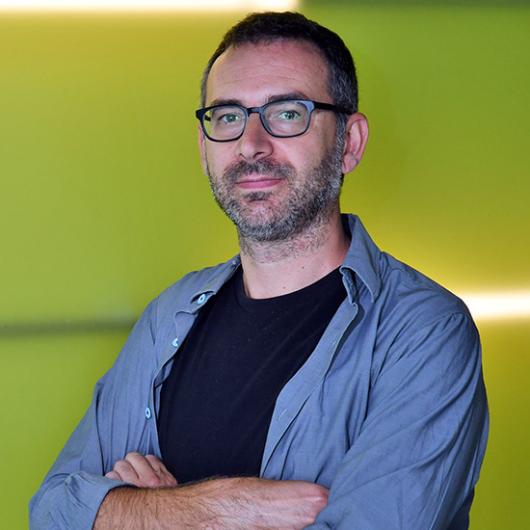 Alessandro Delfanti合作论文数Institute of Communication, Culture, Information and Technology, University of Toronto Mississauga2
 Stefano Fantoni合作论文数School for Advanced Studies, International2
 Daniele Gouthier合作论文数S.I.S.S.A.-I.S.A.S.2
 Giancarlo Sturloni合作论文数2Donato Ramani合作论文数2
 Luisa Massarani合作论文数1Stefania Arabito合作论文数1
 Ivan Pupolizio合作论文数Law Department, University of Bari1
 Luca Buccoliero合作论文数Bocconi University1
 Brian Trench合作论文数1M. Merzagora合作论文数Dipartimento di Fisica, Universita' di Milano and INFN1Valentina Murelli合作论文数1Elena Bellio合作论文数1Vincenza Pellegrino合作论文数1Giancarlo Brunelli合作论文数1Federica Manzoli合作论文数1




