Driven by the rapid increase in variable renewable generation, ancillary services are an integral part of the transition to carbon-neutral and cost-effective energy systems. Ancillary services maintain continuous and discrete balance between generation and load aggregates through frequency and voltage control. As a primary source of renewable energy, the accurate prediction of solar photovoltaic generation is crucial for the effective operation of Frequency Control Ancillary Services (FCAS). Although Deep Learning (DL) algorithms have been used to improve solar power forecasting accuracy, the computational complexity of DL is a technical limitation for the fast response time expected in FCAS. This article presents a novel DL approach composed of sparsity-inducing techniques that reduce the computational complexity of solar power forecasting without loss of forecasting accuracy. This approach applies sparsity within the forecasting models providing a balance between computational efficiency and interpretability, since model capacity is concentrated onto a smaller set of influential connections. The approach is empirically evaluated on two real-world solar power forecasting datasets from diverse geographical regions, followed by performance comparisons with dense DL models. The results confirm and validate the proposed approach in providing fast and accurate forecasts for the decision-making needs of FCAS.
Autonomous underwater vehicles (AUVs) face significant challenges in trajectory tracking due to nonlinear dynamics, actuator faults, and environmental disturbances. To address these issues, this article proposes a novel fault-tolerant control strategy that ensures fixed-time trajectory tracking with prescribed accuracy for underactuated AUVs. The proposed approach integrates boundary functions with a constraint-handling mechanism, enabling guaranteed tracking performance within a fixed time horizon while satisfying output constraints. Unlike existing approaches, the controller does not rely on accurate system models, parameter estimation, or external observers, and avoids the computation of virtual control derivatives, resulting in reduced computational complexity. Moreover, the control scheme maintains robustness against time-varying actuator faults and environmental disturbances without auxiliary adaptation or learning mechanisms. Simulation results demonstrate the effectiveness and superior performance of the proposed approach compared with existing methods, validating its capability to maintain tracking accuracy and closed-loop stability under adverse operating conditions.
This article addresses the adaptive neural network (NN)-based sliding-mode control (SMC) problem for sampled-data singularly perturbed systems under aperiodic sampling intervals and input dead zone nonlinearities. To accurately characterize the irregularity of sampling intervals, a nonhomogeneous sojourn probability approach is introduced. To accurately characterize the irregularity of sampling intervals, a nonhomogeneous sojourn probability approach is introduced. An adaptive NN scheme is utilized to estimate and effectively compensate for the nonlinear errors induced by input dead zones, thereby significantly enhancing the robustness and performance of the controlled system. Leveraging these considerations, a novel sliding-mode controller, specifically designed to accommodate variations in sampling period modes and singular perturbation parameters, is proposed. This control strategy guarantees the exponential ultimate boundedness of system states in the mean-square sense and ensures the reachability of the predefined sliding surface in the closed-loop system. The validity of the proposed theory is demonstrated through a practical example.
This article investigates the state estimation problem for 2-D Markov jumping systems subjected to randomly occurring FDIA. To address this challenge, a novel probabilistic multi-interval ETP (PMIETP) is proposed, integrated with a time-varying saturation mechanism (TVSM). The PMIETP is designed by combining subinterval triggering thresholds with a probability distribution model, thereby enhancing system performance and adaptability under varying network conditions. To further mitigate the impact of maliciously injected data and improve estimation robustness, a TVSM-based estimator is developed, which employs an adaptive threshold to confine abnormal data within an acceptable range. In addition, a PSO algorithm is employed to fine-tune design parameters, thereby reducing the conservativeness of linear matrix inequality conditions. Based on Lyapunov stability theory, sufficient criteria are derived to guarantee mean-square asymptotic stability and prescribed noise attenuation performance. Finally, a numerical simulation example demonstrates the effectiveness and superiorities of the proposed approach over existing methods.
Over the last decade, transfer learning has attracted a great deal of attention as a new learning paradigm, based on which fault diagnosis (FD) approaches have been intensively developed to improve the safety and reliability of modern automation systems. Because of inevitable factors such as the varying work environment, performance degradation of components, and heterogeneity among similar automation systems, the FD method having long-term applicabilities becomes attractive. Motivated by these facts, transfer learning has been an indispensable tool that endows the FD methods with self-learning and adaptive abilities. On the presentation of basic knowledge in this field, a comprehensive review of transfer learning-motivated FD methods, whose two subclasses are developed based on knowledge calibration and knowledge compromise, is carried out in this survey article. Finally, some open problems, potential research directions, and conclusions are highlighted. Different from the existing reviews of transfer learning, this survey focuses on how to utilize previous knowledge specifically for the FD tasks, based on which three principles and a new classification strategy of transfer learning-motivated FD techniques are also presented. We hope that this work will constitute a timely contribution to transfer learning-motivated techniques regarding the FD topic.
In this article, we address the problem of protocol-based sliding mode control for switched systems with multizone probabilistic time-varying delays. To effectively manage the dynamic behavior of stochastic switching systems, a novel switching rule that incorporates both sojourn probability information and sojourn time is proposed. By exploiting the random nature of time-varying transmission delays, a novel multizone probabilistic event-triggered protocol is developed. Unlike the common sliding model control law, by utilizing the coordinate transformation technique, a protocol-based sliding mode control law is implemented to realize the reachability of predetermined sliding domain. Finally, simulations involving a numerical example and an operational amplifier model are provided to validate the feasibility and efficacy of the proposed methodology.
Unmanned aerial manipulators (UAMs) extend the operational reach of unmanned aerial vehicles (UAVs), yet are often limited by the underactuation of traditional UAV platforms, restricting the workspace of their end-effectors. This article introduces an overactuated UAM system comprising a biaxial-tilting thrust-vectoring quadrotor coupled with a serial manipulator. This configuration offers superior controllable performance, an expanded manipulator workspace, and robust disturbance rejection compared to conventional underactuated UAMs. To mitigate practical uncertainties and disturbances–including model imprecision, environmental factors, changing loads, and the coupling wrenches between the UAV and manipulator–a fixed-time (FxT) controller and a FxT disturbance observer are developed, leveraging a high-order fully actuated (HOFA) control strategy. The implicit Lyapunov function (ILF) approach is employed for stability analysis, offering a streamlined proof of convergence. Simulations and flight tests affirm the system's trajectory tracking precision, with positional and attitudinal accuracies within $1\;\text{cm}$ and $1^{\circ }$ , respectively.
Accelerated degradation testing (ADT) data typically exhibit a time-stress-dependent structure, as well as random uncertainties due to time-varying effects and unit-to-unit variations. Existing ADT models based on Brownian motion with drift have successfully represented the fault/failure-based degradation behavior and random uncertainty by assuming that the drift parameter follows a Gaussian distribution. However, these models often lack robustness to outliers, leading to distorted analysis, affecting parameter estimation, model accuracy, decision-making, risk assessment, and potentially overlooking the influence of stress factors. A novel robust ADT model based on the Wiener process and its corresponding lifetime analysis method are proposed to address these issues. The proposed approach improves upon traditional ADT models by making the drift parameter follow a $t$ -distribution rather than a Gaussian distribution, which can reduce sensitivity to outliers in real degradation processes. In addition, the proposed method allows for the simultaneous consideration of time-stress-dependent factors in the ADT model, facilitating the derivation of a closed-form robust ADT formulation. Subsequently, the lifetime is analyzed based on the ADT model using the first hitting time method in a probabilistic framework. The proposed method is applied to stress relaxation data of electrical connectors and compared to three other common methods.
The aerial manipulator, designed for complex aerial tasks, encounters multifaceted operational environments influenced by various internal and external disturbances. This paper introduces an adaptive neural network backstepping control technique fortified with coupling disturbance compensation to enhance the resilience of the aerial manipulator against these disturbances. Firstly, we propose a cutting-edge coupling disturbance feedforward compensator based on variable inertia parameters, which offers precise and prompt compensation for significant internal coupling disturbances without needing external sensors or alternative disturbance estimation techniques. Subsequently, radial basis function neural networks with an online adaptive weight updating mechanism are designed to estimate and counteract lumped disturbances stemming from unmodeled dynamics, uncertainties, and external factors in real-time. Utilizing the Lyapunov stability criteria, we validate that the aerial manipulator can reliably track desired trajectories under our proposed controller. Experimental results and simulations further underscore the effectiveness and superiority of our control approach.
In recent years, the soft measurement and state estimation of key parameters of industrial control systems and critical infrastructure have become crucial. The acquisition of dynamometer diagrams for pumping machines holds great significance in monitoring the operational status of drilling industrial control systems. To achieve the accurate inference of dynamometer diagrams from electrical parameters under variable operational conditions, this paper proposes a data-driven two-stage approach. Specifically, without prior knowledge, this paper proposes an electrical parameter derivation diagram approach based on extreme gradient boosting (XGBoost), which can accurately online suspended load and displacement estimation, thereby enabling efficient dynamometer diagram deduction. Furthermore, facing the variable operational conditions in actual engineering, this paper proposes a two-stage strategy. From a fine-grained perspective, the XGBoost algorithm is constructed separately for the operational condition categories and dynamometer diagram elements. This paper verifies the proposed dynamometer diagram approach under variable operational conditions through the real-world data provided by Daqing Oilfield Research Institute. The experimental result demonstrates the advantages of the proposed approach.
This article presents an adaptive control strategy for lane-keeping task of automatic steering systems via sliding-mode technique. First, considering the road-vehicle lateral dynamics, a standard single track steering model has been developed for the lane-keeping task. To cope with the time-variant nature of the longitudinal velocity and uncertainty of measurement, a class of interval type-2 fuzzy sets considered in this article are employed to reconstruct the steering system dynamics mathematical model. Based on the fuzzy system, an integral sliding surface is proposed and the asymptotic convergence criterion for the overall system is derived with extended dissipation. Furthermore, an adaptive control law is provided to achieve the reachability of the assigned sliding surface and improve the attenuation ability to unknown curvature and exogenous disturbance. Finally, several scenarios with different path-following tasks are given in the simulations. Results demonstrate that the proposed sliding-mode control method has the capability to track the road centerline and is robust to external unknown disturbances.
The intelligent manufacturing system is a complex, large-scale, interconnected system composed of many intelligent agents, and there may be physical or information space couplings between the agents. A distributed monitoring system and optimization control method are proposed to ensure the system completes its tasks safely and efficiently. The distributed monitoring system based on the average consensus algorithm is equivalent to the centralized design method, in which the submonitoring system only requires local and neighbor subsystem information. The advantage of this design is that it uses local and interactive information to achieve global diagnosis. In addition, sending data from all subsystems to a central computing node is challenging to implement in large-scale manufacturing systems. Based on the centralized plug-and-play (PnP) optimization control method, an average consensus algorithm distributed manufacturing system PnP optimization control method is proposed. Its advantage is that it uses local information and interactive information to achieve global control optimization. On this basis, an integrated architecture for distributed fault detection and optimization control is developed. The simulation results verify the feasibility and effectiveness of proposed method.
Under normal operational stress, accelerated degradation testing is employed to assess fault diagnosis, prognosis, lifetime, and maintenance decisions for highly reliable products. The effectiveness of accelerated degradation testing relies on the suitability of the model describing the product’s failure mechanism. While the traditional approach typically involves developing stochastic models to analyze degradation caused by a single failure mechanism, real-life scenarios often encompass multiple failure mechanisms that impact the degradation process. Unfortunately, using a single stochastic process fails to adequately capture these diverse multi-failure modes. This paper introduces an innovative mixed stochastic process model designed to overcome this limitation, focusing on its application to accelerated degradation testing. The mixed model combines three commonly used stochastic models, incorporating dynamic weights. The application of the Metropolis–Hastings algorithm aids in estimating the unknown parameters, while the comparison between the mixed model and single stochastic models in accelerated degradation testing relies on utilizing stress relaxation data to assess their performance. Results demonstrate that the proposed mixed model surpasses the conventional stochastic models, exhibiting superior accuracy.
This article studies the prescribed-time stabilization problem of a class of uncertain linear systems. With the aid of some properties of a class of parametric Lyapunov equations and time-varying Lyapunov-like functions, time-varying linear smooth observer-based output feedback controllers are designed to achieve the prescribed-time stabilization. The studied uncertain linear systems can include part of the linear parameter varying systems and the semi-Markovian jump linear systems. As an application, some control problems of aircraft systems have been addressed. The efficacy of the proposed approaches is confirmed through numerical simulations.
Due to limitations in large-area communication and computation, it can be challenging to apply centralized diagnosis and optimization control design approaches to cascaded systems. This work proposes a distributed diagnosis and optimization control approach, which is realized using data-driven techniques. Specifically, an adaptive observer-based subdiagnosis system design approach is proposed for cascaded systems using only the local input/output (I/O) data and the state estimations of adjacent subsystems. The state estimations from neighboring subsystems are treated as known inputs in the local subsystem. In the centralized design approach, the residual signals generated by all subsystem observers need to be sent to the central computing node to reconstruct controller parameters. The learning process of the local optimization controller only needs to be driven by the residual signals from local and adjacent subsystems, avoiding centralized calculation and reducing the computational burden of the central node. The learning process of the locally optimal controller only needs to be driven by residual signals from the local and neighboring subsystems. In the end, the simulation results verify the effectiveness of the proposed distributed approach.
This article proposes a distributed performance recovery method for multiagent systems with actuator faults in noncooperative games. The local agent (player) can only obtain the policy information of neighboring agents through the communication network. The strategies of nonneighbors in the cost function are unknown, and a leader-follower consensus algorithm is introduced to estimate nonneighbors' strategy. When the actuator faults occur in any agents and lead to performance degradation, i.e., the agents' strategy is biased from its optimal strategy. A distributed optimization control method is proposed to recover performance without changing the original control scheme. An observer-based residual feedback plug-and-play optimization method is used to ensure that the strategies of all agents can still converge to the optimal strategy (or close to the optimal strategy). Numerical case studies are applied to demonstrate the performance and effectiveness of the proposed method.
To achieve fault diagnosis and prognosis, obtaining adequate and reliable life-cycle data is essential. However, this poses a challenge in current high-reliable Internet of Things (IoT) systems. Fortunately, accelerated degradation testing (ADT) can be employed to overcome this hurdle. Nevertheless, a dependable testing and measuring technique is required to construct an accurate model for ADT. This testing method plays a vital role in evaluating fault diagnosis, prognosis, lifetime, and maintenance decisions for reliable products under operational stress. To ensure effective testing, it is crucial to utilize appropriate models that account for the individual heterogeneity of products. However, the commonly used single stochastic models in ADT overlook the impact of this condition in real-world applications, resulting in misspecification problem. To address this limitation, we propose a novel mixed stochastic process model that integrates multi-Wiener processes and dynamic weights. In addition, we leverage interval analysis to analyze system lifetime, considering the limited data size. The estimation of unknown parameters in our mixed model is achieved using the Metropolis-Hastings algorithm. By analyzing stress relaxation data from electrical connectors, we demonstrate the superior accuracy of our mixed model over conventional single stochastic models in ADT.
As industrial cyber-physical systems (ICPS) play an increasingly pivotal role in the new industrial paradigm, their sustainability has become the current research focus. Remaining useful life (RUL) prediction, also known as prognostics, is critically significant for the sustainability of ICPS. The prognostics involve utilizing process monitoring devices within ICPS to acquire real-time operational data. Based on the trends observed in the monitored data, the analysis predicts when potential system failures may occur. Accurate prognostics allow real-time monitoring of the system's health status, which enables early warning of possible faults and system reliability. The primary objective of this paper is to provide readers with a timely survey and review that reveals the current research status, development trends, and common challenges in the prognostics domain within ICPS. From the perspective of artificial intelligence (AI), the paper comprehensively reviews predictive approaches based on stochastic process, machine learning, and their hybrid applications. Through a comprehensive comparison of existing approaches, the paper delves into the strengths and weaknesses of these approaches. Furthermore, facing some cutting-edge issues in existing RUL prediction approaches for ICPS, this paper analyzes some pioneering investigations that have achieved great results. Finally, the paper explores the opportunities and challenges of prognostics from the perspective of artificial intelligence, which aims to drive the sustainability of ICPS.
 Shen Yin (尹珅)合作论文数Department of Mechanical and Industrial Engineering, Faculty of Engineering, Norwegian University of Science and Technology63
 Erdal Kayacan合作论文数Department of Electrical Engineering and Information Technology, Faculty of Computer Science, Electrical Engineering and Mathematics, Paderborn University37
 Mehmet Önder Efe合作论文数Department of Computer Engineering, Hacettepe University35
 Imre J. Rudas合作论文数University Research and Innovation Center, Obuda University35
 Huijun Gao (高会军)合作论文数School of Astronautics, Harbin Institute of Technology33
 Andon V. Topalov合作论文数Control Systems Department, TU - Sofia campus Plovdiv30
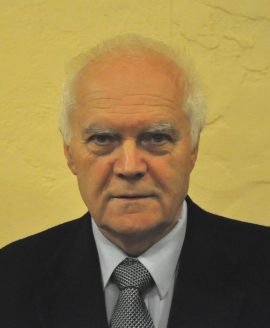 Bogdan 'Dan' M. Wilamowski合作论文数Alabama Microelectronics Science and Technology Center, Department of Electrical and Computer Engineering, Auburn University28
 Mojtaba Ahmadieh Khanesar合作论文数Fac Elect & Comp Engn, Semnan Univ27
 Yesim Oniz合作论文数Department of Electrical and Electronics Engineering, Bogazici University19
 Yuchen Jiang (蒋宇辰)合作论文数School of Astronautics, Harbin Institute of Technology17
 Xinghuo Yu (余星火)合作论文数School of Engineering, Royal Melbourne Institute of Technology University17
 Nikola Georgiev Shakev合作论文数Department of TAET, Technical University - Sofia14
 Rahib Abiyev Hidayatoğlu合作论文数Department of Computer Engineering, Near East University14
 Asif Šabanović合作论文数International University of Sarajevo12
 Mohammad Teshnehlab合作论文数Faculty of Electrical Engineering, K.N. Toosi University of Technology12
 Kemalettin Erbatur合作论文数12
 Hao Luo (罗浩)合作论文数Alibaba Damo Academy11
 Andreas Weisshaar合作论文数College of Engineering, Oregon State University11
 Weichao Sun (孙维超)合作论文数School of Astronautics, Harbin Institute of Technology11
 Cisel Aras合作论文数Department of Electric and Electronics Engineering, Bogazici University11
 Shaikh Fattah合作论文数10Hülya Kırkıcı合作论文数10Hugo Proença合作论文数10
 Michele Nappi合作论文数Dipartimento di Informatica, Universit degli Studi di Salerno10
 Enrico Zio合作论文数Dipartimento di Energia, Politecnico di Milano;Ecole de Mines, ParisTech, PSL University9
 József K. Tar合作论文数Antal Bejczy Ctr Intelligent Robot, Obuda Univ9
 Zhihua Qu合作论文数Department of Electrical and Computer Engineering, University of Central Florida9
 Ahmet Denker合作论文数9
 Mingyi Huo合作论文数Harbin Inst Technol, Dept Control Sci & Engn, Harbin 150001, Peoples R China8
 Abbas Jamalipour合作论文数School of Electrical and Computer Engineering, Faculty of Engineering, The University of Sydney8
 Kuan Li合作论文数8
 Ardashir Mohammadzadeh合作论文数Department of Electrical and Electronics Engineering, Faculty of Engineering, Sakarya University;School of Artificial Intelligence, Shenyang University of Technology7Bito, J.F.合作论文数7
 Fumio Harashima (原島文雄)合作论文数Nara University7
 Meliksah Ertugrul合作论文数TUBITAK MRC, Information Technologies Research Institute7
 Erkan Kayacan合作论文数School of Aerospace and Mechanical Engineering, Gallogly College of Engineering, University of Oklahoma;Field and Autonomous Robots Laboratory, University of Oklahoma6
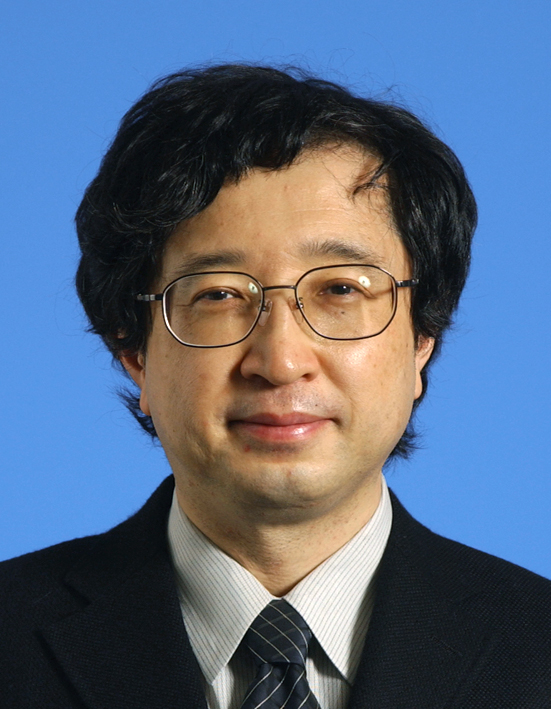 Hideki Hashimoto (橋本秀紀)合作论文数Department of Electrical Electronic and Communication Engineering, Chuo University6
 Giuseppe Iannaccone合作论文数Dipartimento di Ingegneria dell'Informazione, Università di Pisa;Quantavis s.r.l.6
 Jianbin Qiu (邱剑彬)合作论文数School of Astronautics, Harbin Institute of Technology6
 Bahram Javidi合作论文数Multidimensional Optical Sensing and Imaging Systems Laboratory, College of Engineering, University of Connecticut;Electrical & Computer Engineering Department, University of Connecticut6
 Hongyan Yang (杨宏燕)合作论文数Faculty of Information Technology, Beijing University of Technology6
 Ildar Batyrshin合作论文数Center for Computing Research, National Polytechnic Institute6
 Marian P. Kazmierkowski合作论文数Instytut Sterowania i Elektroniki Przemysłowej, Wydział Elektryczny, Politechnika Warszawska6Jamie Moesch合作论文数5Sophia Muirhead合作论文数5Stephen Welby合作论文数5Donna Hourican合作论文数5Karen Hawkins合作论文数5




