Abstract This chapter establishes the conceptual underpinnings of the edited volume for understanding the institutional legacies of violent conflict. It discusses how wartime governance structures—formed by state and non-state actors and civilians—shape post-conflict political stability, economic development, and state-building. The chapter argues that violent conflicts do not simply destroy institutions but also create new governance arrangements that persist beyond war, influencing long-term trajectories of state capacity and legitimacy. It introduces two key conceptual shifts that shape the entire volume: the enduring impact of wartime institutions on post-conflict governance and the role of civilian agency in shaping these institutions. Drawing on historical and contemporary cases, the chapter outlines how institutional change in wartime shapes post-war state-building trajectories, the sustainability of peace. The chapter concludes by emphasizing the need for policy approaches that account for these institutional legacies in post-conflict reconstruction.
This paper investigates how persistent changes in trust caused by the Great Recession have affected how citizens across Europe responded to the next global crisis: the COVID-19 pandemic. We show that increases in mistrust towards institutions caused by individual exposure to the 2007–08 financial crisis led to significant declines in mobility during the initial period of lockdown. We interpret this effect as being consistent with individuals prioritizing their own safety amid perceived breakdowns in the social contract. This result suggests that economic events that lead to changes in trust have lasting legacies by affecting government and citizen responses to future crises.
Abstract To date, there is limited understanding about the consequences of wartime dynamics for post-war state-building processes. This chapter explores one such dynamics—the forms of governance exercised by armed groups during wartime—and proposes a theoretical framework outlining how forms of wartime governance affect trajectories of state-building in the aftermath of civil wars. Six possible trajectories are mapped out: stable democracy, weak democracy, stable autocracy, fragmented rule, contested autocracy, and durable disorder. Each trajectory is shaped by the interaction between two dimensions of wartime governance: how armed groups build institutional capacity in wartime and the characteristics of wartime social contracts between armed groups and civilians. The core argument is that civil wars generate within themselves bureaucratic and institutional capacity—through how armed groups govern territories and civilians within them—that under certain circumstances may be harnessed in the post-war period to build states capable of governing. The characteristics and durability of those forms of wartime governance shape the type of state-building and political regime trajectories that emerge in the post-war period.
Abstract What are the implications of armed group war strategies for the organization of local communities? To address this question, we build a new theoretical framework to formally model the choices faced by armed groups and civilians with respect to local community organizations. The model explores the interplay between the strategies used by armed groups towards local organizations and the response of the local population to these strategies. The model predictions are tested for the case of Colombia using a unique longitudinal individual-level dataset conducted in 2010, 2013, and 2016. Results show that the presence of armed groups in rural communities is accompanied by a reduction in the participation of individuals in local organizations in communities with a strong institutional set-up before the arrival of the armed group. The opposite effect is observed in communities with weaker pre-existing institutions. These results are consistent with a dominance equilibrium derived in the theoretical model, whereby armed groups capture local organizations for strategic war purposes.
This systematic review examines the effectiveness of social assistance programs in protecting households in Africa - a region highly vulnerable to climate change, conflict, and other shocks - during periods of crisis. We focus on quantitative studies using microdata to assess their impact on household income, poverty, assets, and food security. The evidence consistently shows that social assistance programs provide meaningful protection. Beyond immediate consumption support, they often help households establish savings groups and accumulate assets that can be drawn upon during shocks. However, their effectiveness depends on transfers being sufficiently large, predictable, and regular. Cash-plus programs, which combine consumption support with livelihood interventions, show promise in helping households accumulate buffer stocks. Yet evidence for widespread livelihood diversification remains limited. Moreover, the type of shock matters; while some strategies are effective against weather-related shocks, they may offer less protection against pandemics or conflict, where livelihood losses and displacements are common.
Authoritarian and violent experiences affect the institutional settings of post-dictatorial regimes. However, we still lack a comprehensive knowledge on how local autocratic practices of violence, repression and control influence post-dictatorial subnational politics. This special issue aims to advance our understanding of the legacies of authoritarian political regimes. It focuses on the experience of several European countries before, during and immediately after WWII, a period of intense political turbulence in which citizens were subjected to both right- and left-wing dictatorships, where repression was often embedded in systems of governance. While many individuals collaborated with the repressive regimes, others resisted them, creating long-term variation in state-citizen relations across Europe. In this introduction, we review previous research on political legacies, present an analytical framework that distinguishes between two categories of legacies - congruence and alteration- and identify several types of legacies: persistency, discontinuity, creation, reactivation, transformation, substitution, and blunting.
This paper revisits the age-old question of how economic inequalities may affect the emergence of political violence. Recent findings from three distinct bodies of literature suggest that this relationship is shaped by the forms of social mobilization inequalities (may) generate. The paper reviews this new evidence and outlines two conditions under which social mobilization in unequal societies may result in either non-violent or violent collective action and, ultimately, in violent conflict. The first condition is the level of social cooperation between different social groups that are formed during the process of social mobilization. The second is the efficacy of collective action to drive change, which is in turn shaped by the ability of individuals within groups to coordinate their actions. Forms of social mobilization become violent when antagonism is the dominant form of social interaction between different social groups in unequal societies and when each of these social groups exhibits high levels of internal coordination. This framework raises new research questions and policy implications.
This working paper is one of two working papers that present the results of the research component of the REALISE project, implemented by Save the Children and funded by the Foreign, Commonwealth and Development Office (FCDO) in the DRC. The research component of the project was led by the Institute of Development Studies at the University of Sussex, in partnership with Marakuja Kivu Research. The working paper focuses on violence within the school environment and its effect on children’s well-being.
What are the violent repertoires of politics in democracies? We contend that political violence in democratic settings can take many forms. We offer new guidelines and conceptual insights to enhance our understanding of political violence in democracies and promote a more comprehensive study of it. We provide new empirical evidence on patterns of political violence in a polarized democracy, relative trends, repertoires of violence, and the state's responses. Our novel dataset on political violence covers the period of Italian history between 1969 and 1988, also known as the Years of Lead (Anni di Piombo). The dataset is based on a triangulation of news sources and an 'actor-action-target' analytical framework. We collected over 7,800 geolocated and temporally coded events, shedding light on an understudied but extremely violent period in Italian history. We contend that scholars should avoid conceptualizing political violence in democratic societies as a residual phenomenon, often narrowly framed as mere terrorism due to normative biases and analytical constraints. Instead, a broader perspective is necessary to fully understand its complexity and implications.
What is the role of development cooperation in fragile states and conflict-affected areas? Evidence on the effectiveness of aid in these contexts is mixed, but external support remains essential for addressing development and humanitarian needs. This volume brings together findings from a diverse set of expert analyses to shed new light on aid’s record under fragility. It spotlights two key implications for research and practice going forward. First, more systematic unpacking of the considerable diversity that exists across fragile contexts is needed to better understand past experiences and lessons for future practice. This chapter illustrates this point by considering three core dimensions of state fragility: authority, capacity, legitimacy. Second, while the aid effectiveness principles provide important insight into how aid can be improved, their application in fragile contexts is challenging. This is particularly the case for the key principle of ownership. This first chapter both introduces the volume and presents its conclusions.
We study whether exposure to social movements campaigning against income and gender income inequality shifts individual beliefs about inequality, reshapes preferences for redistribution, and translates into political participation in the UK. Since the Great Recession of the 2010s, the UK has seen significant growth in social movements, particularly those mobilizing against inequality. We focus on income and gender income inequality, two persistent and politically contested forms of inequality in advanced democracies like the UK. Responses to social movements can diverge sharply between them. Using observational data, we show that exposure to protests against inequality is strongly correlated with increased support for redistribution. To identify causal effects, we complement this evidence with an online experiment in which we randomly assign 1,436 UK citizens to follow real social movement content focused on either income or gender income inequality over a two-week period on Facebook. Participants exposed to information about income inequality increase support for reducing income disparities, while those exposed to gender income inequality support targeted measures to address gender gaps. Both groups favor higher taxes on the wealthy and are more likely to take political action, including signing a petition, contacting a politician, or meeting a public official.
 Tilman Bruck合作论文数German Institute for Economic Research23
 Philip Verwimp合作论文数Economics Department;Catholic University of Leuven;Economics Department, Catholic University of Leuven18
 Marinella Leone合作论文数13
 Ana Maria Ibanez合作论文数Dept. of Plant Science, University of California12
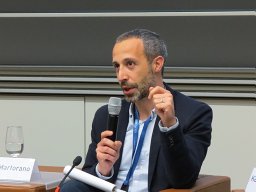 Bruno Martorano合作论文数Department of International;University of Oxford;Department of International, University of Oxford10
 Julián Arteaga合作论文数8Gauthier Marchais合作论文数8
 Juan Camilo Cardenas合作论文数Facultad de Economia;Universidad de Los Andes;Facultad de Economia, Universidad de Los Andes8
 Wolfgang Stojetz合作论文数ISDC Int Secur & Dev Ctr7
 Paola Salardi合作论文数Munk School of Global Affairs & Public Policy, University of Toronto7
 Ana Arjona合作论文数Department of Political Science, Weinberg College of Arts and Sciences, Northwestern University7
 Julie Litchfield合作论文数Department of Economics;University of Sussex;Department of Economics, University of Sussex7
 Jean-Pierre Tranchant合作论文数7Polepole Bazuzi Christian合作论文数6Issa Kiemtoré合作论文数6
 Sweta Gupta合作论文数Inst Dev Studies, Univ Sussex6Pierre Marion合作论文数5
 Cyril Brandt合作论文数LinkedIn: https://www.linkedin.com/in/cyril-owen-brandt-232a8aab5Patrick Mze Somora合作论文数4Samuel Matabishi合作论文数4Dieudonné Kanyerhera合作论文数4Pacifique Nyabagaza合作论文数4andrew tedesco合作论文数4
 Andrea Vaccaro合作论文数United Nations University4Daniele Guariso合作论文数Department of Economics, University of Sussex4margarita gafaro合作论文数Banco de la República4
 Laura Metzger合作论文数Development Economics Group, ETH Zurich4
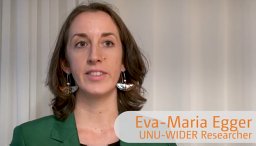 Eva-Maria Egger合作论文数World Institute for Development Economics Research (UNU‐WIDER), United Nations University4Neil T. N. Ferguson合作论文数ISDC Int Secur & Dev Ctr4
 Catherine Muller合作论文数UNICEF4
 Jean-Benoit Falisse合作论文数Centre of African Studies, School of Social and Political Science, The University of Edinburgh4
 Andrea Ruggeri合作论文数Department of Politics and International Relations, University of Oxford4Stefano Costalli合作论文数4
 Sam Jones合作论文数Intensive Care National Audit & Research Centre;School of Health and Related Research, University of Sheffield;School of Health and Related Research, University of Sheffield4
 Rachel M. Gisselquist合作论文数4
 Jaideep Gupte合作论文数Institute of Development Studies4Alia Aghajanian合作论文数3Pierfrancesco Rolla合作论文数3Maria C. Lo Bue合作论文数3
 Francesco Iacoella合作论文数3
 Anke Hoeffler合作论文数Development Research Group ,Department of Politics & Public Administration, University of Konstanz3Oscar Díaz合作论文数2
 Rebecca Mitchell合作论文数Inst Dev Studies, Univ Sussex2Monique Abimpaye合作论文数2Hanna Freudenreich合作论文数Leibniz Inst Vegetable & Ornamental Crops2
 Alexandra Avdeenko合作论文数Corresponding author.2
 Caitriona Dowd合作论文数Dublin City Univ2Liliana Abreu合作论文数Department of Politics and Public Administration, University of Konstanz2
 Anke Kobach合作论文数Department of Psychology, University of Konstanz Konstanz;Vivo International, vivo;Department of Psychology, University of Konstanz Konstanz2




