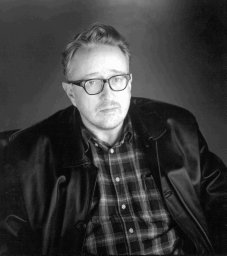
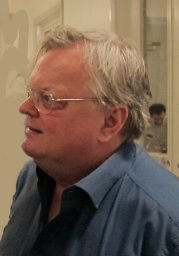
AbstractThis text is a short intellectual biography written in memory of Per Aage Brandt (1944–2021). I present some of the main tenets of his scientific endeavor, artistic practice, and scholarly entrepreneurship.
Abstract George Lakoff and Mark Johnson’s Conceptual Metaphor Theory is by and large a theory of what (abstract) concepts are, how they are structured, and how this structure is acquired — i.e., by mapping of structure from one more concrete or sensory-motor specific domain to another more abstract domain. Conceptual metaphors therefore rest on “cross-domain mappings.” The claims to the effect that our abstract concepts are metaphorically structured and that cross-domain mappings constitute one of the fundamental cognitive meaning-making processes are empirical and can therefore be put to the test. In this paper, I will critically assess Conceptual Metaphor Theory as a theory of concepts in light of recent experimental findings. Many such findings provide evidence for the psychological reality of cross-domain mappings, i.e., that structure activated in one domain actually can perform cognitive tasks carried out in another domain. They do not, however, support the claim that the structure of our (abstract) concepts is still metaphorical, as Lakoff and Johnson claim — that is to say, that our mind actually does perform cross-domain mappings when we process conventional conceptual metaphors such as “Death is Rest” or “Love is a Journey.” Two conclusions can be drawn from this: (1) it is necessary to distinguish between cross-domain mappings (which are psychologically real) and the metaphoric structure of our concepts (which is not, in the sense that such concepts do not any longer activate cross-domain mappings when processed); (2) Conceptual Metaphor Theory is not an adequate theory of concepts. I will therefore sketch another more viable theory of concepts where the structure of our concepts is defined as the full ecology of their situations of use, which includes the kind of situations (objects, agents, interactions) they apply to and the kind of emotional, cognitive, bodily, and behavioral responses they elicit. On this view, the contents of our concepts are to be considered as vague predicates, with vague extensions, which take on a specific form in their situation of use.
AbstractThe present work is an attempt to bring meaning to the fore of not only empirical aesthetics but also experimental aesthetics. We have addressed meaning in terms of attention-grabbing perceptual structure, doing so in the strong sense of structure; i.e., structure understood as a pure spatial relation between shapes, independently of what objects these shapes represent. The structures we investigate are the so-called non-generic configurations that obtain between objects seen from a unique vantage point. In the paper, we first introduce the notion of non-genericity, in general, and its use in visual art in particular, where it is claimed to affect the visual brain as an attention grabber. We then present an experiment we have designed to test the effect of such a relation on the visual brain, and we give evidence to the effect that non-generic configurations in pictures do attract attention significantly more than their generic counterparts. Non-genericity can therefore be considered as one among other pictorial techniques artists dispose of to construct perceptual meaning in vision.
AbstractThis article has a double scope. First, we consider the dynamics inherent in the emergence of genres. Our view is that genres emerge relative to two sets of
This article addresses the phenomenology of aesthetic experience. It first, critically, considers one of the most influential approaches to the psychophysics of aesthetic perception, viz. neuroaesthetics. Hereafter, it outlines constitutive tenets of aesthetic perception in terms of a particular intentional relation to the object. The argument comes in three steps. First, I show the inadequacies of the neuroaesthetics of beauty in general and Semir Zeki’s and V.J. Ramachandran’s versions of it in particular. The neuroaesthetics of beauty falls short, because it develops hypotheses of aesthetic experience which have no consequences for the understanding of what art is, that is, how artists produce visual meaning effects in their works. This is so because they make the rewarding feeling of beauty the cornerstone of aesthetic experience. Next, I show why and how aesthetic experience should be defined relative to its object and the tools for meaning-making specific to that object, and not relative to the feeling (of beauty) it may elicit. Finally, I sketch the import this fact may have on a research program in empirical aesthetics.
The paper considers the phenomenology of aesthetic experience as “twofold” in a sense akin to Wollheim’s (Painting as an art. Princeton University Press, Princeton, 1987). However, as regards the perception of artworks proper, the notion of twofoldness needs further specification. In the wake of Wollheim, the philosophy of pictorial representation has addressed the second, ‘configurational’ aspect of twofoldness in rather vague terms without addressing the aesthetic or pictorial function of this correlate of aesthetic perception. I shall talk about such co-awareness as “design-seeing” and assign two decisive properties to pictorial design. First, I will point to a depicting property of design that is a distinctive property of pictures. Design in pictures is such that it can depict two (or, in rare cases, even more) fully consistent objects without the picture becoming ambiguous. Next, I’ll show that the design structure of a painting is not simply a structure in virtue of which something is represented to the eye, but also in virtue of which meaning is conveyed to the eye. If I am right in considering the design level of pictures as a genuine platform for meaning making, then seeing-in doubled with design seeing occurs every time lines and shapes do not only depict, but also mean something
Roman Ingarden (1973a, 1973b) developed an ontology of the literary artwork with implications for a theory of reader experience. An upshot of the fact that narratives represent only incompletely determined states of affairs, endowed with "spots of indeterminacy," is that readers fill out the blanks left by the author. Filling-out is therefore considered a quasi perceptual act leading to the constitution of a full object in the reader's experience. In this paper, I challenge the degree to which readers' concretization of texts depends on such completing acts. I point to the fact that perception itself is schematic, and that the analogy to perception would rather imply that concretization does not imply full filling-out. On the contrary, there seems to be a correspondence between the standard level of descriptive granularity in literature and the schematic coarse-grainedness of perception. To corroborate this claim, I show how deviations from that descriptive baseline produce a variety of meaning effects.
How is linguistic communication possible? How do we come to share the same meanings of words and utterances? One classical position holds that human beings share a transcendental "platonic" ideality independent of individual cognition and language use (Frege 1948). Another stresses immanent linguistic relations (Saussure 1959), and yet another basic embodied structures as the ground for invariant aspects of meaning (Lakoff and Johnson 1999). Here we propose an alternative account in which the possibility for sharing meaning is motivated by four sources of structural stability: 1) the physical constraints and affordances of our surrounding material environment, 2) biological constraints of our human bodies, 3) social normative constraints of culture and society, and 4) the local history of social interactions. These structures and constraints interact in dynamical ways in actual language usage situations: local dialogical and - social dynamics motivate and stabilize the profiling of a conceptual space already - highly structured by our shared biology, culture, and environment. We will substantiate this perspective with reference to recent studies in experimental pragmatics and semiotics in which participants interact linguistically to solve cooperative tasks. Three main cases will be considered: The dynamic grounding of linguistic categories, the construction of conceptual models to relate entities in a scene, and the construction of shared conceptual scales for assessing and appraising subjective experiences.
This paper provides a précis of Ernst Cassirer’s concept of art as a symbolic form. It does so, though, in a specific respect. It points to the fact that Cassirer’s concept of “symbolic form” is two-sided. On the one hand, the concept captures general cultural phenomena that are not only meaningful but also manifest the way man makes sense of the world; thus myth, religion, and art are considered general symbolic forms. On the other hand, it captures the formal structures and semiotic tools thanks to which meaning is constructed within each general symbolic form (Cassirer called these structures “modes of objectivation”); thus, in art, perspective or the golden section are well-known examples of symbolic forms, now in a narrow sense, i.e. they are means to configure parts into an organized, meaningful whole. The paper will comment on art along both these two dimensions, but its main goal is to provide with concrete examples of aesthetic symbolic forms in the narrow sense in order to show how conceptual meaning can be inscribed in the space of aesthetic intuition.
From a purely quantitative point of view, Edmund Husserl has devoted a rather small amount of time and space to the study of language proper. Essentially, his contributions within this domain amount to the description of language use in the First Logical Investigation (Husserl 1901), and the determination of the essential properties of language as such (independent of any specific use) in the Fourth Logical Investigation. Otherwise, language is only sparsely dealt with in Husserl’s writings: the unpublished note “On the Logic of Signs (Semiotics)” (Husserl 1890) anticipates the distinction between “expression” and “index” which constitutes the starting point of the First Logical Investigation; i.e. the difference between a linguistic or any other sign bestowed with intentional meaning and any type of sign which is immediately or physically linked to its meaning: smoke → fire; scar → wound; weathercock → wind, etc.); Formal and Transcendental Logic (Husserl 1929) contains an appendix related to the theory of syntax outlined in the Fourth Logical Investigation; and, finally, a number of passages from Experience and Judgment (Husserl 1939) reexamine the relation between perceptually formed or antepredicatively structured meaning and its linguistic, predicative articulation (as we shall see this issue is also in the heart of the discussions unfolded in the Fourth Logical Investigation).
Instead of considering key concepts of narratology such as focalization (perspective) or mode of narration (teller vs. reflector, as Franz K. Stanzel has it) simply as criteria for a typology of texts, this paper intends to activate them as ‘symbolic forming tools’ or ‘means of meaning making’ in literary art. The fundamental claim is that an author can activate or apply them in various ways—experimenting with them—in order to obtain given meaning effect within one and the same text. Through analysis of examples it is shown how authors' variations on the focalization, the narrative mode, and the granularity axes produce semiotic effects amenable to systematic characterization. A recurrent concern in the paper is the representation of consciousness in literary art.