The following text was presented to the 1995 conference of the International Council of Philosophical Inquiry with Children and appears here for the first time in a Slovak translation. Unfortunately, the challenges of coping with global change that it discusses have still not been addressed. Some of the facts have changed-for example, China's per capita greenhouse gas emissions have risen significantly, although they are still far below those of the United States and most other industrialized countries. But the planet is warming faster than scientists predicted thirty years ago, and little has been done to reduce greenhouse gas emissions, so the problem of climate change is even more urgent than it seemed to be when the text was first presented. Therefore, my arguments about the changes we need to make to the way we live are still relevant, and it is for that reason that I have accepted the editors' invitation to print the article here in Slovak.
Artificial intelligence is seen as increasingly important, and potentially profoundly so, but the fields of AI ethics and AI engineering have not fully recognized that these technologies, including large language models (LLMs), will have massive impacts on animals. We argue that this impact matters, because animals matter morally. As a first experiment in evaluating animal consideration in LLMs, we constructed a proof-of-concept Evaluation System, which assesses LLM responses and biases from multiple perspectives. This system evaluates LLM outputs by two criteria: their truthfulness, and the degree of consideration they give to the interests of animals. We tested OpenAI ChatGPT 4 and Anthropic Claude 2.1 using a set of structured queries and predefined normative perspectives. Preliminary results suggest that the outcomes of the tested models can be benchmarked regarding the consideration they give to animals, and that generated positions and biases might be addressed and mitigated with more developed and validated systems. Our research contributes one possible approach to integrating animal ethics in AI, opening pathways for future studies and practical applications in various fields, including education, public policy, and regulation, that involve or relate to animals and society. Overall, this study serves as a step towards more useful and responsible AI systems that better recognize and respect the vital interests and perspectives of all sentient beings.
I am grateful to Professor Erler for his thoughtful commentary. As I have been asked to be quite brief in my response, I will move directly to what appear to me to be the most interesting points of contention between us. There are three of them.
Wild-caught shrimp and prawns are the single most numerous group of animals directly killed for human food consumption on the planet. Recent scientific developments have led to greater understanding of the probability that at least some species of shrimp are sentient beings and, should that be the case, policies that could improve shrimp welfare. We begin with an overview of global shrimp fisheries and their characteristics. The world's shrimp fisheries can be understood as a spectrum between large, industrial trawlers in developed and developing countries (e.g. Western Europe, the Americas, Russia) and small-scale fisheries for subsistence in developing countries (e.g. South-East Asia, East Africa). Each has different implications for animal welfare, particularly in light of human wellbeing challenges associated with shrimp fisheries. Secondly, we turn to the emerging science of shrimp welfare and examine recent developments in government and industry policy. In large-scale trawl fisheries, animal welfare can be improved by installing electrical stunning equipment; continuing existing work on bycatch reduction; and optimising on-board processes to reduce the stress endured by shrimp during capture and slaughter. In small-scale fisheries, improving government capacity and supply chain practices may bring benefits for communities in the short-term while opening up opportunities for more specific shrimp welfare policies in the long-term. Thirdly, we provide a new dataset of the estimated numbers of individual shrimp caught by country and species. Drawing on this data, we provide a description of the shrimp fishing industry in the world's top 25 countries by estimated catch of individual shrimp. By our estimates, the wild-catch shrimp industry catches 37.4 trillion individual shrimp (36.3 trillion sergestids, 781 billion carideans, and 287 billion penaeids). Finally, we explore the ethical implications of the probability that shrimp and prawns are capable of feeling pain and the welfare policies that could be adopted.
The Covid-19 pandemic put the views of bioethicists on the allocation of scarce health care resources to the test. We consider positions taken by medical organizations and national ethics councils in Italy, Spain, United Kingdom, Germany and Sweden. In several statements from these bodies, the concept of human dignity plays a central role. We argue that the use of this concept does not stand up to ethical scrutiny, and instead defend the view that decisions on the allocation of scarce resources should be guided by the goal of maximizing the net benefits to those affected. We conclude by asking whether the fact that, in some regions, after vaccination became widely available, the scarcity of hospital beds was largely caused by members of the community choosing not to be vaccinated against the virus that causes Covid-19 should play a role in allocating resources to unvaccinated people who subsequently became ill from that virus.
Interview with Peter Singer, Australian philosopher, world-famous animal ethicist
The Parties to the UNFCCC and Paris Agreement agreed to act on the basis of equity to protect the climate system. Equitable effort sharing is an irreducibly normative matter, yet some influential studies have sought to create quantitative indicators of equitable effort that claim to be value-neutral (despite evident biases). Many of these studies fail to clarify the ethical principles underlying their indicators, some mislabel approaches that favour wealthy nations as ‘equity approaches’ and some combine contradictory indicators into composites we call derivative benchmarks. This Perspective reviews influential climate effort-sharing assessments and presents guidelines for developing and adjudicating policy-relevant (but not ethically neutral) equity research. Contributions to mitigate climate change should be equitable under the Paris Agreement, yet researchers take sharply diverging approaches to assessing national effort. This Perspective evaluates the literature and presents guidelines for policy-relevant—and ethically explicit—research on equity.
Abstract The current pandemic could give several ape species the final push into extinction. Besides the direct harm the virus may cause to species that are very susceptible to human respiratory pathogens, the pandemic has also brought an economic crisis with lockdowns and absence from usual workplaces, resulting in increased poaching and habitat encroachment. The countries where the remaining apes live cannot shoulder alone the cost of conservation. Other countries with more resources have also contributed to ape extinction and are also implicated in the current pandemic. Moreover, international cooperation is essential for the conservation efforts needed to avoid depriving other hominids of their habitats, their cultures, and their future.
We present evidence from a pre-registered experiment indicating that a philosophical argument––a type of rational appeal––can persuade people to make charitable donations. The rational appeal we used follows Singer’s well-known “shallow pond” argument (1972), while incorporating an evolutionary debunking argument (Paxton, Ungar, & Greene 2012) against favoring nearby victims over distant ones. The effectiveness of this rational appeal did not differ significantly from that of a well-tested emotional appeal involving an image of a single child in need (Small, Loewenstein, and Slovic 2007). This is a surprising result, given evidence that emotions are the primary drivers of moral action, a view that has been very influential in the work of development organizations. We did not find support for our pre-registered hypothesis that combining our rational and emotional appeals would have a significantly stronger effect than either appeal in isolation. However, our finding that both kinds of appeal can increase charitable donations is cause for optimism, especially concerning the potential efficacy of well-designed rational appeals. We consider the significance of these findings for moral psychology, ethics, and the work of organizations aiming to alleviate severe poverty.
 Katarzyna De Lazari-Radek合作论文数15
 Yip Fai Tse合作论文数8
 Tracey Dowdeswell合作论文数6
 Nachshon Goltz合作论文数Sch Business & Law, Edith Cowan Univ6
 Christian Holz合作论文数3
 Elizabeth Cripps合作论文数Politics and International Relations, School of Social and Political Science, The University of Edinburgh3
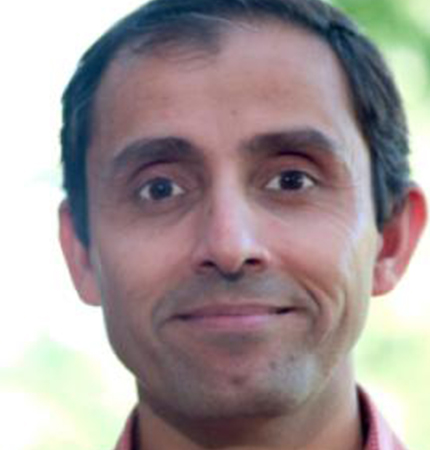 Ambuj Sagar合作论文数School of Public Policy, Indian Institute of Technology Delhi3
 Benito Müller合作论文数Faculty of Philosophy, University of Oxford3
 Julian Savulescu合作论文数Centre for Biomedical Ethics, Yong Loo Lin School of Medicine, National University of Singapore;University of Oxford3
 Sivan Kartha合作论文数3
 Harald Winkler合作论文数Energy Research Centre, University of Cape Town;School of Economics, University of Cape Town3
 Kate Dooley合作论文数3
 Paul G. Harris合作论文数3
 Simon Caney合作论文数Department of Politics and International Studies, University of Warwick3
 Henry Shue合作论文数Merton College, University of Oxford;Centre for International Studies, Department of Politics and International Relations, University of Oxford3Tom Athanasiou合作论文数3
 J. Timmons Roberts合作论文数Department of Sociology, Brown University3
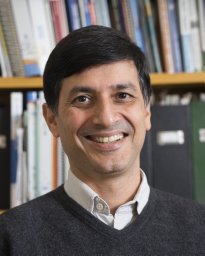 Navroz K. Dubash合作论文数World Resources Institute3Darrel Moellendorf合作论文数3
 Jeff Sebo合作论文数New York University2
 Bård Lahn合作论文数CICERO Ctr Int Climate Res, Univ Oslo2Agata Sagan合作论文数2
 Lori Gruen合作论文数Department of Philosophy and Feminist;Sexuality Studies;Wesleyan University2Laurie Sellars合作论文数1Helen Scales合作论文数1Ann C. Thresher合作论文数1Irvin M. Cushner合作论文数1Cleo Verkuijl合作论文数1Oliver Lazarus合作论文数1Bart Elmore合作论文数1Carl Safina合作论文数1Walter Sánchez-Suárez合作论文数1Jamie Y. Nakatani合作论文数1Danna Staaf合作论文数1Loy Loredana合作论文数1Galen Hall合作论文数Brown Univ1
 David Matthew Edmonds合作论文数University of Hong Kong1Andrew Gershoff合作论文数1Karen Kovaka合作论文数1
 Lucas Brotz合作论文数Institute for the Oceans and Fisheries, University of British Columbia1
 Karen Bradshaw合作论文数Global Inst Sustainabil, Arizona State Univ1Aaron Van Neste合作论文数1Heather Browning合作论文数1Julia D. Monk合作论文数1Sonali McDermid合作论文数Department of Environmental Studies, New York University1
 Léo Peruzzo Júnior合作论文数Programa Posgrad Filosofia, Pontificia Univ Catolica Parana1
 Nicolas Delon合作论文数New College of Florida1
 Edward Stein合作论文数1
 Jonathan Haidt合作论文数Leonard N. Stern School of Business, New York University1




