Entanglement swapping between photon pairs generated at physically separated nodes over telecommunication fiber infrastructure is an essential step towards the quantum internet, enabling applications such as quantum repeaters, blind quantum computing, distributed quantum computing, and distributed quantum sensing. However, successful networked entanglement swapping relies on generating indistinguishable pairs of photons and preserving them over deployed fibers. This has limited most previous demonstrations to laboratory settings or relied on sophisticated methods to maintain the necessary indistinguishability. Here, we demonstrate a scalable entanglement swapping experiment using naturally indistinguishable entanglement sources based on warm atomic vapor cells. Without sharing lasers or optical frequency references between nodes, nor the need for pulsing the sources, we achieve a swapping rate of nearly 500 pairs/s while maintaining the CHSH parameter above 2. Additionally, we demonstrate the scalability of our method by maintaining the quality of the entanglement swapping on 17.6-km of deployed fibers in NYC, relying on commercially available SPADs at the spoke nodes, SNSPDs at the hub and standard time-synchronization techniques. Our work paves the way for the practical deployment of large-scale hub-and-spoke quantum networks within cities and data centers.
In recent years, advances in quantum computing have been driven by substantial improvements in both the number and quality of qubits. As the field progresses, there is growing interest in interconnecting quantum systems to enable scalable computation through Distributed Quantum Computing (DQC) architectures. Consider a distributed quantum application executed across multiple Quantum Processing Units (QPUs) within a quantum data center, where remote gates require establishing entanglement between different QPUs. The creation of such end-to-end entanglement can lead to network congestion and resource contention. To address these challenges, we propose a resource management framework that maximizes fidelity-guaranteed throughput while satisfying dependency constraints. We first formulate the problem as a Mixed-Integer Linear Programming (MILP) model to provide a performance benchmark. Building on this, we develop efficient approximate scheduling algorithms that achieve performance comparable to the optimization solver. Although a trade-off exists between execution time and network throughput, simulation results demonstrate that one of the proposed strategies, Weighted Group Least Resource First (WGLRF), closely approximates the solver’s performance across most scenarios. These findings suggest that the lightweight strategy is sufficient for current DQC settings, offering a practical solution for managing remote-gate resource contention in distributed quantum circuits and improving overall system performance.
Scalable quantum networks must support concurrent entanglement requests from multiple users, yet existing routing protocols fail when users compete for shared repeater resources and waste fragile quantum states that decay rapidly and cannot be buffered like classical data. This paper presents RADAR-Q, a resource-aware decentralized routing protocol that embeds real-time resource contention directly into path selection. Unlike prior designs that either require global coordination or route all traffic through a central anchor, RADAR-Q makes intelligent local decisions by balancing three factors: (1) path length and link fidelity, (2) instantaneous availability of quantum memory at each node, and (3) the number of intermediate Bell-State Measurement (BSM) operations needed to connect a source–destination pair. By identifying the Nearest Common Ancestor (NCA) within a DODAG routing hierarchy, RADAR-Q localizes entanglement swapping close to the communicating users—avoiding unnecessary detours through the network center and reducing both the BSM chain length and qubit exposure to decoherence. We evaluate RADAR-Q on grid and random topologies—representing regular and irregular network fabrics, respectively—against state-of-the-art synchronous and root-centric asynchronous baselines. Results demonstrate that RADAR-Q achieves 2.5× and 7.6× higher aggregate throughput than synchronized and root-centric asynchronous designs, respectively. While baseline protocols suffer catastrophic fidelity collapse below the 0.5 distillation threshold [2] under high load, RADAR-Q consistently maintains end-to-end fidelity above 0.76—ensuring every generated pair remains physically usable for downstream quantum applications. Furthermore, RADAR-Q exhibits near-perfect fairness (Jain’s Fairness Index 96–98
Scalable distributed quantum computing (DQC) has motivated the design of multiple quantum data-center (QDC) architectures that overcome the limitations of single quantum processors through modular interconnection. While these architectures adopt fundamentally different design philosophies, their relative performance under realistic quantum hardware constraints remains poorly understood. In this paper, we present a systematic benchmarking study of four representative QDC architectures-QFly, BCube, Clos, and Fat-Tree-quantifying their impact on distributed quantum circuit execution latency, resource contention, and scalability. Focusing on quantum-specific effects absent from classical data-center evaluations, we analyze how optical-loss-induced Einstein-Podolsky-Rosen (EPR) pair generation delays, coherence-limited entanglement retry windows, and contention from teleportation-based non-local gates shape end-to-end execution performance. Across diverse circuit workloads, we evaluate how architectural properties such as path diversity and path length, and shared BSM (Bell State Measurement) resources interact with optical-switch insertion loss and reconfiguration delay. Our results show that distributed quantum performance is jointly shaped by topology, scheduling policies, and physical-layer parameters, and that these factors interact in nontrivial ways. Together, these insights provide quantitative guidance for the design of scalable and high-performance quantum data-center architectures for DQC.
Quantum networks are a keystone of the quantum internet. However, existing implementations remain largely confined to static point-to-point links due to the absence of a switching paradigm capable of dynamically routing fragile quantum entanglement without introducing decoherence. Here, we propose the Universal Quantum Switch, a foundational building block allowing on-demand, non-blocking, and encoding-agnostic routing of quantum information, as well as seamless modality conversion between disparate quantum platforms. We develop a prototype in thin-film lithium niobate and experimentally demonstrate robust switching with ≤ 4% decoherence via thermo-optic modulation and high-speed electro-optic switching of arbitrary entangled states at 1 MHz. Moreover, we show that our platform can support reconfiguration speeds up to 1 GHz. To our knowledge, this work represents the first demonstration of multi-node dynamic entanglement distribution at these speeds. Complementing these experimental results, we project the architecture's scalability, showing dimension-independent decoherence, and provide a scalable, interoperable building block for heterogeneous quantum network fabrics.
Distributed quantum computing (DQC) in quantum data centers provides a feasible roadmap toward large-scale, fault-tolerant, individual quantum computers in the near term. Realizing DQC in quantum data centers requires significant research and development effort, both in hardware and software. Although significant progress has been made in quantum computing and quantum networking, in general there is a scarcity of software development tools, programming languages, and resource management and scheduling software for DQC in quantum data center. To fill this software gap, the Lawrence Berkeley National Laboratory quantum network research team, along with Cisco Quantum Research, is researching and developing NetQStack, a network-integrated computing stack for quantum data center. NetQStack aims to manage and orchestrate distributed quantum computing in quantum data centers. It is designed to be a full software stack, starting from the physical layer of quantum data centers up to the application layer. In this paper, we present NetQStack, its design, key components, and preliminary results.
As we move towards scalable and modular quantum computing, quantum data centres become imperative. Existing analyses typically treat network constraints in isolation or through simplified models, leaving the interplay between error correction operations and communication resources underexplored. In this work, we present an end-to-end simulation framework that jointly models surface-code operations, internal QPU connectivity, and realistic network constraints including finite entanglement generation rates, limited communication qubits, and bandwidth contention, producing execution latency, from which logical error rate estimates are obtained. The framework is modular by design, allowing individual components such as routing heuristics, scheduling policies, and network topologies to be independently replaced. Numerical evaluation reveals distinct operating regimes in which the optimal resource allocation and code distance selection shift depending on the network characteristics. These results point to tradeoffs in the design of distributed quantum computing architectures that are not visible when computation and communication are modeled separately.
We demonstrate a quantum alert mechanism that uses quantum entanglement and random frequency hopping for eavesdropper monitoring in a classical optical network.
As the demand for better security and higher capacity grows, quantum key distribution (QKD) using free-space optics (FSO) presents an innovative solution for 5G networks and beyond. The Innovate-UK AirQKD project explores how FSO–QKD could enable quantum-secure connections at a metropolitan scale, focusing on the critical “last-mile” of connectivity. However, implementing FSO–QKD in the real world brings several engineering challenges, spanning software, hardware, system integration, and security. This paper dives into the complexities of system architecture and integration, QKD transmission over FSO, and the post-processing of keys. We showcase a cohesive system design that blends the quantum and classical domains, incorporating cutting-edge FSO–QKD hardware and software. The system’s functionality is demonstrated for key processes such as transmission, post-processing, network control, and key management. As a case study, we tested an FSO–QKD link over 135 m at BT’s Adastral Park in Suffolk, UK. The setup achieved a photon count rate of up to 585 kcps through a channel with 15.9 dB of loss and 12 kHz of background noise, resulting in a security key rate (SKR) of up to 84.3 kbps using two detectors. We also conducted simulations to estimate the SKR and compared them with the experimental results. Both approaches confirm the system’s ability to generate keys and successfully transmit orthogonal polarization states, highlighting its potential for practical application.
Modular quantum computing provides a scalable approach to overcome the limitations of monolithic quantum architectures by interconnecting multiple Quantum Processing Units (QPUs) through a quantum network. In this work, we explore and evaluate two entanglement scheduling strategies-static and dynamic-and analyze their performance in terms of circuit execution delay and network resource utilization under realistic assumptions and practical limitations such as probabilistic entanglement generation, limited communication qubits, photonic switch reconfiguration delays, and topology-induced contention. We show that dynamic scheduling consistently outperforms static scheduling in scenarios with high entanglement parallelism, especially when network resources are scarce. Furthermore, we investigate the impact of communication qubit coherence time, modeled as a cutoff for holding EPR pairs, and demonstrate that aggressive lookahead strategies can degrade performance when coherence times are short, due to premature entanglement discarding and wasted resources. We also identify congestion-free BSM provisioning by profiling peak BSM usage per switch. Our results provide actionable insights for scheduler design and resource provisioning in realistic quantum data centers, bringing system-level considerations closer to practical quantum computing deployment.
With its significant security potential, the quantum internet is poised to revolutionize technologies like cryptography and communications. Although it boasts enhanced security over traditional networks, the quantum internet still encounters unique security challenges essential for safeguarding its Confidentiality, Integrity, and Availability (CIA). This study explores these challenges by analyzing the vulnerabilities and the corresponding mitigation strategies across different layers of the quantum internet, including physical, link, network, and application layers. We assess the severity of potential attacks, evaluate the expected effectiveness of mitigation strategies, and identify vulnerabilities within diverse network configurations, integrating both classical and quantum approaches. Our research highlights the dynamic nature of these security issues and emphasizes the necessity for adaptive security measures. The findings underline the need for ongoing research into the security dimension of the quantum internet to ensure its robustness, encourage its adoption, and maximize its impact on society.
We experimentally demonstrate the coexistence of three entanglement-based quantum channels with carrier-grade classical optical channels over 11.5 km hollow core nested antiresonant nodeless fibre, in a four user quantum network. A transmission of 800 Gbps is achieved with four classical channels simultaneously with three quantum channels all operating in the C-band with a separation of 1.2 nm, with aggregated coexistence power of −3 dBm. We established quantum key distribution in the four-node full-mesh quantum network with Bell state fidelity of up to 90.0 ± 0.8%. The secret key rate for all the links in the network are passively preserved over 55 hours of experimental time.
This paper presents the design of scalable quantum networks that utilize optical switches to interconnect multiple quantum processors, facilitating large-scale quantum computing. By leveraging these novel architectures, we aim to address the limitations of current quantum processors and explore the potential of quantum data centers. We provide an in-depth analysis of these architectures through the development of simulation tools and performance metrics, offering a detailed comparison of their advantages and trade-offs. We hope this work serves as a foundation for the development of efficient and resilient quantum networks, designed to meet the evolving demands of future quantum computing applications.
Practical distributed quantum computing and error correction require quantum networks with high-qubit-rate, high-fidelity, and low-reconfiguration-latency. Unfortunately, current approaches are limited by fundamental constraints: single-channel entanglement rates remain at the MHz level with millisecond-level reconfiguration, which is insufficient for fault-tolerant distributed quantum computing. Here, we propose a quantum network architecture that leverages reconfigurable quantum interfaces and wavelength-selective switches to overcome bandwidth and latency constraints. By tuning the frequency and temporal modes of photonic qubits across dense wavelength division multiplexing (DWDM) channels, our protocol achieves an entanglement generation rate of up to 183.4 MHz based on our comprehensive modeling of the networked cold atom computing systems. Our architecture enables nanosecond-scale network reconfiguration with low loss, low infidelity, and high dimensionality. Our modeling and simulation are designed for deployable distributed quantum computing and error correction, integrating the quantum interface, network switching, circuit compilation, and execution into a unified framework. The proposed architecture is fully compatible with industry-standard DWDM infrastructure, providing a scalable and cost-effective foundation for distributed quantum computing.
We present an architectural framework for distributed quantum computing in a quantum data center
Color codes are a leading class of topological quantum error-correcting codes with modest error thresholds and structural compatibility with two-dimensional architectures, which make them well-suited for fault-tolerant quantum computing (FTQC). Here, we propose and analyze a distributed architecture for realizing the (6.6.6) color code. The architecture involves interconnecting patches of the color code housed in different quantum processing units (QPUs) via entangled pairs. To account for noisy interconnects, we model the qubits in the color code as being subject to a bit-flip noise channel, where the qubits on the boundary (seam) between patches experience elevated noise compared to those in the bulk. We investigate the error threshold of the distributed color code under such asymmetric noise conditions by employing two decoders: a tensor-network-based decoder and a recently introduced concatenated Minimum Weight Perfect Matching (MWPM) algorithm. Our simulations demonstrate that elevated noise on seam qubits leads to a slight reduction in threshold for the tensor-network decoder, whereas the concatenated MWPM decoder shows no significant change in the error threshold, underscoring its effectiveness under asymmetric noise conditions. Our findings thus highlight the robustness of color codes in distributed architectures and provide valuable insights into the practical realization of FTQC involving noisy interconnects between QPUs.
Quantum technologies are explored to improve the security of classical communications and networking. Here, we propose and experimentally demonstrate a quantum-assisted classical secure communication system, which provides real-time eavesdropping detection. We randomly multiplex the classical and quantum signal in the wavelength domain based on the output of a quantum random number generator, and monitor the quantum entanglement to detect the presence of eavesdropping. Compared to previous studies, our approach preserves the same level of security without sacrificing the classical data rate.
Distributed Quantum Computing (DQC) provides a scalable architecture by interconnecting multiple quantum processor units (QPUs). Among various DQC implementations, quantum data centers (QDCs) - where QPUs in different racks are connected through reconfigurable optical switch networks - are becoming feasible in the near term. However, the latency of cross-rack communications and dynamic switch reconfigurations poses unique challenges to communications in QDCs, significantly increasing the overall latency, thereby also reducing the overall fidelity. In this paper, we address these challenges by introducing a novel compiler that optimizes scheduling of communications across the program and network layers. Our evaluation shows that it reduces the overall latency by 8.02x over prior approaches with a small overhead and can be integrated with quantum error correction (QEC) to facilitate fault-tolerant quantum computing (FTQC). We have open-sourced our codes at https://zenodo.org/records/15377656.
Traditional quantum random number generators can produce only one type of random number, while the optimal distribution of random numbers for different applications is usually distinct. The typical solution to this challenge is either using different quantum phenomena for different types of random number, or converting one distribution of random numbers to another type. However, the former solution requires multiple hardware systems, while the latter one sacrifices a lot of secure bits. Here, we develop a quantum random number generator that can on-demand produce three distribution types of random numbers at over 60 Gbits/s (Gbps) raw bits by measuring the quantum vacuum noise. After randomness extraction, over 42 Gbps secure bit rate is demonstrated for uniform random numbers, and over 14 Gbps secure bit rate for Gaussian random number. Due to the lack of Rayleigh randomness extraction, only denoised Rayleigh raw bits are generated. Switching between different types of random numbers is achieved in electronics, which does not affect the generation rate. The random numbers pass NIST and Dieharder tests, and are available for various applications, which can be continuously accessed via Cisco Quantum Random Number web service.
 Dimitra Simeonidou合作论文数Smart Internet Lab, Faculty of Engineering, University of Bristol;Bristol Digital Futures Institute, University of Bristol401
 Georgios Zervas合作论文数Department of Electronic and Electrical Engineering, Faculty of Engineering Sciences, University College London93
 Rui Wang合作论文数Univ Bristol, High Performance Networks Grp, Bristol, Avon, England57
 Shuangyi Yan合作论文数High Performance Networks Group, Univ. of Bristol;c;High Performance Networks Group, Univ. of Bristol54
 Shuping Peng合作论文数State Key Laboratory of Advanced Optical Communication Systems & Networks, Peking University50
 Emilio Hugues-Salas合作论文数British Telecom46
 Anna Tzanakaki合作论文数Athens Information Technology39
 George T. Kanellos合作论文数High Performance Network Group School of Computer Science, Electrical and Electronic Engineering and EngineeringMaths (SCEEM),, University of Bristol37Yixuan Qin合作论文数32
 Eduard Escalona合作论文数University of Essex30
 Yanni Ou合作论文数28
 Nicola Ciulli合作论文数The working group where he or she is active appear to be ccamp26
 Alejandro Aguado合作论文数Telefonica I+D c/ Don Ramon de la Cruz;c;Telefonica I+D c/ Don Ramon de la Cruz25
 Ramon Casellas合作论文数Centre Tecnològic de Telecomunicacions de Catalunya25
 Obada Alia合作论文数High Performance Network Group School of Computer Science, Electrical and Electronic Engineering and EngineeringMaths (SCEEM),, University of Bristol23
 Salvatore Spadaro合作论文数Department of Signal Theory and Communications, Universitat Politècnica de Catalunya BarcelonaTech22
 Dimitrios Klonidis合作论文数Ubitech Limited;Ubitech (Greece)22
 Siamak Azodolmolky合作论文数Gesellschaft für Wissenschaftliche Datenverarbeitung mbH Göttingen21Mayur Channegowda合作论文数19
 John Rarity合作论文数School of Electrical, Electronic and Mechanical Engineering, Faculty of Engineering, University of Bristol19
 Fernando Agraz合作论文数19
 Xenofon Vasilakos合作论文数Faculty of Engineering, University of Bristol19
 Norberto Amaya Gonzalez合作论文数University of Essex18
 Anderson Bravalheri合作论文数17
 Tomkos Ioannis合作论文数Division of Telecommunications & Information Technology, Department of Electrical & Computer Engineering, School of Engineering, University of Patras;Department of Electrical and Computer Engineering, University of Cyprus;Industrial Systems Institute17
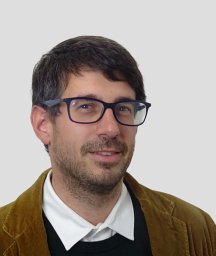 Ricard Vilalta合作论文数Centre Tecnològic de Telecomunicacions de Catalunya (CTTC),17
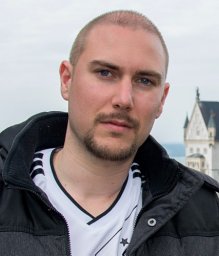 Rodrigo Stange Tessinari合作论文数Cambridge Research Laboratory, Toshiba Europe Limited16
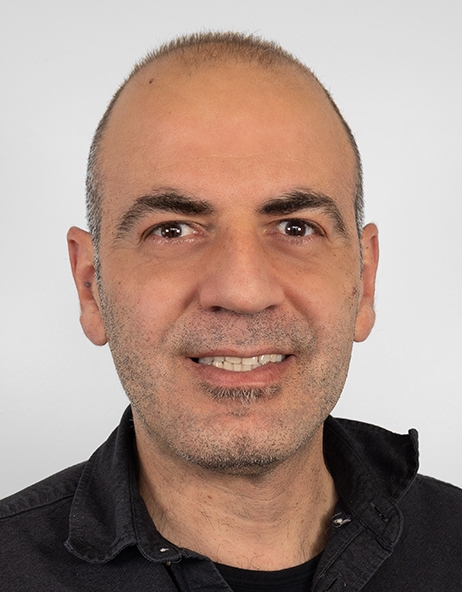 Ricardo Martínez合作论文数Communications Network Department, Centre Tecnològic de Telecomunicacions de Catalunya16
 Hammad Ali Fadlalmola合作论文数16
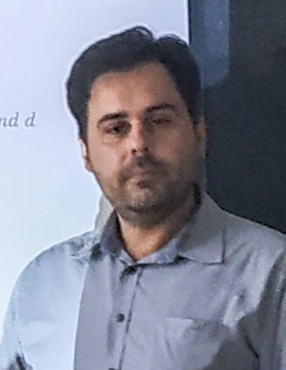 Markos Anastasopoulos合作论文数National and Kapodistrian University of Athens16
 Fanchao Meng合作论文数15
 Abubakar Siddique Muqaddas合作论文数University of Bristol, High Performance Networks Group, UK15
 Andrew Lord合作论文数British Telecom15
 Ramana Kompella合作论文数Cisco15Noboru Yoshikane合作论文数15
 Romerson Oliveira合作论文数Dept Comp Sci, Univ Estadual Montes Claros14
 Shadi Moazzeni合作论文数High Performance Networks Research Group in Smart Internet Lab, University of Bristol14
 Sima Bahrani合作论文数Sch Informat, Univ Edinburgh14
 Navdeep Uniyal合作论文数High Performance Network Group, University of Bristol14Victor Calvo Lopez合作论文数Facultad de Medicina, Universidad Autónoma de Madrid;Department of Biochemistry, Universidad Autónoma de Madrid14
 Achim Autenrieth合作论文数14
 Takehiro Tsuritani合作论文数KDDI Research, Inc.14
 Jordi Perelló合作论文数Advanced Broadband Communications Center (CCABA),, Universitat Politècnica de Catalunya (UPC),14Gino Carrozzo合作论文数13
 Ekin Arabul合作论文数University of Bristol13
 Bartosz Belter合作论文数Poznan Supercomputing and Networking Center13
 Magnos Martinello合作论文数Instituto Capixaba de Pesquisas em Contabilidade;Economia e Financ;Economia e Financ, Instituto Capixaba de Pesquisas em Contabilidade13
 Arash Beldachi合作论文数12
 Mike J. O'Mahony合作论文数School of Computer Science and Electronic Engineering, University of Essex12




