In the early 1960s Feynman lectured to physics undergraduates and, with the assistance of his colleagues Leighton and Sands, produced the three-volume classic Feynman Lectures in Physics. These lectures were delivered in the mornings. In the afternoons Feynman was giving postgraduate lectures on gravitation. This book is based on notes compiled by two students on that course: Morinigo and Wagner. Their notes were checked and approved by Feynman and were available at Caltech. They have now been edited by Brian Hatfield and made more widely available. The book has a substantial preface by John Preskill and Kip Thorne, and an introduction entitled 'Quantum Gravity' by Brian Hatfield. You should read these before going on to the lectures themselves. Preskill and Thorne identify three categories of potential readers of this book. 1. Those with a postgraduate training in theoretical physics. 2. 'Readers with a solid undergraduate training in physics'. 3. 'Admirers of Feynman who do not have a strong physics background'. The title of the book is perhaps misleading: readers in category 2 who think that this book is an extension of the Feynman Lectures in Physics may be disappointed. It is not: it is a book aimed mainly at those in category 1. If you want to get to grips with gravitation (and general relativity) then you need to read an introductory text first e.g. General Relativity by I R Kenyon (Oxford: Oxford University Press) or A Unified Grand Tour of Theoretical Physics by Ian D Lawrie (Bristol: IoP). But there is no Royal Road. As pointed out in the preface and in the introduction, the book represents Feynman's thinking about gravitation some 40 years ago: the lecture course was part of his attempts to understand the subject himself, and for readers in all three categories it is this that makes the book one of interest: the opportunity to observe how a great physicist attempts to tackle some of the hardest challenges of physics. However, the book was written 40 years ago, and since then there have been many discoveries: black holes and the cosmic microwave background have been observed. There have also been theoretical developments. Unless you are a category 1 reader, you will find there are substantial passages you will need to skip over. There are also substantial sections throughout the book accessible to all, such as the following excerpt from lecture 13 (there are 16 lectures) in a section entitled 'Disappearing galaxies and energy conservation'. 'Let me also say something that people who worry about mathematical proofs and inconsistencies seem not to know. There is no way of showing mathematically that a physical conclusion is wrong or inconsistent. All that can be shown is that the mathematical assumptions are wrong. If we find that certain mathematical assumptions lead to a logically inconsistent description of Nature, we change the assumptions, not nature.' If you admire Feynman, then you are likely to enjoy this book. If you want an introduction to gravitation and relativity, there are other more recent and accessible books, but Feynman's insight may help your understanding. Think about buying it for yourself, but make sure there is a copy in your library. P Borcherds
In these classic lectures, Feynman analyses the theoretical questions related to electron and photon interactions at high energies. These lectures are based on a special topics course taught by Feynman at Caltech in 1971 and 1972. The material is dealt with on an advanced level and includes discussions of vector meson dominance and deep inelastic scattering. The possible consequences of the parton model are also analyzed.
Feynman's Tips on Physics is a delightful collection of Richard P. Feynman's insights and an essential companion to his legendary Feynman Lectures on Physics. With characteristic flair, insight, and humor, Feynman discusses topics physics students often struggle with and offers valuable tips on addressing them. Included here are three lectures on problem-solving and a lecture on inertial guidance omitted from The Feynman Lectures on Physics. An enlightening memoir by Matthew Sands and oral history interviews with Feynman and his Caltech colleagues provide firsthand accounts of the origins of Feynman's landmark lecture series. Also included are incisive and illuminating exercises originally developed to supplement The Feynman Lectures on Physics, by Robert B. Leighton and Rochus E. Vogt. Feynman's Tips on Physics was co-authored by Michael A. Gottlieb and Ralph Leighton to provide students, teachers, and enthusiasts alike an opportunity to learn physics from some of its greatest teachers, the creators of The Feynman Lectures on Physics.
The theory of chemical processes is based on theoretical physics. In this sense, physics supplies the foundation of chemistry. The biological example of writing information on a small scale has inspired to think of something that should be possible. Suppose, to be conservative, that a bit of information is going to require a little cube of atoms 5 times 5 times 5 – that is 125 atoms. The magnetic properties on a very small scale are not the same as on a large scale; there is the domain problem involved. The electron microscope is not quite good enough, with the greatest care and effort, it can only resolve about 10 angstroms. The wave length of the electron in such a microscope is only 1/20 of an angstrom. Atoms on a small scale behave like nothing on a large scale, for they satisfy the laws of quantum mechanics.
The Fermi interaction is interpreted as a nonlocal interaction resulting from a double Yukawa-type interaction in which the intervening boson has a definite chirality. The theory is quantizable and renormalizable, and in the "local" limit, the results agree with the usual (V—A) theory of the direct Fermi interaction. The general framework of the theory not only gives a basis for the existence of parity-nonconserving interactions, but also determines the allowed forms of such interactions. The nonlocal eRect of the intervening boson propagator tends to give an improved agreement with experiments,
 matthew sands合作论文数26robert b leighton合作论文数26ralph leighton合作论文数6michael a gottlieb合作论文数3
 Richard (Rick) Field合作论文数Institute for Fundamental Theory, Department of Physics, University of Florida3albert r hibbs合作论文数3Bernardi.G合作论文数3
 Geoffrey Fox合作论文数Department of Physics, College of Arts and Sciences, Indiana University;Department of Intelligent Systems Engineering, Indiana University;Community Grid Laboratory, Indiana University;Digital Science Center of Pervasive Technology Institute;School of Engineering and Applied Science, University of Virginia3M. Gell-Mann合作论文数3Oppenhei.R合作论文数2B. Zumino合作论文数2Ja Wheeler合作论文数2Gf Chew合作论文数2병철 박合作论文数2Difranci.Gt合作论文数2Weisskop.Vf合作论文数2F LOW合作论文数Laboratory for Nuclear Science and Department of Physics, Massachusetts Institute of Technology2Td Lee合作论文数2Michael Cohen合作论文数2
 George Zweig合作论文数Massachusetts Institute of Technology;Los Alamos National Laboratory2Raymond Todd合作论文数2u e kruse合作论文数1EJ KONOPINSKI合作论文数1GC WICK合作论文数1chang zi da guan (昌子 大貫)合作论文数1ya ze shui guang (雅則 水光)合作论文数1Jm Jauch合作论文数1yi lang da chang (一郎 大場)合作论文数1Ch Townes合作论文数1Bogoliub.Nn合作论文数1Mossbaue.Rl合作论文数1edmond l berger合作论文数1L Vanhove合作论文数1Ii Rabi合作论文数1
 Tony Hey合作论文数Science and Technology Facilities Council1
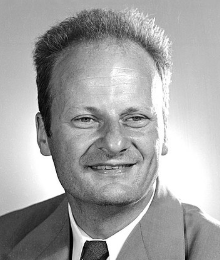 Hans Bethe合作论文数Cornell University1
 Keith Barnham合作论文数1
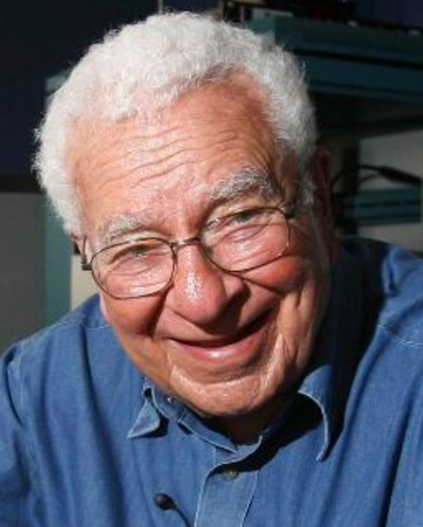 Murray Gell-Mann (默里·盖尔曼)合作论文数California Institute of Technology1John S. Rigden合作论文数1Robert W Hellwarth合作论文数1D. W. G. S. Leith合作论文数1C. Iddings合作论文数1Robert Bruce Lindsay合作论文数Department of Physics, Brown University1
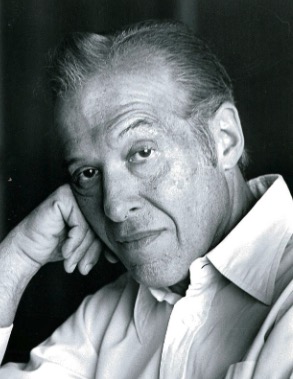 Julian Schwinger合作论文数University of California, Los Angeles1Laurie M. Brown合作论文数1Herbert M. Steiner合作论文数1
 Sandip Pakvasa合作论文数High Energy Physics Group (HEPG) Department of Physics and Astronomy University of Hawaii (UH)1
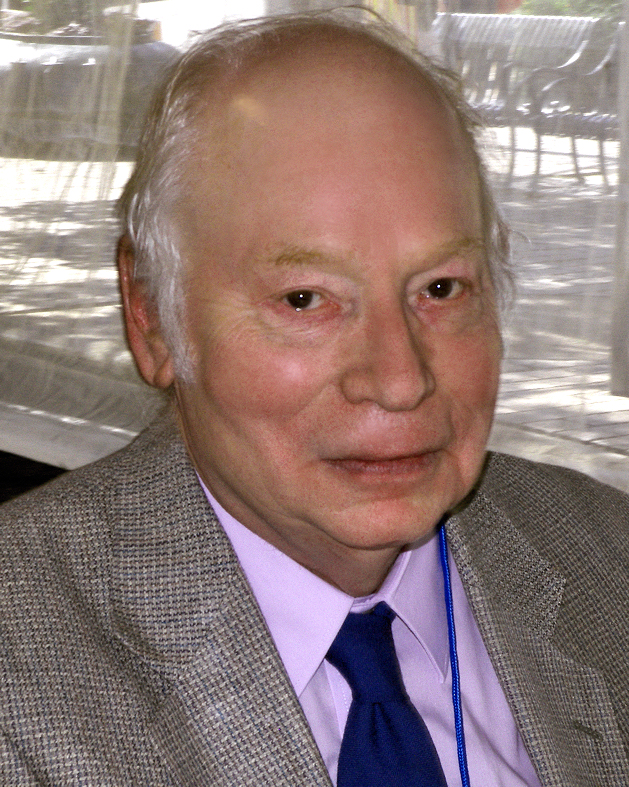 Steven Weinberg合作论文数College of Liberal Arts, University of Texas at Austin1J. E. Mercereau合作论文数1




