Interpreting and creating graphs plays a critical role in scientific practice. The K-12 Next Generation Science Standards call for students to use graphs for scientific modeling, reasoning, and communication. To measure progress on this dimension, we need valid and reliable measures of graph understanding in science. In this research, we designed items to measure graph comprehension, critique, and construction and developed scoring rubrics based on the knowledge integration (KI) framework. We administered the items to over 460 middle school students. We found that the items formed a coherent scale and had good reliability using both item response theory and classical test theory. The KI scoring rubric showed that most students had difficulty linking graphs features to science concepts, especially when asked to critique or construct graphs. In addition, students with limited access to computers as well as those who speak a language other than English at home have less integrated understanding than others. These findings point to the need to increase the integration of graphing into science instruction. The results suggest directions for further research leading to comprehensive assessments of graph understanding.
The Bayesian Knowledge Tracing (BKT) model is a popular model used for tracking student progress in learning systems such as an intelligent tutoring system. However, the model is not free of problems. Well-recognized problems include the identifiability problem and the empirical degeneracy problem. Unfortunately, these problems are still poorly understood and how they should be dealt with in practice is unclear. Here, we analyze the mathematical structure of the BKT model, identify a source of the difficulty, and construct a simple Monte Carlo BKT model to analyze the problem in real data. Using the student activity data obtained from the ramp task module at the Concord Consortium, we find that the Monte Carlo BKT analysis is capable of detecting the identifiability problem and the empirical degeneracy problem, and, more generally, gives an excellent summary of the student learning data. In particular, the student activity monitoring parameter M emerges as the central parameter.
An interactive learning task was designed in a game format to help high school students acquire knowledge about a simple mechanical system involving a car moving on a ramp. This ramp game consisted of five challenges that addressed individual knowledge components with increasing difficulty. In order to investigate patterns of knowledge emergence during the ramp game, we applied the Monte Carlo Bayesian Knowledge Tracing (BKT) algorithm to 447 game segments produced by 64 student groups in two physics teachers' classrooms. Results indicate that, in the ramp game context, (1) the initial knowledge and guessing parameters were significantly highly correlated, (2) the slip parameter was interpretable monotonically, (3) low guessing parameter values were associated with knowledge emergence while high guessing parameter values were associated with knowledge maintenance, and (4) the transition parameter showed the speed of knowledge emergence. By applying the k-means clustering to ramp game segments represented in the three dimensional space defined by guessing, slip, and transition parameters, we identified seven clusters of knowledge emergence. We characterize these clusters and discuss implications for future research as well as for instructional game design.
Students formulated their own questions for a virtual spring/mass system and collected and analyzed data in the InquirySpace environment featuring probes, computational models, and data visualization software. We investigated how students navigated and reasoned with the parameter space defined by a set of manipulative variables related to a virtual spring/mass system. We analyzed logging data of 31 high school student groups and a student group's Screencast video and found that (1) students' investigations followed stages: exploration, crude initial investigation, refined investigation, and data analysis, (2) some logging events acted as markers for these stages, (3) students used more extreme parameter values during exploration than collecting data to answer their questions, and (4) students' discourse was mostly centered around their parameter space navigation and analysis.
La gran promesa educativa de las tecnologias de educacion y comunicaciones esta generalmente desperdiciada en aplicaciones triviales como textos electronicos y video conferencias. Para distinguir entre unas aplicaciones tecnologicas optimas y otras triviales, un grupo de educadores ha empezado a usar el termino “Profundamente digital”. Materiales “Profundamente digitales” aprovechan las distintas maneras en que las tecnologias de la informacion pueden mejorar la educacion. Para proporcionar unos ejemplos especicos, se demuestran dos herramientas de dibujo asistido por computador (CAD) que fortalecen el aprendizaje acerca de la transferencia de calor, el diseno bajo limitaciones y las propiedades de los uidos. Estudiantes aprenden utilizando la herramienta y sus profesores pueden monitorear el aprendizaje. Las herramientas registran todas las acciones de los estudiantes y los registros (o logs) pueden ser analizados para proveer informacion detallada acerca del desarrollo de las habilidades y el pensamiento de cada estudiante. Aplicaciones como estas tienen el potencial de transformar la educacion en ingenieria
Computational experiments based on solving fundamental physics equations bring authentic science to the classroom.
Translated from English by A. Margulyov.
The Molecular Workbench offers highly interactive molecular dynamics simulations to help students learn difficult scientific concepts. The software demonstrates how scientists can transform research tools into educational tools. Research studies show that students learn better using computational models.
Many governmental entities—countries, states, and regions—are studying the possibility of stimulating educational gains and economic development by supplying every student and teacher with a personal, portable computer. The One Laptop Per Child (OLPC) effort led by Nicholas Negroponte has popularized this idea and has generated increased appreciation that some such technology is certain to be available and widely affordable, whether it is the OLPC computer, Intel’s ClassmatePC, regular laptops, cellphones, or some unforeseen innovation. This White Paper deals with three issues that governments need to address in order to realize educational gains in science and mathematics education from one-computer-per-child initiatives: teacher professional development, instructional materials, and research, as each pertains to 1:1 computing.
The $100 computer will soon be a reality. The One Laptop Per Child (OLPC) effort led by Nicholas Negroponte has put new energy into the idea of a low-cost educational computer that could be used anywhere in the world. Today they sell for around $175, but are available only if you want to buy a few million. The OLPC team hopes to get the price down to $100 after a year or two of mass production. The point is that this represents the future—it’s just a matter of time before all computers cost a fraction of what they do now. The XO is an extremely innovative response to the needs of kids worldwide, with special features designed for rural areas of developing nations. The XO is light and attractive. It consumes very little power, so it runs a long time on a charge and can be powered by a hand crank or solar cells. It has no hard drive to crash; it uses flash memory instead for long-term storage. It has Wi-Fi for easy wireless connection to other computers and the Internet. And the display can be seen in the brightest sun. To keep the cost down, the OLPC group depends heavily on open source, both for its operating system (GNU/Linux) and applications. Imagine what a revolutionary impact a computer like the XO could have in the hands of children worldwide. It is an encyclopedia, library, language tutor, multimedia communicator, and music maker. It is a powerful tool for science inquiry, too, particularly if it has probeware—software and hardware for real-time data acquisition and analysis. Ubiquitous computers are coming and probes are close behind
If you could shrink by a factor of a billion (think "Honey, We Shrunk Ourselves"), you would enter a very hostile environment. Since gravity is negligible compared to other forces, you would feel like you were floating in space—until something hit you. The instant you arrived, you'd be knocked unconscious by a speed- ing atom. In fact, millions of atoms and molecules would be slamming into you at the speed of jet planes every second! Here, everything is in violent, random motion and when things heat up, everything moves faster. Atoms and molecules constantly flex, vibrate, and crash into
The Technology Enhanced Elementary and Middle School Science II project (TEEMSS), funded by the National Science Foundation, produced 15 inquiry-based instructional science units for teaching in grades 3–8. Each unit uses computers and probeware to support students’ investigations of real-world phenomena using probes (e.g., for temperature or pressure) or, in one case, virtual environments based on mathematical models. TEEMSS units were used in more than 100 classrooms by over 60 teachers and thousands of students. This paper reports on cases in which groups of teachers taught science topics without TEEMSS materials in school year 2004–2005 and then the same teachers taught those topics using TEEMSS materials in 2005–2006. There are eight TEEMSS units for which such comparison data are available. Students showed significant learning gains for all eight. In four cases (sound and electricity, both for grades 3–4; temperature, grades 5–6; and motion, grades 7–8) there were significant differences in science learning favoring the students who used the TEEMSS materials. The effect sizes are 0.58, 0.94, 1.54, and 0.49, respectively. For the other four units there were no significant differences in science learning between TEEMSS and non-TEEMSS students. We discuss the implications of these results for science education.
There is a disturbing tendency to treat edu- cational materials as building blocks that can be assembled in any convenient order. "Knowledge engineers" think they can start with "learning objects" that can be automatically assembled into meaningful instruction. Such designs ignore the central role of sequences of content and the importance of the progressive integration of ideas that creates knowledge and expertise. Core con- tent needs to be returned to again and again, with each encounter deepening stu- dent understanding and increasing the web of associations that is a critical attrib- ute of true knowledge. At each step, a curriculum designer must consider what the student already knows, what misconceptions are likely, what can be learned now, and what is important for subsequent steps. This need not preclude inquiry, but is required to make learning of key ideas and processes successful. Creating a coherent progression in sci- ence areas that are changing is particularly challenging. For instance, advances in molecular science in general and in molec- ular biology in particular are happening so rapidly that simply memorizing the tenets of yesterday no longer ensures true fluency in the field. Even biology's vaunted Central Dogma (DNA codes RNA, which codes pro- teins)—a cross between classical genetics and modern molecular science—is show- ing cracks. To truly understand new advances in molecular biology, students need molecular literacy that includes understanding the molecular concepts underlying the constructs of modern biol- ogy and the ability to apply these concepts A sequence of model-based activities supports student understanding.
Recent interdisciplinary discoveries in the sciences and engineering at the nanoscale, specifically in our ability to manipulate, molecules at atomic scales, suggests a need for the education community to reconsider the ways in which disciplinary-based sciences and mathematics are being taught in schools, as well as how the public might engage with nanoscale phenomena. This session will discuss key learning questions and their importance in helping to advance both conceptual reasoning from the macro, micro, nano, and atomic levels, as well as their implications for curricular restructuring, public programming, and teacher professional development. The timeliness and broader importance of this research derives in part from two NSF-sponsored workshops on nanoscale education held in 2005, the National Nanotechnology Initiative, and two multi-institutional NSF awards: a National Center for Learning and Teaching and the Nanoscale Informal Science Education Network. This session will discuss research implications for the learning sciences and education community.
 Amy R. Pallant合作论文数6
 Janice D. Gobert合作论文数Worcester Polytechnic Institute6
 Marcia C. Linn合作论文数Graduate School of Education, University of California, Berkeley;Technology-enhanced Learning in Science Center, University of California, Berkeley6
 Andrew Zucker合作论文数Education Development Center5
 Hee-Sun Lee合作论文数4Alvaro Galvis合作论文数4
 Carolyn Staudt合作论文数4Boris Berenfeld合作论文数4Concord Consortium合作论文数3
 Daniel Damelin合作论文数3Paul Horwitz合作论文数3
 Sherry Hsi合作论文数The Exploratorium3Barbara Tinker合作论文数3
 Sarah Haavind合作论文数BBN Full Spectrum Multimedia Group3Shari Metcalf合作论文数3Freda Husic合作论文数2Jacquie Madhok合作论文数2
 Raymond Rose合作论文数2Chad Dorsey合作论文数2Kevin Lai合作论文数2Cabrera Julio合作论文数2
 William Finzer合作论文数The Concord Consortium2
 Qian Xie合作论文数florida state university2Gey-Hong Gweon合作论文数2
 Jonathan Vitale合作论文数Graduate School of Education, University of California, Berkeley2
 Jennifer L. Chiu合作论文数University of California2
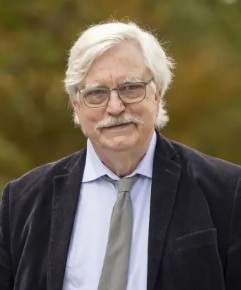 Chris Dede合作论文数Graduate School of Education, Harvard University1zahrl schoeny合作论文数1
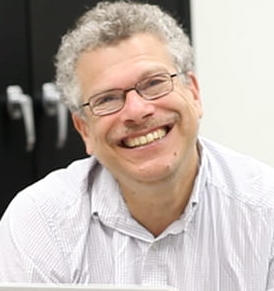 Uri Wilensky合作论文数Center for Connected Learning and Computer-Based Modeling, Northwestern University;Department of Philosophy, Northwestern University1Nathan Kimball合作论文数1Bonnie Elbaum合作论文数1
 Libby Gerard合作论文数School of Education, University of California, Berkeley1Trudi Lord合作论文数1
 Charles Xie合作论文数The Concord Consortium1
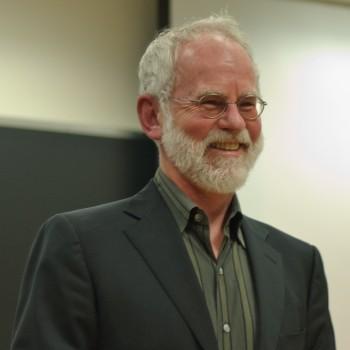 Roy Pea合作论文数Graduate School of Education, Stanford University1
 Joseph Krajcik合作论文数College of Education, Michigan State University;Creat for STEM Institute, Michigan State University1
 Zahrl G Schoeny合作论文数1
 Nancy Songer合作论文数College of Education, University of Utah1Ann C. H. Kindfield合作论文数1
 Barbara C. Buckley合作论文数1Nora Sabelli合作论文数1Garrett M. Deckel合作论文数1Marjorie R. Dial合作论文数1
 Jeremy Roschelle合作论文数Digital Promise1
 John B. Willett合作论文数Graduate School of Education, Harvard University1
 Barbara M Means合作论文数1Bobbi Gerlits合作论文数1




