Three basic acceptations of the possible are presented: the epistemological, the ontological, and the metaphysical. The latter two are presented in some details. They could be distinguished as the processual unfolding of conditions (the ontological reading) and the vision of the process as given and fully completed within each present moment (the metaphysical reading). The ontological dimension can be further distinguished into two different unfoldings of real processes: as the horizontal (temporal) accumulation of determinations and as the vertical (through strata of reality) emergence of both higher entities and higher determinations.
The meaning of 'futures literacy' (FL) depends from both the two individual terms composing FL and the relations between them. The paper offers (i) an analysis of how the meanings of 'futures' and 'literacy' converge in FL, and (ii) a review of a variety of issues that FL should be able to address in order to eventually become a full-fledged framework for the future, such as (a) the world as an incomplete process; (b) the different ways in which one can address the future; (c) the many modes of anticipation; (d) cultural heritage; (e) real utopias; and (f) the role of complexity in decision-making and science.
This paper analyzes some elements of Brazilian National Education Plan -PNE, approved by Federal Law 13005/2014, face to Theory of Anticipation.The article shows how the future notions appear in PNE, and how reduced is its understanding for the elaboration and effectiveness of a national educational project based on the Brazilian Federal Constitution of 1988.The article analyzes five PNE objectives and seeks to show how the eventual attainment of these goals, despite of being important for the country's education, is not articulated with a future project.
Four different aspects of the anticipation, agency, and complexity conundrum are analyzed: best practices, evidence-based policies, innovation and value creation, and pragmatic utopias. These four aspects are arranged according to their level of simplicity and contentiousness, from the simple and less contentious to the complex and highly contentious, and are related to decision-making. Although the connection is overly explicit for best practices, evidence-based policies, and innovation and value creation, it may appear less straightforward for utopias. This chapter frames utopia as the internal driver of innovation, as the sense-making process internal to decision-making that is able to keep it open.
If futures studies aims to become someday an autonomous field of research and application, it must prove that it contributes knowledge, methods, and viewpoints different from those distinctive of other already established fields. A futurist’s toolbox requires both collecting the methods that make futurists different from other academics and practitioners (without implying that futurists must limit themselves to those methods alone) and organizing those methods according to future-based criteria, that is, according to a futures literacy typology.
During the past three years, -skopìa[EDUCATION], the educational branch of the recently established start-up of the University of Trento, -skopìa, has conducted an extensive series of future laboratories in the classroom, working in particular with students aged twelve years old (second year of “medie inferiori”) and fifteen years old (second year of “medie superiori”). Future labs follow an explicit protocol (initial and final tests, three major steps, respectively, focused on the past, the future and the present). Teachers wanting to conduct a lab in their classroom must attend a preliminary training course. Furthermore, all the labs are monitored by -skopìa.
Esse trabalho coletivo incorpora onze posicoes sobre as implicacoes do “Mapa do Conhecimento da Ciencia da Informacao”, um estudo critico Delphi conduzido de 2003 a 2005 e publicado em uma serie de quatro artigos (ZINS, 2007a, b, c, d). O estudo Delphi capturou as deliberacoes de 57 lideres academicos em Ciencia da Informacao de 16 paises para fornecer: 1) definicoes de conceitos fundamentais de dados, informacao, conhecimento e mensagem; 2) concepcoes alternativas em relacao ao dominio da Ciencia da Informacao; 3) diferentes mapeamentos classificatorios da area; e 4) mapeamento compreensivo da Ciencia da Informacao. Em geral, o Mapa do Conhecimento fornece um diagnostico atual da area, retratando as questoes do Seculo XXI, que pode auxiliar o desenvolvimento de pesquisas futuras, programas educacionais, publicacoes e outras perspectivas profissionais e academicas. Esse tipo de pesquisa de mapeamento sobre a Ciencia da Informacao deveria ser feito periodicamente, incluindo estudos Delphi e avaliacoes do grau de expansao da area e provavel divisao em subareas. Metodologias alternativas para mapear a expansao do universo da Ciencia da Informacao e suas sinergias com outras areas do conhecimento, tambem, deveriam ser exploradas.
The science of the twenty-first century won't be less creative and surprising than the science of the twentieth. Both complexity and chaos show the unavoidability of uncertainty - whether it is embedded in feedback cycles and emergence or in the infinite precision of initial conditions. A subtler transformation is ongoing, however: a transformation at a deeper level than the move from linear to non-linear models and much less visible than it. Both linear and non-linear techniques are forms of predicative modeling. The underlying unproven assumption is that the vast majority of systems are predicative, and only marginal, borderline systems are impredicative. Yet the transformation to which I am alluding directs attention to the opposite possibility: the unquestioned belief in the predicativity of most systems may prove to be illusory. As a matter of fact, many disciplines, including sociology, anthropology, and biology, exhibit varieties of self-reference, which is the primary source of impredicativity. The idea that most systems are indeed impredicative opens new avenues for science. Moreover, it may help in addressing some of the most egregious failures of contemporary science. The possibilities to deepen and extend science as well as to address daunting obstacles of present science are serious enough reasons for thorough investigation of the difference between predicative and impredicative science.
 Liliana Albertazzi合作论文数Trento University7
 Francesco Coniglione合作论文数5
 massimo libardi合作论文数5Arnold Louie合作论文数4Jan Woleński合作论文数3charles h davis合作论文数3
 Richard P. Smiraglia合作论文数Institute for Knowledge Organization and Structure, Inc./Member, Information Organization Research Group, School of Information Studies, University of Wisconsin–Milwaukee3
 Gordana Dodig Crnkovic合作论文数Department of Computer Science;Mälardalen University;Department of Computer Science, Mälardalen University3
 Donald H. Kraft合作论文数Department of Computer Science, Colorado Technical University;Department of Computer Science, United States Air Force Academy;Louisiana State University3
 Michael Buckland合作论文数School of Information, University of California Berkeley3Clare Beghtol合作论文数3
 Achilles Kameas合作论文数School of Science and Technology, Hellenic Open University;ALL DIGITAL;Computer Technology Institute;EADTU3Glynn Harmon合作论文数3
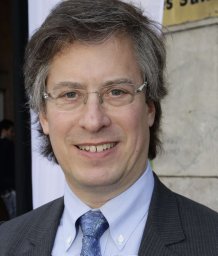 Riel Miller合作论文数Danish Technological Institute;Tecknologiparken Kongsvang Alle;Danish Technological Institute3
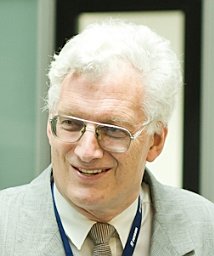 Nicolae Dragulanescu合作论文数University Polytechnics of Bucharest;Romanian Foundation for Quality Promotion;University Polytechnics of Bucharest3
 Anthony Debons合作论文数the University of Pittsburgh3Emilia Agrimi合作论文数3
 Chaim Zins合作论文数3Jean-Claude Anscombre合作论文数2silvia vida合作论文数2Antoinette Balibar-Mrabti合作论文数2Marco Fasciolo合作论文数2Paolo Di Lucia合作论文数2
 Lorenzo Passerini Glazel合作论文数2michele prandi合作论文数2
 Luca Fonnesu合作论文数Dipartimento Studi Umanist, Univ Pavia2
 Isabel Negro合作论文数2Heinrich Herre合作论文数2
 Aldo Gangemi合作论文数Department of Ficlit, University of Bologna;Department of Philosophy and Communication Studies, University of Bologna2
 Robert Hoehndorf合作论文数Faculty of Mathematics and Computer Science, University of Leipzig;Department of Evolutionary Genetics, Max Planck Institute for Evolutionary Anthropology, Deutscher Platz 6, 04103 Leipzig, Germany;Institute of Medical Informatics, Statistics and Epidemiology (IMISE),, University of Leipzig;University of Leipzig, University of Leipzig2
 Guido Governatori合作论文数College of Information & Communication Technology, School of Engineering and Technology, Central Queensland University2
 Janet Kelso合作论文数South African National Bioinformatics Institute, University of the Western Cape2
 Paola Cattabriga合作论文数Dipartimento di Filosofia via Zamboni 28, Università di Bologna2
 Aude Grezka合作论文数2Richard Huyghe合作论文数Université Paris 72Frank Loebe合作论文数Department of Computer Science Intelligent Systems, University of Leipzig2
 Alessandro Oltramari合作论文数Bosch2
 Rocco Scolozzi合作论文数Department of Agro-Ecosystems Sustainability and Bioresources, IASMA Research and Innovation Centre2
 Pierre Rossel合作论文数2Letizia Maninetti合作论文数2Paola Benassi合作论文数2
 Alberto Artosi合作论文数2
 Louis de Saussure合作论文数Institut Des Sciences Du Langage Et De La Communication, Faculté Des Lettres Et Sciences Humaines, Université De Neuchâtel2Georges Kleiber合作论文数2Lorenzo Magnani合作论文数Department of Philosophy,
University of Pavia2
Louis de Saussure合作论文数Institut Des Sciences Du Langage Et De La Communication, Faculté Des Lettres Et Sciences Humaines, Université De Neuchâtel2Georges Kleiber合作论文数2Lorenzo Magnani合作论文数Department of Philosophy,
University of Pavia2 Matteo Motterlini合作论文数Centre for Philosophy of Natural and Social Science, The London School of Economics2
 Paolo Quintili合作论文数2Lambrini Seremeti合作论文数DAISy Group / Computer Technology Institute, Patras, Greece2




