We explore the use of Active Inference (AIF) as a computational user model for spatial pointing, a key problem in Human-Computer Interaction (HCI). We present an AIF agent with continuous state, action, and observation spaces, performing one-dimensional mouse pointing and clicking. We use a simple underlying dynamic system to model the mouse cursor dynamics with realistic perceptual delay. In contrast to previous optimal feedback control-based models, the agent's actions are selected by minimizing Expected Free Energy, solely based on preference distributions over percepts, such as observing clicking a button correctly. Our results show that the agent creates plausible pointing movements and clicks when the cursor is over the target, with similar end-point variance to human users. In contrast to other models of pointing, we incorporate fully probabilistic, predictive delay compensation into the agent. The agent shows distinct behaviour for differing target difficulties without the need to retune system parameters, as done in other approaches. We discuss the simulation results and emphasize the challenges in identifying the correct configuration of an AIF agent interacting with continuous systems.
Measurement of a physical quantity such as light intensity is an integral part of many reconstruction and decision scenarios but can be costly in terms of acquisition time, invasion of or damage to the environment and storage. Data minimisation and compliance with data protection laws is also an important consideration. Where there are a range of measurements that can be made, some may be more informative and compliant with the overall measurement objective than others. We develop an active sequential inference algorithm that uses the low dimensional representational latent space from a variational autoencoder (VAE) to choose which measurement to make next. Our aim is to recover high dimensional data by making as few measurements as possible. We adapt the VAE encoder to map partial data measurements on to the latent space of the complete data. The algorithm draws samples from this latent space and uses the VAE decoder to generate data conditional on the partial measurements. Estimated measurements are made on the generated data and fed back through the partial VAE encoder to the latent space where they can be evaluated prior to making a measurement. Starting from no measurements and a normal prior on the latent space, we consider alternative strategies for choosing the next measurement and updating the predictive posterior prior for the next step. The algorithm is illustrated using the Fashion MNIST dataset and a novel convolutional Hadamard pattern measurement basis. We see that useful patterns are chosen within 10 steps, leading to the convergence of the guiding generative images. Compared with using stochastic variational inference to infer the parameters of the posterior distribution for each generated data point individually, the partial VAE framework can efficiently process batches of generated data and obtains superior results with minimal measurements.
Computational models of how users perceive and act within a virtual or physical environment offer enormous potential for the understanding and design of user interactions. Cognition models have been used to understand the role of attention and individual preferences and beliefs on human decision making during interaction, while biomechanical simulations have been successfully applied to analyse and predict physical effort, fatigue, and discomfort. The next frontier in HCI lies in connecting these models to enable robust, diverse, and representative simulations of different user groups. These embodied user simulations could predict user intents, strategies, and movements during interaction more accurately, benchmark interfaces and interaction techniques in terms of performance and ergonomics, and guide adaptive system design. This UIST workshop explores ideas for integrating computational models into HCI and discusses use cases such as UI/UX design, automated system testing, and personalised adaptive interfaces. It brings researchers from relevant disciplines together to identify key opportunities and challenges as well as feasible next steps for bridging mind and motion to simulate interactive user behaviour.
Controllers trained with Reinforcement Learning tend to be very specialized and thus generalize poorly when their testing environment differs from their training one. We propose a Model-Based approach to increase generalization where both world model and policy are trained in a dimensionless state-action space. To do so, we introduce the Dimensionless Markov Decision Process (Π-MDP): an extension of Contextual-MDPs in which state and action spaces are non-dimensionalized with the Buckingham-Π theorem. This procedure induces policies that are equivariant with respect to changes in the context of the underlying dynamics. We provide a generic framework for this approach and apply it to a model-based policy search algorithm using Gaussian Process models. We demonstrate the applicability of our method on simulated actuated pendulum and cartpole systems, where policies trained on a single environment are robust to shifts in the distribution of the context.
Fast and accurate eye tracking in a virtual reality or augmented reality headset could lead to better display performance and enable novel methods of user interaction with the system. However, it remains a challenge for a system to combine the required operational speed and accuracy of eye tracking with a technology that has a small enough form factor and weight to be easily integrated into a user-friendly headset. By using small, lightweight hardware comprising a high frame rate microLED array and fast single pixel detector, we report a model eye tracking system based on single pixel tracking and a specially developed set of deep learned illumination patterns. This model system is used to demonstrate eye tracking with an angular accuracy of better than one degree and a measurement rate of up to 3.59 kHz.
Active Inference is a closed-loop computational theoretical basis for understanding behaviour, based on agents with internal probabilistic generative models that encode their beliefs about how hidden states in their environment cause their sensations. We review Active Inference and how it could be applied to model the human-computer interaction loop. Active Inference provides a coherent framework for managing generative models of humans, their environments, sensors and interface components. It informs off-line design and supports real-time, online adaptation. It provides model-based explanations for behaviours observed in HCI, and new conceptual tools with the potential to measure important concepts such as agency and engagement in interaction. We discuss how Active Inference offers a new basis for a theory of interaction in HCI, tools for design of modern, complex sensor-based systems, and integration of artificial intelligence technologies, enabling it to cope with diversity in human users and contexts. We discuss the practical challenges in implementing such Active Inference-based systems.
We study the problem of predicting the next query to be recommended in interactive data exploratory analysis to guide users to correct content. Current query prediction approaches are based on sequence-to-sequence learning, exploiting past interaction data. However, due to the resource-hungry training process, such approaches fail to adapt to immediate user feedback. Immediate feedback is essential and considered as a signal of the user’s intent. We contribute with a novel query prediction ensemble mechanism, which adapts to immediate feedback relying on multi-armed bandits framework. Our mechanism, an extension to the popular Exp3 algorithm, augments Transformer-based language models for query predictions by combining predictions from experts, thus dynamically building a candidate set during exploration. Immediate feedback is leveraged to choose the appropriate prediction in a probabilistic fashion. We provide comprehensive large-scale experimental and comparative assessment using a popular online literature discovery service, which showcases that our mechanism (i) improves the per-round regret substantially against state-of-the-art Transformer-based models and (ii) shows the superiority of causal language modelling over masked language modelling for query recommendations.
In the field of detection and ranging, multiple complementary sensing modalities may be used to enrich information obtained from a dynamic scene. One application of this sensor fusion is in public security and surveillance, where efficacy and privacy protection measures must be continually evaluated. We present a novel deployment of sensor fusion for the discrete detection of concealed metal objects on persons whilst preserving their privacy. This is achieved by coupling off-the-shelf mmWave radar and depth camera technology with a novel neural network architecture that processes radar signals using convolutional Long Short-Term Memory (LSTM) blocks and depth signals using convolutional operations. The combined latent features are then magnified using deep feature magnification to reveal cross-modality dependencies in the data. We further propose a decoder, based on the feature extraction and embedding block, to learn an efficient upsampling of the latent space to locate the concealed object in the spatial domain through radar feature guidance. We demonstrate the ability to detect the presence and infer the 3D location of concealed metal objects. We achieve accuracies of up to 95% using a technique that is robust to multiple persons. This work provides a demonstration of the potential for cost-effective and portable sensor fusion with strong opportunities for further development.
Accurate depth estimation is crucial for many fields, including robotics, navigation, and medical imaging. However, conventional depth sensors often produce low-resolution (LR) depth maps, making detailed scene perception challenging. To address this, enhancing LR depth maps to high-resolution (HR) ones has become essential, guided by HR-structured inputs like RGB or grayscale images. We propose a novel sensor fusion methodology for guided depth super-resolution (GDSR), a technique that combines LR depth maps with HR images to estimate detailed HR depth maps. Our key contribution is the Incremental guided attention fusion (IGAF) module, which effectively learns to fuse features from RGB images and LR depth maps, producing accurate HR depth maps. Using IGAF, we build a robust super-resolution model and evaluate it on multiple benchmark datasets. Our model achieves state-of-the-art results compared to all baseline models on the NYU v2 dataset for ×4, ×8, and ×16 upsampling. It also outperforms all baselines in a zero-shot setting on the Middlebury, Lu, and RGB-D-D datasets. Code, environments, and models are available on GitHub.
We propose a novel transformer-style architecture called Global-Local Filter Network (GLFNet) for medical image segmentation and demonstrate its state-of-the-art performance. We replace the self-attention mechanism with a combination of global-local filter blocks to optimize model efficiency. The global filters extract features from the whole feature map whereas the local filters are being adaptively created as 4x4 patches of the same feature map and add restricted scale information. In particular, the feature extraction takes place in the frequency domain rather than the commonly used spatial (image) domain to facilitate faster computations. The fusion of information from both spatial and frequency spaces creates an efficient model with regards to complexity, required data and performance. We test GLFNet on three benchmark datasets achieving state-of-the-art performance on all of them while being almost twice as efficient in terms of GFLOP operations.
We introduce the first continuous-time score-based generative model that leverages fractional diffusion processes for its underlying dynamics. Although diffusion models have excelled at capturing data distributions, they still suffer from various limitations such as slow convergence, mode-collapse on imbalanced data, and lack of diversity. These issues are partially linked to the use of light-tailed Brownian motion (BM) with independent increments. In this paper, we replace BM with an approximation of its non-Markovian counterpart, fractional Brownian motion (fBM), characterized by correlated increments and Hurst index $H \in (0,1)$, where $H=0.5$ recovers the classical BM. To ensure tractable inference and learning, we employ a recently popularized Markov approximation of fBM (MA-fBM) and derive its reverse-time model, resulting in *generative fractional diffusion models* (GFDM). We characterize the forward dynamics using a continuous reparameterization trick and propose *augmented score matching* to efficiently learn the score function, which is partly known in closed form, at minimal added cost. The ability to drive our diffusion model via MA-fBM offers flexibility and control. $H \leq 0.5$ enters the regime of *rough paths* whereas $H>0.5$ regularizes diffusion paths and invokes long-term memory. The Markov approximation allows added control by varying the number of Markov processes linearly combined to approximate fBM. Our evaluations on real image datasets demonstrate that GFDM achieves greater pixel-wise diversity and enhanced image quality, as indicated by a lower FID, offering a promising alternative to traditional diffusion models
In this work, we introduce Pixelsmith, a zero-shot text-to-image generative framework to sample images at higher resolutions with a single GPU. We are the first to show that it is possible to scale the output of a pre-trained diffusion model by a factor of 1000, opening the road to gigapixel image generation at no extra cost. Our cascading method uses the image generated at the lowest resolution as baseline to sample at higher resolutions. For the guidance, we introduce the Slider, a mechanism that fuses the overall structure contained in the first-generated image with enhanced fine details. At each inference step, we denoise patches rather than the entire latent space, minimizing memory demands so that a single GPU can handle the process, regardless of the image's resolution. Our experimental results show that this method not only achieves higher quality and diversity compared to existing techniques but also reduces sampling time and ablation artifacts.
We present a novel Hand-pose Embedding Interactive System (HpEIS) as a virtual sensor, which maps users’ flexible hand poses to a two-dimensional visual space using a Variational Autoencoder (VAE) trained on a variety of hand poses. HpEIS enables visually interpretable and guidable support for user explorations in multimedia collections, using only a camera as an external hand pose acquisition device. We identify general usability issues associated with system stability and smoothing requirements through pilot experiments with expert and inexperienced users. We then design stability and smoothing improvements, including hand-pose data augmentation, an anti-jitter regularisation term added to loss function, stabilising post-processing for movement turning points and smoothing post-processing based on One Euro Filters. In target selection experiments (n=12), we evaluate HpEIS by measures of task completion time and the final distance to target points, with and without the gesture guidance window condition. Experimental responses indicate that HpEIS provides users with a learnable, flexible, stable and smooth mid-air hand movement interaction experience.
In this work we develop a new method, named Sub-graph Permutation Equivariant Networks (SPEN), which provides a framework for building graph neural networks that operate on sub-graphs, while using a base update function that is permutation equivariant, that are equivariant to a novel choice of automorphism group. Message passing neural networks have been shown to be limited in their expressive power and recent approaches to over come this either lack scalability or require structural information to be encoded into the feature space. The general framework presented here overcomes the scalability issues associated with global permutation equivariance by operating more locally on sub-graphs. In addition, through operating on sub-graphs the expressive power of higher-dimensional global permutation equivariant networks is improved; this is due to fact that two non-distinguishable graphs often contain distinguishable sub-graphs. Furthermore, the proposed framework only requires a choice of $k$-hops for creating ego-network sub-graphs and a choice of representation space to be used for each layer, which makes the method easily applicable across a range of graph based domains. We experimentally validate the method on a range of graph benchmark classification tasks, demonstrating statistically indistinguishable results from the state-of-the-art on six out of seven benchmarks. Further, we demonstrate that the use of local update functions offers a significant improvement in GPU memory over global methods.
Camera images are ubiquitous in machine learning research. They also play a central role in the delivery of important services spanning medicine and environmental surveying. However, the application of machine learning models in these domains has been limited because of robustness concerns. A primary failure mode are performance drops due to differences between the training and deployment data. While there are methods to prospectively validate the robustness of machine learning models to such dataset drifts, existing approaches do not account for explicit models of the primary object of interest: the data. This limits our ability to study and understand the relationship between data generation and downstream machine learning model performance in a physically accurate manner. In this study, we demonstrate how to overcome this limitation by pairing traditional machine learning with physical optics to obtain explicit and differentiable data models. We demonstrate how such data models can be constructed for image data and used to control downstream machine learning model performance related to dataset drift. The findings are distilled into three applications. First, drift synthesis enables the controlled generation of physically faithful drift test cases to power model selection and targeted generalization. Second, the gradient connection between machine learning task model and data model allows advanced, precise tolerancing of task model sensitivity to changes in the data generation. These drift forensics can be used to precisely specify the acceptable data environments in which a task model may be run. Third, drift optimization opens up the possibility to create drifts that can help the task model learn better faster, effectively optimizing the data generating process itself. A guide to access the open code and datasets is available at https://github.com/aiaudit-org/raw2logit.
Automated biomechanical testing has great potential for the development of VR applications, as initial insights into user behaviour can be gained in silico early in the design process. In particular, it allows prediction of user movements and ergonomic variables, such as fatigue, prior to conducting user studies. However, there is a fundamental disconnect between simulators hosting state-of-the-art biomechanical user models and simulators used to develop and run VR applications. Existing user simulators often struggle to capture the intricacies of real-world VR applications, reducing ecological validity of user predictions. In this paper, we introduce sim2vr, a system that aligns user simulation with a given VR application by establishing a continuous closed loop between the two processes. This, for the first time, enables training simulated users directly in the same VR application that real users interact with. We demonstrate that sim2vr can predict differences in user performance, ergonomics and strategies in a fast-paced, dynamic arcade game. In order to expand the scope of automated biomechanical testing beyond simple visuomotor tasks, advances in cognitive models and reward function design will be needed.
We develop a deep learning method to enhance sensor detection for depth prediction. Our novel system combines sensor hardware and Bayesian inference to solve the underlying inverse problem, recovering depth from measurements. The hardware comprises single sensor non-scanning time-of-flight laser detection with synchronised video to produce a 3D depth map. The Bayesian framework provides depth prediction with uncertainty quantification. A conditional generator-discriminator adversarial network is adapted to learn a compact representation of the scene that recovers 3D depth at 30 Hz using a large training set. We transfer the network to a real hardware system and compare with ground truth depth information. Our novel synthesis of hardware and machine learning technologies addresses the important challenge of providing accurate absolute depth prediction at video rate with efficient and cost-effective non-scanning laser detection technology. This flexible and compact system has many exciting applications for autonomous vehicles, drones and wearable technology.
The ranking of nodes in a network according to their centrality or ``importance'' is a classic problem that has attracted the interest of different scientific communities in the last decades. The COVID-19 pandemic has recently rejuvenated the interest in this problem, as the ranking may be used to decide who should be tested, or vaccinated, first, in a population of asymptomatic individuals. In this paper, we review classic methods for node ranking and compare their performance in a benchmark network that considers the community-based structure of society. The outcome of the ranking procedure is then used to decide which individuals should be tested, and possibly quarantined, first. Finally, we also review the extension of these ranking methods to weighted graphs and explore the importance of weights in a contact network by providing a toy model and comparing node rankings for this case in the context of disease spread.
Leakage of data from publicly available Machine Learning (ML) models is an area of growing significance since commercial and government applications of ML can draw on multiple sources of data, potentially including users' and clients' sensitive data. We provide a comprehensive survey of contemporary advances on several fronts, covering involuntary data leakage which is natural to ML models, potential malicious leakage which is caused by privacy attacks, and currently available defence mechanisms. We focus on inference-time leakage, as the most likely scenario for publicly available models. We first discuss what leakage is in the context of different data, tasks, and model architectures. We then propose a taxonomy across involuntary and malicious leakage, followed by description of currently available defences, assessment metrics, and applications. We conclude with outstanding challenges and open questions, outlining some promising directions for future research.
 John Williamson合作论文数Glasgow University45
 Daniele Faccio合作论文数Advanced Research Centre, University of Glasgow;School of Physics and Astronomy, University of Glasgow;College of Science and Engineering, University of Glasgow18
 Andrew Ramsay合作论文数University of Glasgow17
 Chaitanya Kaul合作论文数Univ York, Dept Comp Sci, York YO10 5DD, N Yorkshire, England16
 Robert Shorten合作论文数Dyson School of Engineering Design, Imperial College London;Centre for Sectoral Economic Performance, Imperial College London;University College Dublin;Hamilton Institute, Maynooth University15
 Andrew Crossan合作论文数University of Glasgow14Steven Strachan合作论文数Hamilton Institute14
 Francesco Tonolini合作论文数Spotify13Agathe Girard合作论文数13
 Daniel Boland合作论文数University of Glasgow12
 Parisa Eslambolchilar合作论文数Computer Science Department Swansea Univeristy Swansea11
 Sebastian Stein合作论文数Sch Comp Sci, Univ Glasgow10
 Catherine Higham合作论文数School of Computing Science, University of Glasgow;School of Mathematics & Statistics, University of Glasgow10Melissa Quek合作论文数10
 Michael Tangermann合作论文数Machine Learning Laboratory, Berlin Institute of Technology10Joshua Mitton合作论文数School of Computing Science, University of Glasgow9
 Stephen Brewster合作论文数Department of Computing Science, School of Computing Science, University of Glasgow9
 Miles Padgett合作论文数School of Physics and Astronomy, University of Glasgow9
 Henrik Gollee合作论文数8Piergiorgio Caramazza合作论文数8
 Douglas J. Leith合作论文数Hamilton Institute, NUI Maynooth8
 Carl Edward Rasmussen合作论文数Machine Learning Group, Computational and Biological Learning Lab, Division of Information Engineering, Department of Engineering, University of Cambridge;Secondmind;QuantMachines8
 William E. Leithead合作论文数7Simon Rogers合作论文数Department of Computing Science
University of Glasgow7
William E. Leithead合作论文数7Simon Rogers合作论文数Department of Computing Science
University of Glasgow7 Martijn Schreuder合作论文数Technische Universität Berlin7Gabriella Musarra合作论文数6
 Valentin Kapitany合作论文数University of Glasgow6Marco Aversa合作论文数University of Glasgow6Hang Dai合作论文数Mohamed bin Zayed University of Artificial Intelligence6Ashley Lyons合作论文数6Lewi Stone合作论文数School of Science, RMIT University6
 Alex Turpin合作论文数6
 Antti Oulasvirta合作论文数Computational Behavior Lab, School of Electrical Engineering, Aalto University;Department of Information and Communications Engineering, Aalto University6
 Tor Arne Johansen合作论文数Department of Engineering Cybernetics, Norwegian University of Science and Technology;Centre for Autonomous Marine Operations and Systems, Norwegian University of Science and Technology6
 Emanuele Crisostomi合作论文数Department of Electrical Systems and Automation, University of Pisa6
 Jianqing Shi (史建清)合作论文数Department of Statistics and Data Science, Southern University of Science and Technology6
 Lauren Norrie合作论文数University of Glasgow6
 Dari Trendafilov合作论文数Nokia Research Center, University of Glasgow6Stephen Hughes合作论文数5
 Athanasios (Thanos) Tragakis合作论文数University of Glasgow5
 Ilya Starshynov合作论文数Sch Phys & Astron, Univ Glasgow5
 Michelangelo Bin合作论文数Department of Electrical and Electronic Engineering, Imperial College London5
 Matt Jones合作论文数School of Mathematics and Computer Science, Faculty of Science and Engineering, Swansea University5
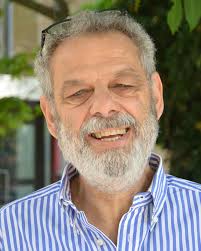 Thomas Parisini合作论文数Department of Electrical and Electronic Engineering, Faculty of Engineering, Imperial College London;Aalborg University;University of Trieste5Daniel Sbarbaro合作论文数5
 Jörg Müller合作论文数Faculty of Mathematics, Physics and Computer Science, University of Bayreuth5C. Anagnostopoulos合作论文数National and Kapodistrian University of Athens, Department of Informatics and Telecommunication5
 Ke Yuan合作论文数4
 Oisín Moran合作论文数Univ Glasgow, Sch Comp Sci, Glasgow, Lanark, Scotland4




