We present a systematic investigation of deep learning methods applied to quantum error mitigation of noisy output probability distributions from measured quantum circuits. We compare different architectures, from fully connected neural networks to transformers, and we test different design/training modalities, identifying sequence-to-sequence, attention-based models as the most effective on our datasets. These models consistently produce mitigated distributions that are closer to the ideal outputs when tested on both simulated and real device data obtained from IBM superconducting quantum processing units (QPU) up to five qubits. Across several different circuit depths, our approach outperforms other baseline error mitigation techniques. We perform a series of ablation studies to examine: how different input features (circuit, device properties, noisy output statistics) affect performance; cross-dataset generalization across circuit families; and transfer learning to a different IBM QPU. We observe that generalization performance across similar devices with the same architecture works effectively, without needing to fully retrain models.
The linear combination of unitaries (LCU) method has proven to scale better than existing product formulas in simulating long time Hamiltonian dynamics. However, given the number of multi-control gate operations in the standard prepare-select-unprepare architecture of LCU, it is still resource-intensive to implement on the current quantum computers. In this work, we demonstrate LCU implementations on an ion trap quantum computer for calculating squared overlaps vertical bar 0)>|(2) of time-evolved states. This is achieved by an optimized LCU method, based on pre-selecting relevant unitaries, coupled with a compilation strategy which makes use of quantum multiplexor gates, leading to a significant reduction in the depth and number of two-qubit(2Q) gates in circuits. For L Pauli strings in a Taylor series expanded n-qubit-mapped time evolution operator, we find a 2Q gate count of 2 (inverted right perpendicular log2(L) inverted left perpendicular) (2n+1)-n-2. We test this approach by simulating a Rabi-Hubbard Hamiltonian.
Quantum computers require both high-fidelity operations and large qubit numbers to surpass classical capabilities1. Trapped-ion platforms have demonstrated the highest gate fidelities of any modality2–6 but scaling to larger qubit numbers while preserving performance has remained a central challenge. We report on Quantinuum Helios, a 98-qubit trapped-ion quantum processor based on the quantum charge-coupled device (QCCD) architecture7. Helios features 137Ba+ hyperfine qubits8,9, all-to-all connectivity enabled by a rotatable ion storage ring connecting two quantum operation regions by a junction10,11, speed improvements from parallelized operations12 and a new software stack with real-time compilation of dynamic programs13. Averaged over all operational zones in the system, we achieve average infidelities of 2.5(1) × 10−5 for single-qubit (1Q) gates, 7.9(2) × 10−4 for two-qubit (2Q) gates and 3.3(5) × 10−4 for state preparation and measurement (SPAM), none of which are fundamentally limited and probably able to be improved. These component infidelities are predictive of system-level performance in both random Clifford circuits and random circuit sampling (RCS), the latter demonstrating that Helios operates well beyond the reach of classical simulation and establishes a new frontier of fidelity and complexity for quantum computers14. A new quantum computer, Quantinuum Helios, which is a 98-qubit trapped-ion quantum processor built on the QCCD architecture, demonstrates performance well beyond classical capabilities and provides a path for scaling up quantum computing.
Noise detrimentally affects quantum computations so that they not only become less accurate but also easier to simulate classically as systems scale up. We construct a classical simulation algorithm, lowesa (low weight efficient simulation algorithm), for estimating expectation values of noisy parameterised quantum circuits with a fixed observable. It combines previous results on spectral analysis of parameterised circuits with Pauli back-propagation and recent ideas for simulations of noisy random circuits. We show, under some conditions on the circuits and mild assumptions on noise, that lowesa gives an efficient, polynomial algorithm in the number of qubits (and depth), with approximation error that vanishes exponentially in the physical error rate and a controllable cutoff parameter. This is valid for any expectation value that may be efficiently evaluated on a quantum computer. We discuss the practical limitations of the method for circuit classes with correlated parameters and its scaling with decreasing error rates.
We report on Quantinuum Helios, a 98-qubit trapped-ion quantum processor based on the quantum charge-coupled device (QCCD) architecture. Helios features $^{137}$Ba$^{+}$ hyperfine qubits, all-to-all connectivity enabled by a rotatable ion storage ring connecting two quantum operation regions by a junction, speed improvements from parallelized operations, and a new software stack with real-time compilation of dynamic programs. Averaged over all operational zones in the system, we achieve average infidelities of $2.5(1)\times10^{-5}$ for single-qubit gates, $7.9(2)\times10^{-4}$ for two-qubit gates, and $4.8(6)\times10^{-4}$ for state preparation and measurement, none of which are fundamentally limited and likely able to be improved. These component infidelities are predictive of system-level performance in both random Clifford circuits and random circuit sampling, the latter demonstrating that Helios operates well beyond the reach of classical simulation and establishes a new frontier of fidelity and complexity for quantum computers.
We introduce the Hierarchical Unified Graph Representation (HUGR): a novel graph based intermediate representation for mixed quantum-classical programs. HUGR's design features high expressivity and extensibility to capture the capabilities of near-term and forthcoming quantum computing devices, as well as new and evolving abstractions from novel quantum programming paradigms. The graph based structure is machine-friendly and supports powerful pattern matching based compilation techniques. Inspired by MLIR, HUGR's extensibility further allows compilation tooling to reason about programs at multiple levels of abstraction, lowering smoothly between them. Safety guarantees in the structure including strict, static typing and linear quantum types allow rapid development of compilation tooling without fear of program invalidation. A full specification of HUGR and reference implementation are open-source and available online.
We present ongoing work on Guppy, a domain-specific language embedded in Python that allows users to write high-level hybrid quantum programs with complex control flow in Pythonic syntax, aiming to run them on actual quantum hardware.
Linear types enforce no-cloning and no-deleting theorems in functional quantum programming. However, in imperative quantum programming, they have not gained widespread adoption. This work aims to develop a quantum type system that combines ergonomic linear typing with imperative semantics and maintains safety guarantees. All ideas presented here have been implemented in Quantinuum's Guppy programming language.
We consider a heterogeneous network of quantum computing modules, sparsely connected via Bell states. Operations across these connections constitute a computational bottleneck and they are likely to add more noise to the computation than operations performed within a module. We introduce several techniques for transforming a given quantum circuit into one implementable on a network of the aforementioned type, minimising the number of Bell states required to do so. We extend previous works on circuit distribution over fully connected networks to the case of heterogeneous networks. On the one hand, we extend the hypergraph approach of [Andres-Martinez & Heunen. 2019] to arbitrary network topologies. We additionally make use of Steiner trees to find efficient realisations of the entanglement sharing within the network, reusing already established connections as often as possible. On the other hand, we extend the embedding techniques of [Wu, et al. 2022] to networks with more than two modules. Furthermore, we discuss how these two seemingly incompatible approaches can be made to cooperate. Our proposal is implemented and benchmarked; the results confirming that, when orchestrated, the two approaches complement each other's weaknesses.
We introduce an embedding-enhanced nonlocal-handling technique to save the entanglement consumption in distributed quantum computing (DQC) between two quantum processing units. The embedding technique is incorporated into the Steiner-tree distribution for DQC over heterogeneous networks.
We introduce a categorical formalism for rewriting surface-embedded graphs. Such graphs can represent string diagrams in a non-symmetric setting where we guarantee that the wires do not intersect each other. The main technical novelty is a new formulation of double pushout rewriting on graphs which explicitly records the boundary of the rewrite. Using this boundary structure we can augment these graphs with a rotation system, allowing the surface topology to be incorporated.
We propose a new algorithm to synthesise quantum circuits for phase polynomials, which takes into account the qubit connectivity of the quantum computer. We focus on the architectures of currently available NISQ devices. Our algorithm generates circuits with a smaller CNOT depth than the algorithms currently used in Staq and tket, while improving the runtime with respect the former.
The detrimental effect of noise accumulates as quantum computers grow in size. In the case where devices are too small or noisy to perform error correction, error mitigation may be used. Error mitigation does not increase the fidelity of quantum states, but instead aims to reduce the approximation error in quantities of concern, such as expectation values of observables. However, it is as yet unclear which circuit types, and devices of which characteristics, benefit most from the use of error mitigation. Here we develop a methodology to assess the performance of quantum error mitigation techniques. Our benchmarks are volumetric in design, and are performed on different superconducting hardware devices. Extensive classical simulations are also used for comparison. We use these benchmarks to identify disconnects between the predicted and practical performance of error mitigation protocols, and to identify the situations in which their use is beneficial. To perform these experiments, and for the benefit of the wider community, we introduce Qermit – an open source python package for quantum error mitigation. Qermit supports a wide range of error mitigation methods, is easily extensible and has a modular graph-based software design that facilitates composition of error mitigation protocols and subroutines.
We investigate the effects of noise on parameterised quantum circuits using spectral analysis and classical signal processing tools. For different noise models, we quantify the additional, higher frequency modes in the output signal caused by device errors. We show that filtering these noise-induced modes effectively mitigates device errors. When combined with existing methods, this yields an improved reconstruction of the noiseless variational landscape. Moreover, we describe the classical and quantum resource requirements for these techniques and test their effectiveness for application motivated circuits on quantum hardware.
We present Tierkreis, a higher-order dataflow graph program representation and runtime designed for compositional, quantum-classical hybrid algorithms. The design of the system is motivated by the remote nature of quantum computers, the need for hybrid algorithms to involve cloud and distributed computing, and the long-running nature of these algorithms. The graph-based representation reflects how designers reason about and visualise algorithms, and allows automatic parallelism and asynchronicity. A strong, static type system and higher-order semantics allow for high expressivity and compositionality in the program. The flexible runtime protocol enables third-party developers to add functionality using any language or environment. With Tierkreis, quantum software developers can easily build, visualise, verify, test, and debug complex hybrid workflows, and immediately deploy them to the cloud or a custom distributed environment.
We employ spectral analysis and compressed sensing to identify settings where a variational algorithm's cost function can be recovered purely classically or with minimal quantum computer access. We present theoretical and numerical evidence supporting the viability of sparse recovery techniques. To demonstrate this approach, we use basis pursuit denoising to efficiently recover simulated Quantum Approximate Optimization Algorithm (QAOA) instances of large system size from very few samples. Our results indicate that sparse recovery can enable a more efficient use and distribution of quantum resources in the optimisation of variational algorithms.
Quantum computing systems need to be benchmarked in terms of practical tasks they would be expected to do. Here, we propose 3 "application-motivated" circuit classes for benchmarking: deep (relevant for state preparation in the variational quantum eigensolver algorithm), shallow (inspired by IQP-type circuits that might be useful for near-term quantum machine learning), and square (inspired by the quantum volume benchmark). We quantify the performance of a quantum computing system in running circuits from these classes using several figures of merit, all of which require exponential classical computing resources and a polynomial number of classical samples (bitstrings) from the system. We study how performance varies with the compilation strategy used and the device on which the circuit is run. Using systems made available by IBM Quantum, we examine their performance, showing that noise-aware compilation strategies may be beneficial, and that device connectivity and noise levels play a crucial role in the performance of the system according to our benchmarks.
We present t | ket ⟩, a quantum software development platform produced by Cambridge Quantum Computing Ltd. The heart of t | ket ⟩ is a language-agnostic optimising compiler designed to generate code for a variety of NISQ devices, which has several features designed to minimise the influence of device error. The compiler has been extensively benchmarked and outperforms most competitors in terms of circuit optimisation and qubit routing.
Generative models, and Generative Adversarial Networks (GAN) in particular, are being studied as possible alternatives to Monte Carlo simulations. It has been proposed that, in certain circumstances, simulation using GANs can be sped-up by using quantum GANs (qGANs). We present a new design of qGAN, the dual-Parameterized Quantum Circuit(PQC) GAN, which consists of a classical discriminator and two quantum generators which take the form of PQCs. The first PQC learns a probability distribution over N-pixel images, while the second generates normalized pixel intensities of an individual image for each PQC input. With a view to HEP applications, we evaluated the dual-PQC architecture on the task of imitating calorimeter outputs, translated into pixelated images. The results demonstrate that the model can reproduce a fixed number of images with a reduced size as well as their probability distribution and we anticipate it should allow us to scale up to real calorimeter outputs.
 Seyon Sivarajah合作论文数Quantinuum6
 Cristina Cirstoiu合作论文数Cambridge Quantum Ltd5
 Simon Perdrix合作论文数Leibniz Laboratory5
 Bob Coecke合作论文数Department of Computer Science, University of Oxford;Wolfson College, University of Oxford;Quantinuum;Perimeter Institute5
 Aleks Kissinger合作论文数Department of Computer Science, University of Oxford5Will Simmons合作论文数4
 Alexander Cowtan合作论文数Cambridge Quantum Comp4
 Silas Dilkes合作论文数4
 Daniel Mills合作论文数Cambridge Quantum Comp Ltd4
 Enrico Fontana合作论文数Natl Phys Lab, Teddington TW11 0LW, England4Ivan Rungger合作论文数School of Physics;Trinity College;School of Physics, Trinity College4
 Daniel Hothem合作论文数Sandia National Laboratories3Russell Stutz合作论文数3Andrew Schaffer合作论文数3Karl Mayer合作论文数3
 Anthony Ransford合作论文数Quantiunuum3Conrad Roman合作论文数Dept Phys & Astron, Univ Calif Los Angeles3
 Quanlong Wang合作论文数Cambridge Quantum3
 Burdick Nathaniel Q合作论文数Stanford University, Stanford University3Estey Brian合作论文数3
 Timothy Proctor合作论文数Quantum Performance Laboratory, Sandia National Laboratories3M. Foss-Feig合作论文数National Institute of Standards and Technology (NIST),, University of Maryland3Figgatt C合作论文数Department of Physics and National Institute of Standards and Technology, University of Maryland3John P Gaebler合作论文数Quantinuum3
 Vittorini Grahame合作论文数School of Physics, Georgia Institute of Technology3
 Lucas Dixon合作论文数Google DeepMind3Kevin C. Young合作论文数3
 Robin Blume-Kohout合作论文数Theory Division3
 Ian Hoffman合作论文数3
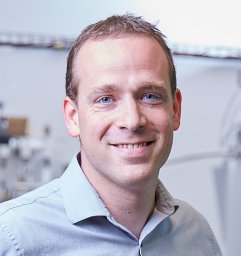 Brian Neyenhuis合作论文数University of Colorado;Department of Physics;University of Colorado, University of Colorado3Curtis E. Volin合作论文数Optical Sciences Center, University of Arizona3Conor Delaney合作论文数2D. Hayes合作论文数2David B. Miller合作论文数2Tim Forrer合作论文数2
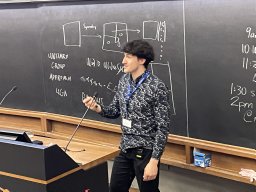 Nathan Fitzpatrick合作论文数Cambridge Quantum Comp Ltd2
 Kartik Singhal合作论文数University of Chicago2Agustín Borgna合作论文数2Luciana Henaut合作论文数2Pablo Andrés-Martínez合作论文数2
 Jun-Yi Wu合作论文数2
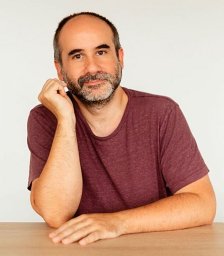 David Munoz Ramo合作论文数Quantinuum2
 Kentaro Yamamoto合作论文数Department of Agricultural Chemistry, University of Tokyo2
 Samson Abramsky合作论文数Department of Computer Science, University College London2
 Michael James Mills合作论文数Sandia National Laboratories, Livermore, CA 94551-0969, USA2
 Andrew C. Potter合作论文数Department of Physics;Massachusetts Institute of Technology;Department of Physics, Massachusetts Institute of Technology2Alexander Wilce合作论文数Department of Mathematical Sciences;Susquehanna University;Department of Mathematical Sciences, Susquehanna University2Mio Murao合作论文数Department of Physics;Graduate School of Science;University of Tokyo;Graduate School of Science, University of Tokyo2




