Computing's dominant concepts - innovation, efficiency, resilience, professionalism - often migrate from reflective ideals to instruments that limit behaviour, redirect responsibility, and foreclose critique. We call this drift weaponisation: the discursive repurposing of professional concepts so that they stabilise business-as-usual while making structural alternatives appear unreasonable, illegible, or out of scope. Using collective autoethnography across education, justice, public administration, research management, and computing, we identify recurring mechanisms (simplification, individualisation, binary framing, metric substitution, hero/resilience scripts, organised ignorance). From this synthesis we propose Reframing - peaceful, practice-ready shifts (e.g., From Simplified Slogans to Structural Literacy; From Performative Compliance to Meaningful Outcomes; From Coping to Justice) - each paired with a 'do-now' prompt. The levers restore complexity, surface assumptions, and redirect attention to structural conditions without requiring formal authority. We contribute: (1) a cross-field account of weaponisation as a patterned phenomenon; (2) a portable reframing toolkit grounded in narrative and systems thinking; and (3) implications for computing within limits, including day-to-day practice shifts toward care, sufficiency, and justice.
Sustainable ICT is an emerging field that integrates ethical, environmental, and technical perspectives, yet there is little guidance on the role of computing professionals in advancing sustainable practice. Despite the increasing focus on sustainability in computing, there is no established framework to define the responsibilities of ICT professionals in this space. Existing research in ICT for Sustainability (ICT4S) has explored the environmental impacts of computing and the role of technology in supporting sustainability goals, but it has not adequately addressed how ICT professionals should navigate their ethical and professional responsibilities in this evolving field. This research introduces a story retelling methodology, drawing from Indigenous and decolonial storytelling traditions, to bridge the gap between sustainability principles and professional practice in ICT. Using an action-based, iterative process, we used storytelling cycles to critically reflect on their roles, responsibilities, and ethical decision-making in sustainable computing, capturing insights through qualitative narratives, and articulating a decolonised professional framework of practice for ICT professionals. This approach provides a decolonial framework that clarifies the role of computing professionals in sustainable ICT, offering practical guidance for future practitioners and contributing to a more inclusive and ethically grounded professional practice.
Generative AI (GenAI) presents societal and ethical challenges related to equity, academic integrity, bias, and data provenance. This working group will consider the ethical and societal impacts of GenAI in higher computing education. In this paper, we outline the goals, methodology and expected deliverables of the working group. In particular, we will carry out a systematic literature review to address a wide set of issues and topics covering the rapidly emerging technology of GenAI from the perspective of its ethical and social impacts, we will provide an evaluation of university policies on the adoption and guidelines for use of GenAI for computing education and develop a framework to outline the ethical and societal impacts of GenAI in computing education. This work synthesizesexisting research and considers the implications for educational and professional codes of ethics.
There is a mismatch between established practice in learning design and the increasingly complex nature of the challenges the world is facing. This article connects learning design to complexity science so learners can be better equipped to create a thriving future. Learning Design methods have traditionally leant heavily upon the reduction of learning into consumable units of knowledge, skill, or understanding, that constructively align to create higher-level learning. Those structured and predetermined outcomes assume a level of order and predictability that is not applicable to all contexts, and even less applicable the more volatile, unpredictable, rapidly changing our world becomes. This practice places the learning designer as passive and complicit in perpetuating those challenges. Learning design can lean upon complexity science to treat learning as a complex adaptive system of interrelated and co-dependent parts. When the Anthro-complexity approach of the Cynefin Framework is applied to the design of learning experiences for climate action and decolonisation, this sense-making framework identifies opportunities to change praxis so that the learners are better prepared to address wicked problems in an increasingly complex world. These are changes that learning designers need to lead in an ethical and considered fashion.
Sustainability-driven computing research - encompassing equity, diversity, climate change, and social justice - is increasingly dismissed as woke or even dangerous in many sociopolitical contexts. As misinformation, ideological polarisation, deliberate ignorance and reactionary narratives gain ground, how can sustainability research in computing continue to exist and make an impact? This paper explores these tensions through Fictomorphosis, a creative story retelling method that reframes contested topics through different genres and perspectives. By engaging computing researchers in structured narrative transformations, we investigate how sustainability-oriented computing research is perceived, contested, and can adapt in a post-truth world.
In this series we take a significant contribution to the visual representation of sustainability, and probe it for insights for computing. In a post-structuralist approach, we present this as a dialogue.
Computing has repeatedly proven its ability to change the world. Each new advancement of technology provides more power, speed, and efficiency, unleashing changes that would seem almost magical only a few years before. But even as each new thing becomes everyday, it also unleashes new challenges -- unexpected ethical dilemmas and often worsening cultural, environmental, and social injustices. As computing educators, we like to bask in the glow of our graduates' innovative abilities but we must also remain complicit in computing's capacity for harm. We might teach ideas of computing ethics or sustainability, but these mostly get relegated to soft skills ''thank goodness I've finished that ethics course, now can I get back to computing?''. I argue this problem can largely be traced back to computing's lack of purpose -- or an immature notion of a computing profession that lacks its own set of values and so accepts by default the neoliberal role as an enabler of efficiency. In this talk, I take a professional practice approach to consider how we might better integrate a hopeful and regenerative approach to computing education. I describe a professional framework of practice and its application in ethics, sustainability and decolonising computing and then provide examples of how these can be better integrated into computing education. I conclude with a manifesto for computing education.
There is an increasing recognition that computing education and the profession of computing has failed indigenous learners around the world. In this paper we argue for a reform of tertiary education's computing curricula so that they address the needs of both indigenous and non-indigenous learners. To achieve this, we must first consider the role of computing as a negative colonising force that continues to the present. This paper integrates traditional methods of storytelling to provide context for a reframing of computing as a decolonising force. A case study of the New Zealand context where Mori have been underserved by both computing education and the computing profession, is used to identify systemic barriers. We propose a process of partnership that empowers indigenous communities to work with industry and education to imagine a computing profession that positively contributes to thriving decolonised practice. And then how can computer science education contribute to that? We then canvas some potential directions a transformation of computing education might take. This paper is not intended to replace or pre-empt partnerships or indigenous self-determination, but to inspire computer science educators towards developing an approach that improves outcomes for all learners.
There is an increasing recognition that computing education and the profession of computing has failed indigenous learners around the world. ACM has responded to this through a focus on diversity, equity and inclusion. This Special Session progresses this work by bringing together diverse voices in panel and audience to look towards a decolonised future for CSEd. This Session integrates traditional methods of storytelling to provide context for a reframing of computing as a decolonising force. We start with sharing stories of the impact of colonised computing, then use these as motivation for envisioning the role and shape a transformation of computing education might take. The session concludes with an exercise on options for Indigenous communities and their allies such as ACM to form partnerships to empower Indigenous communities to work with industry and education to imagine a computing profession and CS education that positively contributes to thriving decolonised practice. This session is aimed at all who are interested in progressing the CS curriculum towards a thriving, equitable and inclusive CSEd experience for Indigenous and non-Indigenous learners.
Decolonising Vocational Computing Education by Mawera Karetai (Te Whare Wānanga o Awanuiārangi) Samuel Mann, Rachel McNamara (College of Work-based Learning, Otago Polytechnic, Te Pūkenga New Zealand Institute of Skills and Technology)
This paper presents MetaMAP: a new graphical tool and framework for designing well-integrated sustainability initiatives, and managing synergies and trade-offs regarding the Sustainable Development Goals (SDGs). The SDGs are highly interconnected, but many institutional structures and thinking paradigms lead us to look at them in isolation. This stifles innovation and social transformation. Most tools and frameworks, while valuable, focus on analysis, not design, and are limited to a particular discipline, sector, SDG, or geographic scale. Without holistic frameworks and collaborative tools, many sustainability practitioners may be playing chess without a board. To support a more integrated approach to achieve the SDGs, MetaMAP resembles architectural design tools which help users to synthesise knowledge, reframe complex situations, and identify stakeholders, leverage points, synergies, and trade-offs. MetaMAP applies a new meta-framework to organise concept maps developed collaboratively by interdisciplinary teams following a guided process. This framework integrates components of the natural environment, built environment, and society across multiple spatial and temporal scales. It incorporates concepts from social-ecological systems, planetary boundaries, design thinking, integral theory, ecosystem services, and ecological footprint, among others. MetaMAP was designed with input from over 170 people from diverse disciplines in five workshops, numerous case studies, and critique. This article demonstrates MetaMAP through its application to a case study in which a multidisciplinary team analysed the impacts of an Ecovillage across scales and designed synergetic initiatives. We then critique MetaMAP from four disciplinary perspectives. We envision that MetaMAP will support the design of sustainability initiatives which are more efficient, more broadly supported, and contribute to multiple SDGs simultaneously. By taking a systems view and applying design thinking, MetaMAP helps users to understand interlinkages, maximise synergies, and minimise trade-offs when designing specific SDG initiatives.
One impact of the global pandemic of 2020 was a rapid shift in the delivery of work-integrated learning (WIL) to remote activity among WIL practitioners, students and educators alike. Along with professional practice research in higher degrees, WIL practice, including placements and non-placements, responded actively and sometimes reactively to the challenges of sudden transition to online environments. What strategies - pivots and pirouettes - did WIL practitioners use to weather the storm of Covid-19? What does this tell us about the nature of WIL? This paper captures the seemingly overnight response to shifting work-based learning to online and other spaces. With change came the opportunity to reflect on the varying areas of WIL: from the practical processes of ensuring students are cared for to pivoting to the learning opportunities it presented in building digital literacies and adapting to the global future of work. This study is a Trans-Tasman collaboration of four WIL practitioners exploring their responsiveness to disruption in WIL contexts. We present collective autoethnographic responses to such themes as disruption, becoming resilient, pivoting to change, changing perceptions of WIL and the legacies of the pandemic. These themes apply to learners and educators alike, and our words embody the experiences of both groups. Our responses to phenomena highlighted this need for resilience and agility. Methodologically, the researchers' micro-narrative responses to key themes structure themselves into a macro-narrative that demonstrates the lived experiences of the researchers as educators in the WIL space and explores implications for ongoing and future practice.
We investigate engaging a computer science conference audience in sketching responses to the event as it occurs. In particular, we explore the response to inviting those present to engage in what is essentially an off-line, co-located, attendee-sourcing experience. Sketchnoting is a popular practice for documenting events, but these sketched records can be limited in scope at multi-track conferences, and paid professionals can be unaffordable at smaller events. Our challenges included: working with an audience with little or no experience of sketching or working with imagery; who were unaware of the possible benefits; and whose attendee engagement was variable - with individuals often working on laptops rather than actively listening during sessions. In order encourage engagement we hosted a pre-conference workshop, developed a conference-specific set of visual icons, and created prompt materials. This resulted in a remarkable visual record of the event, and also an increase in active listening and engagement.
In recent years responsible innovation has gained significant traction and can be seen to adorn a myriad of research platforms, education programs, and policy frameworks. In this workshop, we invite HCI researchers to discuss the relations between the CHI community and responsible innovation. This workshop looks to build provocations and principles for and with HCI researchers who are or wish to become responsible innovators. The workshop looks to do this by asking attendees to think about the social, environmental, and economic impacts of ICT and HCI and explore how research innovation frameworks speak to responsible HCI innovation. Through the workshop we look to examine 5 questions to develop a set of provocations and principles, which will help encourage HCI and computer science researchers, educators, and innovators to reflect on the impact of their research and innovation.
Design disciplines have a long history of creating well-integrated solutions to challenges which are complex, uncertain and contested by multiple stakeholders. Society faces similar challenges in implementing the Sustainable Development Goals, so design methods hold much potential. While principles of good design are well established, there has been limited integration of design thinking with sustainability science. To advance this integration, we examine the process of designing MetaMAP: an interactive graphic tool for collaborating to understand social-ecological systems and design well-integrated solutions. MetaMAP was created using Research through Design methods which integrate creative and scientific thinking. By applying design thinking, researchers and practitioners from different backgrounds undertook multiple cycles of problem framing, solution development, testing and reflection. The testing was highly collaborative involving over 150 people from diverse disciplines in workshops, case studies, interviews and critique. Reflecting on this process, we discuss design principles and opportunities for integrating design thinking with sustainability science to help achieve Sustainable Development Goals.
Heutagogy provides an approach to adult education that is based on learner determined learning and it recognises that this requires a transformation of learning processes beyond a teacher-delivered focus on content. But there are few guidelines or even descriptions of application of heutagogy to whole programmes of learning, and none on the application of this to Computing Education. In this paper we describe a case study of an independent learning pathway approach whereby heutagogy is the underlying principle for work-based learning professional practice programmes for computing professionals. Questions for further development and research are discussed.
 Lesley Smith合作论文数16
 Lisa Nathan合作论文数School of Information, Faculty of Arts, The University of British Columbia13
 Daniela K. Busse合作论文数SAP Labs, Palo Alto, CA, USA10
 Oliver Bates合作论文数Lancaster University8
 Chris Preist合作论文数University of Bristol7
 Eli Blevis合作论文数Luddy School of Informatics, Computing, and Engineering, Indiana University6Ray Maher合作论文数4
 Mawera Karetai合作论文数4Nell Smith合作论文数4
 Christian Remy合作论文数University of Zurich4
 Clive Mcalpine合作论文数School of the Environment, The University of Queensland;School of Earth and Environmental Sciences, The University of Queensland4
 Alison Clear合作论文数3
 Kerry Shephard合作论文数Higher Education Development Centre, University of Otago3Alison Young合作论文数3Logan Muller合作论文数3
 Vanessa Thomas合作论文数Vanessa Thomas is a science writer based in Baltimore, Maryland. Richard Webb is a features editor for3
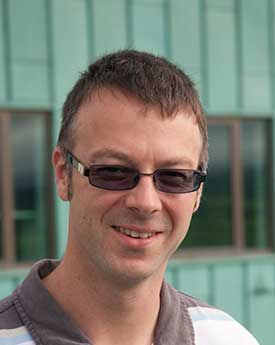 Adrian Friday合作论文数Lancaster University Computing and Communications3
 Adrian K. Clear合作论文数School of Computer Science, University of Galway3Mike Lopez合作论文数2
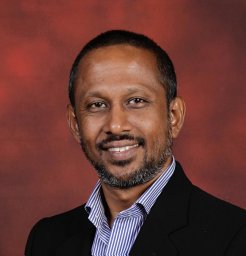 Dhammika (Dave) Guruge合作论文数2Dobrila Lopez合作论文数2J. C. Thomas合作论文数IBM T. J. Watson Research Center2
 Yue Pan合作论文数Indiana University Bloomington2
 Tony Clear合作论文数Auckland University of Technology2
 Bonnie Nardi合作论文数Department of Informatics, Donald Bren School of Information and Computer Sciences, University of California, Irvine;Institute for Software Research, University of California, Irvine2
 Ben Shneiderman合作论文数Department of Computer Science, Brendan Iribe Center for Computer Science and Engineering, University of Maryland;Human-Computer Interaction Laboratory, College of Information Studies, University of Maryland;Institute for Systems Research, University of Maryland;Institute for Advanced Computer Studies, University of Maryland2
 Alan Borning合作论文数Paul G Allen School of Computer Science and Engineering, University of Washington;The Taskar Center for Accessible Technology, Department of Computer Science and Engineering, University of Washington2Phil Osborne合作论文数University of Otago2
 Sherlock A. Licorish合作论文数Department of Information Science, University of Otago2
 Tad Hirsch合作论文数Straight from the labs of MIT comes the voice of Tad Hirsch, activist, inventor, artist2
 Nell Buissink合作论文数2Lynley Deaker合作论文数2Andy Williamson合作论文数2
 Maria Hakansson合作论文数Future Applications Lab;Viktoria Institute;Future Applications Lab, Viktoria Institute2
 Andrea Grimes Parker合作论文数School of Interactive Computing, College of Computing, Georgia Institute of Technology;Google Research2
 Bran Knowles合作论文数School of Computing and Communications, Faculty of Science and Technology, Lancaster University;Centre of Excellence in Environmental Data Science, Faculty of Science and Technology, Lancaster University1Bryan Nunez合作论文数1Scott R. Portnoff合作论文数1Glenys Forsyth合作论文数1Gail T. Finley合作论文数1chris mccarthy合作论文数1David Hursthouse合作论文数1Kylie Ellis合作论文数1Glenys Ker合作论文数1Beate Mueller合作论文数1
 Miriam Sturdee合作论文数School of Computer Science, University of St Andrews1
 Ray O'Brien合作论文数Sustainabil, Univ Otago1
 Ismaila Temitayo Sanusi合作论文数Sch Comp, Univ Eastern Finland1
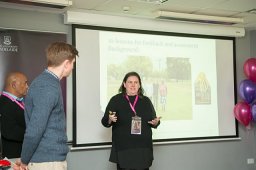 Melissa Connor合作论文数Univ Adelaide1




