A fala natural é organizada em unidades compostas por segmentos cujas fronteiras são marcadas por elementos prosódicos. Métodos têm sido propostos para identificar automaticamente tais unidades, levando em consideração os elementos prosódicos e visando aprimorar tarefas que envolvem a automatização da fala, como a conversão de texto em voz e a transcrição da fala. O método apresentado em Craveiro et al. (2025), que inclui um classificador treinado em português brasileiro (PB), revelou-se capaz de realizar previsões adequadas quanto à identificação dessas unidades de fala em uma amostra de dados dessa variedade do português. O presente trabalho pretende replicar esse método em uma nova amostra de dados do PB, a fim de verificar se os mesmos resultados são obtidos em uma nova condição. Espera-se que os resultados da nova amostra se aproximem daqueles alcançados no estudo original, por meio das mesmas métricas, ferramentas e técnicas estatísticas que foram empregadas.
This paper presents a systematic review on the relationship between prosody and speech synthesis, focusing on the evaluation of prosodic parameters of synthesized speech. The relevance of the topic lies in the fact that the task of speech synthesis has not yet been resolved, therefore the information obtained in this review can contribute to knowledge and to the improvement of the methodologies used in evaluating the prosody of synthesized speech. To select studies, we used the Parsifal platform, including 100 studies published between 2020 and 2024, with the purpose of answering eight previously established research questions. The highlights of this systematic review are presented in the following. The main prosodic parameters considered in speech synthesis systems are fundamental frequency (F0), duration and intensity, with F0 standing out (95 studies). The metric most frequently used in studies belongs to the group of acoustic metrics --- F0-RMSE (Root mean-squared error evaluation of F0). Lower values of this metric indicate greater proximity between the F0 of synthesized speech and that of natural speech. The most used dataset was LJ Speech, a public domain speech dataset consisting of English audio clips of a single speaker reading short excerpts from seven non-fiction books, reinforcing that the predominant language was English --- 48 studies focus on English to evaluate speech description prosody, although there is a relevant number of studies in Mandarin Chinese (27 studies) and Japanese (15 studies).Most studies used models as a baseline to compare the performance of their methods or proposed new models in order to improve the prosody of synthesized speech. Each study presented different methods for this improvement, according to the objectives, such as learning prosodic features extracted from reference speech and adding auxiliary modules to existing model architectures. As highlighted baselines, there was recurrent use of Tacotron 2, which generates mel-spectrograms from text and then synthesize speech from the generated mel-spectrograms using a separately trained vocoder, and FastSpeech 2, which can extract explicit prosodic features to be directly used as entry into training.
We present a freely available spontaneous speech corpus for the Brazilian Portuguese language and report preliminary automatic speech recognition (ASR) results, using both the Wav2Vec2-XLSR-53 and Distil-Whisper models fine-tuned and trained on our corpus. The NURC-SP Audio Corpus comprises 401 different speakers (204 females, 197 males) with a total of 239.30 h of transcribed audio recordings. To the best of our knowledge, this is the first large Paulistano accented spontaneous speech corpus dedicated to the ASR task in Portuguese. We first present the design and development procedures of the NURC-SP Audio Corpus, and then describe four ASR experiments in detail. The experiments demonstrated promising results for the applicability of the corpus for ASR. Specifically, we fine-tuned two versions of Wav2Vec2-XLSR-53 model, trained a Distil-Whisper model using our dataset with labels determined by Whisper Large-V3 model, and fine-tuned this Distil-Whisper model with our corpus. Our best results were the Distil-Whisper fine-tuned over NURC-SP Audio Corpus with a WER of 24.22
Evaluating Text-To-Speech (TTS) systems is challenging, as the increasing quality of synthesis makes it difficult to discriminate models’ ability to reproduce prosodic attributes, especially for Brazilian Portuguese. Offline evaluation metrics do not capture our genuine reactions to audio stimuli. Therefore, we propose an online evaluation method using eye-tracking. Our experiments with 76 annotators show a reasonable correlation between EyetrackingMOS and MOS, as well as a reduction in the total evaluation time. We believe this metric provides precise and potentially fast information to complement existing evaluation methods.
Introduction: Discourse is one of the main linguistic aspects affected by Alzheimer’s Disease (AD) and its relationship with memory needs to be further studied, mainly in low education and low socioeconomic status (SES) groups. The present study aimed at investigating differences in the recall of short narratives between participants with mild AD (AD) and a control group of typical older adults (CG) with the use of automatic assessment. Methods: 17 older adults diagnosed with AD (mean age 76.41, mean education 5,82) and 34 typical older adults (mean age 74.26, mean education 7.09) were asked to listen to and then retell a short story. Syntactic, lexical, and semantic features were assessed via the NILC-Metrix software, and the features were correlated with episodic, working, and semantic memory assessment. Results: Differences were found in 7 of the 34 features assessed. Syntactically, the group diagnosed with AD produced narratives with fewer sentences, fewer words per sentence, and lower Yngve depth scores. Lexically, the AD group produced narratives with fewer words and prepositions per sentence. Semantically, the narratives produced by the AD group featured words with a lower mean age of acquisition, and lower Brunét’s index scores. For the CG group, episodic memory performance correlated with the ratio of conjunctions. No other significant correlation was found for semantic and working memory in the CG. No correlation was found between memory performance and linguistic features for the AD group. Discussion: The automatic assessment of linguistic features showed impaired narrative recall in participants diagnosed with AD relative to healthy controls at the syntactic, lexical, and semantic levels of discourse. These findings corroborate previous literature showing a decline in discourse production performance resulting from cognitive impairment in AD. Conclusion: The assessment of linguistic performance through a narrative recall task provides valuable insights into cognitive decline related to Alzheimer’s disease.
We explore cross-lingual multi-speaker speech synthesis and cross-lingual voice conversion applied to data augmentation for automatic speech recognition (ASR) systems in low/medium-resource scenarios. Through extensive experiments, we show that our approach permits the application of speech synthesis and voice conversion to improve ASR systems using only one target-language speaker during model training. We also managed to close the gap between ASR models trained with synthesized versus human speech compared to other works that use many speakers. Finally, we show that it is possible to obtain promising ASR training results with our data augmentation method using only a single real speaker in a target language.
Automatic speech recognition (ASR) systems play a key role in applications involving human-machine interactions. Despite their importance, ASR models for the Portuguese language proposed in the last decade have limitations in relation to the correct identification of punctuation marks in automatic transcriptions, which hinder the use of transcriptions by other systems, models, and even by humans. However, recently Whisper ASR was proposed by OpenAI, a general-purpose speech recognition model that has generated great expectations in dealing with such limitations. This chapter presents the first study on the performance of Whisper for punctuation prediction in the Portuguese language. We present an experimental evaluation considering both theoretical aspects involving pausing points (comma) and complete ideas (exclamation, question, and fullstop), as well as practical aspects involving transcript-based topic modeling - an application dependent on punctuation marks for promising performance. We analyzed experimental results from videos of Museum of the Person, a virtual museum that aims to tell and preserve people's life histories, thus discussing the pros and cons of Whisper in a real-world scenario. Although our experiments indicate that Whisper achieves state-of-the-art results, we conclude that some punctuation marks require improvements, such as exclamation, semicolon and colon.
The objective of this paper is to present and make publicly available the NILC-Metrix, a computational system comprising 200 metrics proposed in studies on discourse, psycholinguistics, cognitive and computational linguistics, to assess textual complexity in Brazilian Portuguese (BP). The metrics are relevant for descriptive analysis and the creation of computational models and can be used to extract information from various linguistic levels of written and spoken language. The metrics were developed during the last 13 years, starting in the end of 2007, within the scope of the PorSimples project. Once the PorSimples finished, new metrics were added to the initial 48 metrics of the Coh-Metrix-Port tool. Coh-Metrix-Port adapted some metrics to BP from the Coh-Metrix tool that computes metrics related to cohesion and coherence of texts in English. Given the large number of metrics, we present them following an organisation similar to the metrics of Coh-Metrix v3.0 to facilitate comparisons made with metrics in Portuguese and English, in future studies using both tools. In this paper, we illustrate the potential of the NILC-Metrix by presenting three applications: (i) a descriptive analysis of the differences between children’s film subtitles and texts written for Elementary School I (comprises classes from 1st to 5th grade) and II (Final Years) (comprises classes from 6th to 9th grade, in an age group that corresponds to the transition between childhood and adolescence); (ii) a new predictor of textual complexity for the corpus of original and simplified texts of the PorSimples project; (iii) a complexity prediction model for school grades, using transcripts of children’s story narratives told by teenagers. For each application, we evaluate which groups of metrics are more discriminative, showing their contribution for each task.
Expressive oral language development (EOLD) in adolescence is understudied and usuallyinvolves a small set of language parameters. To explore this development in more detail, weused automated language analyses of transcripts of narrative speech (fairy-tale retellings) of257 Portuguese-speaking 9-15-year-olds. We grouped multiple linguistic parameters intoword/lexical, sentence/grammar and inter-sentence/cohesion category levels entered asmultivariate factors in general linear models considering the effects of development, sex andparental schooling. We found substantial EOLD at all levels, with negligible effects (exceptin one level) of sex, and parental schooling (a measure of participants’ socioeconomic status).Age (months), pubertal status and school grade generally showed comparable EOLD effects,suggesting sexual maturation and participants’ grade are not more determinant factors thanage. In summary, automated scoring of linguistic features of transcribed fairy-tale retellings isa sensitive, inexpensive, and ecological way of identifying EOLD in adolescence whichminimizes socioeconomic effects on oral language.
The NURC Project that started in 1969 to study the cultured linguistic urban norm spoken in five Brazilian capitals, was responsible for compiling a large corpus for each capital. The digitized NURC/SP comprises 375 inquiries in 334 hours of recordings taken in São Paulo capital. Although 47 inquiries have transcripts, there was no alignment between the audio-transcription, and 328 inquiries were not transcribed. This article presents an evaluation and error analysis of three automatic speech recognition models trained with spontaneous speech in Portuguese and one model trained with prepared speech. The evaluation allowed us to choose the best model, using WER and CER metrics, in a manually aligned sample of NURC/SP, to automatically transcribe 284 hours.
This article presents RastrOS, a new eye-tracking corpus of eye movement data from university students during silent reading of paragraphs of texts in Brazilian Portuguese (BP). The article shows the potential of the corpus for natural language processing (NLP) using it to evaluate the sentence complexity prediction task in BP and it also focuses on the description of NLP resources and methods developed to create the corpus. Specifically, we present: (i) the method used to select the corpus paragraphs from large corpora, using linguistic metrics and clustering algorithms; (ii) the platform for collecting the Cloze test, which is also responsible for creating the project datasets, and (iii) the hybrid semantic similarity method, based on word embedding models and contextualised word representations, used to generate semantic predictability norms. RastrOS can be downloaded from the open science framework repository with the computational infrastructure mentioned above. Datasets with predictability norms of 393 participants and eye-tracking data of 37 participants are available in the OSF repository for this work (https://osf.io/9jxg3/).
During the outbreak of COVID-19 pandemic, several research areas joined efforts to mitigate the damages caused by SARS-CoV-2. In this paper we present an interpretability analysis of a convolutional neural network based model for COVID-19 detection in audios. We investigate which features are important for model decision process, investigating spectrograms, F0, F0 standard deviation, sex and age. Following, we analyse model decisions by generating heat maps for the trained models to capture their attention during the decision process. Focusing on a explainable Inteligence Artificial approach, we show that studied models can taken unbiased decisions even in the presence of spurious data in the training set, given the adequate preprocessing steps. Our best model has 94.44% of accuracy in detection, with results indicating that models favors spectrograms for the decision process, particularly, high energy areas in the spectrogram related to prosodic domains, while F0 also leads to efficient COVID-19 detection.
Speech provides a natural way for human-computer interaction. In particular, speech synthesis systems are popular in different applications, such as personal assistants, GPS applications, screen readers and accessibility tools. However, not all languages are on the same level when in terms of resources and systems for speech synthesis. This work consists of creating publicly available resources for Brazilian Portuguese in the form of a novel dataset along with deep learning models for end-to-end speech synthesis. Such dataset has 10.5 hours from a single speaker, from which a Tacotron 2 model with the RTISI-LA vocoder presented the best performance, achieving a 4.03 MOS value. The obtained results are comparable to related works covering English language and the state-of-the-art in Portuguese.
Automatic Speech recognition (ASR) is a complex and challenging task. In recent years, there have been significant advances in the area. In particular, for the Brazilian Portuguese (BP) language, there were around 376 h publicly available for the ASR task until the second half of 2020. With the release of new datasets in early 2021, this number increased to 574 h. The existing resources, however, are composed of audios containing only read and prepared speech. There is a lack of datasets including spontaneous speech, which are essential in several ASR applications. This paper presents CORAA (Corpus of Annotated Audios) ASR with 290 h, a publicly available dataset for ASR in BP containing validated pairs of audio-transcription. CORAA ASR also contains European Portuguese audios (4.6 h). We also present a public ASR model based on Wav2Vec 2.0 XLSR-53, fine-tuned over CORAA ASR. Our model achieved a Word Error Rate (WER) of 24.18% on CORAA ASR test set and 20.08% on Common Voice test set. When measuring the Character Error Rate (CER), we obtained 11.02% and 6.34% for CORAA ASR and Common Voice, respectively. CORAA ASR corpora were assembled to both improve ASR models in BP with phenomena from spontaneous speech and motivate young researchers to start their studies on ASR for Portuguese. All the corpora are publicly available at https://github.com/nilc-nlp/CORAA under the CC BY-NC-ND 4.0 license.
 Arnaldo Candido Junior合作论文数Institute of Mathematical and Computer Sciences, University of São Paulo29
 Magali Sanches Duran合作论文数ICMC, University of São Paulo23
 Carolina Scarton合作论文数Department of Computer Science, School of Computer Science, University of Sheffield16
 Edresson Casanova合作论文数Institute of Mathematics and Computer Science, University of Sao Paulo14
 Christopher Shulby合作论文数13
 Caroline Gasperin合作论文数TransPerfect12Rachel Aires合作论文数12
 Sidney Evaldo Leal合作论文数11
 Erick Rocha Fonseca合作论文数Instituto de Ciências Matemáticas e de Computação, Universidade de São Paulo11
 Maria Das Graças Volpe Nunes合作论文数Núcleo Interinstitucional de Lingüística Computacional (NILC), São Carlos, SP, Brasil10
 Lucia Specia合作论文数Department of Computing, Faculty of Engineering, Imperial College London;Epic Games10
 Nathan Hartmann合作论文数10Leandro Borges dos Santos合作论文数University of São Paulo9
 Diana Santos合作论文数Linguateca, SINTEF ICT9Flaviane Romani Fernandes-Svartman合作论文数Universidade Estadual de Campinas9Thiago Alexandre Salgueiro Pardo合作论文数Instituto de Ciencias Matematicas e de Computa??o (ICMC) in Universidade de S?o Paulo (USP),S?o Carlos-SP, Brazil.9Lucas Rafael Stefanel Gris合作论文数8
 Valéria Delisandra Feltrim合作论文数Instituto de Ciências;Matemáticas e de Computação;Universidade de São Paulo;Instituto de Ciências, Universidade de São Paulo8Arnaldo Candido Jr.合作论文数7
 Gladis Maria Barcellos Almeida合作论文数7
 Moacir A. Ponti合作论文数Departamento de Ciências da Computação, Institute of Mathematical and Computer Sciences, Universidade de São Paulo;Mercado Livre7Andre Cunha合作论文数6
 Marcos Treviso合作论文数Instituto de Telecomunicacoes6
 Renata Pontin De Mattos Fortes合作论文数Department of Computer Science, University of São Paulo;Instituto de Ciências Matemáticas e de Computação, University of São Paulo6Cíntia Matsuda Toledo合作论文数5
 Frederico Santos de Oliveira合作论文数5
 Gustavo Paetzold合作论文数University of Sheffield5
 Vinicius dos Santos合作论文数Technological Federal University of Paraná - UTFPR, Brazil5Marcelo Criscuolo合作论文数5Matheus De Oliveira合作论文数5
 Ariani Di Felippo合作论文数Centro de Estudos Lingüísticos e Computacionais;Faculdade de Ciências e Letras, Universidade Estadual Paulista;Centro de Estudos Lingüísticos e Computacionais, Universidade Estadual Paulista5
 Leticia Mansur合作论文数Department of Physiotherapy;Faculty of Medical Sciences, University;Researcher of Group of Cognitive and Behavioral Neurology;Division of Neurology;University, University5Marcelo Adriano Amâncio合作论文数5
 Erick G. Maziero合作论文数Universidade de São Paulo (USP),5
 Osvaldo Novais De Oliveira Junior合作论文数Departamento de Fisica e Ciencia dos Materiais, Instituto de Fisica de Sao Carlos, Universidade de Sao Paulo5
 Willian Massami Watanabe合作论文数University of São Paulo5
 Anderson Soares合作论文数São Carlos Engineering School, University of São Paulo - Av. Trabalhador São Carlense5
 Carmen Dayrell合作论文数The University of Hong Kong4
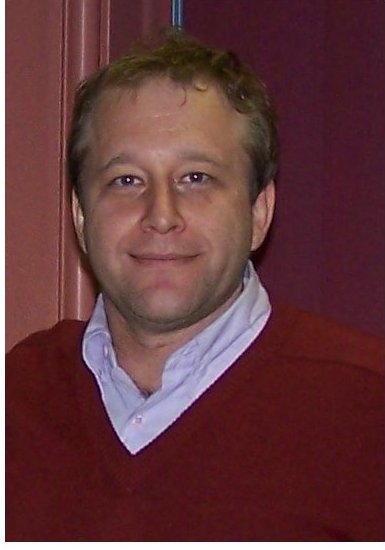 Marcelo Finger合作论文数Department of Computer Science , Institute of Mathematics and Statistics, University of Sao Paulo4
 Lianet Sepulveda Torres合作论文数4Leandro H. M. De Oliveira合作论文数4
 Stella Tagnin合作论文数University of São4
 Aline Manfrim合作论文数NILC, ICMC-USP;Instituto de Ciências4Bruno Baldissera Carlotto合作论文数3Jean Piton-Gonçalves合作论文数3Daniel Peixoto Pinto da Silva合作论文数3
 gustavo mendonca合作论文数University of São Paulo3
 Martha Dais Ferreira合作论文数Fac Comp Sci, Dalhousie Univ3




