Central to many self-improvement pipelines for large language models (LLMs) is the assumption that models can improve by reflecting on past mistakes. We study a phenomenon termed contextual drag: the presence of failed attempts in the context biases subsequent generations toward structurally similar errors. Across evaluations of 11 proprietary and open-weight models on 8 reasoning tasks, contextual drag induces 10-20
Test-time scaling has become a powerful way to improve large language models. However, existing methods are best suited to short, bounded outputs that can be directly compared, ranked or refined. Long-horizon coding agents violate this premise: each attempt produces an extended trajectory of actions, observations, errors, and partial progress taken by the agent. In this setting, the main challenge is no longer generating more attempts, but representing prior experience in a form that can be effectively selected from and reused. We propose a test-time scaling framework for agentic coding based on compact representations of rollout trajectories. Our framework converts each rollout into a structured summary that preserves its salient hypotheses, progress, and failure modes while discarding low-signal trace details. This representation enables two complementary forms of inference-time scaling. For parallel scaling, we introduce Recursive Tournament Voting (RTV), which recursively narrows a population of rollout summaries through small-group comparisons. For sequential scaling, we adapt Parallel-Distill-Refine (PDR) to the agentic setting by conditioning new rollouts on summaries distilled from prior attempts. Our method consistently improves the performance of frontier coding agents across SWE-Bench Verified and Terminal-Bench v2.0. For example, by using our method Claude-4.5-Opus improves from 70.9
In the past year, custom and unreleased math reasoning models reached gold medal performance on the International Mathematical Olympiad (IMO). Similar performance was then reported using large-scale inference on publicly available models but at prohibitive costs (e.g., 3000 USD per problem). In this work, we present an inference pipeline that attains best-in-class performance on IMO-style math problems at an average inference cost orders of magnitude below competing methods while using only general-purpose off-the-shelf models. Our method relies on insights about grader failure in solver-grader pipelines, which we call the Cognitive Well (iterative refinement converging to a wrong solution that the solver as well as the pipeline's internal grader consider to be basically correct). Our pipeline addresses these failure modes through conjecture extraction, wherein candidate lemmas are isolated from generated solutions and independently verified alongside their negations in a fresh environment (context detachment). On IMO-ProofBench Advanced (PB-Adv), our pipeline achieves 67.1 percent performance using Gemini 3.0 Pro with an average cost per question of approximately 31 USD. At the time of evaluation, this represented the state-of-the-art on PB-Adv among both public and unreleased models, and more than doubles the success rate of the next best publicly accessible pipeline, all at a fraction of the cost.
Transformer reasoning is limited by autoregressive decoding, which repeat edly compresses rich hidden computation through token space and makes it difficult for intermediate reasoning states to persist across time. We in troduce Transformers with Temporal Middle-Layer Recurrence (T2MLR), a transformers-based latent reasoning architecture that fuses a cached middle layer representation from the previous token directly into an earlier layer of the current token position, enabling abstract intermediate computation to persist across decoding steps with little inference overhead. Across natural-language pretraining and multi-hop reasoning finetuning, T2MLR consistently outperforms data- and parameter-matched Transformer base lines. Moreover, applying recurrence to only a localized middle-layer block (as little as 20
Automated theorem proving (ATP) ---the task of generating a proof that passes automated proof verification given a math question in formal language--- is a critical challenge at the intersection of mathematics and Artificial Intelligence (AI). We introduce Goedel-Prover-V2, a family of two language models that establish a new state-of-the-art (SOTA) in open-source ATP, using the Lean proof assistant. In addition to standard expert iteration and reinforcement learning, our approach incorporates three key innovations: (1) During training when improvement plateaus on human questions, the prover does {\em scaffolded data synthesis} to generate synthetic questions of increasing difficulty for its own training; (2) The prover is trained to self-correct using Lean compiler feedback; (3) Improved test-time exploration through checkpoint averaging to balance accuracy and diversity. Our small model, Goedel-Prover-V2-8B, reaches 84.6\% pass@32 on MiniF2F and outperforms DeepSeek-Prover-V2-671B despite being $80\times$ smaller. Our flagship model, Goedel-Prover-V2-32B, achieves 88.1\% on MiniF2F at pass@32 in standard mode and 90.4\% in self-correction mode, outperforming prior SOTA by a large margin. Additionally, our flagship model solves 86 problems on PutnamBench at pass@184, securing first place among open-source models and surpassing DeepSeek-Prover-V2-671B's record of 47 problems by pass@1024 with about $20\times$ smaller model size and significantly lower compute budget. To support community research, we have open-sourced the prover models and a SOTA statement formalizer, with all training datasets to be released in the near future.
Reward models are key to language model post-training and inference pipelines. Conveniently, recent work showed that every language model defines an implicit reward model (IM-RM), without requiring any architectural changes. However, such IM-RMs tend to generalize worse, especially out-of-distribution, compared to explicit reward models (EX-RMs) that apply a dedicated linear head over the hidden representations of a language model. The existence of a generalization gap is puzzling, as EX-RMs and IM-RMs are nearly identical. They can be trained using the same data, loss function, and language model, and differ only in how the reward is computed. Towards a fundamental understanding of the implicit biases underlying different reward model types, we investigate the root cause of this gap. Our main finding, backed by theory and experiments, is that IM-RMs rely more heavily on superficial token-level cues. Consequently, they often generalize worse than EX-RMs under token-level distribution shifts, as well as in-distribution. Furthermore, we provide evidence against alternative hypotheses for the generalization gap. Most notably, we challenge the intuitive claim that IM-RMs struggle in tasks where generation is harder than verification because they can operate both as a verifier and a generator. Taken together, our results highlight that seemingly minor design choices can substantially impact the generalization behavior of reward models.
Self-distillation is a promising recipe for self-improvement in language models. In this setting, a model can serve as its own teacher when given privileged information, such as a solution to a math problem. This seems especially appealing for thinking models, which can use test-time reasoning to absorb the privileged information. Surprisingly, we show that privileged self-distillation degrades thinking models on long reasoning traces: across five Qwen3 and OLMo thinking models evaluated on AIME24, AIME25, and HMMT25, privileged-context distillation causes a relative drop of up to 17
Today's reasoning models use thinking tokens to attain stronger performance on benchmarks than their instruction-tuned counterparts. It is also generally believed that this more "deliberative" mode should improve alignment and safety, by providing the model a safe space to consider whether its planned answer to a request violates its safety principles. We present evidence that this intuition is not always correct. Across frontier open-weight reasoning models spanning GPT-OSS, Qwen, Olmo, and Phi families, we find that the eventual refusal/compliance outcome is already strongly predictable via a trained head on the first token's hidden representation (0.84-0.95 AUROC and ∼88% balanced accuracy for predicting refusal/compliance) before any visible thinking. The thinking process turns out to be more akin to prefix completion than to deliberative revision, with the final outcome rarely changing after the first ∼20% of thinking, despite giving the appearance of deliberation at the text level (∼74% of text-level deliberations occur when the response distribution is already locked to one refusal/compliance side). We also find that existing inference-time and training-based safety interventions, despite being motivated by the goal of inducing deliberation, largely shift model behavior toward over-refusal while suppressing already-scarce deliberation signals. Our results suggest that safety behavior in current reasoning models is much less deliberative than commonly assumed, and highlight the need for methods that induce real safety deliberation.
Language models often show little to no improvement (i.e., “saturation”) when trained via vanilla supervised fine-tuning (SFT) on data similar to what they saw in their training set (e.g., MATH). We introduce a new fine-tuning strategy, STAT, to train such a student model by using the metacognition ability of a stronger large language model (LLM) as the teacher. The teacher uses the task dataset to create a list of skills needed for the task, and then labels each data point with its required skills (Didolkar et al., 2024). By monitoring the student’s answers, the teacher creates a Missing-Skill-Profile for the student, tracking how often they failed to apply each skill in their responses. We use this idea to build a modified training set in one of two ways. In STAT-Sel, the teacher uses an existing set of training examples but adaptively reweights them according to the Missing-Skill-Profile. In STAT-Syn, the teacher synthesizes additional examples involving missing skills. Across extensive experiments on Llama and Qwen models, our methods yield improvements of up to 7.5% on MATH, whereas SFT provides only limited gains. Furthermore, STAT enhances performance on out-of-distribution benchmarks (e.g., AIME24/25, AMC23, etc.) by an average of 4.6%. Crucially, we find that STAT is complementary to RL via GRPO (Shao et al., 2024): after the model is improved using STAT to address skill gaps, GRPO continues to add further gains. We conclude that skill-targeted adaptive training should broadly improve current training pipelines.
Vericoding refers to the generation of formally verified code from rigorous specifications. Recent AI models show promise in vericoding, but a unified methodology for cross-paradigm evaluation is lacking. Existing benchmarks test only individual languages/tools (e.g., Dafny, Verus, and Lean) and each covers very different tasks, so the performance numbers are not directly comparable. We address this gap with AlgoVeri, a benchmark that evaluates vericoding of 77 classical algorithms in Dafny, Verus, and Lean. By enforcing identical functional contracts, AlgoVeri reveals critical capability gaps in verification systems. While frontier models achieve tractable success in Dafny (40.3
We introduce Goedel-Architect, an agentic framework for formal theorem proving in Lean 4 centered on blueprint generation and refinement. A blueprint is a dependency graph of definitions and lemmas that builds up to the main theorem. First, Goedel-Architect generates a blueprint of formally stated definitions and lemmas, along with declared dependencies. This blueprint is optionally guided by a natural language proof. Then, a tool-equipped Lean prover component closes each open lemma node in parallel using relevant dependencies. Failed lemmas in turn drive refinement of the global blueprint. This strategy contrasts with other mainstream approaches which use recursive lemma decomposition, and can inefficiently loop on dead-end strategies. Using the open-weight DeepSeek-V4-Flash (284B-A13B) as the backbone, Goedel-Architect attains 99.2
Reasoning training incentivizes LLMs to produce long chains of thought (long CoT), which among other things, allows them to explore solution strategies with self-checking. This results in higher accuracy, but inflates context length, token/compute cost, and answer latency. We ask: Can current models leverage their metacognition to provide other combinations on this Pareto frontier, e.g., better accuracy with lower context length and/or latency? Abstractly, we view the model as an improvement operator on its own "thoughts" with a continuum of possible strategies. We identify an interesting inference family Parallel-Distill-Refine (PDR), which performs the following: (i) generate diverse drafts in parallel; (ii) distill them into a bounded, textual workspace; and (iii) refine conditioned on this workspace, producing an output that seeds the next round. Importantly, context length (hence compute cost) is controllable via degree of parallelism, and is no longer conflated with the total number of generated tokens. We report PDR instantiations of current models that give better accuracy than long CoT while incurring lower latency. Setting degree of parallelism to 1 yields an interesting subcase, Sequential Refinement (SR) (iteratively improve a single candidate answer) which provides performance superior to long CoT. Success of such model orchestrations raises the question whether further training could shift the Pareto frontier. To this end, we train an 8B thinking model with Reinforcement Learning (RL) to make it consistent with PDR as the inference method. On math tasks with verifiable answers, iterative pipelines surpass single-pass baselines at matched sequential budgets, with PDR delivering the largest gains (e.g., +11% on AIME 2024 and +9% on AIME 2025).
Long-horizon reasoning in recent LLMs demands that the model switch between distinct skills inside a reasoning chain, such as first doing a math derivation, then using the result to plan a schedule. We call such problems cross-skill long-horizon tasks: multi-step tasks whose steps require different reasoning skills and depend on earlier outputs. Existing benchmarks often evaluate individual skills, lacking a principled way to measure how well a model switches between skills. We address this gap from both the evaluation and training sides. We introduce Skill Entropy, a measure of the difficulty of switching from one skill to another. We then propose Skill^2-Bench, a benchmark of cross-skill long-horizon tasks built over 558 skills across 9 verifiable and open-ended domains. Each task is assigned a task-level skill-entropy score and grouped into three difficulty levels. Evaluating 8 frontier and 4 open-source models on Skill^2-Bench reveals a skill-switching gap: accuracy decreases on higher-entropy tasks. We then turn skill entropy from a benchmark scale into a training signal. We propose Skill-Entropy RL, an RL framework where the model predicts not only the answer at each step but also the skill used to produce it. The reward combines step-level correctness with a skill-entropy reward that measures the alignment between the model-predicted skill sequence and the gold skill sequence. On Qwen3-4B-Instruct and Qwen3-1.7B, Skill-Entropy RL improves the Skill^2-Bench score from 34.4
Current post-training methods in verifiable settings fall into two categories. Reinforcement learning (RLVR) relies on binary rewards, which are broadly applicable and powerful, but provide only sparse supervision during training. Distillation provides dense token-level supervision, typically obtained from an external teacher or using high-quality demonstrations. Collecting such supervision can be costly or unavailable. We propose Self-Distillation Zero (SD-Zero), a method that is substantially more training sample-efficient than RL and does not require an external teacher or high-quality demonstrations. SD-Zero trains a single model to play two roles: a Generator, which produces an initial response, and a Reviser, which conditions on that response and its binary reward to produce an improved response. We then perform on-policy self-distillation to distill the reviser into the generator, using the reviser's token distributions conditioned on the generator's response and its reward as supervision. In effect, SD-Zero trains the model to transform binary rewards into dense token-level self-supervision. On math and code reasoning benchmarks with Qwen3-4B-Instruct and Olmo-3-7B-Instruct, SD-Zero improves performance by at least 10
The success of Reinforcement Learning from Human Feedback (RLHF) critically depends on the quality of the reward model. However, while this quality is primarily evaluated through accuracy, it remains unclear whether accuracy fully captures what makes a reward model an effective teacher. We address this question from an optimization perspective. First, we prove that regardless of how accurate a reward model is, if it induces low reward variance, then the RLHF objective suffers from a flat landscape. Consequently, even a perfectly accurate reward model can lead to extremely slow optimization, underperforming less accurate models that induce higher reward variance. We additionally show that a reward model that works well for one language model can induce low reward variance, and thus a flat objective landscape, for another. These results establish a fundamental limitation of evaluating reward models solely based on accuracy or independently of the language model they guide. Experiments using models of up to 8B parameters corroborate our theory, demonstrating the interplay between reward variance, accuracy, and reward maximization rate. Overall, our findings highlight that beyond accuracy, a reward model needs to induce sufficient variance for efficient optimization.
In-context learning (ICL) allows a language model to improve its problem-solving capability when provided with suitable information in context. Since the choice of in-context information can be determined based on the problem itself, in-context learning is analogous to human learning from teachers in a classroom. Recent works (Didolkar et al., 2024a; 2024b) show that ICL performance can be improved by leveraging a frontier large language model's (LLM) ability to predict required skills to solve a problem, popularly referred to as an LLM's metacognition, and using the recommended skills to construct necessary in-context examples. While this skill-based strategy boosts ICL performance in larger models, its gains on small language models (SLMs) have been minimal, highlighting a performance gap in ICL capabilities. We investigate this gap and show that skill-based prompting can hurt SLM performance on easy questions by introducing unnecessary information, akin to cognitive overload. To address this, we introduce AdaptMI, an adaptive approach to selecting skill-based in-context Math Instructions for SLMs. Inspired by cognitive load theory from human pedagogy, our method only introduces skill-based examples when the model performs poorly. We further propose AdaptMI+, which adds examples targeted to the specific skills missing from the model's responses. On 5-shot evaluations across popular math benchmarks and five SLMs (1B–7B; Qwen, Llama), AdaptMI+ improves accuracy by up to 6
Large language models (LLMs) now solve multi-step problems by emitting extended chains of thought. During the process, they often re-derive the same intermediate steps across problems, inflating token usage and latency. This saturation of the context window leaves less capacity for exploration. We study a simple mechanism that converts recurring reasoning fragments into concise, reusable "behaviors" (name + instruction) via the model's own metacognitive analysis of prior traces. These behaviors are stored in a "behavior handbook" which supplies them to the model in-context at inference or distills them into parameters via supervised fine-tuning. This approach achieves improved test-time reasoning across three different settings - 1) Behavior-conditioned inference: Providing the LLM relevant behaviors in-context during reasoning reduces number of reasoning tokens by up to 46
We formalize a new concept for LLMs, context-enhanced learning. It involves standard gradient-based learning on text except that the context is enhanced with additional data on which no auto-regressive gradients are computed. This setting is a gradient-based analog of usual in-context learning (ICL) and appears in some recent works. Using a multi-step reasoning task, we prove in a simplified setting that context-enhanced learning can be exponentially more sample-efficient than standard learning when the model is capable of ICL. At a mechanistic level, we find that the benefit of context-enhancement arises from a more accurate gradient learning signal. We also experimentally demonstrate that it appears hard to detect or recover learning materials that were used in the context during training. This may have implications for data security as well as copyright.
Recent reports claim that large language models (LLMs) now outperform elite humans in competitive programming. Drawing on knowledge from a group of medalists in international algorithmic contests, we revisit this claim, examining how LLMs differ from human experts and where limitations still remain. We introduce LiveCodeBench Pro, a benchmark composed of problems from Codeforces, ICPC, and IOI that are continuously updated to reduce the likelihood of data contamination. A team of Olympiad medalists annotates every problem for algorithmic categories and conducts a line-by-line analysis of failed model-generated submissions. Using this new data and benchmark, we find that frontier models still have significant limitations: without external tools, the best model achieves only 53 and 0 that LLMs succeed at implementation-heavy problems but struggle with nuanced algorithmic reasoning and complex case analysis, often generating confidently incorrect justifications. High performance appears largely driven by implementation precision and tool augmentation, not superior reasoning. LiveCodeBench Pro thus highlights the significant gap to human grandmaster levels, while offering fine-grained diagnostics to steer future improvements in code-centric LLM reasoning.
 Boaz Barak合作论文数John A. Paulson School of Engineering and Applied Sciences, Harvard University;Kempner Institute, Harvard University32
 Rong Ge合作论文数Department of Computer Science, Trinity College of Arts & Sciences, Duke University;Department of Mathematics, Trinity College of Arts & Sciences, Duke University26
 Zhiyuan Li (李志远)合作论文数17
 Anirudh Goyal合作论文数Google DeepMind15
 Tengyu Ma (马腾宇)合作论文数Department of Computer Science, Stanford University;Institute for Human-Centered Artificial Intelligence, Stanford University;MongoDB15
 Abhishek Panigrahi合作论文数Department of Computer Science, Princeton University12
 Dingli Yu (俞鼎力)合作论文数Department of Computer Science, Princeton University12
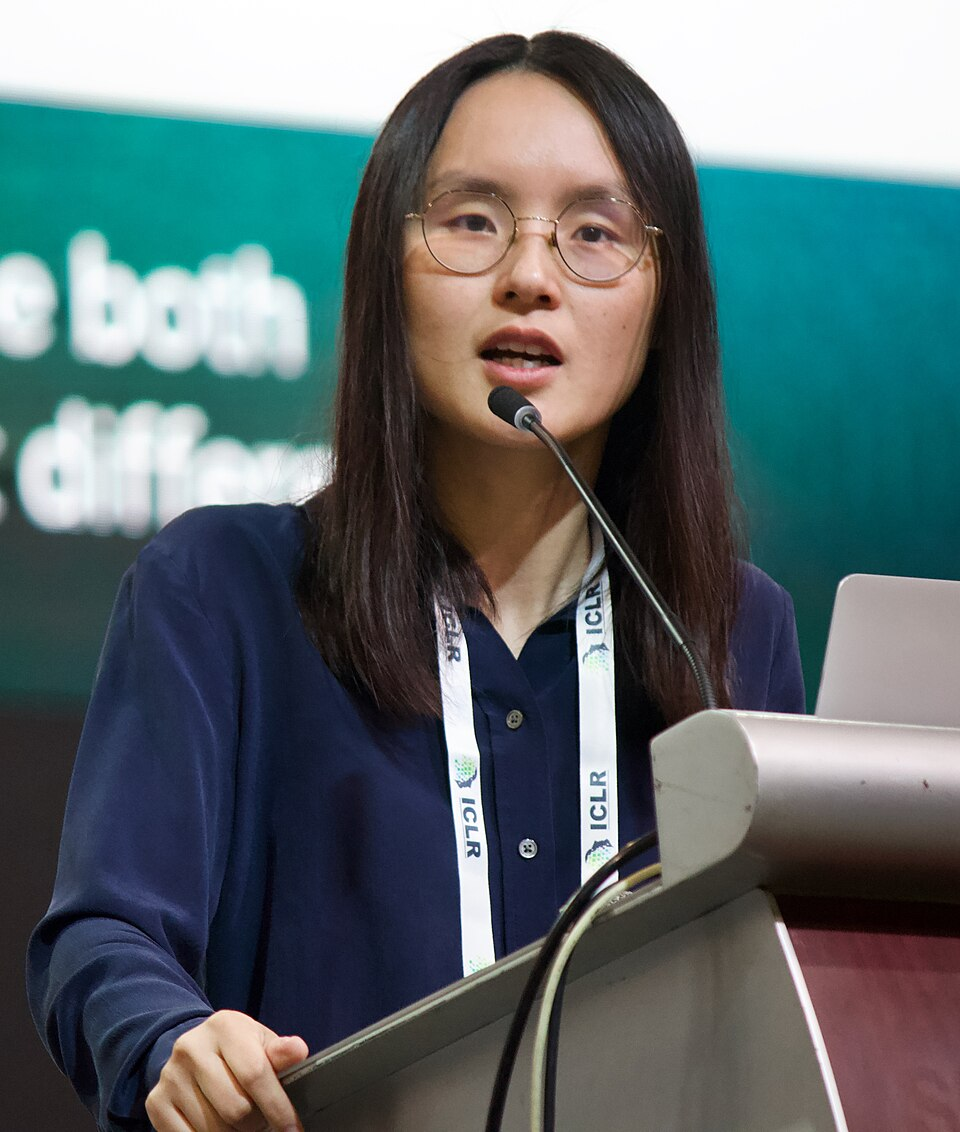 Danqi Chen (陈丹琦)合作论文数12
 Andrej Risteski合作论文数Machine Learning Department, School of Computer Science, Carnegie Mellon University12
 Elad Hazan合作论文数Department of Computer Science, Princeton University12
 Kaifeng Lyu (吕凯风)合作论文数Institute for Interdisciplinary Information Sciences, Tsinghua University12
 Yi Zhang合作论文数Machine Learning Foundations Group, Microsoft Research11
 Nikunj Saunshi合作论文数Google11
 Haoyu Zhao合作论文数Department of Computer Science, Princeton University10
 Sadhika Malladi合作论文数MSR NYC10
 Yingyu Liang合作论文数Department of Computer Science, School of Computing and Data Science, The University of Hong Kong;Musketeers Foundation Institute of Data Science, The University of Hong Kong;Division of Computer Science, School of Computing and Data Science, The University of Hong Kong9
 Satyen Kale合作论文数Google Research8
 David Steurer合作论文数Department of Computer Science, Eidgenössische Technische Hochschule Zürich8
 Ankur Moitra合作论文数Department of Mathematics, Massachusetts Institute of Technology8
 Arushi Gupta合作论文数Google DeepMind7
 Chi Jin (金驰)合作论文数Department of Electrical and Computer Engineering, Princeton University;OpenAI7
 Misha Khodak合作论文数Department of Computer Sciences, University of Wisconsin-Madison7
 Wei Hu (胡威)合作论文数Michigan Institute for Data & Al in Society, University of Michigan;College of Engineering, University of Michigan7
 Satish Rao合作论文数Department of Electrical Engineering & Computer Sciences, University of California, Berkeley7
 Simon Shaolei Du (杜少雷)合作论文数Paul G. Allen School of Computer Science & Engineering, University of Washington;XAI7
 Yinghui He (何映晖)合作论文数Computer Science Department, School of Engineering and Applied Science, Princeton University6
 Noga Alon合作论文数Department of Mathematics, Princeton University;Tel Aviv University6
 Sushant Sachdeva合作论文数Department of Computer Science, University of Toronto;University of Toronto Mississauga;Vector Institute;OpenAI6
 E Hazan合作论文数5
 Yangsibo Huang合作论文数Google NYC5
 Yuanzhi Li (李远志)合作论文数Meta5
 Carsten Lund合作论文数AT&T Inc5
 Mengzhou Xia (夏梦舟)合作论文数Department of Computer Science, Princeton University5
 Aditya Bhaskara合作论文数School of Computing, University of Utah;Utah Center for Data Science, University of Utah5S Kale合作论文数4L Babai合作论文数4
 Zhao Song合作论文数University of California, Berkeley4
 Holden Lee合作论文数Department of Applied Mathematics and Statistics, Whiting School of Engineering, Johns Hopkins University4
 Kai Li (李凯)合作论文数Department of Computer Science, Princeton University4
 Nadav Cohen合作论文数School of Computer Science, Faculty of Exact Sciences, Tel Aviv University;Imubit4Ruosong Wang (王若松)合作论文数4
 Umesh V. Vazirani合作论文数Computer Science Division, University of California, Berkeley;Berkeley Quantum Computation Center4
 Michael C. Mozer合作论文数Institute of Cognitive Science, University of Colorado, Boulder;Google DeepMind;Department of Computer Science, College of Engineering & Applied Science, University of Colorado, Boulder4
 Yoshua Bengio (约书亚·本希奥)合作论文数Departement d'informatique et de Recherche Operationnelle, Faculte des Arts et des Sciences, Universite de Montreal;Mila - Quebec Artificial Intelligence Institute;LawZero4
 Prabhakar Raghavan合作论文数Google4
 Subhash Khot合作论文数Department of Computer Science, Courant Institute of Mathematical Sciences, New York University4
 Dana Moshkovitz合作论文数Department of Computer Science, College of Natural Sciences, University of Texas at Austin4
 Bohan Lyu合作论文数Department of Computer Science and Technology, Tsinghua University;Princeton University3
 Noam Razin合作论文数Princeton University3