Tomila Lankina has written a pathbreaking book. Impressively combining theoretical ambition, sensitive attention to historical detail, and the skillful use of multiple quantitative and qualitative methods, The Estate Origins of Democracy in Russia brings the study of Soviet history squarely back onto the agenda of contemporary comparative social science. For those of us who have spent much of our careers trying to explain to academics and policy makers alike why the story of the rise and fall of the USSR still matters for understanding our contemporary world, Lankina’s book is both welcome vindication and a reason for real optimism about the future of social-scientific inquiry. This is, simply put, the best book I’ve read about the Soviet system and its legacies in many years.
Just over a quarter-century ago, the authors published a widely read essay comparing Weimar Germany and Post-Soviet Russia in historical perspective. After Russia’s unprovoked assault on Ukraine, comparisons of Vladimir Putin’s regime with Nazi Germany are once again tragically relevant. Reexamining our arguments from 1997 shows the continuing relevance of the variables we emphasized in that essay: the burdensome legacies of the past imperial regime, intense international pressure to marketize post-Soviet Russia’s statist economy, and Russia’s weak party system. Three main issues in our earlier article, in retrospect, required greater development: pinpointing the time span needed to assess regime change, distinguishing mobilizational and patrimonial forms of ‘anti-liberal statism,’ and exploring more fully the foreign policy options for would-be defenders of the liberal global order facing powerful revanchist challenges. We conclude that this sort of ‘replication’ of earlier research should be encouraged more often among political scientists adopting the comparative-historical approach.
The past decade has witnessed a resurgence of patrimonial rule not only in the developing world but also, more surprisingly, in the developed West. This resurgence carries potentially dire consequences for responding to a range of pressing problems. Understanding the sources of contemporary patrimonialism is hindered by assimilating the phenomenon into the familiar democracy/autocracy typology or by assuming that it is a function of failed modernization. This article identifies the patrimonial phenomenon and explores the contemporary global diffusion of patrimonial rule from its origins in postcommunist Russia, with a focus on how patrimonialism has manifested itself in policy responses to the COVID-19 pandemic. Some signs indicate that reestablishing bureaucratic predictability and expertise may be much harder than demolishing it. In some respects, the task may be more daunting than the salvation of democracy itself.
An abstract is not available for this content. As you have access to this content, full HTML content is provided on this page. A PDF of this content is also available in through the ‘Save PDF’ action button.
CONTRIBUTORS vii LIST OF TABLES AND FIGURES ix ACKNOWLEDGMENTS xi ONE: Introduction by George W. Breslauer 1 TWO: The Rejection of Authoritarianism by Philip G. Roeder 11 THREE: The Dynamics of Democratic Erosion by M. Steven Fish 54 FOUR: The Discursive Origins of Russian Democratic Politics by Richard D. Anderson, Jr. 96 FIVE: Defining Democratic Consolidation by Stephen E. Hanson 126 SIX: Conclusion: Postcommunism and the Theory of Democracy by Richard D. Anderson, Jr., M. Steven Fish, Stephen E. Hanson, and Philip G. Roeder, 152 NOTES 169 REFERENCES 175 INDEX 197
A weasel word is a term used in academic or political discourse whose meaning is so imprecise or badly defined that it impedes the formulation of coherent thought on the subject to which it is applied, or leads to unsubstantiated conclusions. In this symposium we consider several key terms central to the study of postcommunist politics and discuss the extent to which they fall into this category. The terms discussed here include regime terminology, the notion of postcommunism, the geographic entity “Eurasia,” socialism, populism, and neoliberalism. While the authors come to different conclusions about the extent to which these terms are weasel words, they also provide pointers for how to deploy terms in ways that are consistent with the underlying concept and thus aid in the cumulation of knowledge about the region.
There has been a marked resurgence of interest in the study of time and temporality in the political science discipline. Scholars working within the tradition of comparative historical analysis have explored what might be termed “objective” temporal processes, tracing causal relationships that unfold slowly through long periods of time and analyzing “critical historical junctures” with enduring social effects. Meanwhile, scholars influenced by developments in behavioral economics and social psychology have devoted increasing attention to the problem of “subjective” time: how time is perceived differently by actors with varying psychological profiles and risk appetites. To date, these two literatures have developed largely in isolation from one another. Thus there has been comparatively little attention paid to the problem of explaining the origin and persistence of collective interpretations of political time. In this context, returning to the study of political ideology can help link the objective and subjective approaches to political temporality.
The twenty-fifth anniversary of the collapse of the USSR naturally provokes us to reflect on the course of Eurasian and world history in the post-communist era. Upon closer examination, however, it is not clear what significance the precise time span of two and a half decades has for the scientific study of political and institutional change. A review of the social science literature indicates that we are very far from having any consensual understanding of how long processes of regime evolution typically takeand thus, how to establish the relevant time span for judging the scientific accuracy of initial predictions about the outcomes of post-communist transitions. I argue that the first step in assessing the lessons of post-Soviet political change to date, from a social-scientific point of view, lies in defining the term regime more precisely, so that scholars can at least agree when one regime has ended and another begun. In this respect, Weberian sociological theory provides useful conceptual materials for a more general theory of regime evolution within which the empirical results of the first twenty-five years of post-Soviet change can be situated.
No AccessGorbachev, Ideology, and the End of the Cold WarStephen E. HansonStephen E. Hansonhttps://doi.org/10.7788/9783412504687-003SectionsPDF/EPUB ToolsAdd to favoritesDownload CitationsTrack Citations ShareShare onFacebookTwitterLinkedInRedditEmail About Previous chapter Next chapter FiguresReferencesRelatedDetails Download book cover ISBN: 978-3-412-50400-7 eISBN: 978-3-412-50468-7HistoryPublished online:July 2018 PDF download
Patronal Politics: Eurasian Regime Dynamics in Comparative Perspective. By Henry Hale. Problems of International Politics. Cambridge, Eng.: Cambridge University Press, 2015. xviii, 538 pp. Notes. Bibliography. Index. Figures. Tables. $39.99, paper. - Volume 75 Issue 1
In just over five years, Vladimir Putin will be constitutionally obliged to step down as Russia’s president. Although Putin’s popularity rating remains in the 70–85 percent range, and his reelection to a second term in 2004 seems almost assured, the nature of the post-Putin succession is still hard to foresee. This memo argues that given the continuing absence in Russia of reliable institutional mechanisms to ensure a peaceful transfer of power to opposition forces at the ballot box, 2008 will mark a crucial turning point for Russia’s new democracy—the outcome of which may depend on the degree to which currently inchoate anti-American sentiments among Russia’s younger generation can be mobilized by ambitious Russian political elites.
There can be little doubt that open unemployment in the Russian Federation is going to rise dramatically over the next few years. Currently, approximately 10% of the Russian population is out of work--a figure about triple the rate in 1992 at the outset of Yeltsin's market reforms, and comparable to unemployment rates in Western European countries such as France and Germany that are experiencing considerable social unrest about the problem. However, even this serious rate of unemployment in Russia could easily double, given the continuing need for extensive layoffs to increase Russia's productive efficiency in both industry and agriculture. Pproposed substantial cuts in the military, while welcome in most respects, will add to this problem. Yet few analysts seem aware of the potentially dramatic effects that the predictable increase in joblessness might have on Russian domestic politics, Russian foreign policy, and the US-Russian relationship. Thinking through some of these effects in advance may help Western policymakers to avoid some rather unpleasant political shocks.
 Jeffrey S. Kopstein合作论文数University of Toronto6
 Megan S Steven合作论文数2
 Richard D. Anderson合作论文数Howard Hughes Medical Institute, University of Iowa College of Medicine2Yoshiko M. Herrera合作论文数1
 Anton Shirikov合作论文数Dept Polit Sci, Univ Wisconsin1Philip G. Roeder合作论文数1
 Stuart Kaufman合作论文数Dept Polit Sci & Int Relat, Univ Delaware1Dmitrii Kofanov合作论文数Dept Polit Sci, Univ Wisconsin1
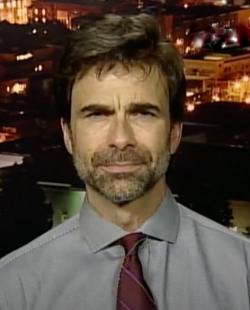 M. Steven Fish合作论文数Department of Political Science, University of California, Berkeley1
 Anna Grzymala Busse合作论文数Political Science Department, Stanford University1Jr . Inventing合作论文数1
 Venelin Ganev合作论文数Department of Political Science, Miami University of Ohio1Mark Lichbach合作论文数DEPARTMENT OF POLITICAL SCIENCE;UNIVERSITY OF COLORADO;DEPARTMENT OF POLITICAL SCIENCE, UNIVERSITY OF COLORADO1Blair A. Ruble合作论文数1Michael H. Bernhard合作论文数1
 Wade Jacoby合作论文数Department of Political Science, Brigham Young University1
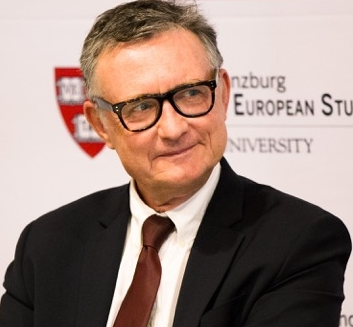 Grzegorz Ekiert合作论文数Department of Government, Harvard University1Kathryn Pinnick合作论文数1Jr .合作论文数1




