Cities and other human settlements are major contributors to climate change and are highly vulnerable to its impacts. They are also uniquely positioned to reduce greenhouse gas emissions and lead adaptation efforts. These compound challenges and opportunities require a comprehensive perspective on the public policy of human settlements. Drawing on core literature that has driven debate around cities and climate over recent decades, we put forward a set of boundary objects that can be applied to connect the knowledge of epistemic communities and support an integrated urbanism. We then use these boundary objects to develop the Goals-Intervention-Stakeholder-Enablers (GISE) framework for a public policy of human settlements that is both place-specific and provides insights and tools useful for climate action in cities and other human settlements worldwide. Using examples from Berlin, we apply this framework to show that climate mitigation and adaptation, public health, and well-being goals are closely linked and mutually supportive when a comprehensive approach to urban public policy is applied.
Care work, often considered economically non-productive, is undervalued and professionally underpaid. This short perspective paper develops a holistic understanding of care, including paid and unpaid care work. It contributes to identifying pathways towards socially and environmentally sustainable, low-consumption societies. Based on archetypical definitions from feminist literature and gender studies, political science, sociology, psychology, ecological economics, and our own work in consumption analysis, we define care work as comprising activities and practices in relation to someone or something (e.g., the environment), which are nurturing and cultivating land, plants, animals, humans, and social groups to support wellbeing and quality of life. They do so by providing many of the “services” that enable people to participate in society and sustain objects of ethical, emotional, and relational value. The definition covers a broad spectrum of care work, including both professional paid care and unpaid, more or less voluntarily provided care (social norms constitute the “less voluntary” case). We differentiate amongst different types of care work and use this more fine-grain approach to have a closer look at the relation between paid and unpaid care and the relation of care to sustainable development.
EDITORIAL article Front. Sustain., 14 September 2023Sec. Sustainable Consumption Volume 4 - 2023 | https://doi.org/10.3389/frsus.2023.1281924
The rapid increase in plastics waste is worrying, but approaching sufficiency in a broader sense can tackle much more than plastic waste streams only, argues Sylvia Lorek.
In this activity, students reflect on the sustainability impact of individual consumption actions and the possibilities and limitations of realizing strong sustainable consumption through individual choices.
EDITORIAL article Front. Sustain., 21 November 2023Sec. Sustainable Consumption Volume 4 - 2023 | https://doi.org/10.3389/frsus.2023.1324319
The debate about care has intensified in the COVID-19 crisis. A consensus appears to be emerging that care work—mostly provided by women—is not only essential to our societies, but also undervalued, reputationally as well as—for the paid work—regarding its remuneration. As care is essential for the cohesion of societies, there is an urgent need to improve the situation. However, care comes in too many forms for general recommendations for improving the situation to be effective. Its majority in terms of working hours is unpaid, but the paid part of it in health, caring or education, is indispensable for any society built upon a division of labor. Finally, not every activity is work, and not every work is care—thus leisure activities are not necessarily care work. Care can be motivated by a plethora of reasons, and take a diversity of forms. To allow for effective suggestions for improvement to be formulated, we deem it necessary to more systematically distinguish different classes of care (each class of course being an ideal type including a wide range of activities). We suggest doing so by first using the “potential third party” criterion to distinguish work and non-work activities, secondly classify work according to the beneficiaries (which is closely linked to but not the same as organizational characteristics), and thirdly characterize the specific role of care work in these categories. The beneficiaries also reflect the motivation held by agents why care work is undertaken, although rarely any motivation comes in isolation. Starting from the proximate causes, the first class of care is caring for oneself, be it in terms of health care, hygiene, or the self-production of consumer goods, both short and long lived. The second class we suggest is caring for the family (native and chosen family including friends). It again includes caring for their health, but also their household (either the common one, or the one the caretaker is managing for the care receiver). It often includes nursing the elderly, disabled or young children, but can also be a kind of neighborhood support, from joint gardening to mutual help in building or renovating a flat or house. Extending the reach of care even wider, we come to care for the public good, with the community from village or city district to higher levels being the beneficiaries. This includes the volunteers working with environment, development, feminist, trade unions, food banks or belief organizations. Finally, there is a whole range of professional care activities, with the possibility to take over any of the previously mentioned activities if there is a financial benefit to be expected, or one is offered by (government) subsidies. We observe a permanent process of substituting professional, exchange value oriented care work for voluntary, use value based care, and vice versa. This dynamic, in combination with the ongoing changes of technology, social security systems and work organization in the remunerated work sets the framework conditions which will determine the future of care, commercial and societal. However, such trends are no destiny; they can be shaped by political interventions. Whether or not a professional or voluntary approach is preferable, depends on the assessment criteria applied which in turn represent political, ethical and cultural preferences.
Consumption Corridors: Living a Good Life within Sustainable Limits explores how to enhance peoples’ chances to live a good life in a world of ecological and social limits. Rejecting familiar recitations of problems of ecological decline and planetary boundaries, this compact book instead offers a spirited explication of what everyone desires: a good life. Fundamental concepts of the good life are explained and explored, as are forces that threaten the good life for all. The remedy, says the book’s seven international authors, lies with the concept of consumption corridors, enabled by mechanisms of citizen engagement and deliberative democracy. Across five concise chapters, readers are invited into conversation about how wellbeing can be enriched by social change that joins with consumerist restraint, social justice, and environmental sustainability. In this endeavour, lower limits of consumption that ensure minimal needs satisfaction for all are important, and enjoy ample precedent. But upper limits to consumption, argue the authors, are equally essential, and attainable, especially in those domains where limits enhance rather than undermine essential freedoms. This book will be of great interest to students and scholars in the social sciences and humanities, and environmental and sustainability studies, as well as to community activists and the general public. The Open Access version of this book, available at http://www.taylorfrancis.com/books/e/9780367748746, has been made available under a Creative Commons Attribution-Non Commercial-No Derivatives 4.0 license.
Living well within limits has emerged as the core global challenge of our time. The central driver behind this development is overconsumption by the global consumer class. Yet, dynamics such as the attitude-implementation gap and the rebound effect have meant that both technological efficiency gains and policy efforts to improve consumer awareness have yet to achieve absolute reductions in resource use. Moreover, structural forces, including business and economic models based on mass consumption, tight connections between money and politics, the social embeddedness of consumption, and challenges associated with collective action, highlight fundamental limits to an individualisation of responsibility for the sustainability of consumption. In contrast to efforts to improve consumption at the margins, some scholars have engaged with the limits Western societies have to face in terms of their economic activities and lifestyles in a more direct and fundamental way. This chapter depicts a number of such approaches to then focus in on consumption corridors as a particularly pertinent one. It delineates the concept, discusses typical trepidations associated with the notion of limits, and reflects on pathways towards consumption corridors and supportive structural changes. The chapter concludes by drawing linkages to ongoing research and normative debates.
Despite widespread recognition of the need to transition toward more sustainable production and consumption and numerous initiatives to that end, global resource extraction and corresponding socio-ecological degradation continue to grow. Understanding the causes of this persistent failure is a necessary step towards more effective action. This article contributes to that understanding by synthesizing theory and evidence that links unsustainable production-consumption systems to power and inequality. While sustainable consumption and production research and action mostly focuses on technological or behavioral change, the socio-ecological inequalities driving production-consumption systems built into the organization of our global political economy, remain largely overlooked. In response, we propose a structural political economy orientation that seeks explicitly to reduce these inequalities and advance environmental justice and, thus, create the conditions for sustainable production-consumption systems. We then propose three important arenas of research and action towards sustainable production-consumption systems: justice, governance, and co-production of knowledge and action. These arenas, collectively and individually, can serve as entry points to study and act on the dynamics of (un)sustainable production-consumption systems. This can be done at the micro level, with respect to specific commodity chains or systems of provisioning, or at meso and macro levels with respect to national and global production networks. Our proposed orientation helps distinguish research and practice proposals into those emphasizing management and compensation resulting often in persistence of unsustainability, from those proffering structural changes in unsustainable production-consumption systems. We invite critique and collaboration to develop this research and action agenda further.
Non-technical summary We summarize some of the past year's most important findings within climate change-related research. New research has improved our understanding about the remaining options to achieve the Paris Agreement goals, through overcoming political barriers to carbon pricing, taking into account non-CO 2 factors, a well-designed implementation of demand-side and nature-based solutions, resilience building of ecosystems and the recognition that climate change mitigation costs can be justified by benefits to the health of humans and nature alone. We consider new insights about what to expect if we fail to include a new dimension of fire extremes and the prospect of cascading climate tipping elements. Technical summary A synthesis is made of 10 topics within climate research, where there have been significant advances since January 2020. The insights are based on input from an international open call with broad disciplinary scope. Findings include: (1) the options to still keep global warming below 1.5 °C; (2) the impact of non-CO 2 factors in global warming; (3) a new dimension of fire extremes forced by climate change; (4) the increasing pressure on interconnected climate tipping elements; (5) the dimensions of climate justice; (6) political challenges impeding the effectiveness of carbon pricing; (7) demand-side solutions as vehicles of climate mitigation; (8) the potentials and caveats of nature-based solutions; (9) how building resilience of marine ecosystems is possible; and (10) that the costs of climate change mitigation policies can be more than justified by the benefits to the health of humans and nature. Social media summary How do we limit global warming to 1.5 °C and why is it crucial? See highlights of latest climate science.
As a salutogenic concept, “consumption corridors” aims to support what is necessary for sustainable wellbeing to be achieved in relation to the Earth system, with a deep consideration for justice and equity. Living in consumption corridors is a representation of everyday life whereby people live within limits, so that all people – now and in the future – can access what is needed to live a good life. In this special issue, a series of scholars and practitioners have come together to further develop the concept, engage with its methodological implications, and relate it to consumption domains and policy implications. We begin by introducing how the concept emerged, in relation to the complexity of grappling with the societal transformations required for achieving more sustainable forms of consumption. We then present the different contributions, which demonstrate the importance of considering both maximum and minimum consumption standards, the relevance of human-need theories, as well as the difference between achieving wellbeing and the means necessary for doing so. We conclude by opening up to areas that merit further deliberation: how to relate consumption corridors to everyday-life dynamics, but also to the critical question of power relations at play in implementing consumption corridors.
 Doris Fuchs合作论文数University of Münster23
 Joachim Spangenberg合作论文数Sustainable Europe Research Institute16
 Antonietta Di Giulio合作论文数11
 Tobias Gumbert合作论文数Münster University7
 Antonia Graf合作论文数7
 Marlyne Sahakian合作论文数7
 Michael F Maniates合作论文数Yale-National University of Singapore College6
 Philip Vergragt合作论文数George Perkins Marsh Institute, Clark University6
 Arnold Tukker合作论文数Institute of Environmental Sciences, Faculty of Science, Leiden University;Netherlands Organisation for Applied Scientific Research TNO5
 Louis Lebel合作论文数Unit for Social and Environmental Research, Faculty of Social Sciences, Chiang Mai University;Stockholm Environment Institute4
 Magnus Bengtsson合作论文数Department of Materials and Surface Chemistry, Chalmers University of Technology4
 Eva Alfredsson合作论文数Division of Strategic Sustainability Studies, Department of Sustainable Development, Environmental Science and Engineering, School of Architecture and the Built Environment, KTH Royal Institute of Technology4Lucia A. Reisch合作论文数4rainer lucas合作论文数3Stefan Giljum合作论文数3
 Gianluca Trotta合作论文数Corresponding author.3
 Raimund Bleischwitz合作论文数Institute for Sustainable Resources, The Bartlett Faculty of the Built Environment, University College London3
 Oksana K. Mont (Oksana Mont)合作论文数The International Institute for Industrial Environmental Economics, Lund University3
 Uchita De Zoysa合作论文数National Advisory Committee on Climate Change3
 Ines Omann合作论文数3
 Kai Nagel合作论文数Fachgebiet Verkehrssystemplanung und Verkehrstelematik, Fakultät V (Verkehrs- und Maschinensysteme), Institut für Land- und Seeverkehr, Technische Universität Berlin3
 Maurie J. Cohen (Maurie Cohen)合作论文数Department of Humanities and Social Sciences, New Jersey Institute of Technology3Aicha Zekar合作论文数2Mark Hammer合作论文数2
 Pia Mamut合作论文数2Florian Nachtigall合作论文数2
 Felix Wagner合作论文数Technical University Berlin2
 Charlotte Liotta合作论文数TU Berlin2Marie Josefine Hintz合作论文数2
 Andrew Sudmant合作论文数Sustainabil Res Inst, Univ Leeds2
 Nikola Milojevic-Dupont合作论文数Mercator Research Institute on Global Commonsand Climate Change, Technische Universität Berlin2
 Leila Niamir合作论文数International Institute for Applied Systems Analysis2
 Sophia Becker合作论文数Corresponding author.2
 Katharina Glaab合作论文数Norwegian Univ Life Sci, Univ Tunet 12
 Peter Berrill合作论文数Yale Sch Environm, Yale Univ2
 Giulio Mattioli合作论文数Transport Research Group, TU Dortmund University2
 Elke U. Weber合作论文数Behavioral Science for Policy Lab, Department of Psychology, Princeton University2
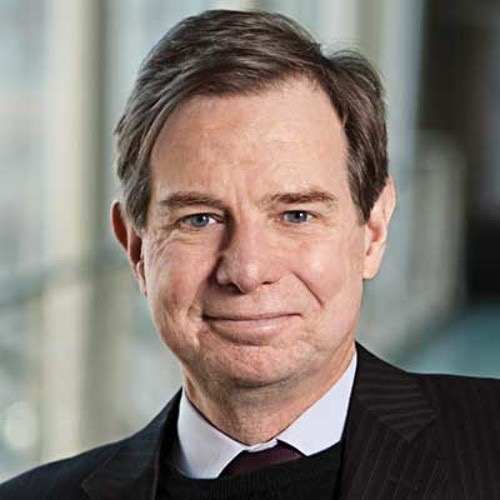 Eric J. Johnson合作论文数Department of Psychology, Columbia University;Graduate School of Business, Columbia University;Center for the Decision Sciences, Columbia University2
 Minal Pathak合作论文数2
 Charlie Wilson合作论文数School of Environmental Sciences, University of East Anglia2
 Niko Heeren合作论文数2Michael Kuhndt合作论文数2
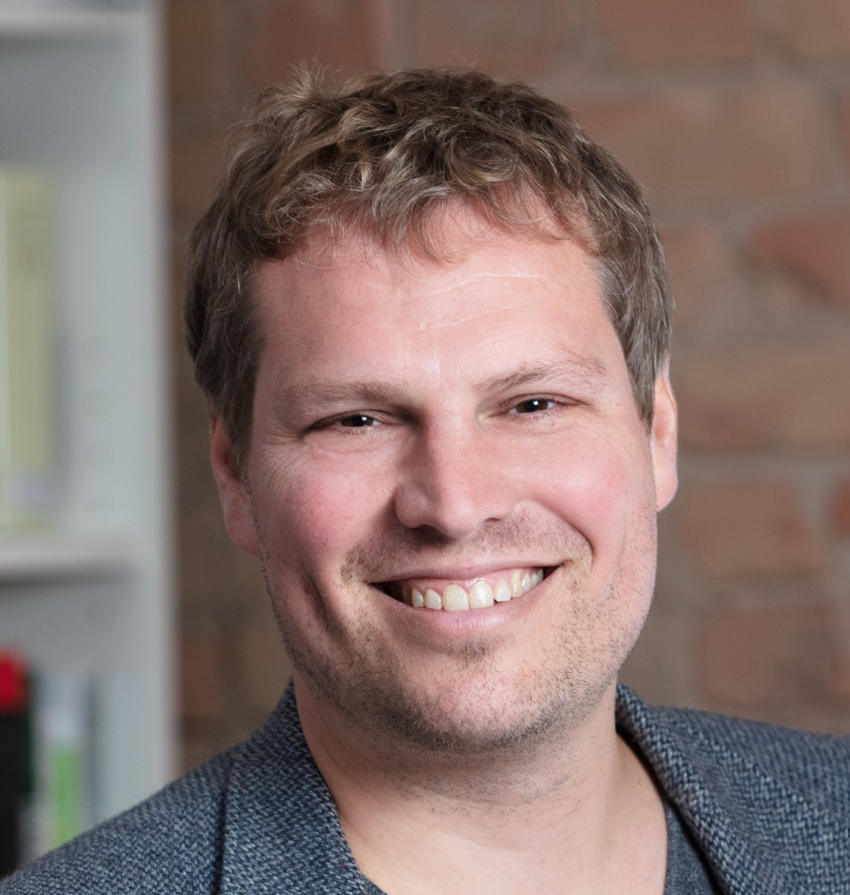 Felix Creutzig合作论文数Department of Climate Economics and Policy - MCC Berlin, Potsdam Institute for Climate Impact Research2
 Diana Reckien合作论文数Potsdam Institute for Climate Impact Research2
 Aromar Revi合作论文数2
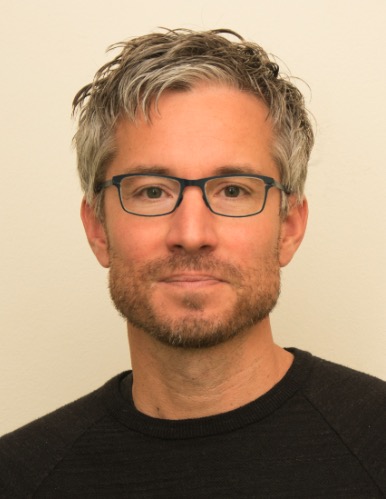 Timon Mcphearson合作论文数Environmental Studies Department, College of Arts & Science, New York University;Climasens;Stockholm Resilience Centre2
 Ashwani Vasishth合作论文数2Birgit Friedl合作论文数2Jill Jäger合作论文数2




