Abstract Civilization has returned to the centre of international affairs. In December 2025, there was considerable consternation in Europe concerning a US National Security Strategy suggesting the region faced “civilizational erasure”. Such pronouncements form part of a wider debate that has gained momentum since Donald Trump re-entered the White House, regarding the future of “the West”. As he moved towards the acquisition of Greenland, European leaders suffered the turmoil of a collapsing North Atlantic world. Among the many other casualties of the new culture wars and geopolitical turbulence launched by Trump 2.0 was international aid, across all sectors. In the field of cultural heritage, this raises important questions about future architectures of international cooperation, particularly in the challenging contexts of climate- and conflict-induced catastrophes. In considering such themes, this chapter examines China’s Global Civilization Initiative, launched in 2023, as the continuation of a trend that largely begun with the Belt and Road Initiative (BRI). The BRI heralded a new era of heritage diplomacy around the geocultural imaginary of the Silk Road. The chapter’s focus then is the question of how far China’s ambitions to continue new forms of geocultural diplomacy will stretch, and whether the country will step in to fill the domains of cultural internationalism that have historically been led by Western countries, and that are now falling away because of the major cultural and political shifts now occurring in Europe and the United States.
This paper examines the evolving geocultural dynamics between Europe and the emerging BRICS+ alliance, focusing on the rise of civilisational internationalism as a framework for global engagement. Against the backdrop of shifting United States foreign policies and domestic conservative movements, the authors analyse how traditional notions of the West are being redefined, while the BRICS+ coalition advances an alternative vision of international cooperation rooted in civilisational dialogue. Drawing on theoretical insights from Wallerstein and Hannerz, geocultural imaginaries are explored and how they intersect with geopolitical and geoeconomic realities, shaping new forms of cultural diplomacy and international relations. The study highlights the BRICS+ alliance's expansion beyond economic cooperation to include cultural exchanges and so-called "dialogue of civilisations" initiatives, presenting both opportunities and challenges for European engagement. The authors argue that this civilisational internationalism, while offering a platform for South-South cooperation and addressing historical power imbalances, also complicates Europe's cultural relations strategy. The paper concludes by examining the varied responses of Eastern and Central European countries to these dynamics, revealing the complex interplay between regional identities, historical legacies, and emerging global narratives in shaping future international cultural engagements.
This paper calls for a maritime turn in critical heritage theory. Drawing on recent work on ocean and maritime ontologies, it takes up the idea of the 'ocean in excess' to argue for a maritime imagination that overcomes the separation of land from water, culture from nature. The paper begins by sketching out the terracentric norms that have come to underpin critical theory around cultural heritage. From there, recent insights on ocean ontologies are cited to show how they can open up new ways of thinking about existing strands of critical heritage work. The second half of the paper turns to the issue of ocean governance and the complex politics that arise from competing ontologies. This provides the foundation for a discussion of the transoceanic heritage discourses that are now emerging, as countries seek regional, come global influence in world affairs. Understanding these and other developments requires moving beyond the earthly, such that we more robustly engage with a multivalent heritage politics that operates across air, water and land.
This Introduction makes the case for a more critical engagement with oceans and the maritime within critical heritage theory. We lay out a research agenda that more consciously foregrounds aquatic domains in debates about conservation, sovereignty, governance, state power, and the politics of memory. In laying the ground for the papers that follow, we portray oceanic geographies and maritime heritage as politically and culturally charged arenas in order to argue that oceans are far from neutral or culturally egalitarian spaces and are subject to human-imposed hierarchies and competing ontologies. We scrutinize the dynamic interplay between maritime and marine realms to challenge conventional understandings of space, territory, and ownership, advocating for a reimagined approach to heritage that recognizes the ocean's pivotal role in shaping human history and culture.
Back in 1995, I travelled to Kiev to stay with a Ukrainian friend that I had met in England. Complicated visa requirements, along with copious amounts of vodka, made it very clear that I had left Europe and entered a country navigating major social and political change in the wake of a collapsed Soviet Union. I was surprised then to hear war correspondents in 2022 describe Ukraine as lying at ‘the heart of Europe’. But in noticing that it was only ‘Western’ media outlets that used this terminology, I was reminded of how, and why, geocultural imaginaries such as Europe are contingent, fluid and constantly being remade, in this case by a military invasion and the analytics of its wider geopolitical consequence. Back in the mid-1990s, the violent disintegration of Yugoslavia meant that Europe’s frontiers were being defined around those countries located to the southwest of Ukraine, in the Balkans and Mediterranean. But then, as now, the idea of Europe was not merely geographical, but wrapped up in questions of civilisation, religion, values, and peoples. It was with such issues in mind that I read with great interest the articles presented in this special issue. Across a number of the papers we see how Europe as a concept is in constant flux and production, whether it be through webs of documentation that make up policy and bureaucracy, or through the valorisation of particular cities, the language of shared heritage oriented around certain values, or through efforts to build cultural and political ties with countries in other parts of the world. The two additional papers here nicely complement this analysis in their respective examination of China’s Silk Road engagements with Central Asia, and the role of UNESCO’s conventions in shaping ideas about heritage as a ‘public good’ at the global level. In reading the papers, I was reminded that they straddle two overlapping, yet distinct ways of approaching heritage diplomacy. The first is to frame it as a domain of practice, something that governments do as part of their ‘soft power’ strategy. Here, we can draw a parallel with those institutes for cultural diplomacy that have sprung up around the world in recent decades. Academic or think-tank, these institutes tend to view cultural diplomacy as an arm of government policy, and thus discuss it in terms of strategy, trends, innovation, or, perhaps, the loftier goals of peace and reconciliation. It is possible to think of heritage diplomacy in such ways, either as a separate, or sub field of the cultural. The second approach is to see heritage diplomacy as a conceptual framework, one that holds distinct critical purchase. Today, both terms, heritage and diplomacy, are used multifariously. This means that attempts to reduce this conceptual frame to a single sentence definition risks inadequately capturing the various ways it can be developed over time to interpret a multitude of events and contexts. Recent scholarship on diplomacy, for example, emphasises the need to move beyond state-centric analyses and instead incorporate other actors, namely non-governmental bodies, professional groups and for-profit organisations. I have always seen heritage diplomacy in this second way, given that, like the authors here, I see heritage as a socio-political process that codifies and orders, preserves and exhibits, reconstructs and erases, and serves as a medium through which ideologies are both advanced and resisted. For cultural heritage, it is also important that critical theory starts by challenging the everyday language of past, present and future as separate ontologies, and instead grapples with the ways in which each is continually remade by the other(s). It is in this space that we find the political, the ideological, the negotiation of power. With such thoughts in mind, the idea of heritage diplomacy then draws our attention to processes of representation, communication, and the building of collaborative INTERNATIONAL JOURNAL OF CULTURAL POLICY 2023, VOL. 29, NO. 1, 130–134 https://doi.org/10.1080/10286632.2022.2141728
This article considers civilizational politics at the interface between nationalism and internationalism. It does this by focusing on some key trends in India's engagements with UNESCO and its flagship conventions for culture. The article builds on existing scholarship regarding the political appropriation of key religious and heritage sites within India by critically examining how Hinduism is presented to UNESCO and other organizations as a religious and civilizational heritage for global recognition and endorsement. We argue that UNESCO's programmes and conventions are being co-opted via a rewriting of history and in the creation of heritage imaginaries of a Hindu nation. From there, the discussion extends previous critiques regarding the conjoining of Hinduism to a Harappan civilization heritage by showing how this geographically extends outwards via a programme of Indian Ocean diplomacy conceived around environmental and historical connectivities. In pulling these various threads together, the article demonstrates the ways in which Hindu civilizational discourses circulate at the international level in seemingly benign and banal ways, and, yet, simultaneously advance the domestic cultural politics now familiar to the Hindutva movement.
UNESCO's long-standing commitment to peace and international solidarity has been developed through various projects designed to foster dialogue and mutual respect between East and West. Such ideas were critically important during the Cold War, as different initiatives separated by three decades spoke to the geopolitics of the moment. It is within this context that we need to consider UNESCO's new commitment to Silk Road multilateralism, the forces driving it, and the stakes. This paper takes up such themes by considering the international cultural politics at play in fostering 'mutual understanding' between East and West and why a return to civilisational discourses matter at a time when global power is moving to the East.
Only a select group of countries have systematically surveyed and classified, written and exhibited the history, religion and culture of others. Today, through its Belt and Road Initiative, China begins to join this group. Proclamations to ‘revive’ the Silk Roads for the twenty-first century have triggered a profusion of cultural sector projects – led in part by the behemoths of China’s technology industries, Tencent, Baidu and Huawei – as part of the Belt and Road Initiative cooperation and diplomacy architecture. This paper argues that geocultural power arises from having the capacity to write and map geocultural histories, and that digitalisation and the new cultural economies it creates is fast emerging as a powerful means for achieving this. It demonstrates how Big Earth Data, crowdsourced imagery and VR technologies afford geocultural thinking, and parallels are drawn with nineteenth-century Europe to consider such developments.
The final chapter returns to questions and issues raised in the Introduction, namely the role and value of the Silk Road as a narrative of history and as a framework for cultivating forms of cultural internationalism in the twenty-first century. The discussion integrates various themes raised over the course of the book and speaks to the future of the Silk Road in relation to China’s seeming long-term investment in the term. The chapter asks whether Eurocentric histories of premodern pasts are now being overlaid with Sinocentric depictions. It also reflects on China’s geopolitical and geo-economic ambitions relative to its commitment to Silk Road internationalism. Together then, these two themes attempt to signal likely ways the Silk Roads will hold significance in the future and why this demands a more sustained conversation about how they should be discussed and studied by scholars.
This chapter examines China’s Belt and Road Initiative as an architecture of cooperation, trade, and development that invokes particular imaginaries of geography and history. It highlights how ideas about the Silk Road inform geopolitical analysis and the foreign policies of governments in an age when power is accumulated through multisector forms of connectivity. Belt and Road is the latest iteration of this. The chapter revisits ideas of pan-Asianism and the historical imaginaries China’s partners and competitors now invoke in response to Belt and Road.
New modes of analysis are required to account for current developments in international cultural politics. To that end, this paper introduces the concept of geocultural diplomacy. It seeks to move beyond current debates about cultural diplomacy, which foreground the nation-state and suffer from narrowly conceived definitions of culture. The concept of the geocultural is offered to explore new developments in world affairs that demand more critical attention.The paper focuses on the example of the Silk Road, which, through its Belt and Road Initiative, China now proclaims to be 'reviving' for the twenty-first century. Three themes - narrative, materiality, values - critically consider how geocultural forms can emerge and stabilize as contexts across which complex, multi-actor diplomatic and cooperative structures form. Through this lens, we begin to see China's desire to build regional alliances combines internationalist values of peace, harmony and openness with strategic national interests.
To address the bias toward European scholars in the many accounts of Silk Road scholarship, this chapter focuses on Meiji-era Japan. It will be seen that for a rapidly industrializing country engaged in international conflicts, a debate emerges around national identity and culture and the degree to which narratives of history should include connections to Asia. This leads to scholars and public intellectuals debating the cultural and religious influences that have shaped Japan and the “routes” by which they traveled. This discussion provides a foundation for understanding how the Silk Road comes to be shaped in the second half of the twentieth century as its popularity in Japan grows, a situation that influences international discourses at the end of the Cold War.
This paper examines China's Belt and Road Initiative as an exercise in geocultural power. To date, Belt and Road has been analysed as a geopolitical and geo-economic initiative, with arguments constructed around the development of infrastructure, trade or finance agreements. This paper introduces the Silk Roads as one of the most compelling geocultural concepts of the modern era to show its strategic value as a platform for cooperation and multi-sector connectivity. A critical analysis of the Silk Roads provides new insights into Belt and Road, revealing how China is mobilising its geocultural potential as a civilisational state to build regional and continental connectivities.
ABSTRACT The Silk Road has become one of the key geocultural and geostrategic concepts of the twenty-first century. Identified by two routes – maritime and overland, the Silk Road stretches across the Indian Ocean and Eurasian landmass; regions that will be of paramount importance in an increasingly multi-polar world. Through Belt and Road, China proclaims to be ‘reviving’ the Silk Road for the twenty-first century; ambitions that are creating forms of diplomacy across multiple sectors and countries. To contextualise such developments, this paper examines the Silk Road’s historical formation as an arena of diplomacy and international cooperation. It argues that this stylised, romanticised depiction of pre-modern globalisation came to be associated with peace and harmony, cosmopolitanism and inter-cultural dialogue after World War II. Within this, however, Silk Road diplomacy has served as a vehicle for nationalist and geopolitical ambitions. The paper argues such entanglements underpin China's Belt and Road Initiative today.
Today the Silk Road is proclaimed to be a history and heritage shared by more than four-billion people, incorporating oceans and continents. Governments, museums, authors, filmmakers and heritage agencies have become adept at telling a story of pre-modern globalisation that weaves together a multitude of locations and events stretched across dozens of countries. As one of the most compelling geocultural imaginaries of the modern era, the Silk Road has become a remarkably elastic and seductive concept for heritage making; a paradigm to which a plethora of landscapes and cultural forms are being recovered and preserved, displayed and curated to tell stories of trade, exchange, friendship and cosmopolitan cultures. Through China’s Belt and Road Initiative, media projects and festivals now celebrate Silk Road cuisine, dress, craft, music, dance, or loftier ambitions of civilisational dialogue. Little attention has been paid to how this fast proliferating narrative of history is emerging as a vast platform for heritage making, museology and cultural policy. This paper takes up such themes, tracing how the concept has evolved since its invention in the late nineteenth century. This provides the foundations for more critical readings of the Silk Road as a unifying concept of heritage and history.
 Marina Kaneti合作论文数Department of Politics, New School for Social Research3
 Ron Byrd合作论文数2Tony Grice合作论文数2Mary Hawkins合作论文数2
 Shaun Lin合作论文数Dept Geog, Natl Univ Singapore2
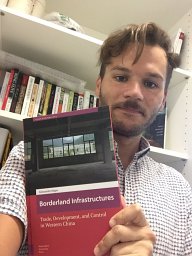 Alessandro Rippa合作论文数Rachel Carson Ctr Environm & Soc, Ludwig Maximilian Univ Munich2
 Henryk Alff合作论文数Centre for Econics and Ecosystem Management, Eberswalde University for Sustainable Development2
 June Wang (王珺)合作论文数Department of Public Policy, College of Liberal Arts and Social Sciences, City University of Hong Kong2
 Mark R. Frost合作论文数History Department, Faculty of Social & Historical Sciences, University College London2
 T.C. Chang合作论文数Department of Geography, Faculty of Arts and Social Sciences, National University of Singapore2
 Daly Patrick合作论文数Earth Observatory of Singapore, Nanyang Technological University2
 Kyle Pierce合作论文数2Tim Oakes合作论文数2Willem Paling合作论文数2Peggy Teo合作论文数2
 Andrew Gorman Murray合作论文数Western Sydney University2
 Ruth Lane合作论文数Monash Energy Institute, Faculty of Information Technology, Monash University2
 Jonathan D Rigg (Jonathan Rigg)合作论文数School of Geographical Sciences, University of Bristol2lucia allais合作论文数1
 Ali Mozaffari合作论文数1
 Sebastien Carretier合作论文数1aparna tandon合作论文数The International Centre for the Study of the Preservation and Restoration of Cultural Property (ICCROM), Rome, Italy1
 Luke James合作论文数1Yang Yang合作论文数1Cut Dewi合作论文数1
 kelly greenop合作论文数School of Architecture, The University of Queensland1
 Amy Clarke合作论文数University of the Sunshine Coast1
 Nigel Westbrook合作论文数School of Design, University of Western Australia1
 Kearrin Sims合作论文数James Cook Univ1
 Chang Jiat Hwee合作论文数Department of Architecture, School of Design and Environment, National University of Singapore1
 James D. Sidaway合作论文数Department of Geography, Faculty of Arts and Social Sciences, National University of Singapore1
 Erica Avrami合作论文数Graduate School of Architecture, Planning and Preservation, Columbia University1Sher Banu A Latiff Khan合作论文数1
 Mairead Nic Craith合作论文数1David Gissen合作论文数Pennsylvania State University1
 Edyta Roszko合作论文数1
 Emma Waterton合作论文数1
 Juan Francisco Salazar合作论文数1Michele Langfield合作论文数1Hae Un Rii合作论文数1
 Elizabeth Leane合作论文数1
 Kecia L. Fong合作论文数1Eugene Rubin合作论文数1David L. Garner合作论文数1
 Bertrand Niviere合作论文数1




