This article uses a Chinese narrative of ‘nature-human harmony’ as the main thread to connect the contributions of ontological anthropology. I argue that the best of the critiques of nature-human or nature-culture dualism in social anthropology propose rebuilding a world that ‘pursues harmony while preserving difference’ in the double sense of nature and culture. Given that most social scientific problems are indeed related to utilitarian individualism, I argue that research on ‘ontology’ should re-engage the ancient notion of ‘ ji’, construed as ‘others-comprised self’, which forms the foundation of a perspective of ‘broad human relationship’ between humans and their others (other humans, things, and divinities). Perspectivism inherits many categories of Western cosmology that it critiques and represents a kind of inert ontology. Grounded in the cosmology of life ( sheng), we hope to contribute to a new anthropology of the compatibility between self/others and subject/objects.
本文以近代西学的源流为主线,叙述了学科的"大历史".作者将人类学定义为"一门研究'他者'及其与我们之间的关联、对我们有启迪的学问",把"他者"界定为"非我"或"非己",指出这个概念超越文明的我他之别,不仅指人,还包括"物"和"神".接着文章追溯了从"后中世纪"的科学到19世纪人类学,及其在"两战"之间、战后人类学及20世纪70年代以来的变化.漫长的学科史的追溯表明西方人类学也是世界观的历史显现.本文也评论了西方人类学对近代世界格局的回应,述及中国的"三个世界"理论和"南方人类学"的兴起,最后落脚到"我们对世界人类学会有什么贡献"这一问题.本文开篇强调了非西方人类学史和区域民族志史的价值,结语部分则指出中国人类学能否为世界提供思想,取决于我们是不是"有心".
Why should human beings be divided into "us" or "them"? This question underlies the basic proposition of anthropology. In fact, it has never received a decisive answer. In the dialogue between Marshall Sahlins and Wang Mingming, the two agree that "we are part of the other," because it is to the other that we owe the constitution of our full selves. The modernity of diversity and plurality supports the validity of this judgment.
基于中国东南及西南的田野经验,王铭铭教授提出"中间圈"概念以概括相对于中心区域的边陲文化.关凯教授就这一概念及云南民族研究、中国民族学学科发展相关问题对王铭铭教授进行了访谈.
近年来,"XX作为方法"一语频繁出现.其中的"XX"大抵是历史学和社会科学研究对象的区域,规模大到亚洲或中国,小到国内的地区,最近它甚至缩小到"自己"了."亚洲作为方法",由汪晖借自日本学者竹内好的叙述,用以还原一个超越国族疆界的、复合的认识主体地位(即"主体间性").①"中国作为方法"是日本著名学者沟口雄三提出的,②在国内学界受到关注,指作为历史"内发动力"的中国本土思想."XX地区作为方法",似与"华南派"历史人类学家有特殊关系,指其长期研究的岭南区域的突出特征及其理论价值.③"自己作为方法",则出自近期项飙、吴琦的对话录的书名,④这本书以项飙自己的学术人生为主线,牵出一连串对乡土、学界与世界的经验和看法.
一、返回故土 1989年5月,父亲重病住院,我要回乡探望.身在英伦,路途遥远,而当时英国对中国留学生有"再入境签证"的要求.没有它,就不能回英完成学业了.幸亏有驻英中国使馆的照顾,我得到一封外交照会,紧急启程回国.当月底,我抵达北京,如约匆忙赶往中央民族学院(现为中央民族大学)家属院拜见了费孝通先生.一天后,我上了一列迟迟不开的火车往福建走(受特殊事件影响,我在北京火车站候车室地板上睡了30多个小时,在火车上站了40多个小时)……父亲痊愈后,留学生因故暂不能离境,我在家住了一年多.不过那时我并不是无事可做.回国前我已完成开题报告,可以进入博士论文田野工作阶段.
华夏身处欧亚大陆东部,经史前到“封建”的转化,再经秦汉帝制的确立,成长为一个超社会的文明共同体.这个文明共同体本身并非民族性的,而是一个介于民族与世界之间的“多元一体格局”,其生命的养分,来自使“多”与“一”得以协调融合的宇宙观系统.这个宇宙观系统使华夏有别于欧亚大陆其他文明,特别是印欧文明与闪米特文明.然而,数千年来,作为欧亚诸文明的核心成员之一,华夏通过其周边的“中间圈”与其他文明频繁往来,在文明的扩散与借鉴中,与后者共同造就了某种文明的“主体间性”局面.要实现文明的“文化自觉”,便要把握文明共同体的生命脉搏,而要把握这一脉搏,便既要通过深挖“多重证据”,追根溯源,又要“环顾四周”,考察诸文明的差异与关联.对于我们认识文明共同体研究这一使命的双重性,不少置身于人文学诸领域中的学者已做出了巨大贡献.然而,我们仍旧面对着通过重温社会科学主要理论支柱的典籍之文明叙述达成“凝视与环顾”的使命.
This article is a research report involving three anthropological studies conducted during the period of “Kuige” and their “re-studies.” By narrating the project, I set forth my views on the connections and differences between Chinese anthropological explorations from two historical periods. These anthropological explorations refer to the study of Lu Village conducted by Fei Xiaotong, that of “West Town” (Xizhou) by Francis L. K. Hsu, and that of “Pai-IPai” (Dai) villages by Tien Ju-Kang. They were all completed in the late 1930s and early 1940s. Each writer extracted a framework to analyze the land system, ancestor worship, and the relationship between humans and gods from the writer’s own field experience. Despite the difference in research methods, all three studies noticed the cultural differences between rural society and modernity. Since 2000, Peking University and Yunnan Minzu University have launched a “Province-university Cooperation Project.” During the project, a research team formed of several young scholars revisited Lu Village, “West Town” (Xizhou), and Namu Village. These writers’ works were based on the data acquired in their fieldwork and drew upon the opinions raised by global anthropologists on “re-study” in recent decades. Considering the dual effects of social change and shifts in academic concepts around “follow-up research,” the scholars put forward several points of view with their ethnographies, which all featured the characteristics of inheritance and reflection. Based on the results of the three “re-studies,” this article emphasizes the importance of the study of public rituals for the research of rural society. This article also attempts to re-examine the methodology of “human ecology,” which profoundly impacts Chinese anthropology and sociology.
近代人类学的奠基者曾高度重视借鉴古典学的研究成果.20世纪初,学科理念发生巨变.此后数十年间,古典学者继续借鉴人类学思想,而现代新人类学中重视古典学的学者却越来越少.20世纪60年代初,克拉克洪在其所著《论人类学与古典学的关系》一书中对这一变化表示喜忧参半.他乐见人类学思想渗入古典学,担忧人类学因减少汲取古典学的养分而丢失其本来的品质.克拉克洪指出,人类学的根基是人文与科学,此二者均为古希腊人的发明,现代新人类学要保持其品格,便有必要重返古希腊.鉴于克氏主张的重要性,本文力图对之加以还原,并在此基础上进行反思.本文认为,克拉克洪有规避西学人类学的神学关联及过度渲染古希腊特殊性的倾向,更存在以“文化”概念“消化”文野关联的问题.要扭转这类倾向,克服这类问题,应有选择地丰富古典旧人类学有关“中间环节”的看法.
本文以"显"和"隐"两个字为切入点,探讨了文化展示的人类学与人类学的文化展示的关系.虽然人类学家常常认为自己是田野中使"隐"得以显现的人,但实际上不同地方的"报道人"已经生活在一个兼备"显"和"隐"的世界里.我们在田野调查时看到的文化展示,如寺庙及其节庆,充满了"展示的智慧",堪与伴随着"殖民现代性"而来的各种"展示文化"做比对.此外,人类学家在寺庙庆典的"综合文本"中看到的——尤其是他们的献祭逻辑——对我们改革当代的"展示文化"具有启发意义.
近年来,国内外社会人类学界对于天人或自然文化对立的宇宙观展开了批判,其中,尤以“天人合一论”和“本体论转向”为代表.此前,社会科学的问题大多与造成“同而不和”的功利个体主义有关,这些新的建设性批判,均主张重建文化-自然意义上的“和而不同”世界.在这个世界中,“我”是“总体的人”,是“容有他者的己”,从“我”的范畴谱系考据中,可以重新发现天人双关的“广义人文关系”内涵.当下盛行的视角主义观点虽有其建树,但却因袭了其批判的西方宇宙观的不少范畴,实为某种静态主义本体观的再现.中国以动为本的“生生论”传统,可为“人与自然关系的再认识”填补巨大空间,也可为自他物我融通的新人类学做出独到贡献.
摩尔根的《古代社会》是“大历史”“宏大叙事”.在注重民族志具体经验的新人类学中,《古代社会》的形象一向不佳.确应批判地对待《古代社会》的教条化版本,确应进一步认识这一版本“客位主张”政治化实质.摩尔根在非西方土著部落中找到了古代希腊、罗马和德意志文明的史前基础,他把西方文明当作地标和“超越性外在历史时间”.这种进化论叙述被西方之外的国家广泛接受,造成了严重的历史扭曲.然而,必须承认,《古代社会》代表的旧人类学,比新人类学更具有哲学和历史内涵,有其明显优点.当下,非西方人类学正在与西方新旧人类学产生某些别致的综合.要增强其人类学的世界性,便有必要返回人类学的“古典时代”,在比较和联想中确立自己的“超文化”(transcultural)观点.
一、《物与人——安溪铁观音人文状况调查与研讨实录》[1]序 2013年7月至2014年5月之间,在我的田野之路上,安溪再次成为一个停靠站(我曾于1991-1995年之间在安溪停留多时).两个时间点,一个是我带几位学徒去这个铁观音原乡实地考察的环节,一个是我配合地方政府组织围绕着茶的人文学国际研讨活动的环节,二者之间有为期不短的“空闲期”,我还是按既成的习惯教书、行走、书写.在教书以外的时间夹缝中,我多次自北京出发,前去安溪“接地气”,试图从茶园,从茶壶里飘出的“观音韵”,从爱茶的乡贤(尤其是廖皆明、陈木根、谢文哲诸先生)得到教诲;写得最多的,是书信(电子邮件),它们数以百计,由此,我联络着海内外同好,为我们的聚会作必要的准备.
:In the middle of 1904 , the renown Chinese thinker and reformer Kang Youwei made his "journey to the West".In Italy , the first of the 11 European countries he visited , Kang inspected the historical relics ,political institutions ,and local customs.Taking the opportunity of "being there" ,he made an on‐the‐spot inquiry into the age‐old Roman civilization.He also compared the Western way with the " Continental" Chinese way of being political and civilized.Near the end of 1904 , Kang compiled his diaries , poems ,and notes of the journey into a book entitled The Travelogue of Italy (the first of the series of his Travelogues of 11 European Nations) ,which is the focus of this study. The Travelogue of Italy is treated in this paper as an example from which a major perspective of "civilization" can be reconstructed and re‐enacted.To the author , a social anthropologist keenly interested in the political and cosmological perspectives of civilization ,Kang’s Travelogue of Italy ,an old‐style "ethnographic" text in which a pattern of "civilizational modernity" (in contrast with "national modernity") is inscribed ,proves to be one of the most fascinating achievements of late period traditional Chinese "gazettes of foreign countries". This paper offers the following four parts of discussion : (1 )a synoptic biography of Kang’s life with a specific focus on his political thinking during the epoch of transition ;(2)a mapping of Kang’s voyage from the East to the West ;(3 ) an overview of Kang’s interpretation of the civilizational differences between Roman empire and the Han "All‐under‐Heaven" as presented in the travelogue ;(4 ) an analysis of Kang’s viewpoints of the relation between European and Asian civilizations.In the introductory and concluding sections , the author presents his views on the relevance of Kang Youwei’s perspectives to the critique of post‐traditional Chinese "nation‐building" social sciences. The paper serves as a sequel to the author’s extended essay on the re‐conceptualization of "civilization" by Kang Youwei’s European contemporary émile Durkheim (and his inheritor Marcel Mauss).Interwoven throughout the discussion are comparative points between King and Durkheim.It is suggested that both men define "civilizations" in terms of "supral‐societal" or "supra‐national" systems.Nonetheless , unlike Durkheim , who remained deeply concerned with improving the life of the nation , Kang was inclined to conceptualize such systems in terms of the " ambit of flourishing peace"( shengping shi) ,a dynamic state of human political existence between the age of violent chaos and that of the Great Unity.
Between 1913 and 1930 , Marcel Mauss worked to re-define civilizations in terms of material ,institutional ,and spiritual entities and moral vitalities between the nations and the world .This paper makes an inquiry of the historical origin of Mauss's project ,its intellectual and political pertinence ,as well as its contemporary implications .Mauss's project of human science of civilizations was envisaged during the time of rupture between the two world wars , a period of tensions and self-contradictory syntheses between the rationalist notions of civilization and the nationalist notions of culture .The former was founded upon both religious and scientific bases and the latter took extremism in the late 19th century.The struggle of the two caused serious problems in Europe as well as other parts of the world .In his study of the"phenomena of civilization ," Mauss conceptualized civilization as the in-between hyper-social spaces between the national borders .He examined the forms and geographic patterns of the spread of the phenomena and argued that for human science—in particular , ethnology and sociology—to be truer to societies and cultures , such phenomena should be systematically studied sociologically .Mauss also believed that a holistic human science would not be possible unless such civilizational phenomena were taken into account by the sociologist.Critiquing the existing territorial boundedness of sociology and the ethical indifference of ethnology ,Mauss insisted on the combination of the two subjects—the ethnological sociology of the hyper-sociality ,or "moral miliu" of the relation between societies .This study argues that what Mauss envisaged a century ago is still relevant to today's world.Considering that social sciences (including the post-war American sciences of "area studies") today are often constrained by the division of "specialized" and "general" fields ,it is important to renew Mauss's open mindedness to see civilizations as the "intermediaries"of social existence encompassing a certain number of nations , each national culture being only a form of the whole . The introductory section here reflects on the dominance of the model of"the world of the nations " in social science , which has resulted in the unfortunate disremembering of Durkheimian sociology of civilizations . It follows with the discussion of the subject of civilizations in the life and work of Mauss.The core parts of this study outline the history of the nationalization and civilization of Annee Sociologique ,offer a review of Mauss's critique of nationalism and narratives of civilization ,as well as a summary of his models of forms ,contents ,and regions of civilizations .In the concluding remarks ,the discussion of Annee Sociologique on civilizations is related to the early 20th century Chinese intellectual thinking regarding national polities and cosmopolitanism.
(一) 1913年,社会学年鉴派导师涂尔干和莫斯合写了一篇短文,题为“关于文明概念的札记”,发表在《社会学年鉴》第12卷,排版后,只占四个多页面(46-50页)[1].在建立学派的过程中,涂尔干没有脱离过莫斯这个博学却因过于活跃而难以集中心神写作的外甥兼助手,但极少与莫斯联名发表文章.《关于文明概念的札记》这篇短文,是涂尔干和莫斯合写的极少数文章之一(如我们所知,另一篇是1903年发表的《原始分类》[2]),更是年鉴派最早的一篇以定义“文明”为主旨的作品.
本文据作者2017年11月18日在北大文研院“纪念涂尔干逝世一百周年学术研讨会”的口头发言整理而成,述及年鉴派汉学成就、“道德环境”(社会)、文明论及学派形成等,夹叙作者个人在其学术实践中如何体会涂尔干相关思想的启迪.作者指出,涂尔干逝世百年了,但我们的处境(尤其是个体-实利主义和排他的国族主义制造的“氛围”)并没有产生根本改变;“重新发现”这位前辈的教诲,学习其思想,对于我们更务实地看现实出现的问题及我们对它担当的责任,都深有启迪.
This article explores the alternative music scene in Debrecen, Hungary’s second largest town, in the first decade after the fall of the Berlin Wall. It describes the conditions of its emergence, highlighting the influence of western music and new wave DIY subculture that served as a catalyst in the identity formation of its participants, both musicians and audiences. It argues that in contrast with the politicized rock of the Budapest underground, the international dimension served as a founding element of scene-formation in Debrecen. The aesthetic cosmopolitanism was achieved through translating the affective packages and anti-mainstream sentiments of new wave music into the local context. This research is based on conversations with prominent members of the scene, and offers several case studies of Debrecen bands. It includes song lyrics to illustrate the cosmopolitan dimension of bands and records arising from the scene. It draws on the studies of subcultures, translocality and cosmopolitanism.
费孝通是20世纪中国最重要的学者和改革家之一.他1910年11月2日出生在江苏省吴江县的一个绅士家庭.在他出生之前5年,清朝政府废除了科举制度.这一大变革导致传统教育衰落,费孝通失去了接受系统的旧学教育的机会,只能去上新式学校.不过,童年时期的费孝通在家中接受了双亲的中西文明熏陶.他的父亲费璞安,有良好的旧学修养,同时也对西方现代科学充满浓厚兴趣;母亲杨纫兰,则是一位有基督教信仰的官员之女.
(一) 《山海经》这本书,现在市场上卖的都是很厚的一本,实际上只有31,000字,书分成山经和海经,共18卷.这本书的历史跟许多古书一样复杂.它跟很多的经典一样,上古时期曾经以某种方式存在过.秦始皇焚书坑儒,项羽大烧咸阳,使很多古书被毁.当然,秦始皇和项羽没有烧掉所有的书.到了汉代时,在我们可以称之为“皇家图书馆”的机构里面,以及在民间,其实还藏着不少.《山海经》这本书正是在西汉的时候古文经学家刘歆(秀)这个人在故纸堆里发现的.据说,这本书的山经部分(《五藏山经》)是传世的,刘歆给加上了海经部分,成了《山海经》.他统合山经和海经,用一种宇宙观图式梳理了这部古书,使它系统化起来.
 Jingdong Qu (渠敬东)合作论文数Institute of Humanities and Social Sciences, Peking University;Department of Sociology, Peking University3
 Shu Yu (舒瑜)合作论文数2JieShun Xu (徐杰舜)合作论文数2
 Xinjian Xu (徐新建)合作论文数The College of Literature and Journalism of Sichuan University2
 Qingmei Yang (杨清媚)合作论文数School of Sociology, China University of Political Science and Law2
 Feizhou Zhou (周飞舟)合作论文数Department of Sociology, Peking University2Michael Rowlands合作论文数1lan luo (罗兰)合作论文数1BeiLi He (何贝莉)合作论文数1RenQing Li (李人庆)合作论文数1Yan Qu (渠岩)合作论文数1TieLiang Liu (刘铁梁)合作论文数1ShuPing Di (翟淑平)合作论文数1GuoXun Su (苏国勋)合作论文数1WenBin Peng (彭文斌)合作论文数1ZhengWen Yang (杨正文)合作论文数1JinGuo Chen (陈进国)合作论文数1ZhiQiang Zhang (张志强)合作论文数1Lin Ma (马琳)合作论文数1Yang Luo (罗杨)合作论文数1
 Kai Guan (关凯)合作论文数Minzu University of China1
 Fei Wu (吴飞)合作论文数Yuanpei College, Peking University1
 Xiaonan Deng (邓小南)合作论文数Department of History, Peking University1
 Shiyu Zhao (赵世瑜)合作论文数Department of History, Faculty of Humanities, Peking University1
 Qi Liu (刘琪)合作论文数Shanghai Academy of Global Governance & Area Studies, Shanghai International Studies University1Huadong Li (李华东)合作论文数1
 Mei Jiang (江湄)合作论文数School of History Capital Normal University1Liang Qindong (梁钦东)合作论文数1
 George E. Marcus合作论文数Williams College1
 Geng Tian (田耕)合作论文数Yuanpei College, Peking University1Changbai WANG (王长百)合作论文数1Wenjiang Lv (吕文江)合作论文数1
 Zhaorong Peng (彭兆荣)合作论文数Department of Anthropology & Ethnology, School of Sociology and Anthropology, Xiamen University1Yahui Zhang (张亚辉)合作论文数1
) Dan Mao (毛丹)合作论文数Department of Sociology, Zhejiang University1
Dan Mao (毛丹)合作论文数Department of Sociology, Zhejiang University1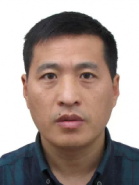 Qiang Ren (任强)合作论文数Department of Sociology, Zhejiang University1Jing Sun (孙静)合作论文数北京大学生命科学学院1Stephan Feuchtwang合作论文数Department of Anthropology;School of Economics, London1
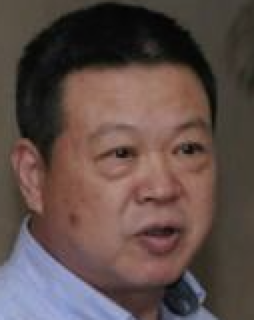 Daming Zhou (周大鸣)合作论文数School of Sociology & Anthropology, Sun Yat-Sen University1
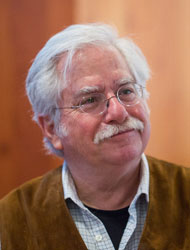 Michael M. J. Fischer合作论文数MIT Anthropology;Science, Technology, and Society, MIT1
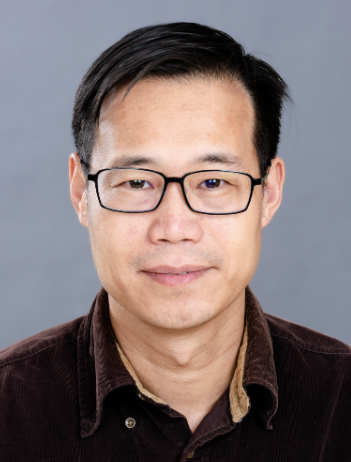 Feiyu Sun (孙飞宇)合作论文数Department of Sociology, Peking University;Yuanpei College, Peking University1




