Abstract Digital surveillance technologies (DSTs) are widely applied in nature recovery for their potential to generate novel data on species and ecosystems through digital tracking, automation (e.g. from hazardous locations) and from newly recruited citizen scientists. However, their use raises a number of wider questions relevant to nature recovery. This paper is an interdisciplinary review of published literature about the potentialities and implications of digital surveillance for nature recovery. DSTs have the potential to contribute to the collection of novel data useful in nature recovery, and allow rapid and efficient capture, management and analysis of data, potentially increasing the speed and reducing the cost of acquiring scientific knowledge. New scientific data may helpfully direct conservation action (e.g. in spatially explicit policy on migration corridors), but there can be problems of bias and distraction. However, digitalisation also shapes human understandings of non‐human nature in complex ways, and contributes to the rise of virtual digital natures. The use of DSTs has implications for the future role of human workers, and a role in commoditising nature and extending the grip of technology corporations. The deployment of DSTs also has implications for (i) human rights (e.g. around protected areas); (ii) for its part in the environmental impacts of digitalisation (e.g. mineral and energy consumption and e‐waste); and (iii) for the welfare of tracked animals. The paper concludes that DSTs can make important scientific contributions through the volume and diversity of data and automated management. However, several issues need close attention from users: the potential of digital technologies to shape conservation action, public understandings and commoditisation of nature, and the importance of human rights, animal rights and the environmental impacts of digitalisation. Ethical frameworks, transparency about methods (especially in published papers) and discussion across the nature recovery community are important if the benefits of DSTs are to be realised without associated costs. Read the free Plain Language Summary for this article on the Journal blog.
Digital technologies are becoming increasingly important in human engagements with the natural world. It has been suggested that digital games could contribute to the work of biodiversity conservation organisations, mediating human understanding of, and responses to, living nature. In this paper, we explore the implications of enrolling non-human nature into conservation gaming projects, focusing on the example of gamifying animal movement data. We discuss a simple experiment where people ‘race’ against animals in an exercise app, examining how wild animals are represented in digital games through digital technologies. We also explore how tracking technologies make animals digital, and how these digital animals can be central to gaming experiences. We consider what is involved in these transitions and enrolments of wild animals into gaming environments, and explore a series of issues that seem to us to deserve further thought and discussion: what humans can learn from games featuring non-human animals; whether games evoke empathy for the non-humans; whether games allow a human player to learn about the political ecology of landscapes within which wild animals exist; questions of ethics and power associated with the involuntary enrolment of animals into the gamification dynamic; the commodification involved in ‘animal games’; and the carbon and other impacts of ‘games for nature’. Digital games are a global phenomenon and a global industry. Their role in the lived experience of being human continues to expand. We suggest that there is value in conservationists and those who analyse and critique the political ecologies of conservation thinking further about digital games, digital animals and digital natures.
Evidence‐based policy‐making increasingly shapes the practice of advisory bodies, including global environmental assessments (GEAs). Advocates point to the power of evidence (particularly, but not only scientific evidence) to improve policy‐making. Here we discuss how political considerations shaped evidence‐gathering and use within the World Commission on Dams (WCD), a GEA body which was active between 1998 and 2000. We use insights from semi‐structured interviews with participants in the WCD process. First, we argue that the WCD shows that the political nature of evidence‐gathering has long been important in GEA processes. Despite rhetoric emphasising the objectivity of its evidence base, the WCD's evidence‐gathering was permeated by political considerations, for example in convening stakeholders with opposing views, giving evidence an instrumental purpose in widening participation and epistemic authority beyond just information and learning. Second, we show how a diversity of evidence (in form and substantive content) can challenge mainstream views. Contrary to the conventional emphasis on technical and quantitative data in GEA processes, we show how personal engagement with emotionally charged evidence, including that from grassroots sources and participatory processes within the WCD, created a shared understanding among opposing sides.
Humans, non-human animals, and technologies are increasingly entangled. Using the peregrine falcon (Falco peregrinus) as an illustrative example, we propose 'technonatural history' as a theoretical and methodological approach for observing, describing, and examining the role technologies play in shaping human relations with other species. After nearing extinction in the 20th century, peregrines have become woven into the fabric of everyday urban life and are a frequently sighted urban raptor in the UK, nesting on high-rise buildings and church spires since the late 1990s. Their unexpected presence in cities symbolises hope for multispecies conviviality amid the contemporary ecological crisis. As their populations resurged, crucially, webcam and livestreaming technologies developed rapidly. Peregrines were one of the first animals to be broadcast over the internet via 'nestcams', granting broad publics access to their intimate lives. We examine the related technological histories of livestreaming technologies and natural histories of peregrine falcons in the UK, tracing the emergence of 'the digital peregrine' and its manifold implications for more-than-human and digital geographies. To do so, we build on oral history interviews with people associated with digital peregrines throughout the UK: nestcam technicians, peregrine conservationists, professional ecologists, activists, and citizen scientists. While digitisation brings broad publics closer to these cosmopolitan raptors, they can only ever grasp at the wildness of peregrine falcons and their wider milieus as the digital peregrine is a distinct entity, encountered via its own set of affects and affordances. In the peregrine's case, digital technologies create unexpected and radical opportunities for urban conviviality, signalling the positive potentials technologies host for forging meaningful more-than-human connections.
Recent discussion of global environmental assessment processes suggests that the process of consensus creation is central to understanding the way knowledge is produced and conclusions are reached. Here we contribute to this literature by providing a case study of the World Commission on Dams, which brought together supporters and opponents of large dams, at the height of controversy about dams in the 1990s. The Commission reviewed evidence and formulated guidelines for best practice, finding a way through a political stalemate. The article draws on interviews with those involved in the Commission and discusses the historical context, form of stakeholder representation, time horizon, and leadership style as consensus-enabling conditions. We conclude that an ambitious consensual process was successful within the life of the Commission, but at the cost of carrying external actors with it, leading to challenges with dissemination and uptake of consensual recommendations.
The global long-term decline of migrant birds represents an important and challenging issue for conservation scientists and practitioners. This review draws together recent research directed at the Afro-Palaearctic flyway and considers its implications for conservation. The greatest advances in knowledge have been made in the field of tracking. These studies reveal many species to be highly dispersed in the non-breeding season, suggesting that site-level conservation at a small number of locations will almost certainly be of limited value for most species. Instead, widespread but 'shallow' land-sharing solutions are likely to be more effective but, because any local changes in Africa will affect many European populations, any impact will be extremely difficult to detect through monitoring in the breeding grounds. Targeted action to boost productivity in Europe may help to halt declines of some species but reversing declines for many species is also likely to require these 'shallow' land-sharing approaches in non-breeding areas. The retention or planting of native trees in the humid and arid zones within Africa may be a generic conservation tool, especially if planting is concentrated on favoured tree species. Overall, and despite a growing knowledge, we remain largely unable to progress beyond general flyway-level actions, such as maintaining suitable habitat across an increasingly anthropogenic landscape for generalists, targeted site-based conservation for specialists and at stop-over sites, protection of species from hunting, and individual species-level solutions. We remain unable to assess the cost-effectiveness of more specific conservation action, mainly because of uncertainty around how migrant populations are affected by conditions during passage and on the non-breeding grounds, as well as around the efficacy of implementation of actions, particularly in non-breeding areas. For advances in knowledge to develop and implement effective conservation, scientific approaches need to be better integrated with each other and implemented across the full annual cycle. However, we urge the immediate use of available scientific knowledge rather than waiting for a complete understanding, and that any action is combined with species monitoring and adaptive management across the flyway.
After nearing extinction in the late 1970s, peregrine falcons have adapted to urban ecosystems, becoming a UK conservation success story. This chapter tells the story of peregrine falcon resurgence in the UK, tracing three key lignes de fuite that peregrines have taken from the twentieth to the twenty-first century. First, we consider the peregrine as a revenant ghost: its transformation into spectral form, its fading from human sight as it neared extinction, and its resurgence and ecological recovery. Second, we consider the peregrine's movement into new spaces; specifically, the built environments of urban landscapes. The revenant peregrine has become urban, occupying novel territories and displaying new mobilities closely aligned to human worlds. Third, we consider a further transition that has accompanied the peregrine's recovery and urban flyways: its emergence in and through the fractal spaces of the digital world. Cameras mounted on nests, shared through the internet, have allowed the peregrine to move through new digital skies, interweaving its flight across a different cloud. From single images refreshed every 30 seconds to high-definition livestreamed audiovisual footage of peregrine nests, "nestcams" have proliferated online, offering unique windows into the lives of these charismatic predators, which have become cosmopolitan species par excellence. We draw on archival research and extensive qualitative research with peregrine nestcam hosts, local birding groups, and online visitors to nestcams across the UK to make our argument.
The World Commission on Dams (WCD) was active between 1998 and 2000. Despite the Commission’s short life, it left a lasting mark on the global debate on large dams, one of the most intractable and conflicted issues in environmental governance. Existing accounts of the Commission focus chiefly on its recommendations and their influence on dam planners. Another major topic of interest has been the novelty of making global environmental policy through multi-stakeholder dialogue rather than through intergovernmental negotiation. This focus on technicalities, results, and institutional design underplays the Commission’s political significance. It was a bold and innovative attempt to find common ground between promoters and opponents of dams on which a new way of thinking about and planning dams could be built. In this paper, we focus on the emergence of the Commission, in response to the evolving conflict over dams, particularly between the World Bank and its critics. We explore the processes that led to the establishment of the Commission and its role as an attempt to transform conflict into cooperation by bringing together pro- and anti-dam communities.
AbstractResearch into the relationship between ecosystem services and human well-being, including poverty alleviation, has blossomed. However, little is known about who has produced this knowledge, what collaborative patterns and institutional and funding conditions have underpinned it, or what implications these matters may have. To investigate the potential implications of such production for conservation science and practice, we address this by developing a social network analysis of the most prolific writers in the production of knowledge about ecosystem services and poverty alleviation. We show that 70% of these authors are men, most are trained in either the biological sciences or economics and almost none in the humanities. Eighty per cent of authors obtained their PhD from universities in the EU or the USA, and they are currently employed in these regions. The co-authorship network is strongly collaborative, without dominant authors, and with the top 30 most cited scholars being based in the USA and co-authoring frequently. These findings suggest, firstly, that the production of knowledge on ecosystem services and poverty alleviation research has the same geographical and gender biases that characterize knowledge production in other scientific areas and, secondly, that there is an expertise bias that also characterizes other environmental matters. This is despite the fact that the research field of ecosystem services and poverty alleviation, by its nature, requires a multidisciplinary lens. This could be overcome through promoting more extensive collaboration and knowledge co-production.
In the thesis, Teklehaymanot Weldemichel explores the social and political dimensions of conservation policy and actions. He uses the Greater Serengeti-Mara Ecosystem to demonstrate how such dimens...
The lack of progress in reversing the declining global trend in biodiversity is partly due to a mismatch between how living nature is conceived and valued by the conservation movement on the one hand, and by many different people, including marginalized communities, on the other. Addressing this problem calls for a pluralistic perspective on biodiversity. This requires consideration of the use of the concept of biodiversity, willingness to expand its ambit, and engagement with the multiple and multi-level drivers of change. We propose ways for conservation science, policy and practice to deliver more effective and socially just conservation outcomes. Divergent conceptions of living nature between conservationists and other groups of people can hinder progress to protect biodiversity. This Perspective reflects on the use of the concept of biodiversity, willingness to expand its ambit, and engagement with the various drivers of change.
Abstract Wildlife conservation and research benefits enormously from automated and interconnected monitoring tools. Some of these tools, such as drones, remote cameras, and social media, can collect data on humans, either accidentally or deliberately. They can therefore be thought of as conservation surveillance technologies (CSTs). There is increasing evidence that CSTs, and the data they yield, can have both positive and negative impacts on people, raising ethical questions about how to use them responsibly. CST use may accelerate because of the COVID‐19 pandemic, adding urgency to addressing these ethical challenges. We propose a provisional set of principles for the responsible use of such tools and their data: (a) recognize and acknowledge CSTs can have social impacts; (b) deploy CSTs based on necessity and proportionality relative to the conservation problem; (c) evaluate all potential impacts of CSTs on people; (d) engage with and seek consent from people who may be observed and/or affected by CSTs; (e) build transparency and accountability into CST use; (f) respect peoples' rights and vulnerabilities; and (g) protect data in order to safeguard privacy. These principles require testing and could conceivably benefit conservation efforts, especially through inclusion of people likely to be affected by CSTs.
Conservation BiologyVolume 35, Issue 5 p. 1701-1703 DIVERSITY Editing the wild William M. Adams, University of Cambridge, Cambridge, UKSearch for more papers by this authorKent H. Redford, Corresponding Author kent@archipelagoconsulting.com orcid.org/0000-0002-4883-822X Archipelago Consulting, Portland, Maine, USA Correspondence Kent H. Redford, Archipelago Consulting, Portland, ME 04112, USA. Email: kent@archipelagoconsulting.comSearch for more papers by this author William M. Adams, University of Cambridge, Cambridge, UKSearch for more papers by this authorKent H. Redford, Corresponding Author kent@archipelagoconsulting.com orcid.org/0000-0002-4883-822X Archipelago Consulting, Portland, Maine, USA Correspondence Kent H. Redford, Archipelago Consulting, Portland, ME 04112, USA. Email: kent@archipelagoconsulting.comSearch for more papers by this author First published: 06 April 2021 https://doi.org/10.1111/cobi.13741 Article impact statement: : Synthetic biology is being used to edit genomes of wild species for agriculture and human health. Conservation science must get involved. Read the full textAboutPDF ToolsRequest permissionExport citationAdd to favoritesTrack citation ShareShare Give accessShare full text accessShare full-text accessPlease review our Terms and Conditions of Use and check box below to share full-text version of article.I have read and accept the Wiley Online Library Terms and Conditions of UseShareable LinkUse the link below to share a full-text version of this article with your friends and colleagues. Learn more.Copy URL Share a linkShare onEmailFacebookTwitterLinked InRedditWechat No abstract is available for this article. Volume35, Issue5October 2021Pages 1701-1703 RelatedInformation
An abstract is not available for this content. As you have access to this content, full HTML content is provided on this page. A PDF of this content is also available in through the ‘Save PDF’ action button.
An abstract is not available for this content. As you have access to this content, full HTML content is provided on this page. A PDF of this content is also available in through the ‘Save PDF’ action button.
As the concept of ecosystem services is applied more widely in conservation, its users will encounter the issue of poverty alleviation. Policy initiatives involving ecosystem services are often marked by their use of win-win narratives that conceal the trade-offs they must entail. Modelling this paper on an earlier essay about conservation and poverty, we explore the different views that underlie apparent agreement. We identify five positions that reflect different mixes of concern for ecosystem condition, poverty and economic growth, and we suggest that acknowledging these helps to uncover the subjacent goals of policy interventions and the trade-offs they involve in practice. Recognizing their existence and foundations can ultimately support the emergence of more legitimate and robust policies.
 Chris Sandbrook合作论文数Department of Geography, University of Cambridge18
 Bhaskar Vira合作论文数Department of Geograph, University of Cambridge17
 Daniel Brockington (Dan Brockington)合作论文数Institute for International Development, University of Manchester;Institute for Global Sustainable Development, University of Manchester15
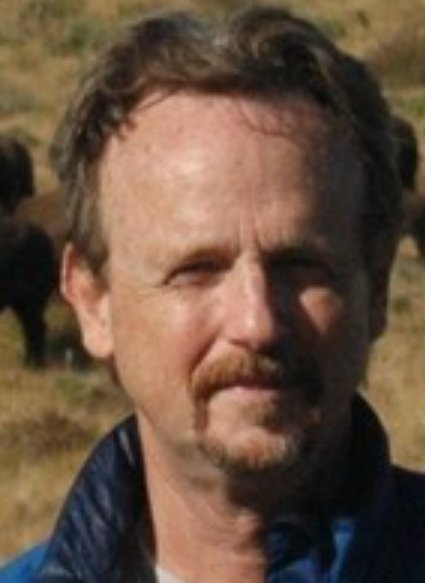 Kent Redford合作论文数Archipelago Consulting11
 Jon M. Hutton合作论文数8
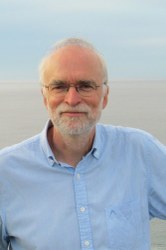 Ian Hodge合作论文数Department of Land Economy University of Cambridge8
 Evangelia Apostolopoulou合作论文数7
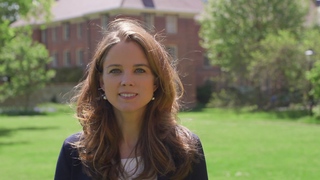 Jane Dyson合作论文数School of Geography, Earth and Atmospheric Sciences, Faculty of Science, The University of Melbourne6
 Francine M. R. Hughes合作论文数Animal and Environment Research Group, Anglia Ruskin University6Barney Dickson合作论文数6Michael Mortimore合作论文数5
 David Hulme合作论文数Global Development Institute, School of Environment, Education and Development, Faculty of Humanities, The University of Manchester;Brooks World Poverty Institute, The University of Manchester5
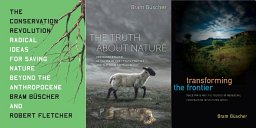 Bram Büscher合作论文数Institute of Social Studies, Erasmus University Rotterdam5
 Arun Agrawal合作论文数School for Environment and Sustainability, University of Michigan4
 Christopher Schulz合作论文数School of Geography and Sustainable Development, University of St Andrews4
 Dilys Roe合作论文数International Institute for Environment and Development4Thomas David H L合作论文数4
 Andrew Whitmore合作论文数Rothamsted Research4
 Rosaleen Duffy合作论文数Department of Politics and International Relations, Faculty of Social Sciences, The University of Sheffield4
 Georgina Mace合作论文数Centre for Biodiversity and Environment Research, Division of Biosciences, University College London4William Wolmer合作论文数4
 Nigel A.D. Bourn合作论文数Butterfly Conservation, Manor Yard4
 William Sutherland合作论文数Department of Zoology, University of Cambridge4Robert J. Smith合作论文数3Lindsey C. Sandbrook合作论文数3Jo Elliott合作论文数3
 Jonathon Turnbull合作论文数Dept Geog, Univ Cambridge3
 Adam Searle合作论文数Dept Geog, Univ Cambridge3Fred Nelson合作论文数3
 John G. Robinson合作论文数Wildlife Conservation Society3
 Elizabeth E Watson合作论文数3
 Esteve Corbera Elizalde (Esteve Corbera)合作论文数Institute of Environmental Science and Technology, Department of Geography, Universitat Autonoma de Barcelona3
 Nigel Leader-Williams合作论文数3
 Eneko Garmendia合作论文数Environmental Economics Unit;Institute for Public Economics;University of the Basque Country;Institute for Public Economics, University of the Basque Country3
 Mark Infield合作论文数3Richie D. Huber合作论文数3
 Stuart Warrington合作论文数3Maano Ramutsindela合作论文数3g e hollis合作论文数3K. Kimmage合作论文数3Michael D Graham合作论文数3david m anderson合作论文数2
 Erik Gomez-Baggethun合作论文数Norwegian University of Life Sciences2Gabriel Kahiro合作论文数2denley warren clifton合作论文数2D Brockington合作论文数2
 Lauren Evans合作论文数2
 Rogelio Luque-Lora合作论文数Dept Geog, Univ Cambridge2
 Alice B. Kelly Pennaz合作论文数2




