Cross-domain Collaboration Recommendation

发布时间:2015年11月27日

Introduction

We study the cross-domain collaboration recommendation problem, which exhibits very different patterns compared to traditional collaborations in the same domain: 1) sparse connection: cross-domain collaborations are rare; 2) complementary expertise: cross-domain collaborators often have different expertise and interest; 3) topic skewness: cross-domain collaboration topics are focused on a subset of topics. 

We propose the Cross-domain Topic Learning (CTL) model to address these challenges. For handling sparse connections, CTL consolidates the existing cross-domain collaborations through topic layers instead of at author layers, which alleviates the sparseness issue. For handling complementary expertise, CTL models topic distributions from source and target domains separately, as well as the correlation across domains. For handling topic skewness, CTL only models relevant topics to the cross-domain collaboration. We compare CTL with several baseline approaches on large publication datasets from different domains. CTL outperforms baselines significantly on multiple recommendation metrics. Beyond accurate recommendation performance, CTL is also insensitive to parameter tuning as confirmed in the sensitivity analysis. Finally, we integrate CTL into a large-scale web application for recommending cross-domain research collaborators, which further demonstrates the scalability of CTL in handling real-time queries.
 
This work has been accepted in KDD 2012. If you use data sets provided or refer to the model, please cite:
 
@INPROCEEDINGS{Tang:12KDDCross,
    AUTHOR = "Jie Tang and Sen Wu and Jimeng Sun and Hang Su",
    TITLE = "Cross-domain Collaboration Recommendation",
    BOOKTITLE = "KDD'2012",
    YEAR = {2012},
}

The full paper can be downloaded here[pdf].

Motivations

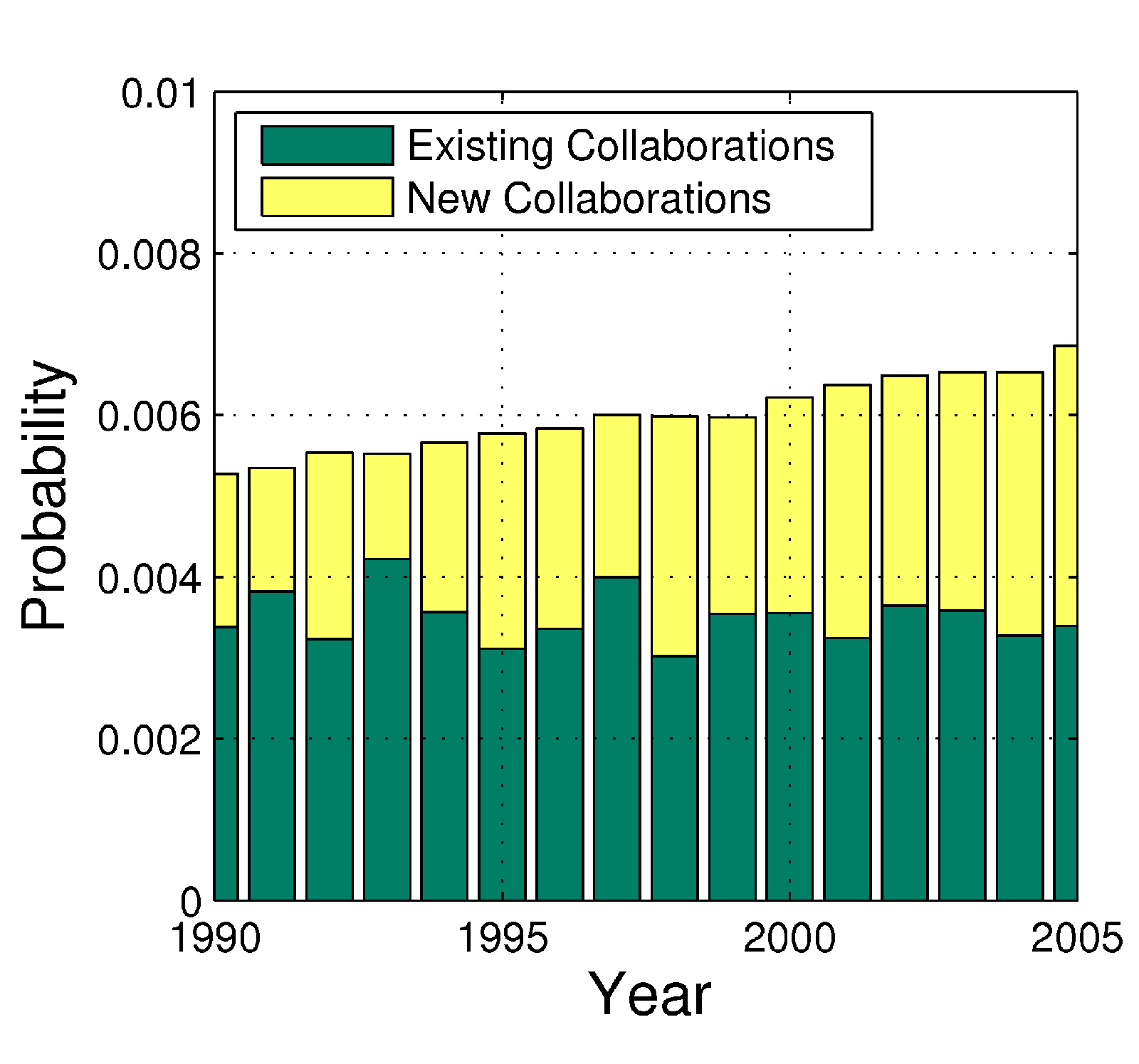
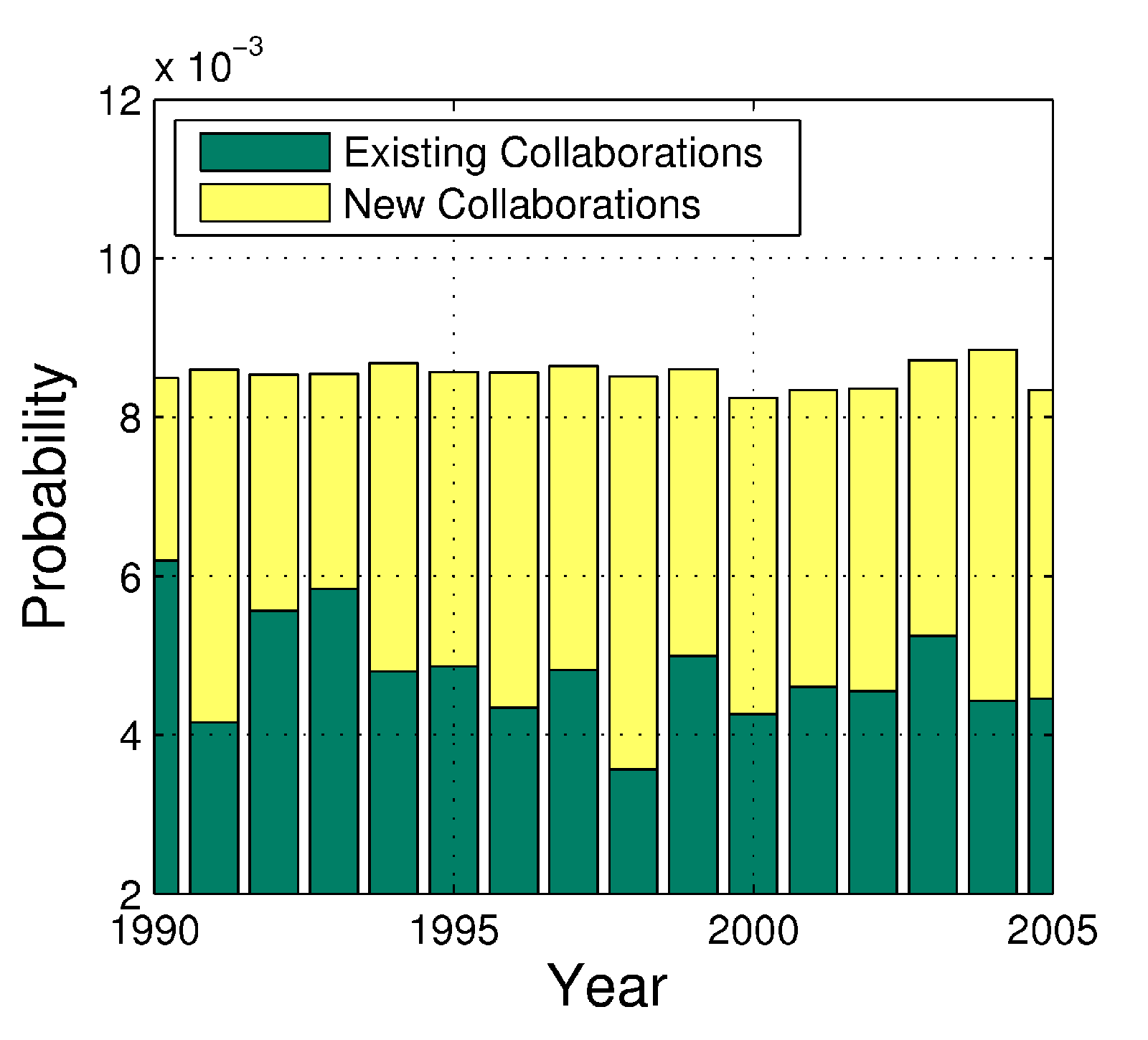
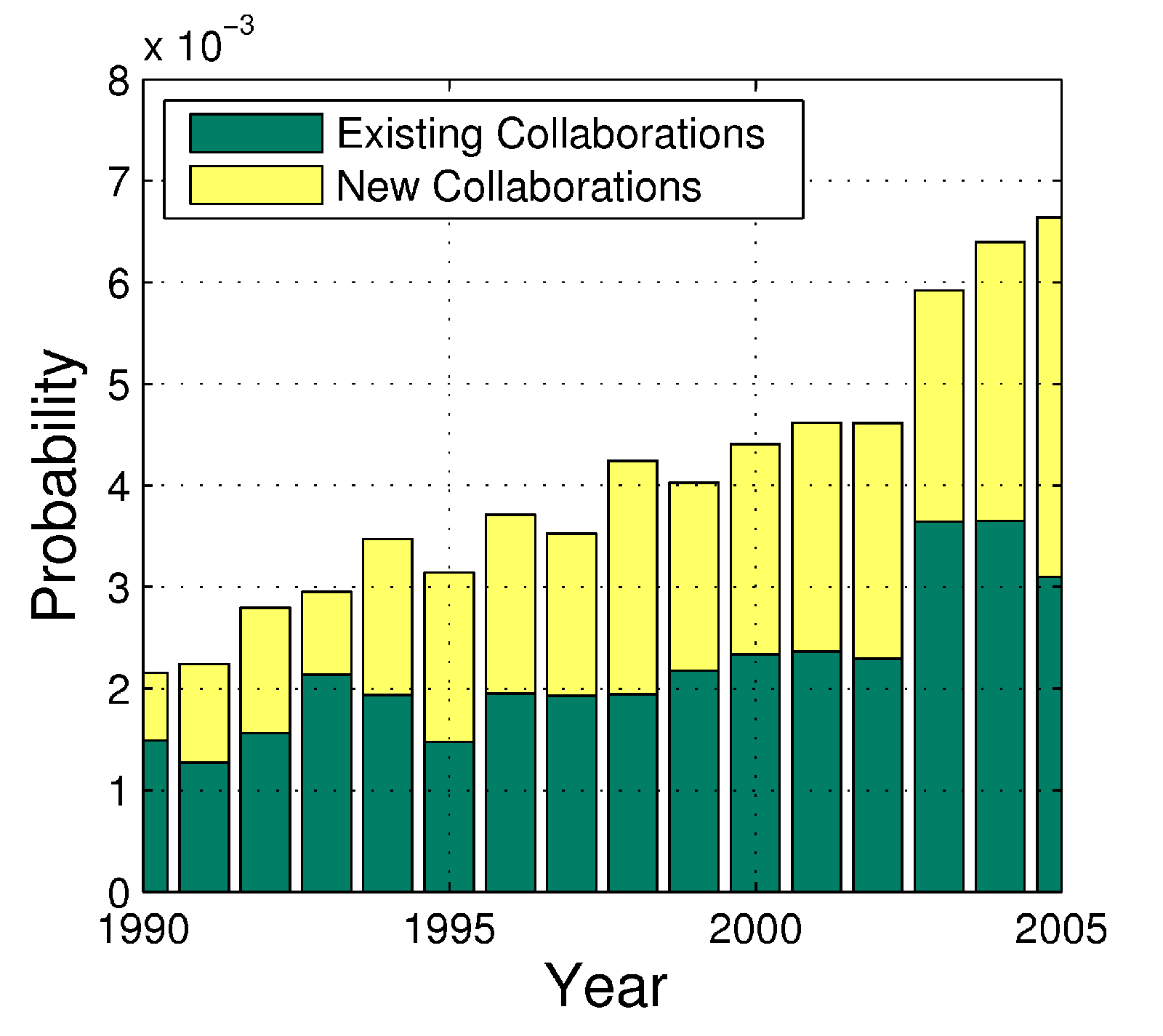
Cross-domain collaborations are increasingly important in many communities. As shown in Figure 1, the trends of cross-domain collaboration in many cases are growing. Newly formed cross-domain collaborations are significant in all cases, which confirmed the potential need for cross-domain collaborations.
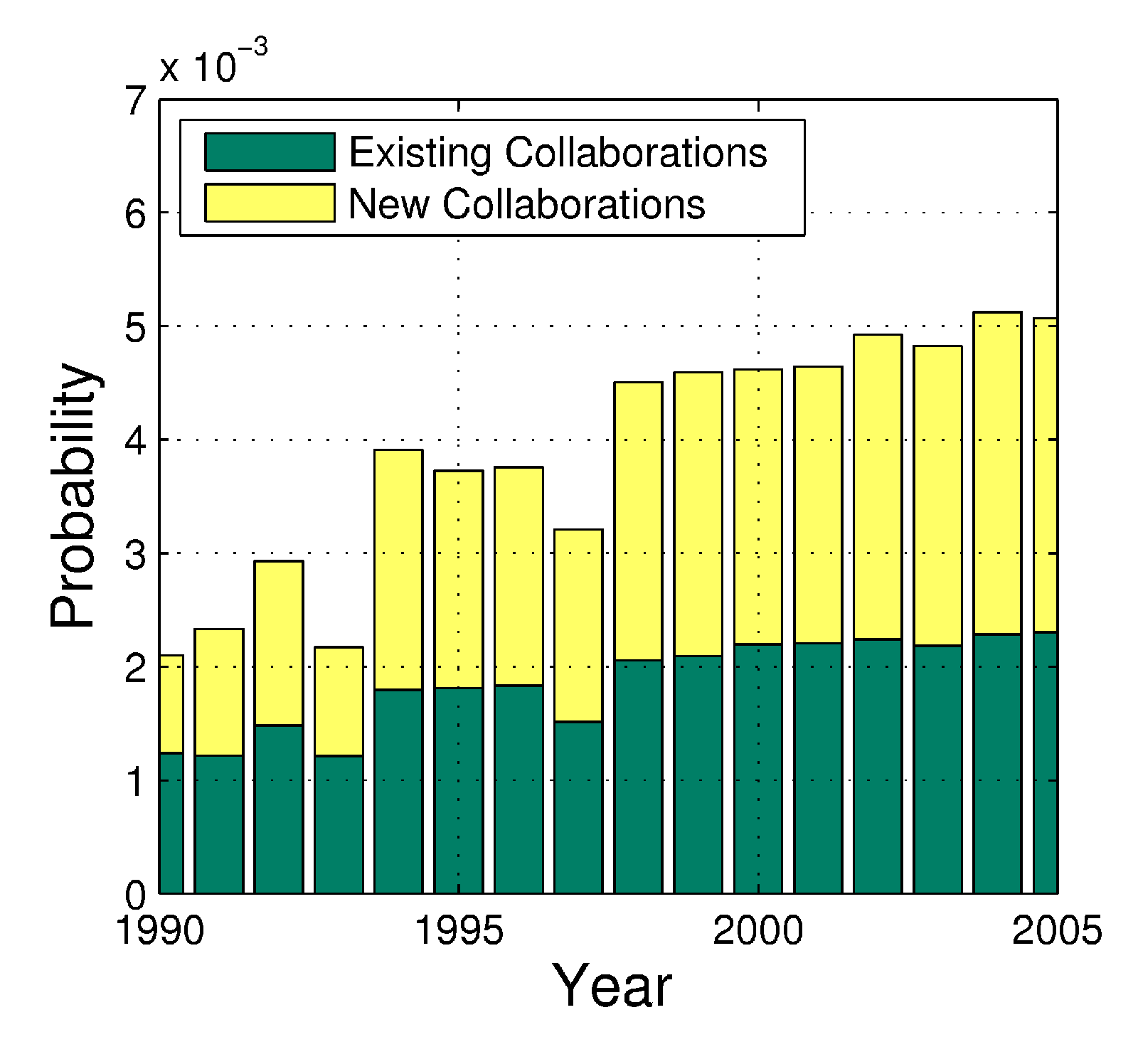
Figure 1: The comparison of existing collaboration and new collaboration trends over years. DM - Data Mining domain; MI - Medical Informatics domain; TH - Theory domain; VIS - Visualization domain; DB - Database domain. The trends of cross-domain collaborations in all but one case are growing (The exception between DM and VIS remain roughly constant over time). Newly formed cross-domain collaborations are significantly in all cases.


Data

 [Download]

The data set is extracted from Arnetminer.org, an academic search system, which contains 1,436,990 authors and 1,932,442 publications. The data we used in our experiments spans from 1990 to 2005. We consider the following five sub-domains: 

  • Data Mining: We use papers of the following data mining conferences: KDD, SDM, ICDM, WSDM and PKDD as ground truth, which result in a network with 6,282 authors and 22,862 co-author relationships.
  • Medical Informatics: We include the following journals: Journal of the American Medical Informatics Association, Journal of Biomedical Informatics, Artificial Intelligence in Medicine, IEEE Trans. Med. Imaging and IEEE Transactions on Information and Technology in Biomedicine, from which we obtain a network of 9,150 authors and 31,851 coauthor relationships.
  • Theory: We include the following conferences, i.e., STOC, FOCS and SODA, from which we get 5,449 authors and 27,712 co-author  relationships.
  • Visualization: We include the following conferences and journals, CVPR, ICCV, VAST, TVCG, IEEE Visualization and Information Visualization. The obtained coauthor network is comprised of 5,268 authors and 19,261 co-author relationships.
  • Database: We include the following conferences, i.e., SIGMOD, VLDB and ICDE. From those conferences, we extract 7,590 authors and 37,592 co-author relationships.
Based on the above five sub domains, we create four crossdomain test cases: Data Mining to Theory, Medical Informatics to Database, Medical Informatics to Data Mining, and Visualization to Data Mining.


To quantitatively evaluate the proposed methods, in each test case, we use historic collaboration data (data before 2001) for training and the last four years (2001-2005) for validation. In evaluation, we consider those candidates who already have cross-domain collaborations and then our task is to predict if
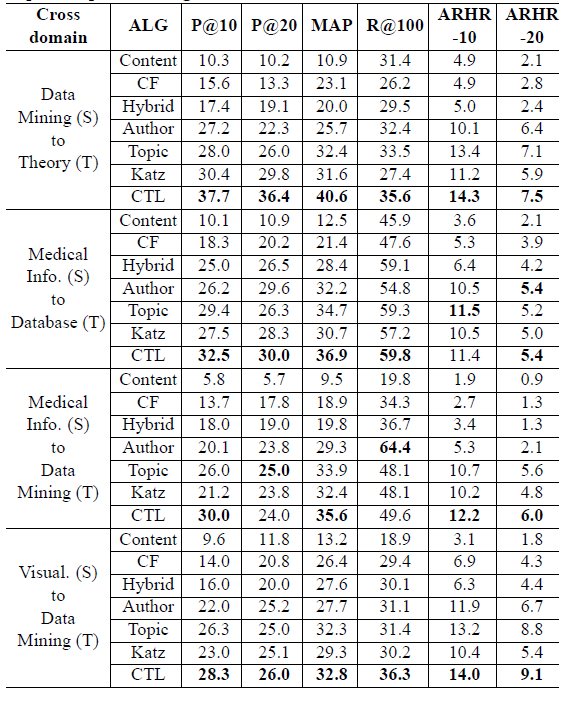
they will maintain the collaborations or expand new cross-domain collaborations. If the system recommends a cross-domain collaboration and later the  collaboration has been built, then we say the system made a correct recommendation; otherwise we say the system made a wrong recommendation. Based on this, we evaluate the recommendation performance in terms of P@10 (Precision for the top 10 recommended results), P@20, R@100 (Recall for the top 100 results), MAP (Mean Average Precision), and Average Reciprocal Hit-Rank (ARHR)


Table 1. Recommendation performance by different methods on the four cross-domain test cases (%). Content− Content Similarity; CF− Collaborative Filtering; Author− Author Matching; Topic− Topic Matching.

Prototype System

We have developed and deployed a web application for crossdomain recommendation based on the proposed CTL method. The system is available at http://arnetminer.org/collaborator
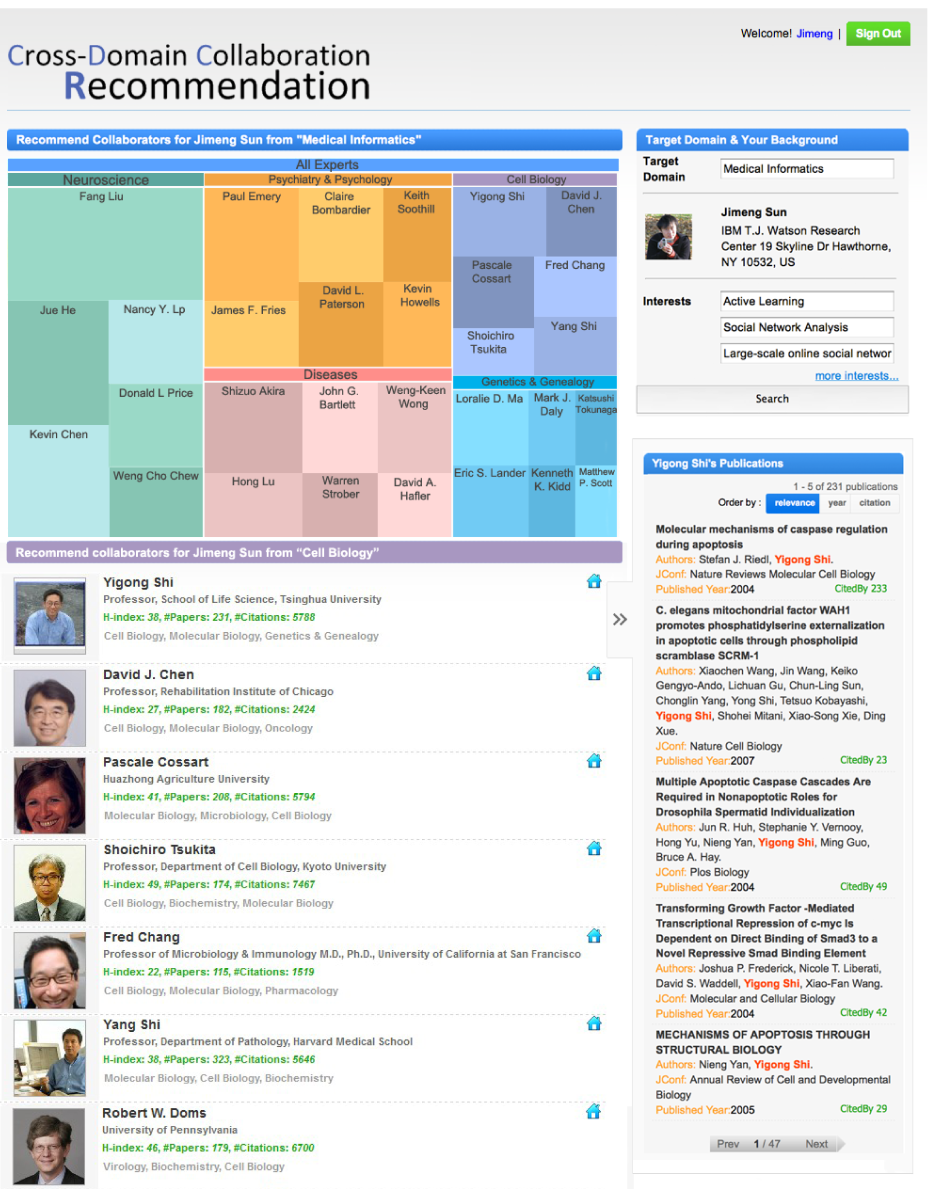
When a user wants to find cross-domain collaborators, he first inputs his profile (including organization and research interest) or use an existing author profile via the Arnetminer system, which includes more than 1 million researcher profiles. Then the user inputs the target domain (by keywords) in which he wants to find collaboration. The system performs the random walk with restart algorithm online against the CTL model to rank potential topics/collaborators in the target domain.
 
The following figure shows a screenshot of the cross-domain collaboration recommendation system. Our design principle is a hierarchical information display. We start by laying out the related topics in the target domain and then allow drill down into a specific topic for recommending authors, and finally to find out more about the recommending authors, their related publications are listed.
 
The right side shows the user’s profile and the top-left lists recommended subtopics in the target domain using Treemap, a popular technique for visualizing hierarchical structures in a constrained space. The area of each topic corresponds to the recommendation score for the topic. Recommended collaborators within each topic are also listed, where the block area corresponding to an author is proportional to her/his recommendation score. By clicking a topic on the treemap, the summary of those recommended authors are listed at bottom-left, where their affiliation and contact are provided. By clicking an individual author in that list, a set of related publications of this author are displayed on the bottom right panel.

Code

We will publish the code later.

Jie Tang, Sen Wu, Jimeng Sun, and Hang Su. Cross-domain Collaboration Recommendation. In Proceedings of the Eighteenth ACM SIGKDD International Conference on Knowledge Discovery and Data Mining (KDD'2012). [PDF] [Slides] [Data&Code] [System]