John W. Rooney - Biography
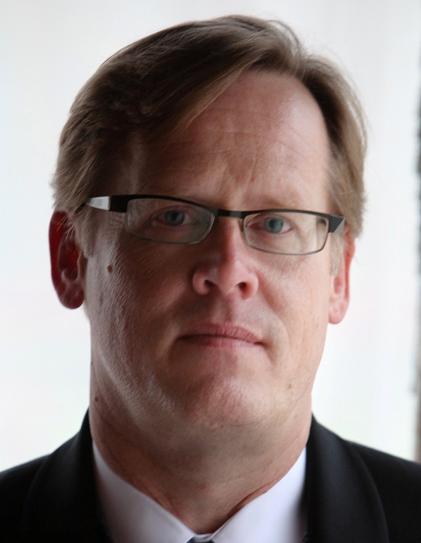
Biography
John W. Rooney is an accomplished educator with extensive knowledge in science and law. He earned a B.A. in Molecular Biology at U.C. Berkeley and completed his PhD in Genetics at Harvard. After a postdoctoral fellowship as a Cancer Research Institute fellowship recipient, he worked for three biotech companies. In all of his research, he has focused on the molecular biology of the immune system. During his research and professional work, he published many well-regarded scientific papers.
To pursue his interest in the legal, political, and social ramifications of health care, health care policy, and pharmaceutical developments, he earned a law degree at Vermont Law School, where he was also a semester associate at Fletcher Allen Healthcare, Burlington, Vermont, in the Offices of Compliance, General Counsel, and Risk Management.
Upon graduating from law school, John took a one year Research Associate position at Dartmouth University, studying gene regulation by steroid hormone receptors. For the last three years, he has been an Associate Adjunct Professor, teaching courses in Law, Liberal Arts, and Sciences, at Hesser College, Manchester Community College, New Hampshire Technical Institute, and Franklin Pierce University. He is also a paid consultant in Law and Science Curriculum Development for The Saylor Foundation.
John hopes to merge his scientific knowledge and expertise with his legal training to become a Patent Attorney as well as continue his teaching. He recently passed the Massachusetts State Bar Exam and the U.S. Patent and Trademark Office Registration to Practice Exam. His membership to the Massachusetts State Bar is pending. He is a registered Patent Agent.
He currently lives near the Boston area.
A complete background (biography, education, experience, awards, and publications) on John may be found using the links on the left or here.
John W. Rooney - Education
Education
J.D., Vermont Law School (2008)
Certificates; Intellectual Property Summer Institute, Advanced Licensing Institute, Franklin Pierce Law Center (2006)
Ph.D., Genetics, Harvard University (1995)
B.A., Molecular Biology, University of California, Berkeley (1987)
John W. Rooney - Experience
Experience
Academic Consultant, Online Law and Science Curriculum Development, The Saylor Foundation, Washington, D.C.
2011-present
- Currently designing: law curricula, including LAW205 Intellectual Property;
- Courses designed: BIO306 Botany;
- Assisted with designing of course: BIO102 Introduction to Evolutionary Biology and Ecology
- Courses reviewed: BIO301 Cell Biology; BIO304 Human Physiology
Associate Professor (Adjunct), Franklin Pierce University, College of Graduate & Professional Studies, Portsmouth, NH
2011-present
- Teaching: IC112 and IC113, Integrated Science, hybrid course (live and online components
- Certified for Online Course Facilitation (Pearson eCollege)
Instructor (Adjunct), South University Online (EDMC Online Higher Education), Pittsburgh, PA
2011-present
- Teaching: BIO3344 Principles of Genetics (once)
- Certified for Online Course Facilitation (Pearson eCollege)
Associate Professor (Adjunct), Department of Chemistry and Biological Sciences, Certification Program in Legal Nurse Consultant, New Hampshire Technical Institute, Concord, NH
2011-present
- Courses taught: BI195 Anatomy and Physiology I with lab (once), BI196 Anatomy and Physiology II with lab (once),
- Courses designed and taught: LNC102 Risk Management Studies hybrid live/online (once), LNC105 Legal and Healthcare Ethics hybrid live/online (once)
Associate Professor (Adjunct), Department of Math and Science, Manchester Community College, Manchester, NH
2010-2011
- Courses taught: BIOL110 Anatomy and Physiology I with lab (four times), BIOL120 Anatomy and Physiology II with lab (twice)
Associate Professor (Adjunct), Paralegal Studies, Medical Assisting and Liberal Arts Programs, Hesser College, Manchester, NH
2009-2010
- Courses taught: HUMN101 Conflict Resolution (three times), NSCI100 Anatomy and Physiology I (five times), NSCI200 Anatomy and Physiology II (four times), GNED201 Critical Thinking Workshop (once), MDAS280 Medical Ethics and Law (twice), NSCI115 Biology of the Human Body (once), NSCI352 Human Biology (once), BADM240 Introduction to Business Law (once)
- Additional: Course Level Assessments
Research Associate, Department of Physiology, Dartmouth College, Hanover, NH
2008-2009
- Project: Investigating the role of transcriptional co-activators and chromatin remodeling in steroid hormone-regulated gene expression in breast cancer cells.
- Responsibilities: Responsible for designing, implementing and managing multiple research projects. Reviewing grant proposals and manuscript submissions. Training and supervising of technical and research staff. Representation of laboratory at scientific research conferences.
- Methodologies: Chromatin Immunoprecipitation (“ChIP”) assays, multiplex real time PCR, large scale protein purification for mass spectrophotometric analysis of post-translational modifications, site-directed mutagenesis and over-expression, and siRNA inhibition of expression, of said proteins in human breast cancer cells.
Legal Intern, Office of Integrity and Compliance, Fletcher Allen Healthcare, Burlington, VT
September-December, 2007
- Project: Performed a comprehensive analysis of Fletcher Allen Healthcare-affiliated hospitals and academic medical centers for compliance with Federal Medicare/Medicaid laws, rules and regulations (Stark, Anti-kickback, Anti-Fraud, etc…). Also assisted Offices of General Counsel, Risk Management and Institutional Review Board (oversees clinical trials) with a wide variety of legal projects. Accompanied representatives on lobbying visits at Vermont State House hearings on State Healthcare legislation reform.
- Responsibilites: Oral and memoranda-based legal analysis provided under severe time constraints. These analyses and recommendations were relied upon by legal counsel.
- Methodologies: Extensive legal research of state and federal case law, statutes, rules and regulations. Extensive legal analyses and memo writing.
Senior Scientist, AtheroGenics, Inc., Alpharetta, GA
2002-2003
- Project: Validated small molecule therapeutics for arteriosclerosis, asthma, COPD, and other inflammatory diseases.
- Responsibilities: Established Research Division of Cellular and Molecular Immunology. Trained and assisted other researchers in methods of Molecular Immunology. Set up Florescent Activated Cell Sorter (FACS) facility. Implemented and managed multiple research projects. Reviewed grant proposals and manuscript submissions. Represented company at scientific research conferences. Assisted in compliance with FDA clinical trial rules and regulations.
- Methodologies: Attended several FACS training courses at Becton-Dickenson FACS facility and learned to use the BD FACS VantageSE high-speed sorter, BD FACS Calibur flow analyzer, and BD FACScan flow analyzers, using multiple software platforms, including FloJo, CellQuest, ModFit, and Cytometric Bead Assay. Established purified primary mast cell and T helper cell cultures for use in drug validation.
Scientist, EpiGenesis Pharmaceuticals, Inc., Cranbury, NJ
2001-2002
- Project: Validated aerosol-delivered antisense therapeutics for asthma, COPD, and other pulmonary diseases.
- Responsibilities: Implemented and managed multiple research projects. Trained others in methods of Molecular Immunology including basic FACS use. Reviewed grant proposals and manuscript submissions. Assisted in compliance with FDA clinical trial rules and regulations. Established blood born pathogen training course.
- Methodologies: Designed and implemented complex combinatorial primary human cell culture models of pulmonary disease states using B cells, antigen-specific T helper cells, mast cells, macrophages, pulmonary smooth muscle cells, and endothelial cells. Constructed several phagemid cDNA libraries from rabbit, mouse and cynomologous monkey tissues. Cloned antisense target genes. Assisted with cynomologous monkey surgery and tissue collection.
Postdoctoral Fellow (Recipient of Cancer Research Institute Fellowship award), Columbia College for Physicians and Surgeons, Department of Microbiology, New York, NY
1996-2001
- Project: Discovered and studied novel genes involved in primary macrophage differentiation, activation and microbial pathogenesis.
- Responsibilities: Implemented and managed multiple research projects. Wrote several grant proposals. Reviewed others’ grant proposals and manuscript submissions. Attendance and presentation at several scientific conferences.
- Methodologies: Cloned cDNAs using the PCR-based technique, Representational Difference Analysis (“RDA”). Established primary macrophage, monocyte, granulocyte and neutrophil cultures using human hematopoietic stem cells. Retroviral infection of human stem cells, using multiple variations of the Phoenix retrovirus system. Designed (using molecular modeling software) and successfully used antisense-hammerhead ribozymes to knock-down endogenous gene expression. Extensive cDNA cloning and subcloning. Muliplex RNase protection assays for gene expression. Construction of inducible EBV episomal plasmid expression system. Established and employed several microbial pathogenic cell models including HIV, Legionella pneumophila, Mycobacterium tuberculosis, Staphylococcus aureus, and Entamoeba histolytica (amoebic dysentery). Extensive use of FACS including cell cycle analysis by BrdU and propidium iodide, phagocytosis of fluorescent beads, and expression/cell sorting of cDNA-IRES-GFP/YFP positive infected cells. Affymatrix microarray and bioinformatic analyses. Also briefly worked on v-abl infection of mouse bone marrow-derived B cell cultures (“Whitlock-Witte” cultures). Independently initiated collaborations with multiple labs at Columbia, Albert Einstein, Sloan-Kettering, and Princeton.
Postdoctoral Fellow, University of California, Berkeley, Department of Molecular and Cell Biology, Berkeley, CA
1995-1996
- Project: Discovered and studied novel genes involved in negative and positive selection of thymocytes in transgenic mice.
- Responsibilities: Implemented and managed multiple research projects. Wrote several grant proposals. Reviewed others’ grant proposals and manuscript submissions.
- Methodologies: Created thymus cDNA libraries from transgenic antigen-specific mouse models of positive and negative T cell selection. Employed multiple apoptosis and proliferation assays to validate genes; TUNEL, BrdU, propidium idodide, Caspase C, and Annexin V.
Travelling Scholar/Researcher, Tularik, Inc., South San Francisco, CA (a subsidiary of Genentech, Inc)
1994-1995
- Project: Isolated and characterized cytokine promoter DNA-binding proteins as part of Harvard graduate thesis work (see below).
- Responsibilities: Implemented and managed multiple research projects.
- Methodologies: Large scale (10-20 liter) primary cell cultures. Large scale protein isolation, fractionation, purification and identification (by micro-peptide sequencing).
Graduate Student, Harvard University, Department of Genetics, Cambridge, MA
1990-1995
- Project: Studied the transcriptional regulation of cytokine genes in primary T helper 1 and T helper 2 cell clones. Helped to identify c-Maf as the master regulatory factor for T helper 2 fate commitment.
- Responsibilities: Implemented and managed multiple research projects. Reviewed grant proposals and manuscript submissions. Attendance and presentation at several scientific conferences.
- Methodologies: Establishment and transfection of primary mouse T helper 1 and T helper 2 cell clones. Mutational analysis of Interleukin 2 (IL-2), Interleukin 4 (IL-4), and MHC class II promoters and transient transfection reporter assays. Identification and analysis of transcription factors. DNase I and in vivo footprinting. Creation of hybridomas and antibody purification. Cell proliferation assays. Cell fusion studies. ELISA assays. Immunoprecipitations, co-immunoprecipitations, and Western analyses. In vivo metabolic protein labeling and phospho-amino acid analysis. Transgenic mice studies. Quantitative RT-PCR. Gel Shift assays.
-
Projects during two years of lab rotations:
- Yeast genetics in the lab of Fred Winston, Ph.D. Complementation analysis of the transcription factors TFIID and SPT3. Reverse genetics/mutational analysis.
- Role of the transcription factor, MyoD, in muscle cell differentiation and embryogenesis in the lab of Andrew Lassar, Ph.D.
- Genes expressed during E. coli stationary phase in the lab of Roberto Kolter, Ph.D.
Research Technologist, University of Washington, Department of Genetics, Seattle, WA
1987-1990
- Project: Transcriptional regulation of Immunoglobulin genes in human B cells.
- Responsibilities: Carried out several research projects. Trained graduate students. Managed daily lab operations.
- Methodologies: PCR. DNA sequencing. Northern (RNA) and Southern (DNA) analyses. Creation and complementation analysis of mutated human B cell lines (“reverse genetics”). Isolation and analysis of primary B cells. Also briefly worked on molecular biology of Plasmodiumfalciparum (malaria) and Leishmaniasp.
John W. Rooney - Publications
Publications
Rooney, J. W., Postel, E. H., and Calame, K. L. (1999). Proc. 3rd Intern. Congr. Genet. Biochem. Physiol. Nm23/Nucleoside Diphosphate Kinase. University of Bordeaux2, France, 20-22. September 1999, Absh. P15.
John W. Rooney - Awards
Awards
Academic Excellence Award, Vermont Law School, 2008
Dean’s List, Vermont Law School, 2008
NIH Arteriosclerosis training grant (T32-HL07343), 2000-2001
Postdoctoral Fellowship Award, Cancer Research Institute, New York, NY, 1996-1999
Traveling Scholar Research Award, Tularik, Inc., South San Francisco, CA, 1994-1995
National Research Service Award, 1992-1995
John W. Rooney - Memberships, Registrations
John W. Rooney - Symposia and Continuing Legal Education (CLE)
Symposia and Continuing Legal Education (CLE)
Boston Patent Law Association (BPLA), 06/19/2012: “BPLA Welcomes BIO2012: Biotech and Pharma IP Forum”
Practising Law Insitute (PLI), 06/13/2012: “Fundamentals of Patent Prosecution 2012: A Boot Camp for Claim Drafting & Amendment Writing (NYC).”
American Intellectual Property Law Association (AIPLA), 05/30/2012: “Examiner Interviews 101 – Strategies on How to Make the Most of Your USPTO Interview and Get Your Patent Issued.”
Boston Patent Law Association (BPLA), 05/09/2012: “Patentability of Diagnostic Methods: The European Perspective Post-Mayo.”
Boston Patent Law Association (BPLA), 03/5/2012: “BPLA Reception for the USPTO’s AIA Roadshow in Boston.”
USPTO, 03/05/2012: “USPTO’s AIA Roadshow in Boston.”
Boston Patent Law Association (BPLA), monthly: “Monthly Meeting of the Biotech Case Law Club.”
John W. Rooney - Links
John W. Rooney - Recent Tweets
John W. Rooney - Recent Tweets