课程简介
近年随着数据复杂度的不断提高,经典机器学习算法已经很难满足实际需求,适应于不同复杂环境、不同领域的学习机制和学习方法不断涌现,针对复杂数据对象、复杂任务和模拟人脑思维过程的机器学习理论逐渐成为数据挖掘和智能信息处理的主流。掌握并熟练应用这些新型机器学习理论和相关算法成为计算机学科研究生必备的技能之一。
本课程基于经典机器学习算法,重点介绍近年流行的机器学习理论和算法,并通过提供的统一实验验证平台进行实践,可以使学生不仅能够熟练掌握先进的机器学习理论知识,并能学习将其应用于新一代信息智能处理的系统方法。
课程大纲(syllabus)
课程主要介绍机器学习的理论和相关算法;课程内容涵盖基础篇:经典机器学习方法的回顾、概率图生成模型(Generative learning)和概率图判别模型(Discriminative learning),进阶篇:介绍最近流行的深度学习、表示学习、增强学习、自动机器学习以及对抗学习,高级篇:介绍当前热点的预训练、自学习以及认知图谱等。具体内容包括:
====================================================基础篇==================================================
====================================================进阶篇==================================================
====================================================高级篇==================================================
| 名称 | 一句话 | 术语表 | 参考文献 | 作业或备注 |
|---|---|---|---|---|
|
预训练 (Pre-Training) 建议课时:2 |
BERT, BERTology, XLNet, ERNIE, ALBERT, ELECTRA | [术语表] | ALBERT: A Lite BERT for Self-supervised Learning of Language Representations, Incorporating BERT into Neural Machine Translation, XLNet: Generalized Autoregressive Pretraining for Language Understanding | |
|
Reasoning 建议课时:2 |
认知推理相关原理算法介绍Knowledge Graph, Cognitive Reasoning, Logic Expression |
[术语表] | Cognitive Graph for Multi-Hop Reading Comprehension at Scale, A cognition graph approach for insights generation from event sequences, Neural-Symbolic Cognitive Reasoning |
|
|
图神经网络GNN 建议课时:2 |
关于图神经网络的一些最新工作 | [术语表] | Capsule Graph Neural Network, Graph Neural Network Based Coarse-Grained Mapping Prediction, Self-supervised edge features for improved Graph Neural Network training, Extensions of recurrent neural network language model |
特邀报告
|
2020年5月13日
|
Jian Tang is an assistant professor at Mila (Quebec AI Institute founded by Yoshua Bengio) and HEC Montreal since December, 2017. His research interests focus on deep graph representation learning with a variety of applications including knowledge graphs, drug discovery and recommender systems. |
Relational Reasoning with Graph Neural Networks Graphs are very general and flexible data structures to capture the relationships between different objects, which are ubiquitous in the real world. Meanwhile, graphs can be an important bridge between System I and II reasoning by capturing the relationships between high-level semantic variables. Many of these problems are essentially conducting relational reasoning on graphs. In this talk, I will introduce our recent work on relational reasoning by combining traditional statistical relational learning and recent graph neural networks. If time allows, I will also give an introduction to our work on graph representation learning for drug discovery (including some efforts on COVID-19). |
|
2020年4月29日
|
李沐,师从机器学习大师 Alex Smola ,现在领导 AWS AI 科学团队,是深度学习框架 mxnet (https://mxnet.io) 和 深度学习编译器 tvm (https://tvm.ai) 的主要作者之一。他的团队发布了AutoML工具AutoGluon: https://autogluon.mxnet.io/ |
主要包括超参数优化(Hyper-parameter Optimization)和神经网络架构搜索(Neural-network Architecture Search)等自动机器学习方法。 |
|
2020年4月29日
|
李磊,字节跳动人工智能实验室总监、资深科学家,原百度美国深度学习实验室少帅科学家。 |
Learning Deep Latent Models for Text Sequences The emergence of new social media platforms calls for fundamentally more effective ways to create information. In this talk, I will present our themed efforts on developing interpretable machine learning models to represent complex data and scalable algorithms that utilize this stream of formalisms to automatically generate text-based information and to build data-efficient machine translation systems. I will describe general formalisms to learn deep latent representations for text and data. The general idea leads to three successful models for: a) learning syntactic and semantic representations from sentences without labeled corpus, b) learning to generate text from table-structured data, and c) learning to translate and compose sentences for two languages simultaneously. These algorithms have been successfully deployed for advertisement design and creation in a large online advertising system, serving a hundred thousand enterprises. Finally, I will demonstrate a writing robot that published over 600,000 articles on social medias covering a variety of subjects including 2018 FIFA World Cup. |
|
2020年4月15日
|
杨强,微众银行首席人工智能官,香港科技大学讲席教授, AAAI/ACM/CAAI/IEEE/IAPR/AAAS Fellow,《IEEE Transactions on Big Data》和《ACM Transactions on Intelligent Systems and Technology》开创主编 。 |
当下,AI在算法研发方面突飞猛进,但AI离在企业落地实施却有着不小的距离。 AI所面临的一个挑战是标注数据的严重不足,而数据往往分布在不同的机构和个人形成的数据孤岛处。使用和聚合这些数据都会受到用户隐私、商业安全的挑战。在这一讲座中,我将介绍如何利用“联邦学习”( Federated Learning)来连接数据孤岛的数据,形成合力,以得到更有效的机器学习模型,同时保护用户隐私和商业秘密。我将给大家一个领域概述,同时介绍几个联邦学习的应用。 |
|
2020年4月8日
|
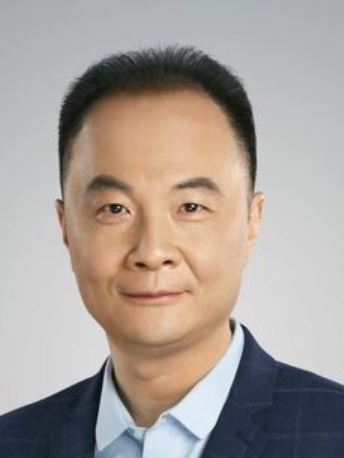
李航,字节跳动科技有限公司人工智能实验室总监,北京大学、南京大学客座教授,IEEE 会士,ACM 杰出科学家,CCF 杰出会员。研究方向包括信息检索,自然语言处理,统计机器学习,及数据挖掘。 |
Sequence to sequence learning is in some sense the most important deep learning technologies for natural language processing. In this lecture I will introduce the fundamental models of sequence to sequence learning, including the Transformer model. I will also explain its extensions to language representation models such as GPT and BERT. |


参考书
[1] Yoshua Bengio, Ian J. Goodfellow, and Aaron Courville. Deep Learning. 2016.
[2] Christopher M. Bishop. Pattern Recognition and Machine Learning. Springer. 2007.
[3] Daphne Koller and Nir Friedman. Probabilistic Graphical Models. MIT Press. 2009.
讲师
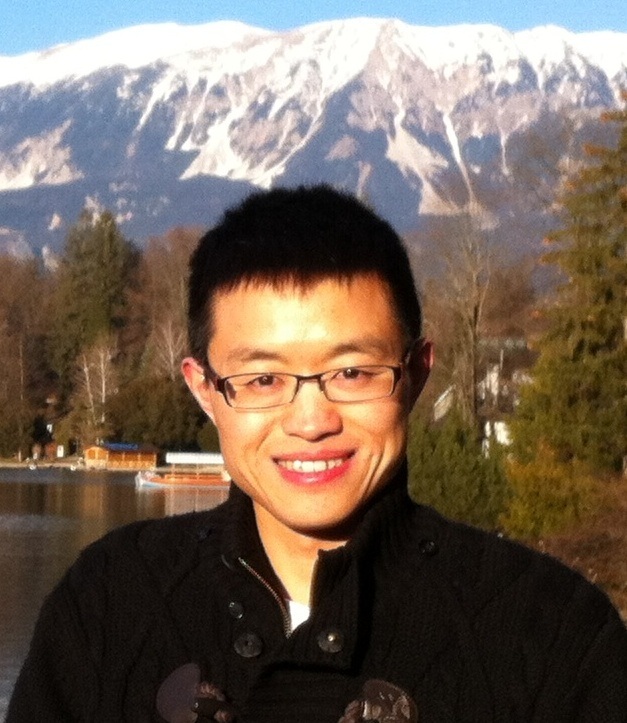
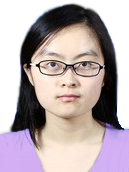
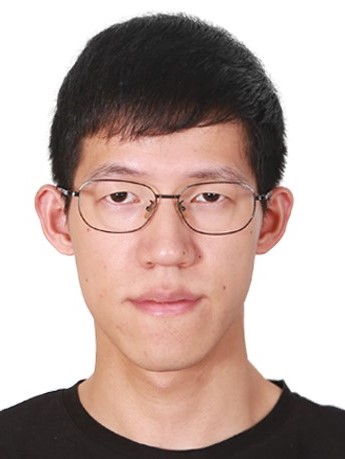
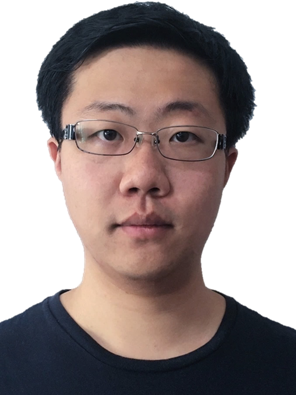
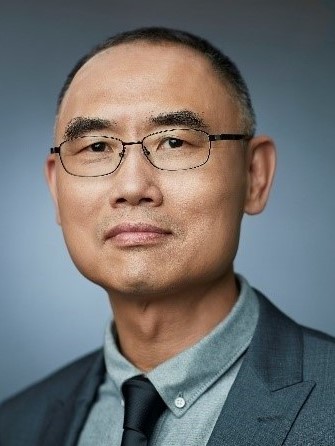
Jie Tang, Tsinghua Univerisity
Teaching Assistants:
|
Fanjin Zhang, Tsinghua Univerisity |
Yukuo Cen, Tsinghua Univerisity |
Mengyang Sun, Tsinghua Univerisity |