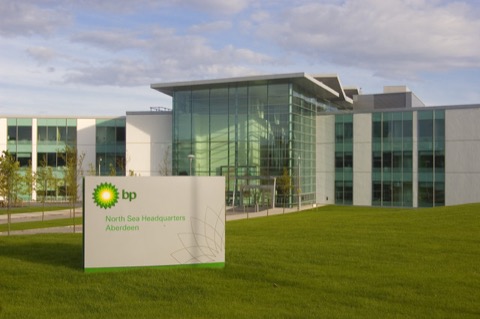
1909年BP由威廉·诺克斯·达西创立,最初的名字为Anglo Persian石油公司,1935年改为英(国)伊(朗)石油公司,1954年改为现名。1973年,BP中国成立。BP由前英国石油、阿莫科、阿科和嘉实多等公司整合重组形成,是世界上最大的石油和石化集团公司之一。BP的太阳花标志是根据古希腊的太阳神命名的。

Deep learning has transformed image analysis across scientific domains, but its application in geosciences remains limited by scarce training data. Traditional image augmentation techniques, such as translation, rotation, and flipping, fail to capture the complexity and range of subsurface geological feature configurations. Here, we demonstrate that mathematical morphology-based image augmentation significantly improves the performance of deep learning models in data-limited subsurface geological applications, achieving an R^2 of 0.97 compared to 0.84 for standard augmentation methods, with as few as four original training images. Our approach systematically transforms images by mimicking the natural variability of subsurface geological structures, enabling models to learn subsurface-specific invariants rather than merely being location- and orientation-independent. This novel method addresses a fundamental challenge in geoscientific machine learning, where high data acquisition costs have historically restricted model development. By generating geologically plausible synthetic training examples, our method enables robust subsurface geological characterization with minimal original data. Validated on synthetic pore/channel images, this morphology-based augmentation strategy demonstrates potential for extension to other deep learning-based subsurface characterization tasks in resource exploration and development applications.
Given the accelerating pace of global warming, there is a pressing need for decarbonisation of the transport sector so as to reduce global greenhouse gas emissions. Alternative renewable fuels derived from biomass or the upcycling of waste are central to achieving this transition. Among these, molecules containing the dioxolane functional group have emerged as promising fuel candidates. Although the combustion kinetics of the dioxolane functional group have been studied, the effects of substituted dioxolanes on combustion characteristics and emissions in practical engine applications remain largely unexplored. This study presents the first experimental evaluation of 2-ethyl-2-methyl-1,3-dioxolane (2-EMD), a substituted dioxolane, as a major fuel component in a heavy-duty compression-ignition engine. 2-EMD was blended with hydrotreated vegetable oil (HVO) at 30% and 70% by volume, and tested under constant indicated mean effective pressure (IMEP) and start-of-combustion (SOC) conditions. The 30%(v/v) 2-EMD blend exhibited an ignition delay identical to that of neat HVO. However, increasing the percentage blend level of 2-EMD to 70%(v/v) resulted in a longer ignition delay and a correspondingly higher apparent peak heat release rate (PHRR), elevating NOx emissions due to increased premixed combustion. Across both blends, 2-EMD reduced incomplete combustion products (CO and THC). These findings highlight the potential of 2-EMD as a viable drop-in biofuel component for heavy-duty engines at moderate blend levels of up to at least 30%(v/v).
Blind image deconvolution refers to the problem of simultaneously estimating the blur kernel and the true image from a set of observations when both the blur kernel and the true image are unknown. Sometimes, additional image and/or blur information is available and the term semi-blind deconvolution (SBD) is used. We consider a recently introduced Bayesian conjugate hierarchical model for SBD, formulated on an extended cyclic lattice to allow a computationally scalable Gibbs sampler. In this article, we extend this model to the general SBD problem, rewrite the previously proposed Gibbs sampler so that operations are performed in the Fourier domain whenever possible, and introduce a new marginal Hamiltonian Monte Carlo (HMC) blur update, obtained by analytically integrating the blur-image joint conditional over the image. The cyclic formulation combined with non-trivial linear algebra manipulations allows a Fourier-based, scalable HMC update, otherwise complicated by the rigid constraints of the SBD problem. Having determined the padding size in the cyclic embedding through a numerical experiment, we compare the mixing and exploration behaviour of the Gibbs and HMC blur updates on simulated data and on a real geophysical seismic imaging problem where we invert a grid with 300×50 nodes, corresponding to a posterior with approximately 80,000 parameters.
Digital twin (DT) technology can improve safety and efficiency in offshore operations, yet adoption remains constrained by inconsistent data, fragmented systems and usability gaps. We present a modular DT architecture that unifies data acquisition, edge analytics, twin processing and visualisation for an operational North Sea asset (“Asset X”). The design standardises identities, units and timestamps, enforces checks at ingestion and adopts an ISO 14224 asset model and tag registry, implemented via Asset Administration Shell (AAS), to enable reuse across sites. Edge components provide low-latency anomaly detection and resilient store-and-forward for intermittent satellite links, while the twin layer combines predictive models with scenario artefacts to yield traceable, explainable recommendations. Role-specific views connect alerts to work orders with full audit lineage. We report the architecture, key interfaces and service-level objectives (SLOs) that bind performance to deployment gates, and we show that the deployed system meets its latency, data completeness and availability targets on a live asset. We illustrate how an ISO 14224 -aligned, AAS-governed, SLO-first design can support a Value-of-Information (VoI)-gated execution loop from the DT to the Computerised Maintenance Management System (CMMS), helping to streamline handover within existing permit-to-work and safety workflows and to implement an edge-first deployment suited to offshore constraints.
In recent years, Full Waveform Inversion combined with low-frequency, long-offset data have dramatically improved the quality of the seismic velocity models in challenging areas – the biggest impediment to high-resolution imaging at reservoir depth as people thought. However, we have yet to see high-resolution images of deep targets. This begs the question whether the same low-frequency long-offset data are adequate for high-resolution imaging at depth. In the abstract, I use Full Waveform Inversion models with both Ocean Bottom Node and Wide-azimuth Towed streamer field data from the Gulf of America to investigate this open-ended question and speculate potential solutions.





