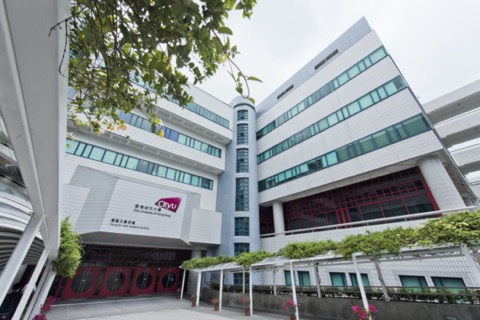
香港城市大学(City University of Hong Kong),简称城大(CityU),是一所世界知名的国际化公立研究型综合大学 ,是大学教育资助委员会资助的八所高等院校之一,为粤港澳高校联盟、粤港澳高校智慧校园联盟、京港大学联盟、中俄工科大学联盟、沪港大学联盟成员高校。在2022QS世界大学排名中,香港城市大学排第53位 ,在2020泰晤士高等教育世界大学排名「全球最国际化大学」第1位 ,在2019QS「建校未满50年全球最佳学府」榜单中位列第5位 ,在2019软科世界大学学术排名中,图书信息科学位列全球第5 位,公共管理、管理学分别位居全球第14 位和16 位,计算机科学位居32位 ,传播学、金融学分别位居全球第51-75 位和44 位。法国人力资源顾问公司Emerging与德国研究机构Trendence合作完成「全球大学就业能力调查」中,连续三年位列全球首150名内。商学院获AACSB和EQUIS双重认证。城大为1984年在九龙旺角建立的香港城市理工学院,1995年更名为香港城市大学并迁往现校址九龙塘,1997年在原威灵顿中学旧址设立九龙湾分校,提供副学士及高级文凭课程。 2001年,于内地设立香港城市大学深圳研究院。2013年,设立香港城市大学成都研究院。香港城市大学位于九龙塘的校园总面积共15.6公顷,学校开设9个学院 的130多个专业学科和1个研究生院,在校学生约20000人,其中6500人是研究生,教职员工逾1000人。

One of the challenges in cardiac cell therapy using cardiomyocytes derived from human pluripotent stem cells (hPSC-CMs) is their poor engraftment and survival rate in infarcted tissues. Click chemistry and lipid insertion are simple methods for modifying the surface of hPSC-CMs with a collagen hybridizing peptide (CHP), providing binding motifs to increase their retention and engraftment in fibrotic hearts after ischemia-reperfusion (I/R) injury. In this study, we developed CHP-modified CMs (CHP-mCMs) to attach cells to damaged collagen in infarcted tissues. We injected CHP-mCMs into the border zone of infarcted hearts 7 days post-MI and evaluated cardiac function for 6 weeks. Serial echocardiography revealed that CHP-mCMs not only improved cardiac function but also reduced adverse remodeling in I/R-injured hearts. These findings indicate that CHP-mCM transplantation was associated with enhanced engraftment, reduced adverse remodeling, and improved cardiac function in the rat I/R model.
In this work, we systematically investigated the influence of L12 particle size on the corrosion behavior and passivation mechanism of a novel multi-component high-entropy alloy with a composition of Ni45 Co30 Cr15 Al6 Ta2 Nb2 (at.%). The coarsening of L12 particles gradually deteriorates the localized corrosion resistance of the alloy, as evidenced by the decreased pitting potential ( Epit ) with extended aging times. X-ray photoelectron spectroscopy analysis indicates that the overall composition of passive films remains unaffected by variations in L12 particle size. However, combined scanning transmission electron microscope and time-of-flight secondary ion mass spectrometry characterization reveals that the chemical inhomogeneity of the passive film becomes more pronounced at the nanoscale with the coarsening of L12 particles. Face-centered-cubic phase and L12 particles are independently passivated, and the compositional fluctuations of the passive film align with the elemental partitioning behavior between the two phases. The increased heterogeneity of the passive film caused by L12 particle coarsening leads to a high localized corrosion susceptibility of the alloy. (c) 2026 Published by Elsevier Ltd on behalf of The editorial office of Journal of Materials Science & Technology.
Triple-negative breast cancer (TNBC) is characterized by severely immunosuppressive tumor microenvironment (TME), which leads to tumor ferroptosis resistance and dominant protumor M2 macrophages, restraining innate-to-adaptive antitumor immune cascade. Herein, an endoplasmic reticulum (ER)-enriched pH/redox-sensitive SPIONS@P-CpG-DOX nanogel was constructed to realize dual ER-targeted manipulation on TNBC cells and tumor-associated macrophages (TAMs) to elicit an ER-centered innate-to-adaptive immune amplification axis. In TNBC cells, nanogel-induced ER stress inhibits the GSH-GPX4 axis and accelerates lipid peroxidation, triggering ER-originated ferroptosis and immunogenic cell death (ICD) to release antigens and damage-associated molecular patterns (DAMPs) for immune priming. In macrophages, nanogel activates ER-dependent STING/NF-κB pathways without ferroptosis, facilitating M2-to-M1 polarization and inflammatory TME remodeling. The dual ER-initiated pathways synergistically facilitate dendritic cell (DC) maturation, enhance intratumoral CD4+ and CD8+ T-cell infiltration and build long-term systemic immune memory. In 4T1 TNBC models, the nanogel efficiently inhibits primary tumor growth, postoperative recurrence, distant rechallenge and lung metastasis with favorable biosafety. This work validates ER as a core regulatory hub linking tumor ferroptosis and macrophage reprogramming, providing an organelle-targeted strategy for durable TNBC immunotherapy.
The planning of metro-led underground spaces often neglects public perception, while traditional methods struggle to translate unstructured social media data into actionable insights. This study introduces a novel framework that integrates large language models (LLMs) and machine learning to quantify public experience systematically. Using 25,349 Google Maps reviews for 91 Hong Kong metro stations, an LLM engine performs fine-grained perception extraction across 14 indicators. We propose a “perception value” (PV) metric that synthesizes perception frequency and preference, significantly improving modeling performance. Machine learning analysis identifies “transfer” as the most critical contribution to public satisfaction. Notably, “barrier-free design” emerges as a high-contribution but low-preference factor, signaling an urgent need for improvement. Spatially, our analysis reveals a distinct “center-periphery” pattern in perception quality, enabling targeted renewal strategies. Our framework provides a scalable, interpretable paradigm for transforming public perception into planning intelligence, advancing human-centered governance for urban underground spaces.
Accurate and timely fault diagnosis of rolling bearings in aero-engines is critical for ensuring flight safety, yet deploying deep learning models on resource-constrained edge devices remains a major challenge. This paper proposes the Spiking Parametric Multi-View Fusion Mixer (SPMF-Mixer), a fully spike-driven framework that achieves high diagnostic accuracy with a favorable accuracy–energy trade-off. The core of the architecture is the Multi-Branch Transient Dynamics Aggregator (MTDA), an attention-free module that replaces conventional self-attention with three parallel branches: a Contextual Branch capturing local morphological features via depthwise convolutions, an Interactive Branch facilitating cross-channel information fusion through point-wise convolutions, and a Transient Branch employing a Spiking Haar Wavelet Transform to isolate high-frequency fault impulses. To overcome the limited dynamic response of standard spiking neurons, we further propose the Adaptive Parametric Leaky Integrate-and-Fire (APLIF) neuron, which incorporates bio-inspired inhibitory gating, learnable membrane decay, and spike-dependent reset modulation to enhance sensitivity to transient fault signatures while maintaining efficient spiking activity. Extensive experiments on the DIRG high-speed bearing dataset and the HIT inter-shaft bearing dataset demonstrate that SPMF-Mixer achieves the best performance among all compared methods and maintains a clear advantage under severe noise. Pareto frontier analysis further shows that it achieves a superior balance between energy consumption and diagnostic performance. These results suggest that SPMF-Mixer is a promising solution for edge-side aero-engine bearing monitoring in noisy and resource-constrained operating environments.





