
This paper investigates strategic export intervention in a final‐good industry which uses an intermediate good supplied by a foreign monopolist. An export tax‐cum‐subsidy leads to horizontal and vertical rent extraction. The optimal government intervention in the final‐good market is shown to depend on the pricing scheme employed by the intermediate‐good producer.
There is much debate as to whether family firms are socially responsible; We believe the question can be informed by changes that occur in managerial priorities across the length of founders’ careers. Drawing on behavioral theories of intertemporal choice, we argue that temporal discounting causes CSR to vary systematically across three succession stages: successor identification, power sharing, and founder exit. CSR related to founder legacy increases when founders identify successors because its socioemotional benefits then become more near-term and salient; subsequently, however, it declines as successors gain influence during power sharing with the founder, and further after founder exit because for successors any CSR legacy benefits are temporally remote and thus more discounted. Evidence from 2,072 listed Chinese family firms supports this multistage transformation, especially among older and first-born founders, and among younger heirs, heirs with shorter tenures, and heirs without children. By viewing legacy concerns through an intertemporal choice lens, we show them to be time-contingent—shaping CSR differently across succession stages and thereby helping reconcile prior findings.
Objective The purpose of this study was to investigate underexplored dynamics of post-divorce LGBTQ-parent families.Background In LGBTQ-parent families in which children were conceived in the context of a prior different-gender partnership, children experience the coinciding events of parental separation and a parent's coming out as LGBTQ. In recent decades, research on LGBTQ-parent families formed following different-gender divorce has stalled, perhaps due to the increasing emphasis on planned LGBTQ-parent families, or families formed after parents have come out.Method Twenty-four adults who were born to different-gender married parents (i.e., mother/father families) who divorced when one parent came out as LGBTQ responded to a survey about their childhood experiences involving parental divorce and a parent coming out.Results Our data shed light on two themes: navigating loyalty conflicts and LGBTQ stepfamily closeting. When queer mothers divorced straight fathers, participants often described loyalties to their mothers, but when queer fathers divorced straight mothers, participants were less likely to describe divided loyalties and more likely to describe cooperative coparenting. Even once parents came out and formed LGBTQ stepfamilies, they often remained closeted at the family level in that participants kept the nature of their parent and stepparent's relationship hidden from family outsiders, typically to protect their families from real and anticipated heterosexism.Conclusion Our findings have implications for the present-day well-being of people who navigated family conflict and secrecy as youth. Amid renewed anti-LGBTQ hostility, our results highlight the invisible familial costs of adapting to systems of oppression.
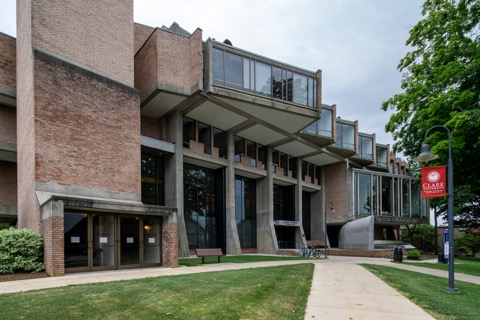
Urbanization of watersheds, including increased impervious surfaces, altered land use, and the introduction of anthropogenic pollutants, alters watershed hydrology and water quality. While the connection between land use and water quality is well established at regional scales, the inconsistent gains in water quality despite management efforts underscores the need to better understand how water quality in individual small watersheds responds to overlapping modern stressors and legacy effects. This study examines the influence of urbanization on the chemical characteristics of a small watershed in central Massachusetts. We used field measurements and laboratory analyses to assess how conductivity, nutrients (nitrate, ammonia, total phosphorus), and trace metals (Cu, Pb, Zn) varied across 13 stream, lake, and tributary sites during the 2022 field season. Land cover analysis of subwatersheds for each site revealed a gradient of urbanization from predominantly forested headwaters to densely developed downstream sites. Specific conductance was positively correlated with impervious surface area and road density; the highest values were observed downstream and during the winter and early spring, suggesting road salt as a key driver of stream salinization. Nitrates showed a strong correlation with impervious surface cover and lawn area, while phosphorus concentrations were more weakly correlated with urbanization metrics and may be more influenced by legacy (historical) sources. Following the single large precipitation event, phosphorus concentrations increased, consistent with a source of sediment-bound legacy phosphorus. Streambed metal concentrations showed no significant correlation with urbanization metrics across sites, but were markedly elevated at the most downstream main stem stream site, possibly indicating a localized point source from historical industrial activity. These findings underscore the complex and spatially variable impacts of urbanization on watershed health and emphasize the need for high-resolution, local monitoring to inform effective management and restoration strategies.
Reaction of n-chloro-2-hydroxypyridine and pyrazine with Cu(ClO4)2 square 6H2O in aqueous alcohols yielded three types of products: [Cu(3-Cl-2-pyone)4(H2O)2](ClO4)2 (1); [Cu(4-Cl-2-pyone)4(pz)](ClO4)2 (2) and [Cu(5-Cl-2-pyone)4(pz)](ClO4)2 (3); and [Cu(5-Cl-2-pyone)2(H2O)2(pz)](ClO4)2 (4) and [Cu(6-Cl-2-pyone)2(H2O)2(pz)](ClO4)2 (5) [n-Cl-2-pyone = n-chloro-2-pyridone]. The structures fall into the crystal systems of monoclinic [P2/n (1), P21/n (2, 5), C2/c (4)] or orthorhombic [Pnnm, 3]. In all cases, the pyridone ligands are kappa-O coordinated with ancillary pyrazine and/or water ligands also coordinated to the Cu ions. The perchlorate ions remain uncoordinated in all complexes.





