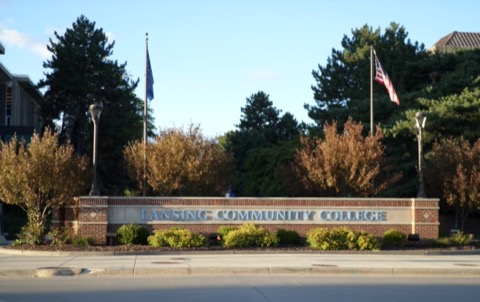
Lansing Community College is a public community college with its main campus in Lansing, Michigan. Founded in 1957, the college's main campus is located on an urban, 42-acre (0.17 km2) site in downtown Lansing spanning seven city blocks approximately two blocks from the state capitol. A West Campus opened in 2004 in Delta Township, southwest of Lansing. There is also an East Campus located in the Eyde Plaza in East Lansing. The school is the third largest community college in Michigan by enrollment, with a fall 2013 enrollment of 18,551, a decrease from 20,394 in 2008.
This research takes a qualitative approach to examine how the transition from high school to university (the collegiate mathematics transition or the secondary-tertiary transition) can affect mathematics self-efficacy (MSE) and mindset for undergraduate students. Thirteen first-year and nine non-first year students from three different mathematics courses (Intermediate Algebra, Calculus 1, and Discrete Mathematics) were interviewed. Results show that the collegiate mathematics transition provided an opportunity for increases in MSE for first-year students who entered university with low MSE; some of these students also experienced shifts towards growth mindset. Conversely, most first-year students with high MSE experienced no change in MSE or mindset, with one student experiencing a decline in MSE. Changes to MSE appear tied to students’ attributions. In addition, we compare these results with students not undergoing the collegiate mathematics transition to highlight the specific effects of the transition. Results have implications for our understanding of how MSE can change as well as for our understanding of how to better understand and support students during their transition to university mathematics.
Chronic upper extremity (UE) impairment is common after stroke. This study aimed to evaluate both the feasibility and preliminary clinical effects of Boost, a novel wheelchair-mounted rehabilitation device designed to assist individuals in UE motor recovery during inpatient rehabilitation. Thirty-five stroke inpatients were randomized to perform additional UE exercises alongside standard therapy, using either Boost or a therapist-customized booklet for self-practice. Feasibility outcomes included the volume of self-directed practice completed and participants’ ability to integrate Boost sessions into routine inpatient care. Clinical outcomes included the UE Fugl-Meyer (UEFM) Exam, Box and Block Test, Motor Activity Log, Modified Ashworth Scale, shoulder subluxation, and shoulder pain. At baseline, mean days post-stroke were 11.9 ± 4.6 (SD) and 13.1 ± 5.9, and UEFM scores were 20.5 ± 10.1 and 21.0 ± 13.5 for the intervention and control groups, respectively. Intervention durations averaged 11.9 ± 4.0 and 17.2 ± 8.8 days, respectively. Participants in the Boost group completed 3,359 ± 3,137 (median: 5,698, Q1 = 913, Q3 = 6,611) arm movements. No significant between-group clinical differences were found at the three-month follow-up. However, the Boost group showed a trend toward greater UEFM improvement immediately post-intervention (11.8 vs. 6.9 points, p = 0.06). Importantly, UEFM gains were predicted by the number of Boost exercises performed (p = 0.02, R²=0.34). Subgroup analysis revealed that patients with less severe impairment (baseline UEFM > 21) achieved significantly greater UEFM improvements at discharge with Boost compared to controls (15.8 vs. 7.8 points, p = 0.01). Boost use was feasible and enabled participants to complete thousands of UE movements during routine inpatient rehabilitation without direct supervision. While this added practice did not lead to significant between-group differences in clinical outcomes, preliminary findings suggest potential short-term benefits—particularly for individuals with less severe impairment—that warrant evaluation in larger, adequately powered trials. Trial registration: This study was registered at ClinicalTrials.gov with the title “Comparing Different Rehabilitation Exercise Strategies for Improving Arm Recovery After Stroke (Boost)” in May 2023; registration number: NCT05880940.
Background: Analysis of digital images of histopathological sections is increasing due to widespread adoption of fully digitised workflows and the greater availability of whole-slide scanners. Currently, hormone receptor status in breast carcinoma is assessed by pathologists scoring separate immunohistochemically stained sections. Methods: In this study, we employed pathologist-verified pixel-level annotations to train nested pixel classifiers capable of making case-level predictions of oestrogen receptor (ER), progesterone receptor (PR), and human epidermal growth factor receptor 2 (HER2) status directly from H&E-stained sections using biopsy cases alone. The model was evaluated on both an internal test set and an external international evaluation set from an institution in a different continent using different scanner hardware without the need for image normalisation. Results: In the internal test set, the models achieved AUCs of 0.8030, 0.7956 and 0.7488 for ER, PR, and HER2, respectively, with AUCs of 0.7008 and 0.7488 for ER and PR using an external cohort from an institution from which no cases were used for training. Conclusions: Our data highlight a potential strategy by which a pixel-based classifier, typically developed to quantify histological features within individual cases, could be used to make case/slide-level predictions but illustrate the challenges associated with this approach.
Background:Chronic upper extremity (UE) impairment is common after stroke. This study evaluated Boost, a novel wheelchair-mounted rehabilitation device designed to assist individuals in UE motor recovery during inpatient rehabilitation. Method:Thirty-five stroke inpatients were randomized to perform additional UE exercises alongside standard therapy, using either Boost or a therapist-customized booklet for self-practice. Outcomes included the UE Fugl-Meyer (UEFM) Exam, Box and Block Test, Motor Activity Log, Modified Ashworth Scale, shoulder subluxation, and shoulder pain. Results:At baseline, mean days post-stroke were 11.9±4.6 and 13.1±5.9, and UEFM scores were 20.5±10.1 and 21.0±13.5. Intervention durations averaged 11.9±4.0 and 17.2±8.8 days, respectively. Participants in the Boost group completed 3,359±3,137 additional arm movements. No significant between-group differences were found at the three-month follow-up. However, the Boost group showed a trend toward greater UEFM improvement immediately post-intervention (11.8 vs. 6.9 points, p=0.06). Importantly, UEFM gains were predicted by the number of Boost exercises performed (p=0.02, R2=0.34). Subgroup analysis revealed that patients with less severe impairment (baseline UEFM >21) achieved significantly greater UEFM improvements at discharge with Boost compared to controls (15.8 vs. 7.8 points, p=0.01). Conclusions:These findings demonstrate the feasibility of achieving thousands of additional UE practice movements while seated in a wheelchair without direct supervision during subacute rehabilitation. The added movement practice was well tolerated and may offer short-term impairment-reduction benefits, particularly in those with less severe impairment. Larger trials are needed to confirm efficacy, establish optimal dosage, and determine long-term clinical and functional benefits of Boost-assisted therapy.This study was registered at ClinicalTrials.gov with the title "Comparing Different Rehabilitation Exercise Strategies for Improving Arm Recovery After Stroke (Boost)" in May 2023; registration number: NCT05880940.




