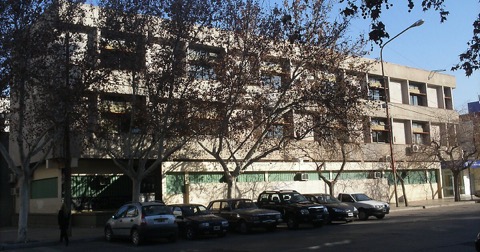
The National University of San Juan (in Castilian, Universidad Nacional de San Juan, UNSJ) is a public university in Argentina. Its seat is located in the city of San Juan, capital of the province of the same name, in the Cuyo region. It was founded in 1973, based on several local institutions and a faculty of the National University of Cuyo.

Although iterative development concepts predate the 2001 Agile Manifesto, the ideas outlined in the manifesto significantly transformed project management, introducing a renewed approach. However, challenges persist, particularly regarding the criteria for selecting both a suitable project management approach (traditional, agile, or hybrid) and a corresponding software development life cycle (SDLC) model. This Systematic Mapping Study (SMS) analyzes existing literature to identify evidence on complexity factors that guide the selection of project management strategies and, subsequently, the appropriate SDLC model. While several complexity factors are documented, a lack of integrated frameworks and guiding criteria remains. Different SDLC models can be applied within each approach, yet their selection often relies heavily on the project manager’s experience due to the absence of formal guidance. The study highlights the need for research efforts aimed at bridging this gap and informing decisions through evidence-based practices. The mapping identified 67 primary studies, with a predominance of agile-oriented research and limited presence of formal frameworks guiding the combined selection of project strategies and SDLC models. The analysis revealed a diverse set of technical and environmental complexity factors, and a lack of systematic guidance in the literature. Based on this evidence, the study proposes a preliminary taxonomy to support future framework development and improve decision-making in practice.
Just a handful of mite species are suspected inhabiting the dust of houses within arid areas of the Arabian Peninsula. In this study, we identified and compared the house dust mite diversity in three different climatic areas within Saudi Arabia. Sampling was carried out over one year and two months, with samples collected in the desert, the coast, and in the highlands. It reviews all known mites of house dust of Saudi Arabia. A total of 998 mites were collected belonging to 23 species in 14 families. Pyroglyphidae (Astigmata) were the most abundant. The interaction among pyroglyphid species in the climatic regions was analysed. While variation in abundance of Pyroglyphidae among regions was weak, there was a strong desert region Cheyletus eruditus–Dermatophagoides farinae association, perhaps explaining that D. farinae populations from the desert have become C. eruditus’ favourite prey. Another interesting association is that of Pyroglyphidae with Acaridae. D. pteronyssinus shows significant numerical dominance in the highlands. A newly discovered species of Dermatophagoides did not interact with any of the other 2 species and was restricted to the coastal region. Dermatophagoides n. sp. and Cheletopsis sp. can be used as markers of location in forensic analyses (provenance), based on their unique association with the coast and desert, respectively. A new species of Dermatophagoides has been identified. Five species are new to Saudi Arabia and the Arabian Peninsula including house dust, ten species are new to the house dust mite fauna of Saudi Arabia and the Arabian Peninsula but have been recorded as storage mites, totalling 15 new house dust mites for the Arabian Peninsula. Two species are new to house dust in Saudi Arabia, but already known from house dust in Kuwait. Of the fifteen new house dust mites for the Arabian Peninsula, five species are new to the dust mite fauna worldwide: Prostigmata: Cheletopsis sp. (Cheyletidae); Mesostigmata: Proctolaelaps pygmaeus (Melicharidae), Macrocheles muscaedomesticae (Macrochelidae); and Oribatida: Oribatula tibialis (Oribatulidae), and Ceratozetes sp. (Ceratozetidae).
The increasing penetration of distributed and renewable generation has driven modern power systems closer to their technical limits, making voltage instability a key threat to grid reliability and reducing the operational margin for preventive control and generation redispatch. Traditional steady-state security tools, such as the Static Security Region (SSR), map feasible operating points under steady-state constraints but do not quantify proximity to voltage collapse. This paper proposes an enhanced SSR that integrates a fast, analytically derived Voltage Stability Index (VSI) based on a Thevenin equivalent and load-impedance characteristics, embedding stability-margin information directly into SSR nomograms. The resulting visualization jointly depicts feasibility and voltage-stability robustness, enabling screening and ranking of dispatch points beyond voltage-magnitude compliance. Case studies on the IEEE 9-bus and New England 39-bus systems show that the VSI-based SSR highlights dispatch-dependent low-margin regions that can occur before conventional thermal or voltage limits are reached. Overall, the method provides an efficient, interpretable tool for steady-state security assessment and preventive decision support.
An integrated three-stage methodology is proposed for the predictive assessment and proactive maintenance of stacker bridges.A three-dimensional finite element analysis (FEA) is performed to characterize the displacement and von Mises stress fields, identifying critical nodes using a kinematic deformation scale factor of 908.2x. A fractal mapping of cracks in the critical planeis developed, estimating the fractal dimension Dfof the crack trajectories using the box-counting method, which allows for the quantification of nonlinear propagation potential beyond linear elastic fracture mechanics (LEFM). Finally, a Graph Neural Network (GNN) is designed and trained that models the structural mesh as a graph G = (V, E, Φ), where the nodes represent the physical connections and the edges represent the structural beams, enabling the iterative prediction of nodal failure probabilities and the projection of remaining useful life (RUL). Results reveal a Structural Health Index (SHI) of 52.9%, identify node 253 as having the highest failure probability (57.7%), and project imminent systemic failure risk within a 3–6 month horizon. A 60-day intervention plan is formulated, including brace replacement, controlled 30-minute post-weld heat treatment (PWHT), and 100% liquid penetrant non-destructive examination (NDE), achieving a fatigue life improvement factor of 4x relative to the as-welded condition.
Este artículo aborda la intersección entre discapacidad y animalidad como un campo de problematización filosófica y política, enmarcado en una perspectiva antiespecista, anticapacitista y decolonial que interroga las condiciones de posibilidad de lo «humano» en la modernidad-colonial. A partir de nuestras experiencias encarnadas -cuerpos queer, neurodivergentes, artríticos, con TOC y cansados- y en diálogo con autoras como Sunaura Taylor, Alison Kafer, Robert McRuer, val flores y Christine Greiner, reconstruimos las genealogías moderno-coloniales que animalizaron y discapacitaron cuerpos, legitimando jerarquías ontológicas basadas en productividad, autonomía y racionalidad. Argumentamos que el capacitismo y el especismo no constituyen opresiones paralelas, sino entrelazadas, sostenidas por dispositivos coloniales de exhibición y por economías que fabrican activamente cuerpos discapacitados -humanos y no humanos- para sostener el capital. Frente a este régimen, proponemos lo crip o lo disca como cohabitación animal: una forma de vida que desestabiliza la norma y abre temporalidades dislocadas, lentas y relacionales. Finalmente, planteamos las «alianzas salvajes» como prácticas multiespecie de cuidado y resistencia que, desde la vulnerabilidad compartida, rehúsan la domesticación y componen mundos habitables más allá de la norma humana.





