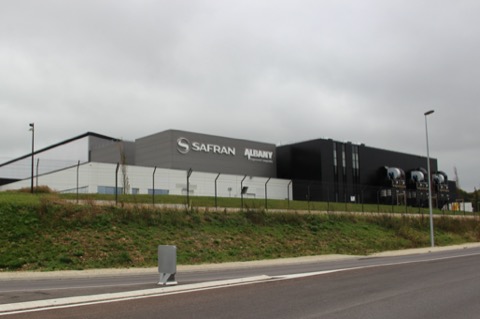
赛峰(SAFRAN)集团是一家高科技的跨国集团公司,世界500强企业之一,拥有四大核心专业:航空航天推进,航空航天设备,防务-安全和通讯。集团在世界30多个国家拥有62,000名员工,年销售额超过113亿欧元。赛峰集团旗下的各公司都享有盛誉,包括Sagem集团、Aircelle集团、Hispano-Suiza集团、Labinal集团、Messier-Bugatti集团、Messier-Dowty集团、Morpho集团、Snecma集团、Snecma Propulsion Solide集团、Techspace Aero集团、Turbomeca集团等,通过独立开发或进行合作均位居世界或欧洲的领先地位,其麾下的斯奈克玛公司主营业务为航空器动力装置研制生产,承担了欧洲阿丽亚娜1-5型火箭及液体助推器所用推进系统的设计和研制工作。

Context. Artificial satellites and space debris are increasingly contaminating astronomical images, affecting scientific surveys and producing large volumes of streaked exposures. Manual inspection is no longer feasible at scale, and reliable identification and characterisation of streaks has become essential for both the quality control of data and the monitoring of objects in Earth orbit. Aims. We present StreakMind, an automated pipeline designed to detect near-Earth objects (NEOs) and satellite streaks in astronomical images, characterise their geometry, and cross-identify them with known orbital objects. The system integrates all inference results into a structured database suitable for large surveys. Methods. A YOLO-OBB model was trained on a hybrid manual-synthetic dataset of 2335 images and used to detect streaks in processed FITS frames. Geometric refinement, inter-frame association, satellite cross-identification, and Gaussian-based confidence scoring were then applied to produce final identifications, which were stored in a normalised relational database. In this work, images acquired at La Sagra Observatory (L98) with a Celestron C14+Fastar telescope were used to develop and test automated streak detection and characterisation methods. Results. On the test set, the model achieved a precision of 94% and a recall of 97%. It reliably detected faint streaks, delivered consistent geometric reconstructions across the dataset, and performed robust satellite cross-identification. The Gaussian-based confidence scoring provided stable identification probabilities across consecutive frames. Conclusions. StreakMind demonstrates strong potential for large-scale automated analyses of linear streaks produced by both NEOs and artificial satellites in ground-based astronomical images. The pipeline offers high detection reliability, robust geometric reconstruction, and reproducible satellite cross-identification within a fully integrated end-to-end framework.
Active temperature cycling tests are carried out on test specimens known as motorettes, by periodically applying current pulses through the conductors to induce Joule heating. This approach enables rapid heating of the windings within seconds, followed by cooling through air vents and a cold plate onto which the lamination stack is clamped. In this study, only the temperature cycle amplitude $(\Delta \mathrm{T})$ is varied, while the cycling frequency is kept constant. The experimental campaign produced results for three thermal cycle amplitudes and temperature profiles applied to three batches of motorettes representative of automotive EIS configurations. Several electrical markers were periodically monitored during aging to assess how these parameters are affected by EIS degradation under the given conditions. Additionally, regular visual inspections were conducted to evaluate the reliability of the electrical markers being monitored. Failures frequently occurred during PDIV measurements throughout the campaign, sometimes correlating with the overall integrity degradation observed during visual inspection.
Context. The rapid proliferation of artificial satellites poses a growing challenge to astronomical observations, calling for robust methods to flag and mitigate their impact on scientific data quality. Modern astronomical surveys, including space-based missions such as CHEOPS, generate vast data volumes, where the manual identification of these contaminants is unfeasible. Artificial intelligence (AI) has emerged as an essential tool for efficiently processing these large datasets, enabling the automated flagging of transient features to preserve the scientific value of the data. Aims. We developed and validated a computationally efficient AI algorithm, based on the MobileNetV2 architecture, to detect satellite trails in CHEOPS images. We benchmarked this novel method against traditional linear feature detection algorithms to assess trade-offs in terms of sensitivity and speed. Methods. We trained a binary classifier using an iteratively enhanced dataset, incorporating “hard-negative” examples (e.g., cosmic rays, stray light, Earth limb proximity) to minimize the false-positive rate. The final model was applied to the entire CHEOPS archive of 1.8 million images (up to June 2025). The detections were cross-matched with the Space-Track database to identify objects, enabling a detailed analysis of their physical parameters and magnitude evolution over time. Results. The AI model achieved 99.2% accuracy on the test set and identified 12 223 satellite trails in the archive (0.68% of all images), more than double the yield of non-AI methods, demonstrating superior sensitivity to faint trails. The post-processing identification matched these trails to 5565 distinct objects. While our photometric analysis from 2020 to 2025 shows a constant average standard magnitude (13.4 ± 1.7) for the aggregate detection set, an analysis against launch dates reveals a trend of newer objects appearing brighter. Conclusions. AI-based methods provide a powerful and sensitive tool for detecting satellite trails in space-based observatories. However, they do require careful training to generalize against complex image artifacts.
We take advantage of the enhancement of Rayleigh scattering in La-doped fiber to enable evanescent field and external environment interactions. We study how the refractive index of the surrounding medium affects the optical modes and transmitted power in nanoparticle-doped fibers using two sensor configurations. A speckle-pattern due to nanoparticles inside the fiber core was observed and the transmitted power decreased up to -91% when the sensor is fully immersed in oil. Finally, we demonstrate liquid-level measurements across several types of liquids.
The present study focuses on the evolution of prior particle boundaries (PPB) and grain growth in a Ni-based superalloy processed by Spark Plasma Sintering (SPS) and their influence on ductility. Ni-based superalloys made by Powder Metallurgy present powder heredities such as inclusions at prior particle boundaries (PPBs) that are detrimental to mechanical properties because there are preferential sites for crack initiation. Some previous works tried to remove these PPBs in the final microstructure with different techniques, especially using grain growth. The following strategy has been undertaken using a new Ni-based superalloy densified by SPS and heat treated in the super-solvus and the super-solidus domains. Tensile tests and microstructural characterisations (SEM, EBSD and EDS) have been performed on as-SPS and after the two aforementioned heat treatments. Grain growth enables the reduction of PPB structures but does not improve high-temperature ductility.





