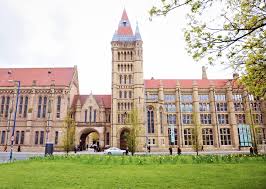
The University of Manchester is a public research university in Manchester, England. The main campus is south of Manchester City Centre on Oxford Road. The university owns and operates major cultural assets such as the Manchester Museum, The Whitworth art gallery, the John Rylands Library, the Tabley House Collection and the Jodrell Bank Observatory—a UNESCO World Heritage Site. The University of Manchester is considered a red brick university, a product of the civic university movement of the late 19th century. The current University of Manchester was formed in 2004 following the merger of the University of Manchester Institute of Science and Technology (UMIST) and the Victoria University of Manchester. This followed a century of the two institutions working closely with one another.The University of Manchester Institute of Science and Technology was founded in 1824 as the Mechanics' Institute. The founders believed that all professions somewhat relied on scientific principles. As such, the institute taught working individuals branches of science applicable to their existing occupations. They believed that the practical application of science would encourage innovation and advancements within those trades and professions. The Victoria University of Manchester was founded in 1851, as Owens College. Academic research undertaken by the university would be published via the Manchester University Press from 1904. The University of Manchester is a member of the Russell Group, the N8 Group, and the worldwide Universities Research Association. The University of Manchester, inclusive of its predecessor institutions, has had 25 Nobel laureates amongst its past and present students and staff, the fourth-highest number of any single university in the United Kingdom. In 2020/21, the university had a consolidated income of £1.1 billion, of which £237.0 million was from research grants and contracts (6th place nationally behind Oxford, UCL, Cambridge, Imperial and Edinburgh). It has the fifth-largest endowment of any university in the UK, after the universities of Cambridge, Oxford, Edinburgh and King's College London.

BACKGROUND AND OBJECTIVE:Intellectual disability (ID) is increasingly recognised as a hidden driver of cancer mortality. However, evidence on prostate cancer (PC) care in this population is limited. METHODS:The study population comprised 29 554 men with an ID and 518 739 comparators from the Clinical Practice Research Datalink Aurum database, which is linked to hospital, mortality, and cancer registry data. Poisson and Cox regression analyses were used to estimate incidence rate ratios (IRRs), risk ratios (RRs), and hazard ratios (HRs) with 95% confidence intervals (CIs) for outcomes related to PC presentation, diagnosis, treatment, and survival. KEY FINDINGS AND LIMITATIONS:The ID group presented more frequently with symptoms suggestive of PC (IRR 1.35, 95% CI 1.28-1.43) but were less likely to have a prostate-specific antigen (PSA) test within 90 d (RR 0.66, 95% CI 0.63-0.70). Following detection of elevated PSA, the ID group had fewer referrals (RR 0.83, 95% CI 0.72-0.96), biopsies (RR 0.54, 95% CI 0.41-0.71), and PC diagnoses (RR 0.51, 95% CI 0.41-0.65). The ID group were also more likely to be diagnosed on the date of death (RR 5.96, 95% CI 2.70-11.77), have missing Gleason scores (RR 1.61, 95% CI 1.27-2.01), and present with de novo metastatic PC (RR 1.79, 95% CI 1.15-2.77). Among those with Gleason scores, the rate of clinically significant PC (Gleason ≥7) was comparable between the ID and control groups, while receipt of radical treatment for nonmetastatic PC was slightly lower in the ID group (RR 0.73, 95% CI 0.51-1.00). Men with an ID had twofold higher risk of death from PC following diagnosis (HR 2.11, 95% CI 1.64-2.73). CONCLUSIONS AND CLINICAL IMPLICATIONS:Men with an ID face disparities across the PC care pathway from investigation of relevant symptoms to survival after diagnosis. Targeted interventions are needed to address these inequities.
Mesh-free numerical methods provide flexible discretisations for complex geometries; however, classical meshless discrete differential operators typically trade low computational cost for limited accuracy or high accuracy for substantial per-stencil computation. We introduce a parametrised framework for learning mesh-free discrete differential operators using a graph neural network trained via polynomial moment constraints derived from truncated Taylor expansions. The model maps local stencils relative positions directly to discrete operator weights. The current work demonstrates that neural networks can learn classical polynomial consistency while retaining robustness to irregular neighbourhood geometry. The learned operators depend only on local geometry, are resolution-agnostic, and can be reused across particle configurations and governing equations. We evaluate the framework using standard numerical analysis diagnostics, showing improved accuracy over Smoothed Particle Hydrodynamics, and a favourable accuracy-cost trade-off relative to a representative high-order consistent mesh-free method in the moderate-accuracy regime. Applicability is demonstrated by solving the weakly compressible Navier-Stokes equations using the learned operators.
This study investigates the systematic marginalisation of women academics in Turkish universities through the lens of ‘mansplaining’, using a phenomenological design and interviews with 13 women academics, and situates these dynamics within a centralised, politicised higher education system that shapes women's epistemic authority. Mansplaining emerges not as a communicative annoyance but as institutional violence and epistemic silencing that enforces a ‘masculinised’ identity performance and reinforces vertical discrimination—symbolised by the ‘men are deans, women are assistants’ hierarchy—particularly in regional settings. Participants' selective reticence about the political context reflects institutional caution and self-censorship. The study proposes concrete interventions—defining ‘epistemic violence’ in university codes, ‘interruption audits’ in academic boards, and peer-solidarity networks—underscoring the need for systemic transformation toward a more equitable academic culture in Turkey.
The provision of paediatric and congenital heart disease services in Africa is currently less than 1% of the global surgical capacity. Coarctation of the aorta (CoA) is a common type of congenital heart disease and is influenced by the haemodynamics of blood. Patient-specific computational fluid dynamics (CFD) modelling offers valuable insights into haemodynamics in CoA, but significantly relies on the prescription of accurate outlet boundary conditions. The 3-Element Windkessel (3-EWK) model is an approach that is often used and has been shown to lead to physiologically realistic results. The accuracy of the 3-EWK is contingent on tuning of its lumped parameters (R1, R2, and C). This study quantifies the impact of measurement uncertainties from Doppler Echocardiography on the estimation of each 3-EWK lumped parameter and the resulting haemodynamic outputs from CFD across the cardiac cycle, using a stochastic approach. The results show that the resulting uncertainties in the lumped parameters do not have a significant effect on the bulk flow. This was shown by the variability of the pressure drop across the coarctation, the main clinical parameter, being less than 5%. This was similarly observed for the volume flow rate. Therefore, indicating that when using the 3-EWK model, measurement uncertainties due to Doppler echocardiography have a minor impact on the bulk flow. However, the time-varying inlet volume flow rate profile was seen to have had a more significant effect. Thus, indicating that it is of greater interest when compared to the lumped parameters.
Universal, school-based social and emotional learning interventions have been consistently shown to meaningfully improve a range of salient outcomes for children and young people in the short-term, but less is known about their longer-term effects. This study focuses on such effects in the context of a cluster-randomised controlled trial of the Passport: Skills for Life intervention in Greater Manchester, England. Passport is implemented by trained classroom teachers, who deliver 18 weekly lessons across 5 modules (emotions; relationships and helping each other; difficult situations; fairness, justice and what is right; change and loss). Mainstream primary schools (clusters, k = 62; trial cohort of N = 2,425 children, aged 8-9 years at baseline) were the unit of randomisation. Allocation took place following completion of baseline measures, with minimisation ensuring balance across trial arms in school size and the proportion of children eligible for free school meals. Intention-to-treat (ITT) analyses at immediate-post-intervention follow-up revealed no intervention effects for any trial outcome. Accordingly, the focus of this paper is on the potential emergence of so-called ‘sleeper’ effects at 12-month post-intervention follow-up, which coincided with the final year of primary school for the trial cohort. However, ITT analyses revealed no statistically significant impact of Passport on internalising symptoms (primary outcome; d = 0.06, 95% bootstrapped confidence interval, BCI -0.17, 0.27) or any of our secondary outcomes (emotion regulation, d = 0.00, 95% bootstrapped confidence interval, BCI -0.21, 0.21; wellbeing, d = 0.05, 95% BCI -0.18, 0.30; loneliness, d = -0.02, 95% BCI -0.24, 0.20; bullying, d = 0.01, 95% BCI -0.21, 0.23; peer support d = 0.05, 95% BCI -0.13, 0.25). Taken together with findings from related analyses of this trial, the present results do not provide evidence to support further scale-up of Passport. Our discussion focuses on whether the impending transition to secondary school was a sufficient or universally applicable catalytic event to trigger the application of skills acquired in Passport, or whether the intervention may simply have been insufficiently potent to provide a meaningful benefit over usual practice.





