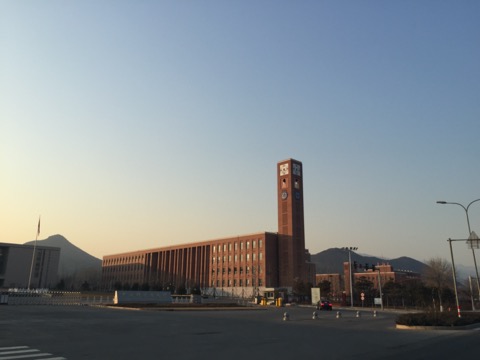
中国科学院大学(University of Chinese Academy of Sciences)简称“国科大”,是一所以科教融合为办学模式、研究生教育为办学主体的创新型大学,入选国家“世界一流学科建设高校”、“基础学科拔尖学生培养试验计划”,环太平洋大学联盟、京港大学联盟、中国高校行星科学联盟、中欧商校联盟成员,首批学位授权自主审核单位。 中国科学院大学,前身是1963年开始试办的中国科学院研究生院;1978年正式建校,校名中国科学技术大学研究生院,是经党中央国务院批准创办的新中国第一所研究生院;1982年之后,中国科学院批准同时使用校名中国科学院研究生院、中国科学技术大学研究生院(北京)。2000年12月,国务院学位委员会及教育部核准校名为中国科学院研究生院。2005年,中国科学院管理干部学院并入。2012年6月,经教育部批准更名为中国科学院大学,并于2014年开始招收本科生。 截至2019年底,学校由京内四个校区(玉泉路、中关村、奥运村、雁栖湖)、京外五个教育基地(上海、武汉、广州、成都、兰州)和分布在全国的116个培养单位组成;有直属教学科研单位55个,其中,京内40个、京外18个;有附属医院19所;有一级学科博士点42个,一级学科硕士点54个,本科专业13个;专任教师3000余名;各研究生培养单位在岗研究生指导教师11737名,其中博士生导师6786人(含两院院士282人);在学本科生1620名;在学研究生5.17万名,博士生数量位居全国第一;在学外国留学生1734人,其中外国博士生1055人。
Autonomous on-orbit servicing demands embodied agents that perceive through visual sensors, reason about 3D spatial situations, and execute multi-phase tasks over extended horizons. We present SpaceMind, a modular and self-evolving vision-language model (VLM) agent framework that decomposes knowledge, tools, and reasoning into three independently extensible dimensions: skill modules with dynamic routing, Model Context Protocol (MCP) tools with configurable profiles, and injectable reasoning-mode skills. An MCP-Redis interface layer enables the same codebase to operate across simulation and physical hardware without modification, and a Skill Self-Evolution mechanism distills operational experience into persistent skill files without model finetuning. Beyond the framework, we contribute an evaluation protocol that complements binary success with continuous behavioral metrics, including a delta-v proxy, path efficiency, and a failure-mode taxonomy, and release the platform with configurable stress injections as a benchmark for space agents. We validate SpaceMind through 363 closed-loop runs across five satellites, four task types, and two environments, a UE5 simulation and a physical laboratory, deliberately including degraded conditions to stress-test robustness. Under nominal conditions all modes achieve 90%-100% navigation success; under degradation, the Prospective mode uniquely succeeds in search-and-approach tasks where other modes fail. A self-evolution study shows that the agent recovers from failure in four of six groups from a single failed episode, including complete failure to 100% success and inspection scores improving from 12 to 59 out of 100. Real-world validation confirms zero-code-modification transfer to a physical robot with 100% rendezvous success. A challenging-scenario campaign of 171 runs then locates the capability boundary: the agent tolerates target rotation up to 2 degrees/s almost without loss, yet success drops to 47% under a delta-v budget and to 33% on a fly-around repositioning task, with failures dominated by long-range target acquisition and geometric self-assessment rather than maneuver execution. Code: https://github.com/wuaodi/SpaceMind.
Point-supervised Temporal Action Localization (PTAL) adopts a lightly frame-annotated paradigm (i.e., labeling only a single frame per action instance) to train a model to effectively locate action instances within untrimmed videos. Most existing approaches design the task head of models with only a point-supervised snippet-level classification, without explicit modeling of understanding temporal relationships among frames of an action. However, understanding the temporal relationships of frames is crucial because it can help a model understand how an action is defined and therefore benefits the localization of complete action instances. To this end, in this paper, we design a multi-task learning framework that fully utilizes point supervision to boost the model’s temporal understanding capability for action localization. Specifically, we design three self-supervised temporal understanding tasks: (i) Action Completion, (ii) Action Order Understanding, and (iii) Action Regularity Understanding. These tasks help a model understand the temporal consistency of actions across videos. To the best of our knowledge, this is the first attempt to explicitly explore temporal consistency for point-supervision action localization. Extensive experimental results on four benchmark datasets demonstrate the effectiveness of the proposed method compared to several state-of-the-art approaches.
High-dimensional neuroimaging analyses for clinical diagnosis are often constrained by compromises in spatiotemporal fidelity and the limited adaptability of large-scale, general-purpose models. To address these challenges, we introduce Dynamic Curriculum Learning for Spatiotemporal Encoding (DCL-SE), an end-to-end framework centered on data-driven spatiotemporal encoding (DaSE). We leverage Approximate Rank Pooling (ARP) to efficiently encode three-dimensional volumetric brain data into information-rich, two-dimensional dynamic representations, and then decode this representation through a DGM-implemented architectural curriculum, where the fixed hierarchical decoder progressively refines features from global anatomical structures to fine pathological details without introducing a threshold-controlled stage-switch scheduler. Evaluated across six publicly available datasets, including Alzheimer’s disease and brain tumor classification, cerebral artery segmentation, and brain age prediction, DCL-SE consistently outperforms existing methods in accuracy, robustness, and interpretability. These findings underscore the critical importance of compact, task-specific architectures in the era of large-scale pretrained networks.
Recently, point-supervised temporal action localization has gained significant attention for its effective balance between labeling costs and localization accuracy. However, current methods primarily rely on visual features and do not fully exploit the complementary semantic information contained in textual descriptions. To address this issue, we propose a Text Refinement and Alignment (TRA) framework that incorporates refined textual semantics to complement visual representations for point-supervised temporal action localization. This is achieved by designing two new modules for the original point-supervised framework: a Point-based Text Refinement module (PTR) and a Point-based Multimodal Alignment module (PMA). Specifically, we first generate descriptions for video frames using a pre-trained multimodal model. Next, PTR refines the initial descriptions by leveraging point annotations together with multiple fixed pre-trained models. PMA then projects the visual and textual features into a unified semantic space and employs a point-based multimodal contrastive learning objective to reduce the gap between visual and linguistic modalities. Finally, the aligned multimodal features are fed into the action detector for temporal action localization. Extensive experiments on five widely used benchmarks demonstrate that TRA consistently improves strong point-supervised baselines and achieves competitive performance compared with state-of-the-art methods. In particular, on THUMOS’14, TRA achieves 58.5% AVG mAP@[0.1:0.7], outperforming the visual-only baseline by 2.3%. These results demonstrate that refined textual semantics can effectively complement visual representations and improve temporal action localization performance.
Prefix-based methods have emerged as a promising paradigm for Controllable Text Generation (CTG) due to their parameter efficiency. However, while effective in short sequences, their controllability tends to diminish as the generated sequence grows. In this paper, we identify Attention Dilution as a key factor behind this phenomenon: as the sequence length increases, the attention allocated to the control signal naturally decays due to the softmax mechanism, leading to a "fading" control effect. To address this, we propose LaPA^2 (Length-aware Prefix and Prompt Attention Augmentation), a training-free and model-agnostic framework designed to sustain robust control in long contexts. Specifically, LaPA^2 employs Length-Aware Logarithmic Scaling to dynamically amplify prefix attention weights, mathematically counteracting the dilution effect, while an optional Contextual Anchor Reinforcement applies synchronized augmentation to prompt tokens, preserving semantic coherence when strong attribute control risks overshadowing the original prompt. LaPA^2 is versatile, supporting both soft prefixes (continuous embeddings) and hard prefixes (discrete instructions). Experiments on multiple CTG tasks demonstrate that LaPA^2 consistently improves the performance of various prefix-based methods in long-form settings, leading to superior attribute controllability while preserving content relevance and fluency. Our code and data are publicly available at https://github.com/jiabingyang01/LaPA2.




