During particle collisions in the vicinity of the horizon of black holes, it is possible to achieve energies and temperatures corresponding to phase transitions in particle physics. It is shown that the sizes of the regions of the new phase are of the order of the Compton length for the corresponding mass scale. The lifetime is also on the order of the Compton time. It is shown that the inverse influence of the energy density in the electro-weak phase transition in collisions on the space-time metric can be neglected.
We study the question of conditions for the existence of negative-energy states of particles in the absence of external fields in inertial and noninertial frames of reference. We show that in the nonrelativistic case in noninertial reference frames, there always exist domains where the energy of particles is negative. We also show that in the relativistic case, the existence of negative-energy states of point particles does not lead to violations of the energy dominance condition. We consider conditions for the appearance of negative and zero energies of particles in the Milne universe and Rindler space–time.
Particles with negative energies are considered for three different cases: inside the horizon of a Schwarzschild black hole, Milne’s coordinates in flat Minkowski space–time (Milne’s universe using nonsynchronous coordinates) and in the cosmological Gödel model of the rotating universe. It is shown that, differently from the Gödel model with a nondiagonal term, where it occurs that negative energies are impossible, they are present in all other cases considered in the paper. Particles with zero energy are also possible in the first two cases.
It has been shown that temperatures near the horizon of rotating black holes can be about the phase transition temperature in the Standard Model with the Higgs boson. The distance from the horizon and gravitational and electromagnetic radiation emitted in collisions between particles have been numerically estimated.
The game in which acts of participants don’t have an adequate description in terms of Boolean logic and classical theory of probabilities is considered. The model of the game interaction is constructed on the basis of a non-distributive orthocomplemented lattice. Mixed strategies of the participants are calculated by the use of probability amplitudes according to the rules of quantum mechanics. A scheme of quantization of the payoff function is proposed and an algorithm for the search of Nash equilibrium is given. It is shown that differently from the classical case in the quantum situation a discrete set of equilibrium is possible.
It is shown that use of non synchronous reference frame in cosmology can lead to unusual behavior of the energy of particles: it can have not only positive but also negative and zero energies. A special example of the model with the scale factor a(t) ∼ t is considered.
Arguments are given for the conclusion that the energy of collision of two ultrarelativistic elementary particles due to gravitational radiation cannot exceed the Planck value. Comparison of the gravitational and electromagnetic radiation for charged particles close to the horizon of Kerr black hole is made. If for trans-Planckian energy the black hole can arise it is shown that the energy growth used in scattering for interaction of particles is still limited.
The number of superheavy particles with the mass of the Grand Unification scale with trans-Planckian energy created at the epoch of superheavy particle creation from the vacuum by the gravitation of the expanding Universe is calculated. In later collisions of these particles, gravitational radiation is radiated playing the role of bremsstrahlung for gravity. The effective background radiation of the Universe is evaluated.
The problem of particle creation in cosmology concerning whether the results for the number of particles are infinite or finite is discussed for scalar and spinor particles in Friedmann expanding Universe. It is shown that the results are always finite if one puts in case of scalar particles creation a special term into the Lagrangian. Numerical estimates of the effect of particle creation are made. The role of creation of superheavy particles in cosmology is discussed.
States of particles with negative energies are considered for the nonrelativistic and relativistic cases. In the nonrelativistic case it is shown that the decay close to the attracting center can lead to the situation similar to the Penrose effect for a rotating black hole when the energy of one of the fragments is larger than the energy of the initial body. This is known as the Oberth effect in the theory of the rocket movement. The realizations of the Penrose effect in the non-relativistic case in collisions near the attracting body and in the evaporation of stars from star clusters are indicated. In the relativistic case similar to the well known Penrose process in the ergosphere of the rotating black hole it is shown that the same situation as in ergosphere of the black hole occurs in rotating coordinate system in Minkowski space-time out of the static limit due to existence of negative energies. In relativistic cases differently from the nonrelativistic ones, the mass of the fragment can be larger than the mass of the decaying body. Negative energies for particles are possible in the relativistic case in cosmology of the expanding space when the coordinate system is used with a nondiagonal term in metrical tensor of the space-time. Friedmann metrics for three cases: open, close and quasieuclidian, are analyzed. The De Sitter space-time is shortly discussed.
It is shown that in the rest frame of the observer in expanding Universe states of particles with negative energy exist.The properties of such states are studied. The comparison with the case of negative energies of particles in black holes and rotating coordinates out of the static limit is made.
Reference [3] on page 1125, 3. A. A. Grib and Yu. V. Pavlov, "Comparison of particle properties in Kerr metric and in rotating coordinates," Gen. Rel. Grav., 49, 78 (2017); arXiv:1609.04202v2 [gr-qc] (2016).C. W. Misner, K. S. Thorne, and J. A. Wheeler, Gravitation, Freeman, San Francisco (1973). should be split as 3. A. A. Grib and Yu. V. Pavlov, "Comparison of particle properties in Kerr metric and in rotating coordinates," Gen. Rel. Grav., 49, 78 (2017); arXiv:1609.04202v2 [gr-qc] (2016). 4. C. W. Misner, K. S. Thorne, and J. A. Wheeler, Gravitation, Freeman, San Francisco (1973). The subsequent reference numbers should incremented (old numbers 4–20 become 5–21). Then the citations in the text will correctly relate to the list of references. The editorial staff apologizes to the authors.
We show that effects similar to those for a rotating black hole arise for an observer using a uniformly rotating reference frame in a flat space-time: a surface appears such that no body can be stationary beyond this surface, while the particle energy can be either zero or negative. Beyond this surface, which is similar to the static limit for a rotating black hole, an effect similar to the Penrose effect is possible. We consider the example where one of the fragments of a particle that has decayed into two particles beyond the static limit flies into the rotating reference frame inside the static limit and has an energy greater than the original particle energy. We obtain constraints on the relative velocity of the decay products during the Penrose process in the rotating reference frame. We consider the problem of defining energy in a noninertial reference frame. For a uniformly rotating reference frame, we consider the states of particles with minimum energy and show the relation of this quantity to the radiation frequency shift of the rotating body due to the transverse Doppler effect.
Some remarks on the use of quantum logic and corresponding nondistributive lattices in macroscopic situations—in the theory of automata and macroscopic quantum games—are discussed. Comparison with microscopic quantum mechanics is made.
The problem of back reaction of the gravitational radiation of the two merging black holes on the metric of the spacetime is investigated. It is shown for some models that large energy density of the gravitational waves close to the merger can lead to the disappearance of the visible accretion disc of the merged pair of black holes.
We study properties of particles with zero or negative energy and a nonzero orbital angular momentum in the ergosphere of a rotating black hole. We show that the sign of the particle energy is uniquely determined by the angular velocity of its rotation in the ergosphere. We give a simple proof of the fact that extreme black holes cannot exist. We investigate the question of the possibility of an unlimited energy increase in the center-of-mass system of two colliding particles, one or both of which have negative or zero energy.
Properties of particles in Kerr metric are compared with properties of particles in rotating coordinates in Minkowski space-time. It is shown that particles with negative and zero energies existing in the ergosphere of the rotating black hole also exist in the region out of the static limit in rotating coordinates in Minkowski space-time. Some similarities like the Penrose process and differences in both cases are analyzed.
Three mechanisms of getting high energies in particle collisions in the ergosphere of the rotating black holes are considered. The consequences of these mechanisms for observation of ultra high energy cosmic rays particles on the Earth as result of conversion of superheavy dark matter particles into ordinary particles are discussed.
A new feature of the rotating black holes is the existence in their ergosphere of trajectories of particles with negative and zero energies. Here we analyze general prop-erties of such trajectories comparing them with usual trajectories of particles with posi-tive energy. A comparison with the situation in rotating coordinate frame in Minkowski space-time is made. The possibility of the unbounded growth of the energy of two col-liding particles in the centre of mass frame in the ergosphere is analysed.
Results on particle creation from vacuum by the gravitational field of the expanding Friedmann Universe are presented. Finite results for the density of particles and the energy density for created particles are given for different exact solutions and different expansion modes of the Universe. The results are obtained for both conformal and nonconformal particles. The hypothesis on the origin of visible matter from the decay of created from vacuum superheavy particles identified with dark matter is discussed.
 Yu. V. Pavlov合作论文数37Vladimir M Mostepanenko合作论文数Department of Quantum Electronics, Peter the Great St.Petersburg Polytechnic University/Universidade Federal de Moscow31s g mamaev合作论文数14Sg Mamayev合作论文数7
 Roman R. Zapatrin合作论文数Department of Mathematics;Division of Mathematics;Istituto per la Ricerca di Base;Department of Mathematics, Istituto per la Ricerca di Base6V. M. Frolov合作论文数5V. N. Ponomarev合作论文数4Moiseĭ Aleksandrovich Markov合作论文数4N. A. Smurova合作论文数4M. I. Bashmakov合作论文数4
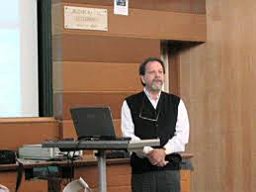 Waldyr A. Rodrigues合作论文数Instituto de Matemática Estatística e Computação Científica, Universidade Estadual de Campinas4Alexei V Nesteruk合作论文数4Georgy Parfionov合作论文数3V. I. Bogatko合作论文数3Яков Борисович Зельдович合作论文数2V. Yu. Dorofeev合作论文数2g a kolton合作论文数2V.M. Maksimov合作论文数2V. B. Braginskii合作论文数2
 Oliver Fabio Piattella合作论文数Departamento de F ´ õsica;Universidade Federal do Esp;Departamento de F ´ õsica, Universidade Federal do Esp2Georges Parfionov合作论文数2S. A. Pritomanov合作论文数1a m rasulova合作论文数1
 Vitalii Vertogradov合作论文数The SAO RAS1
 Andrei Khrennikov合作论文数Department of Mathematics, Faculty of Technology, Linnaeus University1
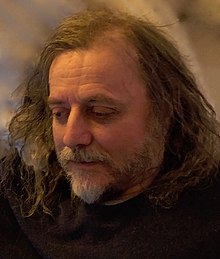 Diederik Aerts合作论文数Centre Leo Apostel, Brussels Free University1
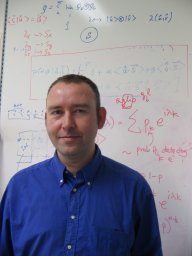 Tom Durt合作论文数Free University of Brussels1B. A. Levitskii合作论文数1B. Van Bogaert合作论文数1Surendra Nath Pandey合作论文数1E. V. Damaskinskii合作论文数1W. A Rodriguez合作论文数1
 YaB Zeldovich合作论文数Department of Physics, Moscow State University;Sternberg Astronomical Institute, Moscow State University;Institute of Problems of Chemical Physics, Russian Academy of Sciences1Ya B Zel'Dovich合作论文数1Vladimir B Braginskiĭ合作论文数1Konstantin E Starkov合作论文数1Valery Pavlov合作论文数1G. A. Kolton合作论文数1




