Interactive Machine Translation (IMT) advances the computer-aided translation (CAT) paradigm, enabling collaboration between machine translation systems and human translators for high-quality outputs. This paper presents Synslator, a CAT tool designed for IMT and proficient in online learning with real-time translation memories. Synslator accommodates different CAT service deployments by integrating two neural translation models for online learning and a language model to boost translation fluency interactively. Our evaluations demonstrate the system's online learning effectiveness, showing a 13% increase in post-editing efficiency with Synslator's interactive features. A tutorial video is provided at: https://youtu.be/K0vRsb2lTt8.
Due to the development of China, more and more people have come to know about Chinese politics and culture. The Government Work Report is an authoritative document published by the Chinese government, which has been translated into English for international audiences. To ensure that the Government Work Report can be well understood by international audiences, we studied the translation of featured words in the 2019 Government Work Report from the perspective of Skopos theory. The report is analyzed from the perspective of literal translation and free translation based on the Skopos theory. Under the guidance of Skopos theory, the 2019 Government Work Report can be translated using literal translation and free translation techniques. At the same time, the translation of featured words using Skopos theory provides a more accurate expression of the original meaning of the Government Work Reports. By doing so, the communicative function of the translated text can also be achieved.
In solid-state drives (SSDs), garbage collection (GC) plays a key role in making free NAND blocks for newly coming data. The data copied from one block to another by GC affects both the performance and lifetime of SSD significantly. Placing the data with different "temperature" into different NAND blocks can reduce data copy overhead in GC. This paper proposes a scheme to place data according to its predicted future temperature. A neural network called LSTM is applied to increase the accuracy of temperature prediction in both temporal and spatial dimensions. And it also uses K-Means to do clustering and automatically dispatch similar "future temperature" data to the same NAND blocks. The results obtained show that performance and write amplification factor (WAF) are improved in various applications. In the best case, the WAF and 99.99% of the write latency are reduced by up to 43.5% and 79.3% respectively.
BackgroundLipid metabolismreprogramming is a hallmark for tumor which contributes to tumorigenesis and progression, but the commonality and difference of lipid metabolism among pan-cancer is not fully investigated. Increasing evidences suggest that the alterations in tumor metabolism, including metabolite abundance and accumulation of metabolic products, lead to local immunosuppression in the tumor microenvironment. An integrated analysis of lipid metabolism in cancers from different tissues using multiple omics data may provide novel insight into the understanding of tumorigenesis and progression.ResultsThrough systematic analysis of the multiple omics data from TCGA, we found that the most-widely altered lipid metabolism pathways in pan-cancer are fatty acid metabolism, arachidonic acid metabolism, cholesterol metabolism and PPAR signaling. Gene expression profiles of fatty acid metabolism show commonalities across pan-cancer, while the alteration in cholesterol metabolism and arachidonic acid metabolism differ with tissue origin, suggesting tissue specific lipid metabolism features in different tumor types. An integrated analysis of gene expression, DNA methylation and mutations revealed factors that regulate gene expression, including the differentially methylated sites and mutations of the lipid genes, as well as mutation and differential expression of the up-stream transcription factors for the lipid metabolism pathways. Correlation analysis of the proportion of immune cells in the tumor microenvironment and the expression of lipid metabolism genes revealed immune-related differentially expressed lipid metabolic genes, indicating the potential crosstalk between lipid metabolism and immune response. Genes related to lipid metabolism and immune response that are associated with poor prognosis were discovered including HMGCS2, GPX2 and CD36, which may provide clues for tumor biomarkers or therapeutic targets.ConclusionsOur study provides an integrated analysis of lipid metabolism in pan-cancer, highlights the perturbation of key metabolism processes in tumorigenesis and clarificates the regulation mechanism of abnormal lipid metabolism and effects of lipid metabolism on tumor immune microenvironment. This study also provides new clues for biomarkers or therapeutic targets of lipid metabolism in tumors.
Proteins are major effectors of biological functions, and differentially expressed proteins (DEPs) are widely reported as biomarkers in pathological mechanism, prognosis prediction as well as treatment targeting in cancer research. High-throughput technology of mass spectrometry (MS) has identified large amounts of DEPs in human cancers. Through mining published researches with detailed experiment information, dbDEPC was the first database aimed to provide a systematic resource for the storage and query of the DEPs generated by MS in cancer research. It was updated to dbDEPC 2.0 in 2012. Here, we provide another updated version of dbDEPC, with improvement of database contents and enhanced web interface. The current version of dbDEPC 3.0 contains 11 669 unique DEPs in 26 different cancer types. Multi-level annotations of DEPs have been firstly introduced this time, including cancer-related peptide amino acid variations, post-translational modifications and drug information. Moreover, these multi-level annotations can be displayed in the biological networks, which can benefit integrative analysis. Finally, an online enrichment analysis tool has been developed, to support a KEGG enrichment analysis and to browse the relationship among interested protein list and known DEPs in KEGG pathways. In summary, dbDEPC 3.0 provides a comprehensive resource for accessing integrated and highly annotated DEPs in human cancer.
In this paper, the KIT systems submitted to the Shared Translation Task are presented.We participated in two translation directions: from German to English and from English to German.Both translations are generated using phrase-based translation systems.The performance of the systems was boosted by using language models built based on different tokens such as word, part-of-speech, and automacally generated word clusters.The difference in word order between German and English is addressed by part-of-speech and syntactic tree-based reordering models.In addition to a discriminative word lexicon, we used hypothesis rescoring using the ListNet algorithm after generating the translation with the phrase-based system.We evaluated the rescoring using only the baseline features as well as using additional computational complex features.
This paper describes the phrase-based SMT systems developed for our participation in the WMT11 Shared Translation Task. Translations for English↔German and English↔French were generated using a phrase-based translation system which is extended by additional models such as bilingual and fine-grained POS language models, POS-based reordering, lattice phrase extraction and discriminative word alignment. Furthermore, we present a special filtering method for the English-French Giga corpus and the phrase scoring step in the training is parallelized.
In this paper, we present the KIT systems participating in the TED translation tasks of the IWSLT 2014 machine translation evaluation. We submitted phrase-based translation systems for all three official directions, namely English→German, German→English, and English→French, as well as for the optional directions English→Chinese and English→Arabic. For the official directions we built systems both for the machine translation as well as the spoken language translation track. This year we improved our systems’ performance over last year through n-best list rescoring using neural networkbased translation and language models and novel preordering rules based on tree information of multiple syntactic levels. Furthermore, we could successfully apply a novel phrase extraction algorithm and transliteration of unknown words for Arabic. We also submitted a contrastive system for German→English built with stemmed German adjectives. For the SLT tracks, we used a monolingual translation system to translate the lowercased ASR hypotheses with all punctuation stripped to truecased, punctuated output as a preprocessing step to our usual translation system.
In this paper, we propose a novel Rhetorical Structure Index (RSI) to measure the structural importance of a word or a phrase. Unlike TF-IDF and other content-driven measurements, RSI identifies words or phrases that are structural cues in an unstructured document. We show structurally motivated features with high RSI values are more useful than content-driven features for applications such as segmenting unstructured lecture transcripts into meaningful segments. Experiments show that using RSI significantly improves the segmentation accuracy compared to TF-IDF, a traditional content-based feature weighting scheme.
This paper describes the phrase-based SMT systems developed for our participation in the WMT12 Shared Translation Task. Translations for English↔German and English↔French were generated using a phrase-based translation system which is extended by additional models such as bilingual, fine-grained part-of-speech (POS) and automatic cluster language models and discriminative word lexica. In addition, we explicitly handle out-of-vocabulary (OOV) words in German, if we have translations for other morphological forms of the same stem. Furthermore, we extended the POS-based reordering approach to also use information from syntactic trees.
Polymeric microcapsules are of great potential in ultrasonic imaging due to their characteristic hollow structure. Water-in-oil-in-water (W1/O/W2) double emulsion-solvent evaporation technique is a versatile strategy applicable to most hydrophobic polymers for fabricating microcapsules; however, the adjustment of the size and inner structure of resultant microcapsules have not been systematically studied until now. Here, we evaluate in detail the parameters in double emulsification and find that the W1/O volume ratio is a pivotal parameter which controls the hollow structure of microcapsules. In addition, an appropriate concentration of emulsifier in W2 is essential to guarantee the hollow structure as well. For quantitatively characterizing the hollow structure of microcapsules, we propose the concept of Hollow Ratio (HR) and Hollow Degree (HD) to evaluate the percent of hollow microcapsules in products and the hollow characteristic of the microcapsules. Our study demonstrates that the HR of microcapsules can vary between 25% and 98% by only adjusting the W1/O volume ratio. The size of microcapsule has a close relationship to its HD. Moreover, the microcapsules with both single cavity and multicavities have been fabricated by altering the energy of the second emulsification. Further, acoustic studies reveal that the microcapsules with different HD display obviously different sound attenuation spectrum and resonance frequency, which demonstrates that the adjustment of hollow structure should be an effective approach to control the acoustical properties of microcapsules for ultrasonic imaging.
In this paper, we deal with the problem of a large number of unaligned words in automatically learned word alignments for machine translation (MT). These unaligned words are the reason for ambiguous phrase pairs extracted by a statistical phrase-based MT system. In translation, this phrase ambiguity causes deletion and insertion errors. We present hard and optional deletion approaches to remove the unaligned words in the source language sentences. Improvements in translation quality are achieved both on large and small vocabulary tasks with the presented methods.
RWTH’s system for the 2008 IWSLT evaluation consists of a combination of different phrase-based and hierarchical statistical machine translation systems. We participated in the translation tasks for the Chinese-to-English and Arabicto-English language pairs. We investigated different preprocessing techniques, reordering methods for the phrase-based system, including reordering of speech lattices, and syntaxbased enhancements for the hierarchical systems. We also tried the combination of the Arabic-to-English and Chineseto-English outputs as an additional submission.
In this paper, we describe a source-side reordering method based on syntactic chunks for phrase-based statistical machine translation. First, we shallow parse the source language sentences. Then, reordering rules are automatically learned from source-side chunks and word alignments. During translation, the rules are used to generate a reordering lattice for each sentence. Experimental results are reported for a Chinese-to-English task, showing an improvement of 0.5%--1.8% BLEU score absolute on various test sets and better computational efficiency than reordering during decoding. The experiments also show that the reordering at the chunk-level performs better than at the POS-level.
The RWTH system for the IWSLT 2007 evaluation is a combination of several statistical machine translation sy stems. The combination includes Phrase-Based models, a n-gram translation model and a hierarchical phrase model. We describe the individual systems and the method that was used for combining the system outputs. Compared to our 2006 system, we newly introduce a hierarchical phrase-base d translation model and show improvements in system combination for Machine Translation. RWTH participated in the Italian-to-English and Chinese-to-English translation d irections.
Inspired by previous chunk-level reordering approaches to statistical machine translation, this paper presents two methods to improve the reordering at the chunk level. By introducing a new lattice weighting factor and by reordering the training source data, an improvement is reported on TER and BLEU. Compared to the previous chunklevel reordering approach, the BLEU score improves 1.4% absolutely. The translation results are reported on IWSLT Chinese-English task.
This paper aims to develop a data-based Semi-Quantitative Food Frequency Questionnaire (SQFFQ) covering both urban and rural areas in the Chaoshan region of Guangdong Province, China, for the investigation of relationships between food intake and lifestyle-related diseases among middle-aged Chinese. We recruited 417 subjects from the general population and performed an assessment of the diet, using a 3-day weighed dietary record survey. We employed contribution analysis (CA) and multiple regression analysis (MRA) to select food items covering up to a 90% contribution and a 0.90 R-2, respectively. The total number of food items consumed was 523 (443 in the urban and 417 in the rural population) and the intake of 29 nutrients was calculated according to the actual consumption by foods/recipes. The CA selected 233, 194 and 183 foods/recipes for the combined, the urban and the rural areas, respectively, and then 196, 157 and 160 were chosen by the MRA. Finally, 125 foods/recipes were selected for the final questionnaire. The frequencies were classified into eight categories and standard portion sizes were also calculated. For adoption of the area-specific SQFFQ, Validity and reproducibility tests are now planned to determine how the combined SQFFQ performs in actual assessment of disease risk and benefit.
 Hermann Ney合作论文数RWTH Aachen University6
 Alex Waibel合作论文数Interactive Systems Labs, Institute for Anthropomatics and Robotics, Karlsruhe Institute for Technology;InterACT;Carnegie Mellon University6
 Eun-Ah Cho合作论文数Bohyunsan Optical Astronomical Observatory;Korea Astronomy Observatory;Bohyunsan Optical Astronomical Observatory, Korea Astronomy Observatory6Teresa Herrmann合作论文数Universität Karlsruhe (TH),6
 Jan Niehues合作论文数Institute for Anthropomatic and Robotics, Karlsruhe Institute of Technology6Mohammed Mediani合作论文数Karlsruhe Institute of Technology6
 Thanh-Le Ha合作论文数KIT · Institute of Anthropomatics5isabel slawik合作论文数3Toshiro Takezaki合作论文数3Song Feng-Yan合作论文数3Ke Li (李克)合作论文数3Ping Yu合作论文数3
 Richard Zens合作论文数Google3
 Evgeny Matusov合作论文数RWTH Aachen University3
 Oliver Bender合作论文数2
 Xiaoling Deng合作论文数2
 David Vilar合作论文数Google Research2XuKai Lin (林旭凯)合作论文数2
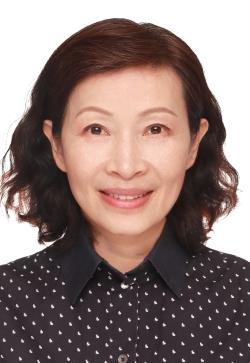 Lu Xie (谢鹭)合作论文数Institute of Genome and Bioinformatics, Shanghai Institute for Biomedical and Pharmaceutical Technologies;School of Health Science and Engineering, University of Shanghai for Science and Technology2
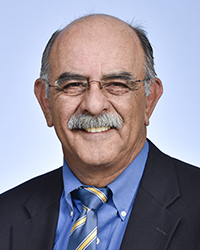 James W. Simpkins合作论文数Department of Physiology & Pharmacology, School of Medicine, West Virginia University2
 Arthur L. Day合作论文数Vivian L Smith Department of Neurosurgery, McGovern Medical School, The University of Texas Health Science Center at Houston2Xinen Huang (黄新恩)合作论文数Nanjing Medical University2Lv Lai-Wen合作论文数2
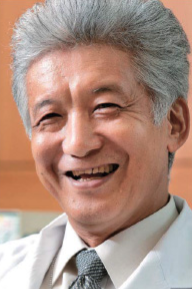 Tajima Kazuo合作论文数Aichi Cancer Center Research Institute2Arne Mauser合作论文数2Zeyu Feng合作论文数1Zhiyong Fu合作论文数1
 Jiayi Wang合作论文数Centre for Artificial Intelligence, University College London1Sasa Hasan合作论文数1G Rajakumar合作论文数1Yongkun Wang合作论文数1
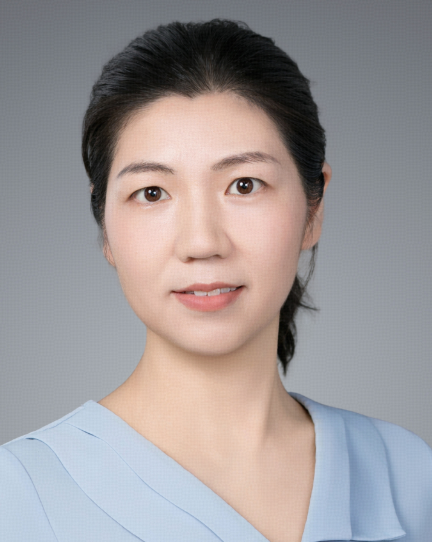 Menghuan Zhang (张梦欢)合作论文数School of Life Sciences and Technology, Tongji University1
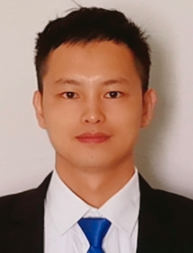 Helin Yang (杨和林)合作论文数Department of Information and Communication Engineering, School of Informatics, Xiamen University1Hui Cui合作论文数1
 Rainer Kärgel合作论文数Siemens Healthineers1Qingmin Yang合作论文数1Rong Lu合作论文数1
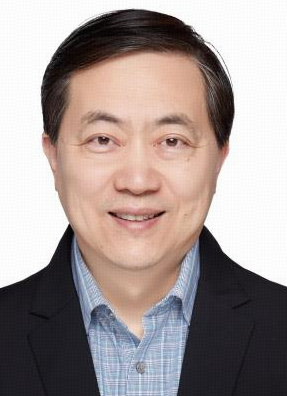 Jiong Shi (施炯)合作论文数School of Medicine, University of Science and Technology of China Life Sciences and Medicine;The First Affiliated Hospital of University of Science and Technology of China1Jian Ouyang合作论文数Shanghai Center for Bioinformation Technology, Shanghai Academy of Science and Technology, Shanghai, China1Yong Lin合作论文数1
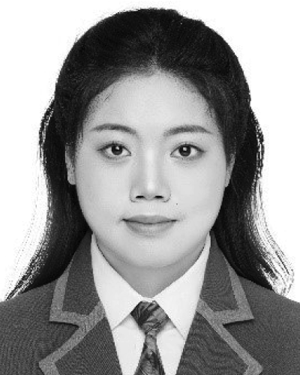 Ke Wang合作论文数Alibaba Group1Yang Hao合作论文数1Zhiming Zhou合作论文数1Fengming Zhou合作论文数1
 Yong Zhao (赵勇)合作论文数College of Food Sciences & Technology, Shanghai Ocean University1
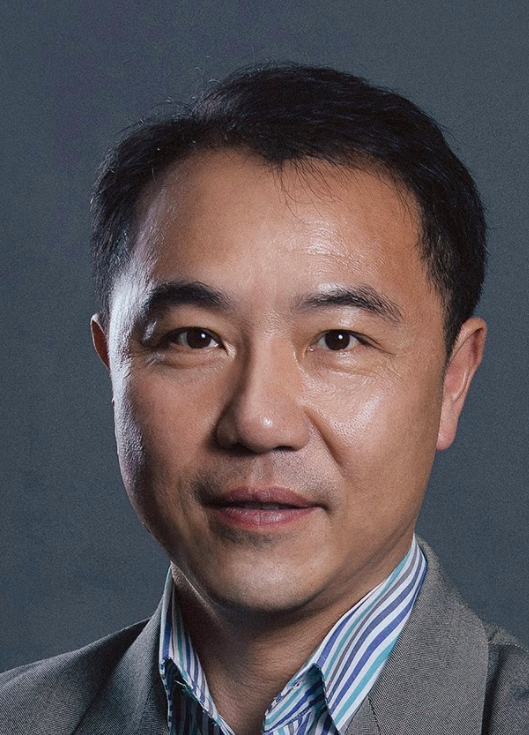 Kang Sun (孙康)合作论文数The State Key Lab of Metal Matrix Composites, School of Materials Science and Engineering, Shanghai Jiao Tong University1
 Li Sun合作论文数1
 Lanming Chen (陈兰明)合作论文数College of Food Sciences & Technology, Shanghai Ocean University1
 Dong Zhang (章东)合作论文数School of Physics, Nanjing University;Institute of Acoustics, Nanjing University1




