In response to the low latency requirements of navigation, a joint time-domain-atlas domain design is carried out to optimize its time-domain response, thereby reducing positioning delay and communication overhead, minimizing disturbance to the final steady-state of the response, and adding overshoot constraints and other practical design constraints enable the algorithm to converge smoothly and quickly to the steady-state state.
Lake volume variation is closely related to climate change and human activities, which can be monitored by multi-source remote-sensing data from space. Although there are usually two routine ways to construct the lake volume by the digital elevation model (DEM) or satellite altimetric data combined with the lake area, rarely has a comparison been made between the two methods. Therefore, we conducted a comparison between the two methods in Texas for 14 lakes with abundant validation data. First, we constructed the lake hypsometric curve by five commonly applied DEMs (SRTM, ASTER, ALOS, GMTED2010, and NED) or satellite altimetric products combined with the gauge lake area. Second, the lake volume was estimated by combining the hypsometric curve with the gauge lake area time series. Finally, the estimation error has been quantitatively calculated. The results show that the relative lake volume estimation error (rVSD) of the altimetric data (4%) is only 10–18% of that of the DEMs (22–41%), and the DEM with the highest resolution (NED) has the least rVSD with an average of 22%. Therefore, for large-scale lake monitoring, we suggest the application of satellite altimetric data with the lake area to estimate the lake volume of large lakes, and the application of high-resolution DEM with the lake area to calculate the lake volume of small lakes that are gapped by satellite altimetric data.
Significance The filamentation process of ultra -intense femtosecond lasers in the atmosphere is accompanied by significant nonlinear optical effects such as self -focusing, self -steepening, and plasma defocusing. This is essential for studying lidar, new light sources, artificial rainfall, air pollution detection, and laser remote sensing. When the femtosecond laser pulse is propagated into the atmosphere, a random multifilament phenomenon occurs owing to air refractive index perturbation caused by atmospheric turbulence and the initial inhomogeneous energy distribution of the femtosecond laser. This affects the energy distribution of the filament, shortens the propagation distance of the filament, and reduces the spot quality of the beam, therefore limits the practical application of the filament. This review summarizes local and international research progress on multifilaments in the past two decades. A series of multifilament control methods are reviewed, including the introduction of the elliptical rate of the incident beam, variation of the laser field gradient, modulation of the laser phase, and introduction of image dispersion to establish a reference for the study of multifilament regulation in femtosecond lasers.Progress With continuous advancements in laser technology, the peak intensity of femtosecond laser pulse obtained in laboratory tests has far exceeded the relativistic threshold (10(18) W/cm(2)) and even reaches 10(23) W/cm(2), which significantly reduces the difficulty of femtosecond laser atmospheric filamentation. This serves as a foundation for experimental research and the practical application of the filament. Researchers have found that the multifilament phenomenon is mainly caused by the perturbation of the refractive index of air and the initial uneven energy distribution of the femtosecond laser. Further studies have also shown that during the formation of femtosecond laser filaments, only a small portion of the laser energy is concentrated in the filament, and most of the laser energy is stored around the filaments as background energy, which is often called the background energy reservoir. In this regard, Mlejnek et al. proposed the theory of dynamic energy compensation for optical filament propagation. It is believed that an energy reservoir with a low light intensity concentrated around the optical filament provides energy for the propagation of the laser filament, and the interaction between background energy reservoirs can sustain the filament. This theory was experimentally confirmed in 2005. Liu et al. interrupted the transmission of background energy by shielding the filament s outer ring, immediately stopping the filament s propagation. In subsequent simulation studies, they found that the required background energy must be at least 50% higher than the total energy required to sustain the self -guided propagation of the filament. The main reasons for the multifilament phenomenon are atmospheric turbulence caused disturbance of air refractive index and the uneven distribution of the initial energy of the femtosecond laser. To effectively control the generation of a stable multifilament structure, researchers have proposed several methods; these methods include introducing ellipticity in the incident beam, changing the laser field intensity gradient (Fig. 1, Fig. 2), introducing astigmatism (Fig. 3), modulating the wavefront phase (Fig. 4), introducing axicon, introducing optical anisotropy of the introduced species (Fig. 5), and using polarization axis symmetry breaking (Fig. 6). These methods reduce and even eliminate the effect of random perturbations on femtosecond filament transmission by modulating the initial energy distribution of the femtosecond laser or the perturbation of the air refractive index cause by atmospheric turbulence, thereby achieving experimentally reproducible femtosecond laser transmission processes. In addition, by increasing the distance between the background energy reservoirs of the filaments and reducing the mutual interference between the energy pools, a multifilament structure with stable transmission can also be produced. Another method to control the orderly spatial distribution of femtosecond multifilaments involves inhibiting the generation of multifilaments, that is, turning the multifilaments into single filaments during laser transmission. Similar to regulating multifilaments, inhibiting multifilament production can also produce controllable filaments. One of the main ways of suppressing the generation of multifilaments is by making the initial light intensity distribution of the laser pulse as smooth as possible, thus reducing the influence of the initial uneven distribution of light intensity and preventing the generation of multiple hot spots . Another method is to reduce the distance between hot spots , causing the energy pools of each hot spot to overlap with each other so that the multifilaments are fused into a single filament. Based on these two techniques, researchers have proposed the use of telescopic systems for beam reduction (Fig. 7), the introduction of astigmatism, the use of spatial light modulators or phase templates (Fig. 8), and the use of iris diaphragms and axicons to control multifilaments.Conclusions and Prospects The formation process of femtosecond laser filaments is accompanied by rich optical effects such as fluorescence radiation, pulse self -compression, and supercontinuum generation. It has important application prospects in atmospheric pollution detection, new light sources, laser triggering, and terahertz radiation sources. Moreover, the study of femtosecond laser filamentation processes also benefits the development of the optics theory. Random multifilaments limit the practical applications of laser filamentation; hence, the significance of regulating multifilaments is to expand the practical applications of femtosecond lasers. Existing regulation methods for the multifilament phenomenon focus on generating controllable and stable structures and inhibiting multifilament production. Various research methods can be used to eliminate the randomness of multifilaments when the femtosecond laser is propagated to a certain extent in the atmosphere. However, there are still certain problems in multifilament control such as a low distribution control accuracy and shortened laser transmission distance due to laser energy loss. Therefore, the regulation of multifilaments needs to be studied further before it can be widely applied to various fields.
With the further development of big data, paying attention to data privacy and security has become a worldwide issue, and every data leakage will cause great concern to the media and the public. In order to solve the problems of data privacy of individual users, data islands and ensure the quality of spectrum sensing (SS) model during migration, a cooperative SS algorithm based on federated learning (FL) is proposed in this paper, which is effective in solving the problem of SS and effectively improves the utilization efficiency of spectrum. Specifically, the users adopt the local data sets to train the convolutional neural network (CNN). Then update the trained model parameters to the fusion center that performs global aggregation. Experimental results show that the cooperative spectrum sensing (SS) based on federated learning (FL) can effectively improve the sensing performance at low signal-to-noise ratio (SNR).
Recently, integrated sensing and communication (ISAC) has been a hot topic to alleviate the issue of low spectrum efficiency, pursuit the hardware gain and integration gain as far as possible. However, the coexistence of sensing and communication functions triggers the mutual interference therein, seriously affecting their respective performance. To solve this problem, the communication model and sensing model are built respectively in this paper, considering the interference between communication signals and between sensing signals and communication signals. Then, the ratio of the total transmitting data rate and the total power consumption is regarded as the optimization objection of this paper for energy-efficient interference cancellation. After that, the approximate solution of the optimization objection is obtained by Dinkelbach based scheme and semi-definite relaxation (SDR). Finally, the numerical simulations are conducted and the simulation results state that the proposed scheme can obtain a higher energy efficiency and outperforms the classical scheme.
Recently, deep learning (DL) based spectrum sensing (SS) has drawn much attention due to its better capacity of feature extraction and superb performance. However, the model robustness of the DL based scheme is limited by reason of the dynamic radio environment, leading to the floating of sensing performance. Motivated by this, adversarial transfer learning is applied to SS here, where the model is pre-trained at the central node firstly and fine-tuned at the local nodes. More specifically, a 2D dataset of the observed signal is constructed under various signal-to-noise-ratio (SNRs) and a convolution neural network (CNN) model is designed. Then a part of samples with various SNRs in the constructed dataset are employed to pre-train the proposed CNN model. After that, the pre-trained CNN model is distributed to local nodes with different SNRs and the pre-trained CNN model is fine-tuned. The proposed CNN model is pre-trained based on the samples under various SNRs, resulting in its stronger adaptability at the local node. The simulation experiments validate the effectiveness of the proposed scheme.
This paper proposes a non-cooperative unmanned aerial vehicle (UAV) signal detection strategy based on a multichannel control signal with an energy detector (ED), wherein the sampling point of the control signal on each subchannel is adjusted with environmental signal-to-noise (SNR) in a semi-adaptive manner. In order to estimate the SNR in the environment, not only is a convolutional neural network (CNN) applied in the proposed signal detection strategy, but a long shor-term memory network (LSTM) network is also included; in terms of features, it combines deep features and time-dimension features. The numbers of layers of the CNN and LSTM impact the performance of the algorithm. The decision on the presence or absence of a control signal is made at the fusion center (FC) based on the majority voting rule. This paper shows that the network with a two-layer CNN and a two-layer LSTM can achieve high estimation accuracy of environmental SNR. Simultaneously, the detection accuracy is improved by about 1 dB compared with the classical multichannel detection schemes.
Rely on powerful computing resources, a large number of internet of things (IoT) sensors are placed in various locations to sense the environment we live. However, the proliferation of IoT devices has led to the misuse of spectrum resources, and many IoT devices occupy the frequency band without permission. As a consequence, the spectrum regulation has become an essential part of the development of IoT. Automatic modulation classification (AMC) is a task in spectrum monitoring, which senses the electromagnetic space and is carried out under non-cooperative communication. Generally, deep learning (DL)-based methods are data-driven and require large amounts of training data. In fact, under some non-cooperative communication scenarios, it is challenging to collect the wireless signal data directly. How can the DL-based algorithm complete the inference task under zero-sample conditions? In this paper, a signal zero-shot learning network (SigZSLNet) is proposed for AMC under the zero-sample situations. The semantic descriptions and the corresponding semantic vectors are designed to generate the feature vectors of the modulated signals. The generated feature vectors act as the training data of zero-sample classes. The experimental results demonstrate the effectiveness of the proposed SigZSLNet. The accuracy of one unseen class and two unseen classes exceeds 90% and 76%, respectively. Simultaneously, we show the generated feature vectors and the intermediate layer output of the model.
Future 6G wireless networks will integrate sensing and communication (ISAC) with the ability to perceive the physical world. The radar can obtain the two-dimensional information of the target area more accurately through the synthetic aperture and other methods to satisfy the imaging requirements. When the communication signal is transmitted, the communication information unknown to the receiving end is modulated, and the information that it needs to communicate and transmit is unpredictable to the receiving end. Therefore, the intelligent fusion of communication signals and sensing signals is an important topic of ISAC, which helps to improve communication performance with the aid of sensing information. We propose an Auto-Encoder network that can fuse arbitrary size and length communication signals with perceptual image compression. Finally, Simulation results demonstrate the compression performance of the proposed model.
Recently, the spectrum resources of broadcasting services are increasingly scarce due to the urgent requirement of high definition (HD) and ultra- high definition (UHD) broadcasting, leading to a continuous increase in the demand for spectrum. Spectral hole detection seems extremely important due to its capacity of ide spectrum detection for possible spectrum reuse. However, the performance of classical spectral hole detection schemes is limited by the difficulty of threshold setting and sampling point selection. To improve the spectrum utilization further, this paper proposes a Q-learning based spectral hole detection scheme, where the sampling of received signal and sensing threshold adaptively varies with the radio environment. The optimal sampling point and sensing threshold are determined by Q-learning to minimize the predefined utility function. The effectiveness of the proposed scheme has been confirmed.
In recent years, deep learning (DL) technology has greatly improved the performance of facial expression recognition (FER). However, most DL-based methods will increase the computational loss and reduce the recognition speed. To alleviate the problem, this paper proposed a novel model LWER based on the lightweight convolution neural network (CNN) model for FER. The proposed model considers the depthwise separable convolutions, inverted residual modules and global average pooling to reduce the parameters of the model. Additionally, the improved downsampling module and regularization technique are employed to optimize the model. The LWER is validated on FER2013, JAFFE and CK+ dataset with two strategies, which demonstrates the proposed lightweight model makes a better trade-off between recognition accuracy and model complexity.
The CNN-LSTM network is employed in the proposed strategy for the estimation of environment SNR in broadcasting channel, where deep features and time dimension features are fused and the optimal layers of both CNN and LSTM are discussed. The proposed scheme can extract the features of broadcasting channel with a higher quality and the accuracy of SNR estimation is greatly improved as a consequence. On this basis, we conduct simulation experiments and verify the effectiveness of the proposed algorithm.
With the rapid growth of consumer demand for high-quality audio-visual media content such as 4K/8K and VR/AR., broadcasting services are becoming diversified and refined and the existing broadcast television network is difficult to meet the demand. 5G link will become an important communication channel for broadcasting services. Among them, the detection of idle spectrum is particularly important. In this paper, we use a convolutional neural network (CNN) module to solve the task of detection of idle spectrum. Experiment demonstrates that the CNN module is better than the traditional energy detection (ED) module. We compare CNN with ED when the signal-to-noise ratios (SNR) varies constantly to validate the scheme proposed in this paper.
The photodetectors generally works as the significant unit in intelligent optoelectronic systems, converting optical signal into electrical signal. The photomultiplication (PM) type polymer photodetectors (PPDs) were successfully demonstrated based on sandwich structure of ITO/PEDOT:PSS/PBDB-T:polymer acceptor (mass ratio, 100:3)/Al. The performance of PM type PPDs were enhanced by solvent additive 1-chloronaphthalene (CN). The EQE value of PM type PPDs with CN under -15 volts bias approaches 860% and 600%, and is better than EQE values of 300% and 240% in PM type PPDs without CN under 350 nm and 670 nm light illumination, respectively, which confirms the effectiveness of solvent additives CN on improving the performance of PM type PPDs. The PM phenomenon can be ascribed to the hole tunneling injection assisted by interfacial band bending. This paper provides new insight into realizing excellent performance PM type PPDs.
This paper mainly considers the data inadaptability issue of radar radiation sources, and proposes a corresponding similarity analysis method based on the knowledge graph, which helps to improve the reasoning performance of the knowledge graph module. In addition, an event-based knowledge graph reasoning framework is established for massive radar radiation source data and some effective information increment is obtained. Finally, simulation experiments verify the effectiveness of the proposed scheme.
Deep learning (DL) has been widely applied in automatic modulation classification (AMC), while the superb performance highly depends on high-quality datasets. Motivated by this, the AMC under few-shot conditions is considered in this letter, where a novel network architecture is proposed, namely automatic modulation classification relation network (AMCRN), and verified with the baseline methods. Experimental results state that the accuracy of proposed AMCRN exceeds 90% and 10% to 50% improvements are obtained compared with classical schemes when the signal-to-noise ratio (SNR) is greater than −2 dB.
The number of mobile broadcast users has increased significantly because of evolved multi-media broadcast multicast services (eMBMS). According to the above reasons, machine learning technology is introduced into 5G RAN slices to forecast the state of communication channel in a mobile scene. We propose a new architecture not only including convolutional neural network (CNN), but also fusing long short-term memory network (LSTM) to implement channel estimation, simultaneously demonstrate the performance of our proposed scheme with simulation results.
Along with the commercialization of evolved multimedia broadcast multicast services (eMBMS), the number of mobile broadcasting users is growing notably. Previous works reveal that the accuracy of mobile channel estimation will significantly impact the quality of broadcasting services. Motivated by this fact, we apply machine learning (ML) to the fifth-generation Radio Access Network (5G RAN) slicing in this paper for the estimation and the prediction of the channel status in mobile scenarios. More specifically, a cascaded convolutional neural network (CNN)-long short term memory network (LSTM) architecture is developed to achieve channel estimation for mobile broadcasting users. The energy efficiency of the base station (BS) is modeled mathematically, and the sub-optimal solution is achieved by deep Q-Network (DQN) based on the available channel status. Finally, we present the simulation results to justify the performance of our proposed schemes.
Relativistic vortex laser has drawn increasing attention in the laser-plasma community owing to its potential applications in various domains, e.g., generation of energetic charged particles with orbital angular momentum (OAM), high OAM X/γ-ray emission, high harmonics generation, and strong axial magnetic-field production. However, the generation of such relativistic vortex laser is still a challenge to the current laser technology. Using micro-structure targets named axial line-focused spiral zone plate (ALFSZP), we propose a novel scheme for ultra-intense vortex laser generation. In the scheme, a relativistic Gaussian laser pulse irradiates an ALFSZP, and diffracts as it passes through the ALFSZP. Due to the focusing and radial Hilbert transform capabilities of the ALFSZP, the seed laser is converted efficiently to a vortex one which is then well focused in a tunable focal volume. Three-dimensional particle-in-cell simulations indicate that using a seed laser pulse with intensity of 1.3 × 10²⁰ W/cm2, the vortex laser intensity achieved is as high as 1.3 × 10²¹ W/cm2 with the averaged angular momentum per photon up to 0.73ℏ, promising diverse applications in various fields aforementioned.
In the Internet of things (IoT), the extensive use of IoT devices makes the problem of spectrum sharing among devices increasingly prominent. Spectrum sensing is very significant to promote spectrum efficiency in IoT. However, due to network security and industry privacy issues, it is difficult to obtain large-scale data sets needed for spectrum sensing. Therefore, federated learning (FL) is an effective technique to solve the problems that may be encountered in the establishment of data sets and the problem of data leakage. In this paper, FL is utilized to study the problem of spectrum sensing, and a value evaluation mechanism of IoT devices is proposed to improve the performance of FL and resist poisoning attacks. Simulation shows that the proposed value evaluation mechanism can make the global model of FL converge more quickly and stably, and at the same time it is almost unaffected by malicious nodes when poisoning attacks occur.
 Qihong Lou (楼祺洪)合作论文数Shanghai Institute of Optics and Fine Mechanics, Chinese Academy of Sciences20
 Junsheng Mu合作论文数Beijing Univ Posts & Telecommun, Sch Informat & Commun Engn, Beijing 100876, Peoples R China17
 Xiaojun Jing (景晓军)合作论文数School of Computer and Information, Anhui Normal University17
 Jun Zhou (周军)合作论文数Shanghai Institute of Optics and Fine Mechanics, Chinese Academy of Sciences;University of Chinese Academy of Sciences16
 Yunrong Wei合作论文数13Jingxing Dong合作论文数12
 Zhijiang Wang (王之江)合作论文数Shanghai Institute of Optics and Fine Mechanics, Chinese Academy of Sciences12
 Bing He (何兵)合作论文数University of Chinese Academy of Sciences10Hongming Zhao合作论文数10
 Jianqiang Zhu (朱健强)合作论文数Shanghai Institute of Optics and Fine Mechanics, Chinese Academy of Sciences;University of Chinese Academy of Sciences7HaiZhong Xue (薛海中)合作论文数6
 Jinyan Li (李进延)合作论文数Wuhan National Laboratory for Optoelectronics, Huazhong University of Science and Technology;School of Optical and Electronic Information, Huazhong University of Science and Technology5Yuhua Xing合作论文数5Jiawu Miao合作论文数4Yuebo Li合作论文数4
 Ronghui Zhang (张荣辉)合作论文数School of Intelligent Systems Engineering, Sun Yat-sen University4Bohan Li (李博瀚)合作论文数北京邮电大学4
 Quan Zhou合作论文数3Guoliang Zhang合作论文数3
 Yuanhao Cui合作论文数Sch Informat & Commun Engn, Beijing Univ Posts & Telecommun3WenJie Han (韩文杰)合作论文数3
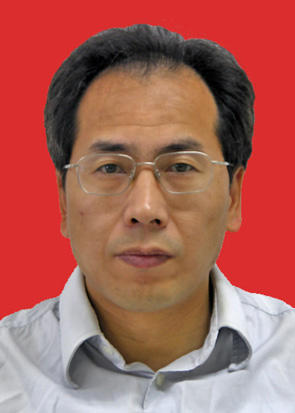 Weibiao Chen (陈卫标)合作论文数Shanghai Institute of Optics and Fine Mechanics, Chinese Academy of Sciences;University of Chinese Academy of Sciences3
 Xinlu Cheng (程新路)合作论文数Institute of Atomic and Molecular Physics, Sichuan University3Wei Wang合作论文数3Songtao Du (杜松涛)合作论文数3
 Shiyu Li (李诗愈)合作论文数FiberHome Telecommunication Technologies Co.,Ltd.2Fei-fei DOU (窦飞飞)合作论文数2
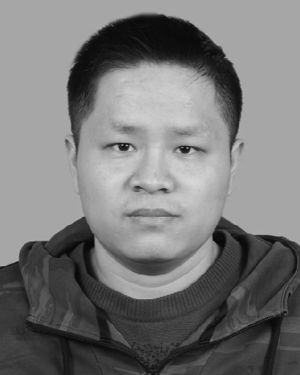 Wenjiang Ouyang (欧阳稳江)合作论文数2
 Cui Yuan合作论文数2Yan Shen (沈严)合作论文数2YongZhao Hu (胡永钊)合作论文数2
 Yunfeng Qi (漆云凤)合作论文数中国科学院大学上海光机所2
 De Zhang合作论文数2Yubing Zhang合作论文数2ZhongJie Liu合作论文数2Wenping Zhang (张文平)合作论文数2Jingyan Pan (潘静岩)合作论文数2
 Jia Zhu (朱佳)合作论文数School of Communications and Information Engineering, Nanjing University of Posts and Telecommunications2Xia Liu合作论文数2
 Tongpu Yu (余同普)合作论文数National University of Defense Technology2
 Zijiang Liu (刘子江)合作论文数School of Mathematics and Physics, Lanzhou Jiaotong University;Key Laboratory of Atomic and Molecular Physics & Functional Materials of Gansu Province;College of Physics and Electronic Engineering, Northwest Normal University2
 Changce Wang (王常策)合作论文数University of Science and Technology Beijing2
 Jie Zhao合作论文数1Dong-Ao Li合作论文数1Yuliang Lin合作论文数1Jianjun Ge合作论文数1Youheng Tan合作论文数1




