ABSTRACT The order Hymenoptera, which has ~160 000 described species, is the largest within the class Insecta, in which all members are capable of parthenogenesis. This review represents a synthesis of the previously existing and new reports and hypotheses on different cases and mechanisms of parthenogenesis in Hymenoptera, including genetic and cytological aspects of sex determination as well as the role of specific bacterial symbionts. Arrhenotokous parthenogenesis and haplodiploidy are likely to represent two key ancestral genetic features of this order. Multiple independent transitions to diploid, and, occasionally, to triploid thelytoky took place across different hymenopteran clades. Arrhenotoky, that is, haploid males and diploid females respectively developing from unfertilized and fertilized eggs, is implemented in Hymenoptera either through single‐locus (or sometimes multiple‐locus) complementary sex determination (CSD) or, at least in some taxa with high levels of inbreeding, via genomic imprinting. Similarly to other insects, sex determination in this order is performed by specific gene cascades, with transformer and doublesex usually being the main master and actuator genes, respectively. In a few special cases, males are produced through paternal genome elimination. Thelytoky in Hymenoptera can be sporadic, facultative or obligate, and, in terms of the presence/absence of the reductional meiotic division, either automictic or apomictic. Different types of automixis in this order include gamete duplication as well as central or terminal fusion. Arrhenotoky and thelytoky can coexist within the same species, whereby thelytokous individuals sometimes become intraspecific social parasites. Thelytoky in Hymenoptera, usually in the form of gamete duplication, is often induced by endosymbiotic microorganisms, and this type of parthenogenesis is almost exclusively restricted to parasitoids. These endosymbionts must therefore possess specific genes which ensure both egg diploidization and feminization of the developing individual, either in the form of one‐step or, more frequently, two‐step thelytoky. Although recent data and hypotheses significantly contribute to our understanding of hymenopteran reproduction, a number of questions deserve further investigation.
The parasitoid wasp Aganaspis daci (Weld, 1951) is a natural enemy of several tephritid fruit flies and was recently detected for the first time in Italy. Despite its biological and applied relevance, no chromosomal data have been available for this species until now. Here we provide the first karyotype description of A. daci, based on specimens from a laboratory stock in Campania (Italy), using chromosome morphometry and acridine orange staining. This species has n = 9 and 2n = 18, with a very large first metacentric chromosome, and acrocentrics prevailing among the remaining ones. The sixth metacentric presumably carries a single nucleolus organizing region (NOR). Staining with acridine orange provides homogeneous staining of all chromosomes. A brief review of the chromosome study of parasitoids of the family Figitidae, which have n = 5 to 11, is given. The haploid karyotype of ten chromosomes apparently represents the ancestral character state at least for the subfamily Eucoilinae, with chromosome sets that include n = 9 and the very large first metacentric, likely result from independent chromosomal fusions.
Background:In the Western Palaearctic, many species of Darwin wasps exhibit a form of diapause known as free-living adult diapause, similar to hibernation in certain beetle, bumblebee and butterfly species. This study provides a first comprehensive overview of all known hibernating species and aims to improve the current ecological knowledge. New information:We reviewed 439 species, confirming free-living adult diapause in 340; 81 remain unverified and 18 are excluded, which have been incorrectly reported as hibernators in the past. The validated dataset includes 7443 records from 27567 specimens, spanning over 235 years of both published and unpublished observations. We report 29 species as hibernators for the first time. Amongst the records, 388 provide the first evidence of hibernation for a species in a given country, with 67 also representing the species' first national record. We highlight the value of field-based data and caution against relying solely on collection dates to study diapause. The observed variability in diapause strategies and hibernacula underscores the importance of nature management for biodiversity conservation, especially preservation of microhabitats.
Related species of parasitoid Hymenoptera often coexist on a certain host, but many details of interactions between these organisms remain unclear. The present review summarizes the main existing concepts and facts and suggests principal patterns and mechanisms that allow for the coexistence of several members of a particular parasitoid genus at the expense of the same host. Although the successful introduction of exotic parasitic wasps into the existing ecosystems often leads to the competitive displacement of related parasitoids, mere spatial and/or temporal niche partitioning between these insects is also possible. Nevertheless, many cases of coexistence of related wasp species on the same host defy simple explanations since they apparently result from complex interactions between the host and its parasitoids. The main characteristics of the oviposition process, i.e., egg volume, fecundity, and duration of the egg-laying period, are likely to correlate with other basic features of life-history strategies in parasitoid Hymenoptera. Specialist parasitic wasps often aggregate over the host patches, whereas generalists can be randomly distributed, thus reducing the degree of interspecific competition among parasitoids. However, some of the coexisting parasitic wasps, usually the weakest competitors, must also have access to enemy-free space to survive.
Currently, clusters of 45S and 5S ribosomal DNA (rDNA) have been studied in about 1000 and 100 species of the class Insecta, respectively. Although the number of insect species with known 45S rDNA clusters (also referred to as nucleolus-organizing regions, or NORs) constitutes less than 0.1 percent of the described members of this enormous group, certain conclusions can already be drawn. Since haploid karyotypes with single 45S and 5S rDNA clusters predominate in both basal and derived insect groups, this character state is apparently ancestral for the class Insecta in general. Nevertheless, the number, chromosomal location, and other characteristics of both 45S and 5S rDNA sites substantially vary across different species, and sometimes even within the same species. There are several main factors and molecular mechanisms that either maintain these parameters or alter them on the short-term and/or long-term scale. Chromosome structure (i.e., monocentric vs. holokinetic chromosomes), excessive numbers of rRNA gene copies per cluster, interactions with transposable elements, pseudogenization, and meiotic recombination are perhaps the most important among them.
To identify nucleolus organizing regions (NORs), fluorescence in situ hybridization (FISH) with 18S rDNA probe was performed on chromosomes of Tenthredo campestris Linnaeus, 1758 (Tenthredinidae), Arge ciliaris (Linnaeus, 1767) (Argidae) (n = 10 in both) and Aulacidea hieracii (Bouché, 1834) (Cynipidae) (2n = 20). In all these species, a single pericentromeric rDNA cluster per haploid karyotype was detected. This number of NORs is confirmed as ancestral for the order Hymenoptera.
The karyotype of Pseudapanteles dignus (Muesebeck, 1938), an important parasitoid of a serious tomato pest Phthorimaea (= Tuta) absoluta Meyrick, 1917 (Lepidoptera, Gelechiidae), in the Neotropics and adjacent regions, was studied for the first time using morphometric analysis and several techniques of differential chromosome staining, i.e., C-banding and staining with base-specific fluorochromes, together with fluorescence in situ hybridization (FISH) with an 18S rDNA probe. We found n = 7 and 2n = 14 in P. dignus, with seven metacentric chromosomes of similar size in the haploid set. C-banding revealed various C-positive bands, either centromeric or interstitial, on most chromosomes. Both AT-specific and GC-specific fluorochromes, 4’6-diamidino-2-phenylindole (DAPI) and chromomycin A3 (CMA3) respectively, showed uniform staining of chromosomes. FISH visualized a single subterminal rDNA site on a medium-sized metacentric. A brief review of known chromosome sets of the subfamily Microgastrinae (Braconidae) is given; certain features of karyotype evolution of this group are discussed.
Although chromosomes of only 20 members of Pteromalidae sensu lato (s.l.), which belong to the families Pteromalidae sensu stricto (hence Pteromalidae) and Spalangiidae, are studied up to now, the accumulated cytogenetic information has important implications for taxonomic and evolutionary studies of these parasitoids. Within the former family, which includes the overwhelming majority of karyotypically studied species of Pteromalidae s.l., the known haploid chromosome number (n) can vary from 4 to 7 in Pachycrepoideus vindemmiae (Rondani) and Anisopteromalus calandrae (Howard), respectively, with a clear mode at n = 5. Among these parasitoids, Nasonia vitripennis (Walker) is the most thoroughly studied species in terms of modern cytogenetic techniques. On the contrary, chromosomes of only two members of Spalangiidae are known, both belonging to the Spalangia endius Walker complex, with n = 4 and 6. A few cosmopolitan cryptic species of the family Pteromalidae were studied using cytogenetic approaches. Specifically, Anisopteromalus quinarius Gokhman et Baur, a newly described parasitoid of stored-product pests with n = 5, was initially separated from A. calandrae based on its different chromosome number. Another pteromalid with a similar biology, Lariophagus distinguendus (Forster), was also found to harbor two cryptic species with n = 5 and 6. Moreover, a morphometric study of these karyotypes suggested that the largest chromosome in the set with n = 5 has resulted from a fusion of two particular chromosomes in the karyotype with n = 6, and this hypothesis was confirmed using microdissection and whole-chromosome painting. Recent cytogenetic and bioinformatic research also showed that N. vitripennis, Nasonia longicornis Darling, Nasonia giraulti Darling, Nasonia oneida Raychouhury et Desjardins, Muscidifurax uniraptor Kogan et Legner, and Trichomalopsis sarcophagae (Gahan) (all Pteromalidae) share the TTATTGGG telomeric motif with most other Chalcidoidea. Perspectives of the chromosome study of Pteromalidae s.l. are briefly discussed. Accumulated cytogenetic information has important implications for both taxonomic and evolutionary studies of Pteromalidae and Spalangiidae. Within these groups, the known haploid chromosome number (n) can vary from 4 to 7. A few cosmopolitan cryptic species of the family Pteromalidae were studied using cytogenetic approaches. Recent research showed that certain members of this family share the TTATTGGG telomeric motif with most other Chalcidoidea.image
The current state and perspectives of karyotype research on the suborder Symphyta (Hymenoptera), or sawfl ies and horntails, are discussed.The haploid chromosome number (n) in the studied members of the group can vary from 5 to 35, although the ancestral state of this character is apparently closer to n = 25.Metacentrics and submetacentrics prevail in the karyotypes of the majority of Symphyta, but subtelocentrics and/or acrocentrics are often present in the chromosome sets of species with higher chromosome numbers.In the process of karyotype evolution, most horntails and sawfl ies retained higher n values, but this variable decreased in the superfamily Tenthredinoidea down to n = 10 and less.Prospective directions of chromosome research of the Symphyta imply a detailed investigation of the karyotype structure of these insects, including preparation of karyograms and morphometric analysis of chromosomes, as well as the chromosome study of horntails and sawfl ies by using techniques of molecular cytogenetic analysis.РЕЗЮМЕ.Обсуждается нынешнее состояние и перспективы исследования кариотипов перепончатокрылых, относящихся к подотряду сидячебрюхих (Symphyta), или рогохвостов и пилильщиков.Гаплоидное число хромосом (n) у исследованных представителей данной группы может изменяться от 5 до 35, но анцестральное значение этого признака, очевидно, близко к n = 25.В составе кариотипов большинства Symphyta преобладают метацентрики и субметацентрики, однако в хромосомных наборах видов с высоким числом хромосом часто присутствуют субтелоцентрики и/или акроцентрики.В ходе эволюции кариотипа большинство пилильщиков и рогохвостов сохраняли высокие значения n, однако в надсемействе Tenthredinoidea произошло снижение этого показателя до n = 10 и ниже.Перспективные направления хромосомного исследования Symphyta, очевидно, связаны с детальным изучением структуры кариотипа этих насекомых, включая составление кариограмм и морфометрический анализ хромосом, а также с исследованием хромосомных наборов рогохвостов и пилильщиков с помощью методов молекулярной цитогенетики.
Two correlated genetic features are characteristic of the order Hymenoptera, i.e., arrhenotoky and haplodiploidy, but multiple transitions to diploid thelytoky also occurred within this group. Karyotypes of approximately two thousand members of the order are recently known. History of the chromosomal study of the Hymenoptera can be provisionally subdivided into four stages, with approximate borders of the 1930s, 1970s and 2000s between them. Although the development of this study can mainly be explained by the technical progress in preparing and analyzing chromosomal preparations, the results obtained with the help of earlier developed methods, also can successfully be used nowadays. In addition to morphometric analysis, a number of differential staining techniques are used to identify particular chromosomes and their segments; these techniques can conditionally be subdivided into two groups, the so-called “traditional” and “modern” ones. First of all, C- and AgNOR-bandings constitute the former methods; these techniques visualize heterochromatic segments and nucleolus organizing regions respectively. Moreover, modern methods are also widely used at present for studying parasitoid karyotypes. These techniques include use of fluorescent dyes (fluorochromes), especially those specifically staining AT- and GC-rich chromosome segments. Fluorescence in situ hybridization (FISH) is a very important method of physical mapping of DNA sequences on chromosomes. Immunocytochemical techniques can be of use to study chemical content and structure of chromosomes; these methods involve use of specific fluorochrome-conjugated antibodies. Nowadays, taxonomic significance of karyotypic study of the order Hymenoptera substantially increases, especially within the framework of the so-called integrative taxonomy, aimed for recognition, delimitation and description of closely related species. Furthermore, a combined use of classical and molecular methods has very good perspectives. Knowledge of hymenopteran phylogeny is necessary for identifying pathways of karyotype evolution of the order, but at least in some cases chromosome characters can be considered as synapomorphies defining different lineages. Karyotypic research also has very important implications for genetic studies of Hymenoptera. The chromosome number equals the number of linkage groups within the genome, but it also can be used as a proxy to the level of genetic recombination, especially in the context of big data approach. In addition, significance of physical mapping of DNA sequences increases in the light of the modern efforts in genome sequencing. FISH is most often used for mapping repetitive sequences, including ribosomal DNA, microsatellites and telomeric segments. Nevertheless, this technique could be useful for mapping unique sequences as well. In the order Hymenoptera, FISH is also successfully used together with chromosome microdissection for identifying particular chromosomes and/or chromosome segments, as well as various chromosomal rearrangements. In addition, chromosomal analysis can reveal the so-called supergenes, i.e., inverted chromosome segments, which accumulate genetic differences. Finally, immunocytochemical techniques can map distribution of various chemical compounds along the chromosomes, including identification of the degree of methylation of the chromosomal DNA.
A brief overview of the current stage of the chromosome study of the insect order Hymenoptera is given. It is demonstrated that, in addition to routine staining and other traditional techniques of chromosome research, karyotypes of an increasing number of hymenopterans are being studied using molecular methods, e.g., staining with base-specific fluorochromes and fluorescence in situ hybridization (FISH), including microdissection and chromosome painting. Due to the advent of whole genome sequencing and other molecular techniques, together with the "big data" approach to the chromosomal data, the current stage of the chromosome research on Hymenoptera represents a transition from Hymenoptera cytogenetics to cytogenomics.
Results of the chromosome study of 12 sawfly species of the genus Arge Schrank, 1802 are reviewed, including new data on the karyotypes of A. ciliaris (Linnaeus, 1767) and A. enodis (Linnaeus, 1767) with n = 10. Moreover, the same chromosome number, n = 10, is found in A. ustulata (Linnaeus, 1758), for which n = 8 was previously reported. In addition, n = 8 is confirmed in A. gracilicornis (Klug, 1814). The results of the morphometric analysis of chromosome sets of these four species are given. In the genus Arge, haploid chromosome numbers of n = 8, 10, 11 and 13 were found. Among these sawflies, n = 8 appeared to be the most frequent chromosome number, followed by n = 10. The known data of the chromosome study of these insects are summarized and discussed in the light of phylogeny and taxonomy of the genus Arge.
EDITORIAL article Front. Ecol. Evol., 20 October 2022Sec. Evolutionary and Population Genetics Volume 10 - 2022 | https://doi.org/10.3389/fevo.2022.994136
A comprehensive review of main approaches, techniques and results of the chromosome study of parasitic wasps is given. In this group, the haploid chromosome number ranges from n = 3 to 23. Distribution of parasitic wasp species by the chromosome number is bimodal, with two obvious modes at n = 6 and 11. Karyotype analysis based on routinely stained preparations of mitotic chromosomes can be used to identify members of taxonomically complicated parasitoid taxa and to distinguish between them. Morphometric study effectively reveals subtle differences between similar chromosome sets of parasitic wasps. If combined with meiotic analysis and/or cytometric data, information on mitotic karyotypes can highlight pathways of the genome evolution in certain parasitoid taxa. C- and AgNOR-banding as well as staining with base-specific fluorochromes detected important interspecific differences within several groups of parasitic wasps. Fluorescence in situ hybridization (FISH) is successfully used for physical mapping of various DNA sequences on parasitoid chromosomes. These techniques demonstrate that heterochromatic segments are usually restricted to pericentromeric regions of chromosomes of parasitic wasps. Haploid karyotypes carrying one or two nucleolus organizing regions (NORs) are the most frequent among parasitoid Hymenoptera. In combination with chromosome microdissection, FISH could become a powerful tool exploring the genome evolution of parasitic wasps. Perspectives of the comparative cytogenetic study of parasitoid Hymenoptera are outlined.
Chromosomes of two species of the tribe Aylacini (Cynipidae), Isocolus jaceae (Schenck, 1863) and I. scabiosae (Giraud, 1859) (both have 2n = 18) were studied for the first time. In addition, 2n = 20 is confirmed in a member of the same tribe, Aulacidea hieracii (Bouché, 1834). All chromosomes of these gall wasps are biarmed; however, they gradually decrease in size in the case of A. hieracii, whereas a pair of large metacentrics is characteristic of karyotypes of both Isocolus Förster, 1869 species. Chromosomes of the two latter gall wasps are either metacentric or submetacentric, but elements with lower centromeric indices prevail in the karyotype of A. hieracii. Chromomycin A3 (CMA3)/DAPI staining revealed single CMA3-positive bands on a particular pair of chromosomes of all species, and these bands apparently refer to the nucleolus organizing regions (NORs). However, localization of CMA3-positive bands differs substantially between the studied members of Isocolus and Aulacidea Ashmead, 1897. Together with normal haploid and diploid mitotic divisions, several metaphase plates with 2n = 17 containing a peculiar dicentric chromosome were found in a single male specimen of I. scabiosae; this appears to be the first report of an obvious dicentric in the order Hymenoptera in general. Certain aspects of the chromosome diversity and karyotype evolution within the family Cynipidae and the tribe Aylacini in particular are briefly discussed.
In the southeast of European Russia, the gall wasp Aulacidea hieracii (Bouché, 1834) is attacked by ten parasitoid species, including Eupelmus (Eupelmus) microzonus Förster, 1860 and E. (Macroneura) messene Walker, 1839. Although both members of the genus Eupelmus Dalman, 1820 are idiobiont ectoparasitoids, they demonstrate different life-history strategies in respect to many bionomic features. Specifically, E. messene is represented by brachypterous thelytokous females which lay single eggs directly onto the host body. This species can parasitize both concealed and exposed larvae and pupae of A. hieracii, but fails to attack its primary parasitoids. On the contrary, arrhenotokous males and females of E. microzonus are fully winged. These parasitoids usually lay several eggs per host which are placed onto the wall of the host chamber and covered with a particular fibrous substance. E. microzonus never parasitizes pupae or exposed larvae, although it can readily attack concealed larvae of A. hieracii and its primary parasitoids. In addition, hibernating individuals of E. messene undergo obligatory larval diapause, but those of E. microzonus are able to develop without exposure to subzero temperatures. All these data collectively suggest that the former species is highly specialized to exploit A. hieracii as a host, whereas the latter one mostly exhibits the so-called morphotypical specialization. These different strategies allow E. messene and E. microzonus to coexist on the same host species, as a local specialist and a more or less evenly distributed generalist, respectively.
 Valentina Kuznetsova合作论文数Russian Academy of Sciences Zoological Institute St. Petersburg11
 A. P. Mikhailenko合作论文数7к а колесниченко合作论文数7в с новиков合作论文数6Т.И. Варлыгина合作论文数6с в ефимов合作论文数6в в дворцова合作论文数5с в купцов合作论文数5т в лаврова合作论文数5г а бойко合作论文数5е в клюйков合作论文数5Michael G. Pimenov合作论文数5
 Tatiana Ostroumova合作论文数5н с лазарева合作论文数4н б октябрёва合作论文数4
 Alexander Rappoport合作论文数4к в киселёва合作论文数4с ю казарова合作论文数4
 Nugnes Francesco合作论文数Istituto per la Protezione Sostenibile delle Piante, Consiglio Nazionale delle Ricerche4Е.И. Терентьева合作论文数3к а голиков合作论文数3е с романова合作论文数3И.О. Филатова合作论文数3у а украинская合作论文数3
 Alex Gumovsky合作论文数3
 Umberto Bernardo合作论文数CNR, Inst Sustainable Plant Protect3Shubha Govind合作论文数2К.В. Киселева合作论文数2Л.С. Ванина合作论文数2AV Timokhov合作论文数2Alexander V. Timokhov合作论文数2
 Marie Pollmann合作论文数2Cornelia Gantert合作论文数2Christian König合作论文数2алексей юрьевич ретеюм合作论文数2Nikolai Nikolaevich Vorontsov合作论文数2Sergey A. Belokobylskij合作论文数Inst Zool, Russian Acad Sci2Magdalene Westendorff合作论文数2Viktor V Kostjukov合作论文数2Keith R. Hopper合作论文数Beneficial Insects Introduction Research Unit, Agricultural Research Service, United States Department of Agriculture2
 Viktor Fursov合作论文数Schmalhausen Institute of Zoology;National Academy of Sciences of Ukraine;Schmalhausen Institute of Zoology, National Academy of Sciences of Ukraine2
 Nadezhda L. Bolsheva合作论文数Engelhardt Institute of Molecular Biology, Russian Academy of Sciences2Kristen L. Kuhn合作论文数2
 Johannes L. M. Steidle合作论文数Universität Hohenheim Institut für Zoologie Tierökologie 220c2Boris A. Anokhin合作论文数2Rustem Zhantiev合作论文数Faculty of Biology, Moscow State University2
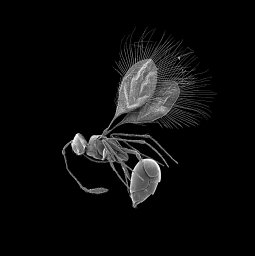 Lars Krogmann合作论文数2
 Vladimir Pavlovich Korablev合作论文数2
 Olga Muravenko合作论文数Laboratory of Molecular Karyology, Engelhardt Institute of Molecular Biology, Russian Academy of Sciences2




