The synthesis of 1 : 1 and 1 : 2 complexes of Zn( ii ) hexafluoroacetylacetonate with sterically crowded triphenodioxazines (TPDO) is described, and the compounds are characterized using single-crystal X-ray crystallography, NMR, and IR spectroscopy.
The Сd(II) complexes with redox amphoteric 2,6-di-(tret-butyl)-4-((2-hydroxyphenyl) imino)cyclohexa-2,5-dienone ligands L1 and L2 (adducts I, II, and III) are synthesized. The structures of coordinated complexes I, II, and III are determined by X-ray diffraction (XRD) (CIF files CCDC nos. 1838319 (II) and 1838310 (III)) and confirmed by the 1Н, 13С, and 113Cd NMR spectroscopy (for complexes I and III) and IR spectroscopy data.
A convenient method for the synthesis of a series of 2-(arylamino)-3H-phenoxazin-3-ones based on the nucleophilic substitution reaction between sterically crowded 3H-phenoxazin-3-one and arylamines performed by short-term heating of the melted reactants at 220–250 °C is described, and the compounds were characterized by means of single-crystal X-ray crystallography, NMR, UV–vis, and IR spectroscopy, as well as cyclic voltammetry. The reaction with o-amino-, o-hydroxy-, and o-mercapto-substituted arylamines widened the scope and provided an access to derivatives of N,O- and N,S-heteropentacyclic quinoxalinophenoxazine, triphenodioxazine and oxazinophenothiazine systems.
Reactions of 12H-quinoxaline[2,3-b]phenoxazine (QOPO) derivatives with the CoII and ZnII hexafluoroacetylacetonates accompanied by protonation of the starting bases result in stable complexes [QOPOH]+[M(hfac)3]− whose structure was determined by X-ray diffraction and by 1H and 15N NMR spectroscopy. The complexes are characterized by long-wavelength absorption (560–664 nm) and fluorescence in the red region (λfl = 674–805 nm). The relative energies of the protonated tautomers N(14)—H and N(7)—H were determined using the results of B3LYP–D3BJ/6-311G++(d,p) density functional calculations with inclusion of D3BJ dispersion correction. A SQUID magnetometry study of the static and dynamic magnetic properties of the CoII complex revealed that it behaves as a field-induced single-ion magnet.
Using the reaction of 2,4-di-(tert-butyl)-12-(4-methoxyphenyl)-10-methoxy-12H-quinoxalino[2,3-b]phenoxazine with π-electron acceptors such as tetracyanoquinodimethane and 3,6-di-(tert-butyl)-o-quinone) as an example it was shown that derivatives of this N,O-pentaheterocyclic system are effective electron donors that, under mild conditions, carry out electron transfer reactions with the formation of stable cation and anion radical structures.
A series of new derivatives comprising heteropentacyclic 12 H -quinoxalino[2,3- b ]-phenoxazine (QOPO) system and functionalized with arylamide anchoring groups was synthesized. Their photostability as well as the spectral, luminescent, electrochemical, and optoelectronic properties were studied both in composites prepared by adsorption of QOPO onto the TiO 2 surface and in solution. Attachment of the amide anchoring groups to the QOPO core provides high adsorption of the compounds and the onset of photovoltaic properties that were not observed in the unfunctionalized precursors. However, these groups do not provide efficient injection of excited electrons into the conduction band of the semiconductor. According to B3LYP/6-311++G(d,p) density functional calculations of the model nanoclusters QOPO/(TiO 2 ) 10 , efficient electron injection and, as a consequence, high photovoltaic conversion efficiency of dye-sensitized solar cells require delocalization of the LUMO of the QOPO/TiO 2 system over both structural fragments. Relevant anchoring groups are proposed.
Zinc(II) complexes 2, 3, and 5 with redox-amphoteric o-indophenol ligands were prepared. The molecular structures of tetracoordinate complex 2 and hexacoordinate complex 3 were determined by single-crystal X-ray diffraction. The antioxidant properties of indophenols and their complexes were studied by cyclic voltammetry (CVA) and EPR spectroscopy. Complexation of indophenols increases the oxidation potentials by more than 0.84 V and leads to the formation of stable metal-containing radicals.
A convenient method for the synthesis of a series of 2-arylamino-3H-phenoxazin-3-ones based on the nucleophilic substitution reaction between sterically crowded 3H-phenoxazin-3-one and arylamines performed by short-term heating of the melted reactants at 230-250 °C is described and the compounds are characterized by means of single-crystal X-ray crystallography, NMR, UV/vis, IR spectroscopy and cyclic voltammetry. Involvement into the reaction of arylamines with o -amino-, o -hydroxy and o -mercapto-substituents widens its scope and provides for an access to derivatives of N,O- and N,S-heteropentacyclic quinoxalinophenoxazine, triphenodioxazine and oxazinophenothiazine systems.
Zinc(II) complexes 2 , 3 , and 5 with redox-amphoteric o -indophenol ligands were prepared. The molecular structures of tetracoordinate complex 2 and hexacoordinate complex 3 were determined by single-crystal X-ray diffraction. The antioxidant properties of indophenols and their complexes were studied by cyclic voltammetry (CVA) and EPR spectroscopy. Complexation of indophenols increases the oxidation potentials by more than 0.84 V and leads to the formation of stable metal-containing radicals.
The reaction between 3,5-di(tert-butyl)-o-benzoquinone 1 and o-phenylenediamine performed under oxidative conditions that is highly sensitive to the reaction conditions (type of solvent, ratio of reactants, and duration of the reaction) gives rise to various derivatives of a new condensed 10H-quinoxalino[3,2,1-kl]phenoxazin-10-one heteropentacyclic system. The reaction of 1 with N-phenyl-o-phenylenediamine results in the formation of three phenazine-like compounds and, unexpectedly, a derivative of a new spiro[1,3]dioxole-2,2'-furanyl-1H-benzo[d]imidazole system. The molecular structures of the prepared compounds were authenticated by NMR, mass spectra and X-ray crystallography data.
Reaction of 4,6-di- tert -butyl-3-nitrocyclohexa-3,5-diene-1,2-dione with secondary amines (piperidine, morpholine, 1-methylpiperazine) in isopropanol leads to a mixture of products formed as a result of parallel reactions of Michael addition and ANRORC. The compounds obtained were characterized by 1H NMR, 13C NMR, IR spectroscopy, and elemental analysis. Molecular structure of 3-nitrocyclohexa-3-ene-1,2-dione and cyclopenta1,3-diene derivatives was established by X-ray diffraction analysis.
The reaction of 4,6-di- tert -butyl-3-nitrocyclohexa-3,5-diene-1,2-dione with secondary amines (piperidine, morpholine, 1-methylpiperazine) in isopropanol involves Michael addition and ANRORC and forms a mixture of products. The resulting compounds were characterized by IR and 1 H and 13 C NMR spectroscopy, and elemental analysis. The molecular structures of 3-nitrocyclohexa-3-ene-1,2-dione and cyclopenta-1,3-diene derivatives were established by X-ray diffraction analysis.
Cu( ii ) hexafluoroacetylacetonate with triphenodioxazine ligands gives complexes with different crystal structures and magnetic properties.
A series of zinc, copper, cobalt, and nickel bis(chelate) complexes (I–IV) with 2,4,9,11-tetra-tert-butylbenzo[5,6][1,4]oxazino[2,3-b]phenoxazin-1-ol (LН) of the general formula ML2 is synthesized. The spatial and electronic structures of the synthesized coordination compounds are studied by the density functional theory (DFT B3LYP/6-311++g(d,p)). The molecular structure of the adduct of the copper complex with pyridine (II·Py) is determined by X-ray diffraction (CIF file CCDC no. 2113818). The spectral characteristics of the ligand and related complexes are studied.
An entry from the Cambridge Structural Database, the world’s repository for small molecule crystal structures. The entry contains experimental data from a crystal diffraction study. The deposited dataset for this entry is freely available from the CCDC and typically includes 3D coordinates, cell parameters, space group, experimental conditions and quality measures.
A series of N-aryl derivatives of heteropentacyclic 12Н-quinoxaline[2,3-b]phenoxazine (QOPO) system were synthesized and spectral, luminescent, electrochemical and optoelectronic properties of the prepared compounds studied. The compounds are well soluble in nonpolar and polar solvents, absorb in the strongest emissive part of the solar spectrum and exhibit sufficiently high photostability at air conditions. The HOMO, LUMO energy levels of the obtained QOPOs were calculated by the DFT B3LYP/6–311++G(d,p) method and assessed using the electrochemical methodology. The double-layered p-n heterojunction organic solar cells constructed on the basis of QOPOs as electron donor components, bathocuproine as the exciton blocking layer and fullerene C60 as electron acceptor displayed promising values of photovoltaic (open circuit voltage and short-circuit current density) parameters.
A radical stable at room temperature was prepared by the oxidation of a toluene solution of 6,8-di-( tert -butyl)-3 H -phenoxazin-3-one oxime with lead oxide PbO 2 . The DFT/B3LYP/6-311++G**, ab initio MP2/def2-svp, and CASSCF (15,15)/def2svp calculations showed the ground structure of the radical in which the spin density is concentrated on the heterocyclic nitrogen atom and energetically close electromeric form in which the spin density is predominantly localized on the exocyclic nitroso group. Two forms of the radical are the first example of electronic isomerism in the series of electroneutral organic structures.
A facile synthesis of derivatives of a new heterocyclic 1H-cyclopenta[b]pyridine-4,5-dione system via coupling sterically crowded 3,5-di(tert-butyl)-6-nitro-1,2-benzoquinone with arylamines and acetone was developed. The reaction mechanism involving intramolecular 1,2-shift and intermolecular transfer of tert-butyl groups of the reaction intermediates was examined on the basis of DFT/B3LYP/6–311++G(d,p) (SMD) calculations.
A series of 2-(hydroxyphenyl)-1H-benzo[d]imidazols bearing readily oxidizable 2,6-di-tert-butyl-phenol substituents and bis-chelate Cu(II) complexes based on these ligands were synthesized. The structure of the compounds was characterized by NMR, IR, mass spectroscopy and X-ray crystallographic analysis and redox behavior explored using ESR spectra and cyclic voltammetry. Under oxidation with PbO2 in toluene solution both the ligands and Cu(II) complexes form stable phenoxyl-type radicals. As shown by ESR measurements and DFT calculations, no exchange interaction exists between unpaired electrons located on metal and oxygen centers in the biradical Cu (II) complexes. The ligands and complexes reveal antioxidant radical scavenging activity measured spectrophotometrically and using ESR and DPPH-tests.
Heteropentacyclic triphenodioxazines are shown to be efficient bridging ligands in the synthesis of 1D coordination polymers, whose structure and stability depend on the electron accepting properties of the substituents in the diketonate moieties.
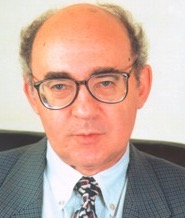 Vladimir I. Minkin合作论文数Institute of Physical and Organic Chemistry, Southern Federal University51
 Knyazev Pavel A合作论文数21Andrey G Starikov合作论文数19
 Oleg P. Demidov合作论文数Stavropol State University17Nadezhda I. Makarova合作论文数15
 Konstantin A. Lyssenko合作论文数Department of Physical Chemistry, Lomonosov Moscow State University;Institute of Organoelement Compounds, Russian Academy of Sciences14Lp Olekhnovich合作论文数13A. P. KNYAZEV合作论文数12L. P. Olekhnovich合作论文数10
 Galina V. Romanenko合作论文数International Tomography Center, Russian Academy of Sciences10V. I. Simakov合作论文数9O. Yu. Okhlobystin合作论文数9Vb Panov合作论文数7T. E. Ivakhnenko合作论文数7Ai Prokofev合作论文数7K. A. Lysenko合作论文数7Artyom S. Bogomyakov合作论文数7A. I. Shif合作论文数7S. N. Lyubchenko合作论文数6Oy Rekhlova合作论文数6Nina G Furmanova合作论文数6
 A. S. Morkovnik合作论文数6A. I. Prokof'ev合作论文数5Anastasiia А. Kovalenko合作论文数5
 Vasily Malay合作论文数5Simakov Vladimir I合作论文数5
 Sergey M. Aldoshin合作论文数Laboratory of Structural Chemistry, Department of Structure of Matter, Federal Research Center of Problems of Chemical Physics and Medicinal Chemistry, Russian Academy of Sciences;Institute of the Problems of Chemical Physics, Russian Academy of Sciences5B. A. Tertov合作论文数5Yu. V. Koshchienko合作论文数5OE KOMPAN合作论文数4G. S. Borodkin合作论文数4Ai Shif合作论文数4V. A. Kogan合作论文数4Mikhail S Korobov合作论文数4Martin I Kabachnik合作论文数4G. A. Khachatur'Yan合作论文数4
 Nadezhda Berberova合作论文数4Dmitrii a Garnovskii合作论文数4M. Yu. Antipin合作论文数A. N. Nesmeyanov Institute of Organoelement Compounds of Russian Academy of Sciences (INEOS RAS)4Gennady S. Borodkin合作论文数4I. V. Karsanov合作论文数3Oy Okhlobystin合作论文数3A. A. Starikova合作论文数3Ga Khachaturyan合作论文数3
 Anatoly V. Metelitsa合作论文数Institute of Physical and Organic Chemistry, Southern Federal University3Yu. T. Struchkov合作论文数3V. S. Khandkarova合作论文数3
 Denis V. Korchagin合作论文数Institute of Problems of Chemical Physics, Russian Academy of Sciences3




