Objective:To investigate the application value of 3D MRI in the diagnosis of brachial plexus injuries combined with large vascular injuries.Methods:From June 2006 to December 2019, 55 patients with brachial plexus injuries were treated in our department. For 13 patients suspected of having vascular injuries, 3D MRI of brachial plexus and its accompanying blood vessels were performed simultaneously to understand the location and extent of nerve and blood vascular injury, so as to provide reliable evidence for accurate diagnosis and treatment. The application value of this imaging diagnostic technique in brachial plexus injury was evaluated by comparing with the intraoperative findings.Results:The brachial plexus and its accompanying blood vessels of 13 patients were reconstructed and digitally fused. The 3D MRI results of 7 patients who underwent surgery were consistent with the clinical examination and intraoperative findings.Conclusion:The 3D MRI simultaneous imaging of the brachial plexus and its accompanying vessels can clearly show the shape, location and injury of the brachial plexus and vessels, and show a three-dimensional relationship in anatomical structure, which is of great value in the diagnosis and treatment of brachial plexus injuries combined with adjacent vascular injuries.
目的 了解苏州市社区内65岁及以上老年人轻度认知障碍的患病率并探讨其影响因素.方法 随机抽取403例老年人.使用一般资料调查表和简易智能精神状态量表(MMSE)进行轻度认知障碍筛查.结果 社区老年人轻度认知障碍的患病率为32.0%.单因素分析显示年龄、退休前职业、记忆力是否下降、注意力是否下降、兴趣爱好、是否参加体育锻炼、睡眠质量、睡眠时间、视力情况、听力情况、是否参加社区活动、是否担心子女、食欲情况、是否饮茶、幸福感、性格类型、平时心情、是否倾诉对轻度认知障碍差异有统计学意义(P<0.05).多因素回归分析显示:注意力是否下降、兴趣爱好、是否参加社区活动、饮茶、是否倾诉对轻度认知障碍患病率的影响有统计学意义(P<0.05).结论 轻度认知障碍的保护因素包括兴趣爱好广泛、饮茶、参与社区活动,而其危险因素包括注意力下降和不倾诉.社区应针对其中可能的干预因素,尽早采取干预措施,预防轻度认知障碍的发生,并延缓其向老年痴呆发展.
800 m、1 000 m跑测试是在用一个以无氧代谢供能为主的运动项目评测人的有氧耐力,成绩不能客观反映机体的有氧耐力水平,不能引导学生科学锻炼,还会让受试者承受较大的心理负荷,不利于运动兴趣培养和终生体育生活方式的养成,且在800 m、1 000 m跑测试中频频发生意外.研究认为,可用无氧阈跑速做耐力评测指标,它能确切反映人的有氧耐力水平,引导人们科学锻炼,强度由低到中,安全、简单,可在跑步机或场地上完成.
目的 探讨单次全身主动牵拉运动应用于急性期脑卒中患者的安全性和可行性.方法 采用自身对照实验,对15例患者进行单次全身主动牵拉运动,观察运动前后不同时间点患者心率、血压、血氧饱和度和血糖变化,评估运动后不同时间点患者主观用力程度、肌肉酸痛程度、疲劳感和运动愉悦感.结果 1例患者运动后主诉疲惫不适,14例患者无异常主诉.患者心率、血压、血氧饱和度和血糖在运动前、运动后多个时间点无显著变化,1例合并糖尿病的患者运动后15 min出现低血糖现象.患者运动愉悦感运动后即刻评分为(2.27±1.53)分,属于愉悦感较好至良好.患者主观用力程度运动后即刻为13(11,15)分、运动后15 min为6(6,6)分,Z=-3.309,P=0.001;患者肌肉酸痛程度、疲劳感在运动后3个时间点比较,差异有统计学意义(P均=0.001).结论 急性脑卒中患者进行单次全身主动牵拉运动安全可行,肌肉酸痛和疲劳程度较低,且患者接受度好,但仍需注意个体差异,预防过度疲劳和低血糖等的发生.
目的 探讨社区老年人衰弱与睡眠质量的相关性.方法 采用方便抽样的方法,对苏州市社区老年人进行调查.应用FRAIL衰弱量表和匹兹堡睡眠质量指数量表分别进行衰弱和睡眠质量的评估.结果 156名社区老年人衰弱及衰弱前期发生率分别为9.0%和41.0%;睡眠障碍发生率为38.5%.不同衰弱状态的社区老年人睡眠障碍的发生率存在显著差异.存在睡眠障碍的老年人更容易发生耐力减退及行走能力下降.此外,社区老年人衰弱得分与睡眠得分存在相关性.结论 社区老年人衰弱与睡眠质量间存在相关关系.对于存在睡眠障碍的社区老年人应进行衰弱筛查,同时采取相应的干预措施,提高社区老年人的睡眠质量,改善衰弱.
目的 评价音乐干预对维持性血液透析(MHD)患者心理和生理状态的影响.方法 计算机检索The Cochrane Library、PubMed、EMbase、EBSCO、CBM、中国知网和万方数据库中关于音乐干预对维持性血液透析患者心理和生理状态影响的随机对照试验文献.采用RevMan 5.3软件进行Meta分析.结果 共纳入17篇随机对照试验文献,包括1326例研究对象.Meta分析结果显示:音乐干预可缓解MHD患者的焦虑(SMD=-1.22,95%CI:-1.82~-0.62,P< 0.01)和抑郁(WMD=-6.73,95%CI:-8.33~-5.12,P< 0.01),降低心率(WMD=-6.24,95%CI:-10.42~-2.05,P< 0.01)、收缩压(SMD=-0.47,95%CI:-0.75~-0.19,P<0.01)及舒张压(SMD=-0.46,95%CI:-0.71 ~-0.20,P<0.01),同时减少透析并发症的发生(RR=0.41,95%CI:0.17~1.01,P=0.05).结论音乐干预能改善MHD患者的焦虑和抑郁情绪,稳定患者在透析中的心率和血压水平,减少并发症.鉴于本研究纳入文献的质量相对较低,结论 尚需大样本、高质量的随机对照试验予以验证.
Objective To develop knowledge-attitude-social support questionnaire of exercise for stroke se-quela and analyze its reliability and validity,in order to provide a tool for investigating the influencing fac-tors of the exercise level among stoke patients.Methods The knowledge-attitude-social support question-naire of exercise for stroke sequela was designed and constructed based on literature review,research group discussion,expert consultation and preliminary experiment.With convenience sampling method,110 pa-tients with stroke sequela dwelling in Suzhou participated in the investigation.Cronbach's α,construction validity and content validity index(CVI)were analyzed to test the reliability and validity of the question-naire.Results The questionnaire contained 19 items in 3 dimensions.Its CVI was 0.94,ranging from 0.78 to 1 in each item.Factor analysis indicated that each item had great factor loading,and items were able to reflect the designed three dimensions of knowledge,attitude and social support.About 72.94% of the total variance could be explained by the three dimensions.Cronbach's α of the questionnaire and 3 dimensions was 0.938,0.970,0.779 and 0.783 respectively.All results indicated that the questionnaire had good relia-bility and validity.Conclusions T hrough standardized process of development,the questionnaire could be used to evaluate the knowledge,attitude and social support of exercise for patients during stroke sequela stage with its high specificity,good stability and reliability.
Objective To apply an early functional training program for simple activities of daily living in hemiplegic patients and observe its feasibility,acceptability and patients' compliance.Methods Early functional training program was specifically made for ischemic stroke patients with hemiparesis to improve the function of upper and lower extremes.By convenience sampling,9 cases were selected and received early functional training intervention for 8 weeks.The effectiveness was assessed by using National Institute of Health stroke scale (NIHSS),timed up and go test (TUGT)and Barthel index (BI) before (Pre) and after 4 (4W) and 8 weeks (8W) training.Results The early training program and all assessments were performed in these patients smoothly and safely without any unexpected accident,complication or adverse reaction.In addition,9 patients had a high compliance,3 cases with 0 grip strength on Pre,4 cases were unable to walk by themselves at Pre test,and the time was set for 60 s.After intervention,patients' neurologic impairment,upper limb grip strength,dynamic balance function,walking ability and self-care ability were all improved.The NIHSS score,hemiplegic upper limb grip strength,TUGT and MBI score were improved significantly at 4 and 8 weeks when compared with Pre (P<0.05).Conclusion This early functional training program for upper and lower extremes is proved to be safe,feasible and effective in acute ischemic stroke patients with hemiparesis and is accepted and performed well.
Objective To explore the effects of resistance combined with stretching exercise on improving the motor function in patients with chronic stroke.Methods 18 patients with chronic stroke were selected from several communities in Suzhou from February to May 2016. The participants were randomly divided into the control group (n=9) and the intervention group (n=9). The control group received a resistance training while the intervention group received a combined exercise (i.e. resistance and stretching). During the four weeks of intervention,four participants dropped out of the study (two for control group and two for intervention group). Comparing the walking ability,balance function and muscle strength before and after the intervention. The assessment included six-minute walk test (6MWT),modified Barthel index (MBI),functional independence scale (FIM),Berg balance scale (BBS),and grip strength.Results After the intervention,both groups had a significant improvement in 6MWD,MBI,BBS,FIM,and grip strength,but the intervention group had an additional success in MBI (P<0.05). Before the intervention,there was limited difference in 6MWT, MBI,BBS,FIM and grip strength between two groups (P>0.05). However,after the intervention,the participants in the intervention group showed a significant progress in BBS and grip strength for the diseased side compared with the control group (P<0.05).Conclusions Both resistance training and stretching exercise can improve the muscle strength,balance function and walking ability in patients with chronic stroke. But the combined training has shown a crucial benefit for muscle strength and balance ability compared with a purely resistance training.
Modified constraint-induced movement therapy (mCIMT), which is modified from constraint-induced movement therapy (CIMT), is used in hemiplegics for rehabilitation. It may be used in the selected patients in certain function and age. mCIMT is more flexible than CIMT, which is mainly consisted of intervention movement, intensity, and the time of training and limitation. mCIMT is also used with other rehabilitation methods. There are various assessment for the evaluation of upper extremity motor function. By using Contract and Mo-tor Activity Log, researchers can better guarantee the curative effect.
Balance function assessments for stroke patients include instruments and scales. The instruments consist of static balance test systems and dynamic balance test systems. The commonly used static balance test systems include balance performance monitor (BPM) and Tetrax balance test system, and the dynamic balance test systems include Active Balancer EAB-100 and Pro-Kin 254. The balance scales contained Berg Balance Scale, Postural Assessment Scale for Stroke Patients, Timed Up and Go Test, Fugl-Meyer Assessment-Bal-ance, Tinetti Performance Oriented Mobility Assessment, and Five-Times-Sit-to-Stand Test, etc. This article reviewed the features and indi-cations of them.
脑卒中是多种脑血管疾病的严重表现形式,具有极高的致残率和较高的致死率,是当今世界危害人类生命健康的最主要疾病之一[1]。脑卒中是导致成年人残疾最常见的原因。存活患者中1/3留有永久性残疾[2],超过一半的存活者日常生活需要依靠他人协助完成[3-4]。随着现代临床急救医学的发展,患者的死亡率大大下降,而致残率仍呈上升趋势[5],因此脑卒中患者的康复运动训练显得尤为重要。脑卒中患者大多伴随着心肺功能降低、有氧运动能力低下[6]。然而有氧运动训练有降低心脑血管意外、提高有氧运动能力等方面的效果[7]。现将有氧运动训练的康复护理进展综述如下。
Overweight or obesity is a risk factor for many chronic diseases, such as cardiovascular and cerebrovascular disease. Overweighed people have higher risk of stroke occurrence. However the relationship between stroke patient prognosis and body weight is controversial. Based on many studies, there are currently two opposite opinions. One believes that the body weight higher than normal is associated with more adverse effects with regard to stroke patient prognosis, including stroke recurrence, functional recovery and risk of death. The opposite opinion believes that the body weight higher than normal is protective in stroke patients. The present article reviews the relationship between body weight and stroke occurrence and prognosis, in order to provide guidance and reference for weight management of stroke patients during their rehabilitation.
<正>格林-巴利综合征(Guillain-Barre syndrome,GBS)是可能与感染有关和免疫机制参与的急性(或亚急性)特发性多发性神经病,其诊断主要根据典型临床表现、脑脊液检查及肌电图检查。肌电图在早期较脑脊液检测具有更重要的诊断价值[1]。本文对我院2003年8月至2007年12月收治的30例GBS患者的肌电图表现分析如下。
 Yuan LIN (林源)合作论文数2Jing Xi (奚婧)合作论文数2
 Meie Niu (钮美娥)合作论文数School of Nursing, Suzhou University2
 Huiling Li (李惠玲)合作论文数School of Nursing, Suzhou University2Xiang Yu (于翔)合作论文数2yan lin (林岩)合作论文数1ZHANG Min (张敏)合作论文数1A-shan YI (易阿珊)合作论文数1Fanzhen Kong合作论文数1Kun Zhou合作论文数1Qing ZHANG (张情)合作论文数1Wenxia LI (李文霞)合作论文数1Yuan Lin合作论文数1Qianqian ZHANG (张倩倩)合作论文数1Ruixue Zhu (朱瑞雪)合作论文数1Lei Fang (方蕾)合作论文数1Yan SHEN (沈燕)合作论文数1Jia-jia ZHANG (张佳佳)合作论文数1MengYu Shi (石梦宇)合作论文数1LianGang Qi (祁连港)合作论文数1QiongHua Yin (殷琼花)合作论文数1ShiQin Pan (潘世琴)合作论文数1YongPing Dai (戴永萍)合作论文数1ZongBao Liu (刘宗宝)合作论文数1LiPing Huang (黄力平)合作论文数1Xiang Li (李向)合作论文数1CuiHong Su (苏翠红)合作论文数1ZhengDao Xu (徐正道)合作论文数1Jie Gu (顾洁)合作论文数1Min Li (李敏)合作论文数1Tao Wang (王涛)合作论文数1WeiLi Wu (吴伟莉)合作论文数1Lin Zhang (张林)合作论文数School of Physical Education and Sports, Soochow University1
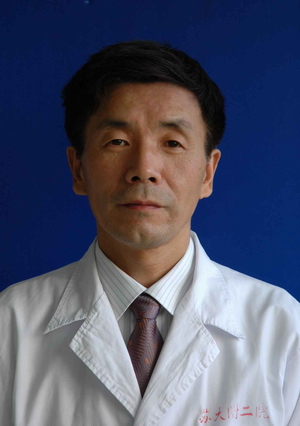 Heqing Zhao (赵合庆)合作论文数苏州大学附属第二医院神经内科1Jun Ai (艾军)合作论文数1Houliang Jing (井厚亮)合作论文数1




