The Climate-Nature Emergency (CNE) is an existential crisis that makes urgent the need to fundamentally transform the dominant model of social and economic development. Amid the wreckage created by competitive accumulation and hyper consumption, the crucial need is to develop a sustainable moral order, embodying constructive human-nature and human-human relations. Following Durkheim, the main components of a moral order are the state, which is the crucial repository of collective interest, and individuals who take responsibility for self-improvement and the implementation of social values. The CNE foregrounds the capacity of states everywhere to both organise centrally and foster devolved community agency that can effectively address local problems and disasters. Working with government, higher education has a central role to play in advancing and defending science, fostering skills and knowledge in government, and in developing reflexive agents effective in social action in all of the local, communal, national, regional and global scales. The CNE also calls up the need to overhaul the curriculum to render it consistent with ecological survival. Higher education has an advanced capacity to cooperate across national borders and can assist nation-states in the difficult but vital process of building stable global cooperation. In addressing these issues, China and higher education in China have strong endogenous traditions, ancient and recent, on which to draw, including the consensual role of the Sinic state, which when functioning effectively draws on widespread public support; governance through deep devolution within the framework of central policies; Confucian self-cultivation with its capacity to foster consciously reflective lifelong learners; and tianxia an approach to global cooperation founded in moral values and norms of conduct rather than coercion. When combined with the Western respect for personal freedom and initiative, these qualities have much to offer in addressing the CNE, not only in China but across the world.
Li Zhuobao was a pioneer of higher education research in New China and an important promoter of the discipline construction of higher education in China. As an educational practitioner and researcher, she devoted herself to the construction of socialist universities with Chinese characteristics. Her thoughts on higher education, especially her ideas on higher education research and talent cultivation, still have very important guiding and enlightening significance in the new era. The inner logic of Li Zhuobao’s higher education thoughts were consistently guided by Marxism and deeply rooted in the rich experience of educational practices at Tsinghua University.
在我国英文科技期刊"做大做强"的当下,政治性问题不容忽视.英文科技期刊作者政治背景和论文政治信息来源错综复杂,政治性问题隐而不显.本文从地图、涉港澳台、国际关系、保密等方面分析了英文科技期刊政治性问题表现形式,并提出防范举措,旨在强化政治性风险防控,提升编辑政治敏锐性,服务期刊高质量发展.
本文构建了省域博士研究生教育发展指数,从规模、质量和效益三个维度测算了各省域2015、2017年博士研究生教育发展水平及历时性变化,发现:整体上,我国各省域博士研究生教育发展水平均有显著上升,但各省域的发展速度呈现“存量决定增量”的显著特征.同时,博士研究生教育发展呈现“效益驱动”“质量提升”和“良性互动”三个阶段,不同阶段博士研究生教育发展指数中规模、质量和效益维度得分的结构性特征与省域博士研究生教育发展水平紧密相关.
研究生教育发展水平决定了国家未来的核心竞争力.本研究在参考教育发展指数构建经验的基础上,基于系统论的自然生长、结构分化、要素竞合和开放系统特性,构建了包含规模、结构、质量和效益四个维度的研究生教育发展指数.基于2010年以来的发展指数测算发现,我国研究生教育规模不断扩大、结构与经济社会发展日益协调、质量水平不断提升、对我国经济社会发展做出了显著贡献,但还须进一步增加与经济社会发展的协调性.最后,提出“三层四维”研究生教育发展指数体系框架,建议应用体系化的研究生教育发展指数从四个维度有效监测和诊断不同层面、不同学段研究生教育的发展状况,为国家、省市规划研究生教育和高校对标定位自身发展提供有力支撑.
以“学”为中心的高等教育质量评价理念,推动了国内大学生学情调查的广泛开展.此类调查使用自陈式问卷进行,其数据质量可能受填答者社会称许性反应的影响.使用清华大学2014-2016年“中国大学生学习与发展追踪研究”的数据研究发现:有关学习行为和主观感受的自陈性指标存在5-10%的社会称许性反应偏误,但自我汇报的客观情况(如学习成绩)偏误较小;学生的社会称许性水平越高,自陈性指标中的偏误越大;指标内容与社会称许性反应偏误的大小有一定关系.上述发现对大学生学情调查的科学性和工具开发的有效性具有方法论的意义.
本文基于2015年“中国大学生学习与发展追踪研究”数据,通过与非第一代大学生的比较,全面分析第一代大学生的个体及家庭特征、大学前学习特征以及在大学期间的学习行为特点.希望能够为更具针对性的教育教学改革提供实证依据,为促进高等教育过程性公平提供新的视角.
甲午新元复始,万象更新之际,《清华大学教育研究》编辑部于2014年1月18日在京举办了“教育研究与学术期刊发展”高端论坛,来自教育学界的著名学者、优秀学术期刊的主编、教育部期刊管理部门的领导和清华大学的有关人士与会.论坛围绕“中国教育研究的发展方向”、“教育研究如何引领和推动教育改革的发展和实践”、“教育学术期刊与学术研究的互动发展”等问题进行了深入探讨,专家学者畅谈学术,洞见叠出,交流思想,情谊敦厚.
Based on CCSS 2012 survey data,using the method of multiple linear regression and sheaf coefficient,this research studies the mechanism of the influence of the student individual factors (inclu-ding ascription and achievement factors)on higher education process and quality. The study found that the ascription factor (high school education experience)has greater impact on higher education quality than the achievement factor (family background).As the preparation for col-lege,high school education experience plays an important role in the high-impact practices,enables the students to engage more in college learning activities,and enhances their learning achievement and satisfaction.The richness of student high school experience has significant influence on higher educa-tion quality,while the academic performance ranking has a negative effect on higher education quality. These results challenge us to rethink the connection between high school education and college educa-tion,and the undergoing comprehensive reforms in the field of education provides an important oppor-tunity to solve this problem.
高等教育的社会作用已经发生了变化.尽管存在精英和大众高等教育的差异,但全球高等教育入学率在16年中翻了一番,其动力主要是社会需求,而不是劳动力市场需求.非英语和西欧之外的国家研究能力和世界一流大学显著成长和扩张.其中最引人注目的是东亚,包括中国大陆、香港、台湾、韩国和新加坡.包括日本在内的东亚已成为仅次于北美和欧洲的世界第三大研究和创新之地.东亚高等教育的加速发展是由经济增长、中产阶级的需求、本土儒家教育根基所推动的,并在国家赶超西方的积极助力下.虽然东西方在研究能力和资源上的差距仍然存在,但东亚世界一流大学的数量正在迅速增加,而使东亚高等教育与众不同的文化因素将在未来发挥更加重要的作用.东西方大学模式、大学/国家/社会关系的协同将全面影响高等教育的发展.
Based on NSSE-China 2011 survey data,using student engagement(five benchmarks) as process indicator of higher education quality and student self-reported learning outcome(i.e.knowledge,abilities and values) as result indicators of higher education quality,this research studies the status of college education quality in China and its variation according to region and institutional types,and analyzes the effects of process related determinants and student endowment on education quality from the perspective of outcome. The study found that although the unbalanced distribution of higher education resource exists among different regions and institutional types,more resources does not imply students' higher engagement and learning outcome.In addition,the determinants of student learning outcome and school satisfaction vary with regions and institutional types.The overall prediction rate shows that the effects of educational process factors on student learning outcome and satisfaction are larger than student endowment.
The primary task for Chinese higher education is to train high quality talents.This study focuses on measuring student engagement in China's diverse institutions of higher education.The tool used in current study is based on the National Survey of Student Engagement(NSSE).The NSSE instrument was translated into the Chinese language,adapted to the Chinese context.The Chinese version of NSSE was known as NSSE-China.The national survey administration was conducted in June 2009 among 23 voluntarily participating institutions.24,252 students were randomly selected.Based on five comparable benchmarks,the study provides the empirical description and analysis on undergraduate students' learning experiences across diverse institutions including 985 institutions,211 institutions,as well as local community colleges.
<正>尊敬的顾校长、各位学界同仁、女士们、先生们:首先我要感谢清华大学邀请我参加2011年大学校长全球峰会。在清华大学百年校庆这样特殊的时刻和场合发表演讲,我备感荣幸。我谨向清华百年校庆致以诚挚的祝贺。在此,我还要代表日本人民向各位表示衷心感谢,感谢你们在日本大地震后给予我们的深切同情和慷慨援助。本次峰会的主题是"全球经济社会发展与高等教育",对于这一问题的讨论,我想还是从日本发生的
Globalization of education refers to the worldwide discussions,processes,and institutions affecting local educational practices and policies.There are international organizations that directly and indirectly influence national school systems.There are multinational education corporations and schools.Government and professionals engage in global discussions about school policies.Today,the dominant educational ideology is human capital economics and consumerism.Human capital economics defines the primary goal of education to be economic growth.Educational discourses around the world often refer to human capital,lifelong learning for improving job skills,and economic development.Consequently,there is a burgeoning global market for global education business,for-profit education,global testing services,as well as shadow education.The author proposes that school policies should be evaluated on their contribution to the social conditions that provide the conditions for human happiness and longevity rather than being judged by their contribution to economic growth and income.
This study analyzes the modern university system from the educational quality self-protection Mechanisms based on the case of university of California,Berkeley.In the University of California,Berkeley,self-protection mechanisms mainly refer to the schools' and programs' self-assessment,which includes three categories.They are the university's self-assessment for social accountability,the school or college's self-assessment for accreditation,and the program's self-assessment for self-improvements.Base on the analysis of all kinds of self-assessments,the article summarizes two basic characters of modern university system: prioritizing the university autonomy and balancing social accountability;scientific management based on academic autonomy.
首先梳理了我国研究生教育区域发展宏观政策的变迁过程,继而对我国研究生教育在省级行政区的分布进行了实证研究,包括各省级行政区研究生教育发展规模、拥有研究生教育资源的状况以及研究生教育与社会发展之间的匹配程度。在此基础上,揭示了我国研究生教育的区域分布特征。
In 2001,the Ministry of Education started the program of "the counterpart support".As one of the first batch of support universities,Tsinghua university helps Qinghai university in many ways,such as the program development,course design,lab construction,and faculty recruitment.Based on the core task of cultivating the talents,"the counterpart support" helps Qinghai university to develop rapidly in training talents.Based on the Tsinghua's experiences at Qinghai university,this article summarizes the contribution and characteristics of the "counterpart support".
Education is always closely related to knowledge,but it has long been difficult to directly apply knowledge on education itself to enhance efficiency and effectiveness of educational practice.A national educational research and development system can be regarded as a management system of educational knowledge and serves as an important part of national innovation system.It is also an important measure for education quality improvement to innovate and reform the concept and operation mechanism of educational knowledge management system.By reviewing new ideas and policies in educational research and development in the international academic community since 2000,the paper maintains that the main focus has been shifted towards the application-oriented basic research.The study is intended to serve as a reference for the reform and development of educational research in China.
Object To study the difference of phenylethanoid glycoside between the cultured cells of Cistanche salsa (C. A. Mey.) Benth. et Hook. f. and Herba Cistanche. Methods Making comparison by means of FTIR and HPLC technique. Results Using the FTIR technique, the infrared spectrum of cutured cell of C. salsa was similar to that of native Herba Cistanche at a certain extent. The HPLC analysis indicated that the main chemical constituents in cultured cells of C. salsa were similar to that of native Herba Cistanche while considerable difference of constituents was found between them. Conclusion On the whole, there are much more constituents in the cultured cells of C. salsa comparing with the native Herba Cistanche. The content of echinacoside and acteoside in the cultured cells is much higher than that in the native Herba Cistanche.
Comparing with other educational systems, vocational education is easier to be linked to market mechanism. In the context of China, vocational education has once thrived and now is at low ebb. This paper, from the theoretical angle of neoinstitutionalism, analyzes the institutional transformation mechanism of marketization in the field of Chinese vocational education since late 1970s.
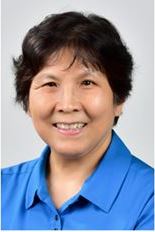 Jinghuan Shi (史静寰)合作论文数Institute of Education, Tsinghua University;Research Center for the Assessment of College and Student, Tsinghua University4
 Huiqin Liu (刘惠琴)合作论文数3Wen Wang (王文)合作论文数2
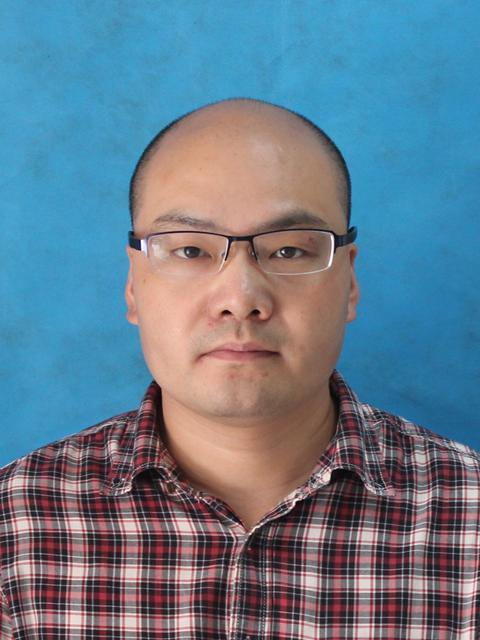 Zhe Cheng (程哲)合作论文数School of Public Administration, Xi’an University of Architecture and Technology2
 Chuanyi Wang (王传毅)合作论文数Institute of Education, Tsinghua University2
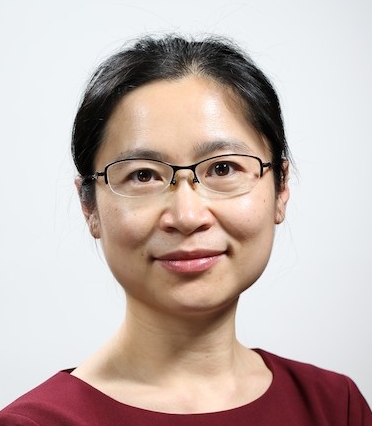 Zhou Zhong (钟周)合作论文数Institute of Education, Tsinghua University2
 Fei Guo (郭菲)合作论文数Institute of Education, Tsinghua University2Yue Li (李越)合作论文数1chunyi bintian (滨田纯一)合作论文数1Zhixin Lian (连志鑫)合作论文数1Guangmeng ZHANG (张广萌)合作论文数1Jing CHU (初静)合作论文数1Shu Wang (王纾)合作论文数1RuiZhi Liu (刘瑞芝)合作论文数1HuaFeng Zhang (张华峰)合作论文数1HuiJun Tian (田慧君)合作论文数1
 Meng Xie (谢梦)合作论文数School of Education, Renmin University of China1
 Li Zhang (张莉)合作论文数School of Journalism and Communication, Tsinghua University1
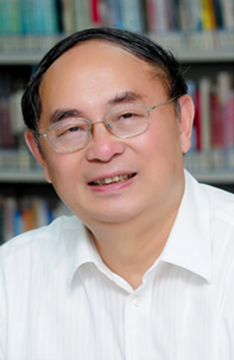 Sunyu Wang (王孙禺)合作论文数International Centre For Engineering Education under the Auspices of UNESCO, School of Education, Tsinghua University1Yifei Li (李一飞)合作论文数1
 Suqin Sun (孙素琴)合作论文数Department of Chemistry, Tsinghua University1
 Fengliang Li (李锋亮)合作论文数Institution of Education, Tsinghua University1
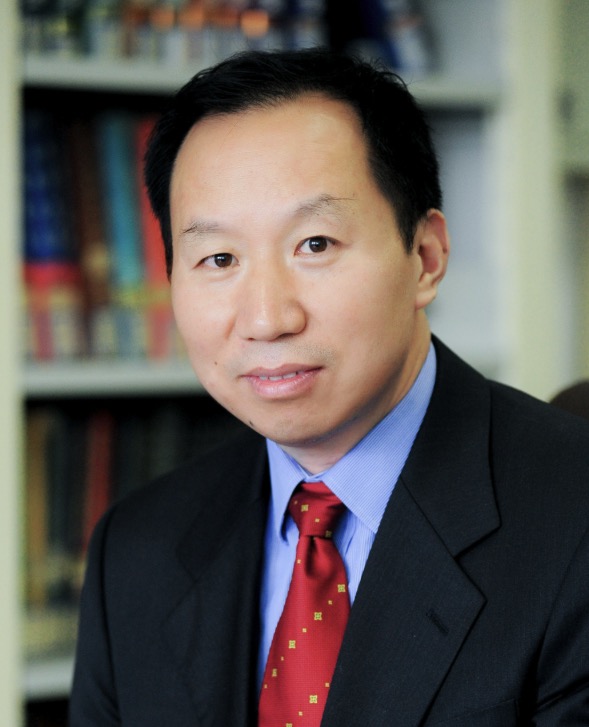 Fugui Ye (叶富贵)合作论文数School of Education, Tsinghua University1Tian Xu (许甜)合作论文数1
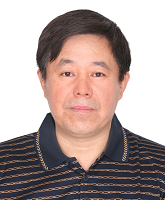 Zhigang Guo (郭志刚)合作论文数Department of Chemical Engineering, Tsinghua University1
 Dongbo Tu (涂冬波)合作论文数1
 Bentao Yuan (袁本涛)合作论文数Institute of Education, Tsinghua University1Zongwei Lv (吕宗伟)合作论文数1




