We show that excitons forming between moiré flat Chern bands possess a substantial electric dipole moment comparable to the moiré lattice parameter times the elementary charge (∼10^2 Debye). At a hole filling factor of one in twisted MoTe_2, the dipole moment of the lowest-energy exciton branch develops in-plane helical texture in momentum space from the intrinsic Berry curvature of electron and hole. By solving the Bethe-Salpeter equations, we demonstrate that an out-of-plane displacement field induces a Frenkel-to-Wannier exciton transition, accompanied by a reversal of the dipole texture helicity. The resulting attractive exciton dipole-dipole interactions lead to quadrupolar biexcitons that can be probed via two-photon spectroscopy. Our findings establish band topology as a tunable knob to engineer exciton dipole moments and pave the way to manipulate many-body interactions in the terahertz regime.
Cooper-pair density modulation (CPDM) states are superconducting phases in which the order parameter varies periodically in real space without breaking translational symmetry1-3. Moiré superlattices in layered materials4-18 have recently emerged as powerful platforms for engineering charge density with tunable lattice symmetry, offering a new route to creating and controlling CPDM states. Here we demonstrate moiré-induced CPDM states in a bilayer heterostructure formed by epitaxially stacking one quintuple layer (1QL) of topological insulator Sb2Te3 on a six-unit-cell (6UC) antiferromagnetic FeTe layer. Scanning tunnelling microscopy and spectroscopy (STM/S) measurements reveal a moiré superlattice formed between the hexagonal tellurium lattice of Sb2Te3 and the square tellurium lattice of FeTe, which spatially modulates the two superconducting gaps of the 1QL Sb2Te3/6UC FeTe bilayer. Our Josephson STM/S measurements provide direct real-space imaging of the CPDM states with a wavelength corresponding to the periodicity of the moiré superlattice. By substituting Sb2Te3 with Bi2Te3, we achieve control over both the periodicity and magnitude of the CPDM states. Our work demonstrates an epitaxial strategy for synthesizing moiré superlattices from materials with different crystal symmetries and reveals a new mechanism for engineering CPDM states in designer bilayer heterostructures.
Tm3+-doped (Lu0.25Y0.25Sc0.25Gd0.25)2O3 high-entropy sesquioxide crystal fibers with doping concentrations of 2, 4, and 8 at.% were successfully grown using the laser-heated pedestal growth (LHPG) method. X-ray diffraction (XRD) confirmed that the crystal fibers possess a cubic structure. A comprehensive spectroscopic characterization was performed, including absorption and fluorescence spectra, as well as fluorescence decay curves. The JuddOfelt theory was applied to determine the spontaneous emission probabilities and radiative lifetime. For the 2.0 at.% doped fiber, the absorption cross-section at 793 nm was measured to be 2.76 & times; 10-21 cm2. The emission cross-section corresponding to the 3F4 -> 3H6 transition in the 2.0 at.% doped fiber reached 0.94 & times; 10-20 cm2 with an FWHM of 81.89 nm. The fluorescence lifetime of the 3F4 level decreased with increasing Tm3+ concentration, from 1.52ms at 2.0 at.% to 0.27 ms at 8.0 at.%. These results demonstrate that Tm3+-doped (Lu,Y,Sc, Gd)2O3 high-entropy crystal fibers exhibit outstanding spectral properties, making them promising gain media for tunable and ultrafast lasers in the near-infrared region.
Stacking two-dimensional layered materials offers a platform to engineer electronic and magnetic states. In general, the resulting states—such as moiré magnetism—have a periodicity at the length scale of the moiré unit cell. Here we study magnetic order in twisted double-bilayer chromium triiodide by means of scanning nitrogen-vacancy microscopy. We observe long-range magnetic textures extending beyond the single moiré unit cell, which we dub a super-moiré magnetic state. At small twist angles, the size of the spontaneous magnetic texture increases with twist angle, opposite to the underlying moiré wavelength. The spin-texture size reaches a maximum of about 300 nm in 1.1° twisted devices, an order of magnitude larger than the underlying moiré wavelength, and vanishes at twist angles above 2°. The obtained magnetic field maps suggest the formation of antiferromagnetic Néel-type skyrmions spanning multiple moiré cells. The twist-angle-dependent study, combined with large-scale atomistic Monte Carlo simulations, suggests that the magnetic competition between the Dzyaloshinskii–Moriya interaction, magnetic anisotropy and exchange interactions—which all depend on the relative rotation of the layers—produces the topological textures that emerge in the super-moiré spin order. Scanning nitrogen-vacancy microscopy unveils super-moiré spin textures emerging in twisted double-bilayer CrI3 and provides real-space evidence of antiferromagnetic Néel-type skyrmions spanning multiple moiré cells.
Fractionally charged elementary excitations, the quasielectron and quasihole, are hallmarks of the fractional Chern insulator. We observe that spontaneous spin polarization in twisted MoTe_{2} leads to multiple species of low-energy quasiparticles distinguished by their spin quantum numbers. Through large-scale exact diagonalization calculations, we investigate the nature of these excitations and develop a method to extract their energetic properties. Focusing on θ=3.7° and filling factor ν=-2/3 relevant to recent experiments, we show that spin-preserving (spinless) charge excitations have smaller gap than spin-flipping (spinful) excitations with and without band mixing. This result is in qualitative agreement with the measured magnetic field dependence of the transport gaps. Beyond spinless and spinful quasiparticle gaps, we extract the full quasielectron and quasihole "band structure" and find significant dispersion with emergent magnetic translation symmetry-a fundamental departure from the immobile excitations of the quantum Hall fluid. Our work establishes a framework for computing the properties of elementary excitations in fractional Chern insulators.
The experimental discovery of fractional Chern insulators (FCIs) in moiré materials raises the question of whether their time-reversal invariant analogs, fractional topological insulators (FTIs), can also be realized in these platforms. We address this via exact diagonalization calculations in both a Landau level (LL) model and continuum model for twisted MoTe2, and extract principles for engineering FTIs in realistic conditions. For the spinful LL model at filling ν =1/3+1/3 , we show that a suppression of the short-range component of the interaction is important to stabilize the FTI. For twisted MoTe2 at ν =-4/3 , we find that a short-range attraction g on top of the screened Coulomb interaction is needed to realize an FTI. We discuss how this threshold value of g could be reduced by examining larger system sizes, incorporating band-mixing effects, exploiting Landau level character, and engineering the dielectric environment. While our study highlights the challenges, at least for the fillings considered, for obtaining FTIs, we also provide potential sample-engineering routes to improve the stability of FTI phases. Fractional Chern insulators, and their time-reversal analogs, fractional topological insulators, are realizations of topological order in flat-band electronic systems; while the former have been realized experimentally in twisted bilayer MoTe2, the latter have remained more elusive. Here, using exact diagonalization calculations, the authors propose routes towards engineering fractional topological insulators in twisted bilayer MoTe2 and other moiré materials.
Fractionalization of the electron charge e is one of the most striking phenomena arising from strong electron-electron interactions. A celebrated example is the emergence of anyons with fractional charges in fractional quantum Hall effect (FQHE) states1-13. Recently, zero-field fractional Chern insulators (FCIs)14-19, lattice analogues of the FQHE states that form without Landau levels, have been realized20,21. FCIs provide a unique platform to investigate anyons, yet their detection remains a challenge. Here we report the observation of anyon-trions, a new type of excitonic complex formed by binding a trion with a fractional charge in twisted MoTe2 bilayers. Photoluminescence spectroscopy of quantum-confined excitons reveals emergent peaks that appear only within slightly doped FCI states. The new spectral features are red-shifted relative to the trions in undoped FCIs, but share the same electric field, temperature and magnetic field dependence. These observations suggest their origin as trions binding with elementary quasi-particles, that is, anyon-trions. Crucially, the ratio of binding energies between the anyon-trions in the -2/3 and -3/5 FCI states matches the expected fractional charge ratio of e/3 to e/5. This provides strong evidence for fractional charges in FCI-an essential property of anyons. Our results address a fundamental question in FCI physics and establish trion spectroscopy as a powerful probe of fractionally charged excitations, complementary to transport- and tunnelling-based approaches.
Ho3+-doped YGdO3 single crystal fibers with doping concentrations of 0.2, 0.5, and 0.7 at.% were successfully grown via the laser-heated pedestal growth (LHPG) method. Comprehensive structural and spectroscopic characterizations, including Judd-Ofelt analysis, were performed. The crystals exhibited broad mid-infrared (∼2.85 μm) emission from the 5I6 → 5I7 transition, with a full width at half maximum exceeding 75 nm. The maximum emission cross-sections were determined to be 0.72×10⁻²⁰, 0.66×10⁻²⁰, and 0.75×10⁻²⁰ cm2 for the 0.2, 0.5, and 0.7 at.% doped samples, respectively. The fluorescence lifetimes of the 5I6 level and 5I7 level were measured, with variations attributed to concentration quenching effects. The combination of a large emission cross-section, broad bandwidth, and favorable gain properties demonstrates the strong potential of Ho: YGdO3 crystals for applications in efficient and broadly tunable ultrafast mid-infrared lasers.
This study successfully grew a series of mixed-valence Eu2+/Eu3+ co-activated alkaline-earth fluoride single crystals (CaF2, SrF2, BaF2, Ca0.5Sr0.5F2, and the medium-entropy Ca0.33Sr0.33Ba0.33F2) using the vertical Bridgman method. During the high-temperature growth process, Eu3+ undergoes spontaneous reduction to form Eu2+. X-ray photoelectron spectroscopy (XPS) confirmed the coexistence of both valence states, and their relative ratio exhibits a strong host-dependence; for instance, Eu2+ is predominant in SrF2, while Eu3+ is dominant in BaF2. Under ultraviolet excitation, all crystals simultaneously exhibit the broadband emission of Eu2+ (400-550 nm) and the narrow-line emission of Eu3+ (585-710 nm). The Eu2+ emission peak systematically red-shifts from 440 nm in CaF2 to 485 nm in BaF2 as the host cation radius increases. Efficient resonant energy transfer from Eu2+ to Eu3+ is evidenced by spectral overlap and opposing fluorescence lifetime trends. By controlling the host's composition, the emission chromaticity of the crystals can be continuously tuned from the deep-blue of CaF2 (0.1720, 0.0382) to the warm-white of BaF2 (0.4135, 0.3516) under 299 nm excitation. Notably, the medium-entropy Eu: Ca0.33Sr0.33Ba0.33F2 crystal can achieve a shift in emission tone from neutral white to warm white simply by changing the excitation wavelength. These findings provide a new design strategy for developing single-activator, wide-gamut, tunable luminescent materials for next-generation solid-state lighting and display technologies.
Two-dimensional magnetic semiconductors provide a unique platform where long-range magnetic order coexists with strongly bound excitons. Because excitonic states and magnetic moments originate from the same electronic orbitals and couple via intrinsic exchange interactions, optical excitations in these systems exhibit pronounced sensitivity to magnetic order. Recent experiments show unusually strong magneto-optical responses and direct exciton-magnon coupling, establishing new routes for controlling light-matter interactions with spin degrees of freedom. This Review surveys key developments, focusing on representative material systems, experimental signatures, and theoretical frameworks used to describe these phenomena. We conclude with perspectives on how this rapidly evolving field could enable next-generation optoelectronic and quantum technologies leveraging the coupled dynamics of light, charge and spin.
Pr:LaLuO3 crystal fibers with doping concentrations of 0.15, 0.3 and 0.5 at.% were successfully grown by the laser-heated pedestal growth (LHPG) method. The absorption spectra, fluorescence spectra and fluorescence decay curves were measured at room temperature, followed by Judd-Ofelt (J-O) theory analysis. The 0.5 at.% Pr: LaLuO3 crystal fiber exhibits a strong, broad absorption band centered at 452 nm, with an absorption cross section of 2.54 x 10- 20 cm2 and a full width at half maximum (FWHM) of 18.4 nm. The J-O intensity parameters were determined as S22 = 2.68 x 10⁻²⁰ cm2, S24 = 0.88 x 10⁻²⁰ cm2, and S26 = 2.96 x 10⁻²⁰ cm2, respectively. Notably, the 3P0-*3F2 transition at 659 nm yields the largest emission cross section of 2.86 x 10⁻¹⁹ cm2 with a FWHM of 5.82 nm. The influence of doping concentration on the fluorescence lifetime was also investigated. These results demonstrated that Pr:LaLuO3 is a promising gain medium for visible laser operation.
0.1 at.% Eu3+-doped (Y1-xScxZr0.03)2O3 (x = 0.01, 0.05, 0.1 and 0.97) scintillation ceramics were fabricated via vacuum sintering at 1800 degrees C. Comprehensive XRD analysis of the as-prepared ceramics confirms pure crystalline cubic phase. SEM morphology reveals an increase in average grain size with increasing Sc3+ doping concentration. Elemental mapping via EDS verifies a uniform distribution of Y, Sc, Eu, and O elements with no detectable aggregation or depletion regions. The in-line transmittance of Eu3+:Sc2O3 ceramic sample reaches 66 % at 431 nm and as high as 72 % at 730 nm. PL spectra exhibit a dominant 611 nm emission peak attributed to the 5D0 -> 7F2 transition of Eu3+. The lifetimes of ceramic samples are 924, 903, 895 and 648 & micro;s, respectively. The XEL spectra of Eu3+-doped (Y0.95Sc0.05)2O3 ceramic shows the strongest emission intensity. The intensity ratio R are 3.14, 3.28, 2.79 and 1.77, respectively. The value exhibits a trend of first increasing and then decreasing, which directly reflects the corresponding variation in the symmetry of the crystal field. The results demonstrate that 0.1 at.% Eu3+-doped (Y,Sc)2O3 ceramics could function as high-performance scintillators.
Resonant inelastic x-ray scattering provides experimental signatures of spin-phonon coupling in CrSBr through temperature-dependent Cr L-edge spectra. Low-energy excitations are observed exclusively in the low-temperature antiferromagnetic phase as energy-loss features. A quasi-elastic peak at approximately 42 meV is observed under π-polarization. Density functional theory phonon-mode calculations identify these RIXS features as occurring within the same energy range as bond-bending optical phonon modes associated with distortions of the Cr–S–Cr network. The pronounced suppression of these low-energy excitations upon warming into the paramagnetic phase, together with their polarization dependence, the calculated phonon spectrum, and a spin-renormalized electron-phonon RIXS framework, indicates a strong interplay between magnetic correlations and lattice dynamics. While the loss features appear at energies characteristic of optical phonons, the significant overlap of the optical-phonon and magnon bands suggests that the temperature-dependent behavior should not be regarded as purely lattice-derived excitations. Instead, the room-temperature suppression of the low-energy RIXS peaks is explained in terms of a spin-phonon coupling effect on the L-edge electron-phonon RIXS mechanism. The interpretation is supported by the combined experimental observations, phonon calculations, and theoretical modeling, rather than by temperature contrast alone. These results support spin-phonon coupling as a plausible and consistent interpretation of the observed temperature-dependent RIXS response and demonstrate that magnetic order can strongly influence phonon-related spectral weight in the RIXS spectrum.
Undoped and titanium-doped sapphire (Ti:Al2O3) single-crystal rods were grown using the micro-pulling-down (mu-PD) technique to investigate the effect of Ti incorporation on bubble defect formation. Crystals with Ti concentrations of 0, 500, and 1000 ppm were obtained with uniform geometry and good optical quality. Microstructural analysis revealed a strong dependence of bubble distribution and morphology on the Ti dopant. Undoped sapphire exhibited only a thin peripheral layer of small spherical bubbles (0-20 mu m), whereas Ti-doped crystals showed a significant increase in bubble layer thickness (up to similar to 370 mu m), accompanied by the appearance of elongated and irregular bubble shapes. A quasi-steady-state numerical model, including heat transfer, melt convection, and thermocapillary (Marangoni) effects, was developed to clarify the governing mechanisms. Simulations indicate that increasing Ti concentration enhances the meniscus height and intensifies the Marangoni convection, with melt velocities rising from similar to 5.6 to 20 mm s-1. The resulting flow structure promotes bubble transport toward the crystal periphery and contributes to their deformation under strong shear near the meniscus. These results provide a consistent interpretation of the relationship between titanium doping, melt flow, and bubble distribution during mu-PD sapphire growth.
The fractional quantum anomalous Hall effect has recently been experimentally observed in fractional Chern insulators at zero magnetic field. However, an outstanding challenge is the presence of substantial longitudinal resistance, even though the anomalous Hall resistance is quantized. This dissipation is probably linked to imperfect sample quality. Here we demonstrate a twisted MoTe2 bilayer device that exhibits quantized anomalous Hall resistance and vanishing longitudinal resistance for the fractional state, such that it is a dissipationless fractional Chern insulator. Unlike fractional quantum Hall states, where the energy gap increases with magnetic field, the thermal activation gap of the fractional state decreases rapidly with magnetic field and then plateaus above a few teslas. This behaviour reflects the coexistence of two distinct excitation channels: spinful quasiparticles dominate transport at low magnetic fields whereas spinless quasiparticles govern transport at high fields, where Zeeman splitting suppresses spin-flip processes. Our results provide insights into the energy scale of fractional Chern insulators and indicate a pathway to the quantum engineering of exotic correlated topological states.
Er3+-doped (Lu,Y,Sc)2O3 mixed sesquioxide crystal fiber, along with Lu2O3, Y2O3, and Sc2O3 crystal fibers were fabricated using the laser-heated pedestal growth (LHPG) method. XRD characterization revealed that Er: (Lu,Y, Sc)2O3 crystal fiber maintains a single-phase cubic structure with the Ia-3 space group. The absorption and emission spectra, along with fluorescence lifetimes, were systematically investigated. Judd-Ofelt (JO) analysis was employed to determine the spontaneous emission probabilities, branching ratios, and radiative lifetimes. The material exhibits an absorption cross-section of 2.12 x 10⁻²¹ cm2 at 983 nm, with emission cross-sections reaching 0.90 x 10⁻²⁰ cm2 at 2742 nm (4I11/2-4I13/2 transition) and 0.93 x 10⁻²⁰ cm2 at 1558 nm (4I13/2-4I15/2 transition). The measured fluorescence lifetimes were 1.04 ms for the 4I11/2 upper laser level and 5.76 ms for the 4I13/2 lower level. These results highlight the promising potential of Er: (Lu,Y,Sc)2O3 crystal fibers for 2.7 mu m laser applications.
InP/InGaAs avalanche photodiodes (InP APDs) have broad application prospects in space communications and LiDAR. However, radiation damage caused by various particles in space can compromise their performance. The displacement damage equivalence method is commonly used to analyze the radiation damage equivalence of different particles, and it plays a significant role in the space application of devices. The dark currents of InP APDs are measured under irradiations of 23 MeV O ions, 30 MeV F ions, 30 MeV Si ions, 33 MeV Cl ions, 3 MeV protons, and 1 MeV electrons. The displacement damage dose (DDD) of different particles is calculated to evaluate the displacement damage equivalence of the dark current in InP APDs. The fitting results show that there is a nonlinear relationship between the damage factor (K) and the non-ionizing energy loss (NIEL) in InP APDs. The extraction results of the dark current activation energy indicate that the diversity of current components is responsible for the nonlinear relationship between K and NIEL. The complex structure of InP APDs leads to a variety of defect types and states, which may make the damage equivalence method inapplicable. The relationship between them deserves further study.
The kagome metal ScV_6Sn_6 has attracted attention as a platform for exploring the interplay between charge density wave (CDW) order and symmetry-breaking phenomena, including a recently reported intermediate phase and a low-field Hall anomaly that has been attributed to an anomalous Hall effect (AHE). The interpretation of both observations has been limited by the modest sample quality achieved by previous growth procedures, which produced crystals with in-plane residual resistivity ratios (RRR) of at most ≈9. Here, we report a simple modification of the flux growth procedure that yields ScV_6Sn_6 single crystals with RRR exceeding 50, more than five times the previous highest reported value, and use this expanded mobility range to revisit both the symmetry and the magnetotransport of the CDW phase. We resolve a sequence of closely spaced transitions in the immediate vicinity of T_CDW that emerges above a sharp threshold of RRR ≈ 4, and demonstrate through elastoresistivity that the intermediate phase breaks the three-fold rotational symmetry of the parent lattice. We examine the Hall response from both the parent samples across the full RRR range as well as Cr-doped samples, and conclude it is quantitatively inconsistent with an intrinsic AHE and is instead explained by ordinary multi-band transport involving small, high-mobility pockets identified through quantum oscillations. These results refine the symmetry-breaking landscape of ScV_6Sn_6 and establish systematic mobility tuning as a diagnostic for disentangling an intrinsic AHE from multi-band Hall contributions in kagome CDW systems.
Van Hove singularities (vHSs) strongly amplify electron interactions and can stabilize correlated phases in topological bands. Here we report signatures of topological magnetism in large-angle twisted bilayer MoTe2 driven by the interplay of vHSs, strong correlations, and valley topology. In a 4.8 degree device, electrostatic tuning to a vHS produces a spontaneous anomalous Hall hot spot near nu = -1. Combined transport and reflective magnetic circular dichroism measurements indicate that this regime is not governed by magnetization alone, but instead emerges from a correlated intervalley-coherent antiferromagnetic state that evolves with doping into a canted phase. With increasing magnetic field, the Hall response develops an additional finite-field component consistent with a topological Hall effect from a noncoplanar spin texture, before transitioning into a C = -1 Chern insulator. Our results establish tunable vHSs in moire topological bands as a route to chiral magnetism and engineering topological phase transitions.
Moiré superlattices of transition-metal dichalcogenides (TMDs) host strongly interacting Bose-Fermi mixtures in which bosonic excitons coexist with correlated electron lattices. Using ultrafast, time- and energy-resolved photoluminescence (PL) and reflectance microscopy, we show that strong exciton-electron and exciton-exciton repulsion can enable collective ballistic exciton transport in a WSe_2/WS_2 heterobilayer. The ballistic transport is energy-selective: repulsive interactions drive excitons into a higher moiré exciton band, where enhanced intersite hopping enables rapid spatial expansion. Correspondingly, the exciton mean-squared displacement (MSD) exhibits a quadratic time dependence (∝ t^2). This ballistic expansion is enhanced at fractional electron fillings where the electrons form generalized Wigner-crystal (GWC) orders. Afterwards, the system transitions into a mixed electron-exciton Mott state as Auger recombination and density depletion conclude the ballistic expansion. A one-dimensional Bose-Fermi Hubbard model solved using density-matrix renormalization group (DMRG) qualitatively reproduces the measured exciton transport and time-dependent response. It further confirms that strong cross-species interactions allow the electron crystal to perforate the exciton Mott background, accelerating its melting and enhancing exciton motion. Our results establish moiré TMDs as highly tunable platforms for realizing strongly interacting Bose-Fermi mixtures, which we employ here to demonstrate real-time control of intertwined bosonic and electronic order and to establish a route to the exciton insulator-fluid transition.
 Wang Yao (姚望)合作论文数Department of Physics, The University of Hong Kong104
 Di Xiao合作论文数Department of Physics, College of Arts & Sciences, University of Washington98
 Dongzhen Li (李东振)合作论文数97
 Kenji Watanabe (渡邊賢司)合作论文数Research Center for Electronic and Optical Materials, National Institute for Materials Science95
 David Cobden合作论文数Department of Physics, College of Arts & Sciences, University of Washington94
 Takashi Taniguchi (谷口尚)合作论文数Research Center for Materials Nanoarchitectonics, National Institute for Materials Science;Graduate School of Science, Faculty of Science, Tohoku University94
 Jiun-Haw Chu (曲君浩)合作论文数Department of Physics, University of Washington72
 Yanyan Xue合作论文数70
 Jiaqiang Yan合作论文数Materials Science and Technology Division, Oak Ridge National Laboratory;Tickle College of Engineering, The University of Tennessee, Knoxville65
 Peng Liu (刘鹏)合作论文数Institute of Frontier and Interdisciplinary Science, Shandong University64Yongguang Zhao (赵永光)合作论文数Institute of Crystal Materials, Shandong University58
 Kheirreddine Lebbou合作论文数Département de Chimie-Biochimie, Claude Bernard University Lyon 1;Institut Lumière Matière Laboratory, Centre National de la Recherche Scientifique56
 Pasqual Rivera合作论文数Univ Washington, Dept Phys, Seattle, WA 98195 USA52
 Qingsong Song合作论文数52QingGuo Wang (王庆国)合作论文数51
 Zaiyao Fei (费再瑶)合作论文数School of Electronic Science and Engineering, Nanjing University50Jian Liu合作论文数49
 Liangbi Su (苏良碧)合作论文数Shanghai Institute of Ceramics, Chinese Academic of Sciences49Jian Zhang (章健)合作论文数49
 Bin Xu (徐斌)合作论文数School of Electronic Science and Engineering, Xiamen University49
 Huili Tang (唐慧丽)合作论文数School of Physical Science and Engineering, Tongji University46
 Sanfeng Wu合作论文数Department of Physics, Princeton University44
 Hongyi Yu (俞弘毅)合作论文数School of Physics and Astronomy, Sun Yat-sen University42Zhiwei Zhao合作论文数41
 Kyle Seyler合作论文数Wyant College of Optical Sciences, University of Arizona40
 Ting Cao (曹霆)合作论文数College of Engineering, University of Washington40Clark Genevieve合作论文数Department of Material Science and Engineering, University of Washington37
 Valentin Petrov合作论文数Max-Born-Institute for Nonlinear Optics and Ultrafast Spectroscopy36
 Feng Wu (吴峰)合作论文数Wuhan National Laboratory for Optoelectronics, Huazhong University of Science and Technology35
 David Mandrus合作论文数Department of Materials Science and Engineering, Tickle College of Engineering, University of Tennessee, Knoxville35Lihe Zheng (郑丽和)合作论文数Shanghai Institute of Ceramics, Chinese Academy of Sciences35
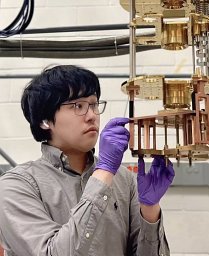 Jiaqi Cai合作论文数Department of Physics, University of Washington34
 De-Yuan Shen (沈德元)合作论文数School of Physics and Electronic Engineering, Jiangsu Normal University34
 Michael A. Mcguire合作论文数Correlated Electron Materials Group, Foundational Materials Science Section, Materials Science and Technology Division, Oak Ridge National Laboratory34
 Jun Xu (徐君)合作论文数Innovation Academy for Precision Measurement Science and Technology, Chinese Academy of Sciences;University of Chinese Academy of Sciences34
 Qianni Jiang合作论文数Dept Phys, Univ Washington33
 Pavel Loiko合作论文数Centre De Recherche Sur Les Ions Les Matériaux Et La Photonique33
 Xavier Mateos Ferré合作论文数Departament de Química Física i Inorgànica, Universitat Rovira i Virgili33Chaowei Hu合作论文数32
 Jones Aaron M合作论文数Dept Phys, Univ Washington32
 Jason S Ross合作论文数Dept Mat Sci & Engn, Univ Washington32
 Xiaoyang Zhu合作论文数Department of Chemistry, Columbia University31
 Bevin Huang合作论文数Dept Phys, Univ Washington30
 Uwe Griebner合作论文数Max Born Institute for Nonlinear Optics and Short Pulse Spectroscopy30
 Huiying Xu (许惠英)合作论文数School of Electronic Science and Engineering, Xiamen University30
 Zhiyi Wei (魏志义)合作论文数Key Lab for Optical Physics, Institute of Physics, Chinese Academy of Sciences30




