Research publication metrics, while intended to assess research impact, have unintended consequences. Hence, this study investigated the unintended consequences of research productivity metrics on academic careers and knowledge production in global higher education using a survey of 1065 respondents. The study employed variance-weighted least-squares regression, multivariate analysis of variance and covariance, and robust OLS for robustness checks. The findings revealed five main results: (1) unintended consequences of research productivity metrics, including institutional emphasis on publication metrics, pressure to publish in high-impact journals, and burnout or stress, adversely affect academic careers in terms of career progression, work-life balance, and stress or burnout; (2) metric-related pressures negatively affect research quality and innovation by influencing research quality and rigour, encouraging the prioritization of topics with high citation potential, and constraining decisions to adopt innovative research methods and conduct innovative research; (3) the same pressures increase the volume of knowledge production by shaping the type of research conducted, encouraging the prioritization of citation-oriented topics, and influencing decisions to share research findings openly; (4) the effects of these pressures do not significantly differ by gender; and (5) institutional policies aimed at reducing stress, supporting work-life balance, and alleviating pressure caused by research metrics are effective in reducing the negative effects associated with research productivity metrics.
BACKGROUND:Assessments of academic achievement, job productivity and numerous other sectors place a significant emphasis on non-cognitive abilities. Thus, Chinese parents are increasingly concentrating on their children's non-cognitive abilities. However, factors such as parental educational expectations, careers and cultural practices may significantly influence these non-cognitive abilities in children, yet studies on this topic are scarce. AIM:This study aims to explore the associations between parental educational expectations, careers and cultural practices in the development of non-cognitive abilities in Chinese middle school students. METHODS:This study uses multilevel regression analysis and data from the China education panel survey (CEPS) to examine how various parental factors relate to the development of non-cognitive abilities. RESULTS:The findings revealed that in terms of parental educational expectations, for rural parents, the highest level of educational expectations for their child and expectations regarding where their child will live and work in the future contribute to the development of the child's non-cognitive abilities, although the impact of future living and working locations is small. For urban parents, the highest level of educational expectations for their child, parental expectations regarding the type of job they expect their child to have in the future and parental confidence in their child's future also influence these abilities, though such impacts are minor. Furthermore, regarding parental careers, for both rural and urban parents, mother's career, writing desk at home, having some books at home and computer and internet access at home contribute to the development of non-cognitive abilities. However, the influence of the father's career on this development is minimal. Moreover, with respect to parental cultural practices, for both rural and urban parents, factors such as the availability of community facilities, parental participation in extra-curricular or cram school courses, parental care and strictness regarding the child's homework and exams, behaviour at school and methods of resolving parental disagreements, as well as the time parents spend directly with their child, are conducive to fostering non-cognitive abilities. However, the impact of community facilities is relatively minor for rural parents. CONCLUSION:The study finds that parental educational expectations, careers and cultural practices play varying but important roles in shaping non-cognitive abilities, with mothers' careers and home learning resources having stronger effects than fathers' careers or community facilities.
Structural and policy-driven factors within schools could play a significant role in developing students’ non-cognitive abilities. A positive and nurturing school factor supports individuals’ comprehensive development. Past literature has highlighted several domains related to school factors, such as academic performance, wellbeing, students’ engagement, attendance in school, delinquent behaviors, bullying, and school safety. However, little is known about the development of other related domains, like non-cognitive abilities in relation to the school factors. Hence, this study made a didactic attempt to evaluate the impact of structural and policy-driven school factors on the development of non-cognitive abilities among Chinese children using the China education panel survey (CEPS) dataset, and employing a hierarchical linear model (HLM). The findings revealed that, for both rural and urban students, the female gender is more contributor/source of the non-cognitive abilities than the male students, with rural females exhibiting higher levels; while regional/provincial differences among students have no influence. Furthermore, school location, the age of the school, and the school category are weakly related to non-cognitive abilities. Moreover, for urban students, proximity to facilities around the school encourages non-cognitive abilities, while safety and infrastructure around the school are retarding it, whereas for rural students none are affecting it. Yet, both rural and urban students’ academic performance, extracurricular participation, behavior, and attitudes strongly influence their non-cognitive abilities.
This paper presents a systematic review of the literature on evaluation and program planning strategies for technology integration in education. The aim of the review was to examine the evidence on different types of strategies that can be used to design, implement, assess, and improve technology integration in educational settings, as well as the factors that influence their success. The review followed the Preferred Reporting Items for Systematic Reviews and Meta-Analyses (PRISMA) guidelines and searched four databases for relevant studies published between 2010 to May 2023. A total of 124 studies met the inclusion criteria and were appraised for quality using multiple quality assessment tools. The findings were synthesized using a narrative synthesis approach. The review identified and compared various models and approaches for technology integration, such as design-based research, logic model, backward design, Analysis, Design, Development, Implementation, and Evaluation (ADDIE) model, and Substitution, Augmentation, Modification, and Redefinition (SAMR) model. It also explored how organizational, technological, pedagogical, teacher, and student factors interact with the evaluation and program planning strategies and affect the outcomes of technology integration. Furthermore, the review has highlighted the importance of evidence-based practice in technology integration and the need for continuous improvement based on data from multiple sources and methods. Moreover, this review also discussed the limitations and challenges of the review and suggested directions for future research and policy development. Besides, the review contributes to the existing literature on technology integration in education by providing a comprehensive and systematic analysis of the evaluation and program planning strategies and their interaction with various factors that influence their success.
Artificial intelligence (AI) refers to the theory and development of computer systems capable of performing tasks that normally require human intelligence. This revolutionary technology holds immense potential in multiple domains, including the development of educational curricula. This article has explored the impact of AI on curriculum development in global higher education institutions, analyzing data from 2,000 faculty and student respondents, across five continents: North America, Europe, Asia, Africa, and Latin America, using a logistic regression model. The study found that frequent use of AI, the extent of the faculty knowledge, institution support to faculty, and the future expectation about AI are promoting curriculum development. Furthermore, the effectiveness of AI-driven tools in personalizing learning experiences, enhancing student engagement, identifying and addressing individual needs, providing real-time feedback, improving the quality of teaching and learning materials, and promoting critical thinking and problem-solving skills is driving curriculum development. Moreover, the challenges limiting AI integration in curriculum development include its ability to personalize learning, adapt content based on student needs, ethical concerns, and hesitations in recommending AI use to other educational institutions. Besides, with respect to cultural and educational contexts in AI-powered tools, the integration of AI in global higher education curriculum development is hindered by its inability to align with and navigate the complexities of these contexts. In addition, educators’ and leaders’ perceptions and attitudes also influence AI’s role in curriculum development. Factors such as AI’s ability to create personalized learning experiences, familiarity with current AI tools, its effectiveness in identifying student learning gaps, willingness to undergo training and professional development, and its capacity to address biases in curriculum content stimulate development yet also present limitations. Importantly, our findings indicate that, while AI has enormous potential to revolutionize curriculum development, strategic approaches and policies are required to overcome the identified issues and improve AI integration in varied educational settings.
Institutions are pivotal in university governance, symbolizing stable organizational power reflective of governance capacity. The strategic organization of a university’s internal structures aims to align with its developmental goals. The effectiveness of these arrangements is evaluated by their congruence with the university’s characteristics and norms, aiming to enhance governance for growth and sustainability. Thus, the primary aim of this study is to determine whether this layout can strengthen the university’s governance ability, enhancing its prospects for survival and development. This study introduces a novel theoretical framework across the dimensions of time, space, and quantity, utilizing governance elements to assess the impact of institutional layouts on governance capabilities. Data were gathered through a self-developed survey questionnaire, with a total of 742 valid responses collected, and by employing a high-dimensional fixed-effects model, we found that the three-dimensional institutional layouts significantly impact governance capabilities, with effects varying by the institution’s affiliation. Furthermore, the mechanism analysis shows that university governance capabilities are also manifested through different configurations of governance elements under institutional layout, and are influenced by the responsiveness, collaboration, and expansion of the entire institutional system. Moreover, our analysis indicates a threshold effect in the tenure of institutional members, where both excessive and insufficient enthusiasm impact governance capabilities differently. This suggests the importance of a strategic institutional layout that aligns with the governance elements’ dynamics of timeliness, flexibility, distribution, and scarcity across time, space, and quantity. Achieving an optimal arrangement enhances the university’s governance efficiency significantly. In light of these findings, policy implications were proposed.
Education is crucial for economic growth as well as the emergence and spread of new products. Thus, a deeper understanding of educational growth is needed, which can be achieved by increasing school enrollment at various educational levels—primary, secondary, and tertiary. Despite extensive debates on the impact of education, the determination of an optimal school enrollment level remains crucial for enhancing economic growth. This study examines school enrollment ratios and their optimality toward economic growth in Middle Eastern countries (MEC) in the twenty-first century using the panel smooth transition regression (PSTR) model, utilizing data from 2000 to 2020. The results revealed that primary and secondary school enrollments have a positive impact on economic growth, with growth rates of 2.702
从学生视角审思学生评教行为表现的影响因素,考察学生评教的本真性,对于大学教学质量评价与问题改进具有重要意义.在对一所"双一流"高校学生质性评教结果进行分析后,提炼学生评教行为表现与结果影响因素的概念类属和核心类属,并在此基础上进行理论解析框架构建与三角互证.研究发现,学生评教结果及行为表现在教学因素与非教学因素影响下出现偏离与异化,并呈现出三种教学实践映照,分别为学习简单化、教学狭隘化以及教育平庸化.展望未来,重塑学生评教本真性需要协调师生间"教"与"学",凸显教学教育性,实现从异化到共鸣,营造"乐教""好学"的评教文化氛围.
This paper provides an insight on whether the global shock of education budget, health budget, and environmental footprint are supporting national development in the twenty-first century as world aggregate data analysis from 2000 to 2019 using the Threshold Structural Vector Autoregressive (ThSVAR) model. The findings revealed that global shocks of the education budget and health budget are partially causing economic growth, but the environmental footprint is partially decreasing it; global shocks of the education budget are substantially raising the human development index while health is partially raising it; global shocks of the education budget and health budget are partially reducing the rate of unemployment, but the environmental footprint is raising it. Furthermore, the levels to which education and health budgets are cost-effective for national development are 4.246523% of GDP and US$e(6.768500) of health budget per capita for economic growth, 4.302660% of GDP and US$e(6.901392) of health budget per capita for human development index, and 4.251330% of GDP and US$e(6.768500) of health budget per capita for the unemployment rate. Moreover, education and health budgets are negligibly curbing environmental degradation. In addition, the levels to which education and health budgets are cost-effective for curbing environmental degradation are at 4.456587% of GDP and US$e6.901392 of health budget per capita. In line with these findings, a couple of policy recommendations and suggestions for further research were made.
作为一种建构科研生活世界的社会实践手段,科研规范话语具有塑造科研秩序的巨大影响力,它们能通过文字片段、语言互动、情境渲染等方式,产生备受关注的、不断被强化的议题,从而实现对科研的"软治理".在国家科技自立自强战略背景下,要建构符合需求的科研规范话语,还需要做到以我为主,即实现科研规范话语的本土化建构.在"科技伦理""科研伦理"已取代"学术道德""科研诚信"并成为相当凸显的科研规范话语的当下,有必要将其进一步归结到"学术伦理"."学术伦理"这一话语不仅具有中国特色,而且还具有很强的渗透性和规约力,理应作为科研规范体系中一个最具主导性的话语,甚至还有必要设立专门的"学术伦理学"来予以系统研究.
建设高质量教育体系是当前我国教育发展的战略任务,对高校自主培养拔尖创新人才提出了新的迫切要求。尽管高校拔尖创新人才培养取得了一定成效,但同时也受到培养计划统筹协调、相关资源与政策保障、评价方式等多方因素制约。拔尖创新人才自主培养质量的提高,需要在“面”上构建起科学合理、特色鲜明的拔尖创新人才培养目标和体系,在“线”上以激励机制牵引拔尖创新人才自主培养的整个流程,在“点”上利用好科技平台这一拔尖创新人才培育的助力器。基于拔尖创新人才培养的特点,需要建立一种有别于普通教育的特殊教育体制和文化,构建拔尖创新人才培养的理论基础。一是彰显学生优势发展的教育哲学原则,提供的学习资源和机会必须匹配不同学生的学习能力;二是遵循知识整体性学习的教育规律,为学生的学习从课程设置的序列性和学科学习的交叉性层面建立知识的关联;三是突破学习成果质量评价标准的束缚,引导学生追求“超常模”的挑战性学习;四是植根于丰富学生就读经历的质量内涵式发展战略路径,开阔学生视野和丰富学生学养并重。
拥有同样治理体系、结构或制度的大学在治理绩效水平上存在天壤之别,往往源自于差别化的治理能力.当前发展新征程下,转向治理能力的研究,不仅能突破和弥补现有相关研究存在的壁障和"能力不在场"的缺憾,也是我国大学治理现代化改革往"下半场"转进的现实需要.基于要素-资源的视角,大学治理能力作为大学实现治理目标的综合性力量,就其本质而言是大学对其拥有的各种要素进行配置过程中的影响力、控制力及其效果的综合体现,表现为所能生产的资源的多少.在大学治理能力生产中,院校作为行动者和要素配置的平台,承担着从"潜能"(要素)到"显能"(资源)现实转化的中介角色.院校对相关要素的配置,不是简单的要素加总,而是现有时空条件下最大治理成效获取的配置,并形成对要素利用、探索、再利用、再探索的良性治理循环.在具体的配置方式上,院校要根据要素在不同维度上所具有的时效性、流动性、离散性和稀缺性,相机采用或综合采用研判、响应、转移、联结、转换、延展等配置方式,从而将大学发展所需的资源不断地生产和再生产出来.
[目的]为进一步提高河南省高校科技创新能力,需要对高校科技创新能力进行重新评估,基于评估结果对河南省高校进行针对性策略研究.[方法]本研究应用贝叶斯约束的均值聚类方法,对河南省高校科技创新能力进行分级评估,首先对河南省高校科技创新能力发展的现状进行定性研究,并对基于贝叶斯约束的改进K均值算法进行描述,基于定性研究结果构建输入数据模型,并利用优化算法进行不同高校的评级分类.[结果]利用贝叶斯聚类方法,将河南地区高校按照科技创新能力水平分成了5个等级,科技创新能力与高校排名相关性为0.885,工科院校的科技创新能力要高于其他学科.[结论]基于评级分类结果,给出将创新成果转化及提升科技创新能力的建议,以加强学科产学研平台建设、平衡学科布局、建立分级管理机制等手段来提高高校科技创新能力.
为了提升型钢-混凝土组合柱的抗震性能,共设计了 7组型钢-混凝土组合柱试件并进行了低周往复荷载试验.研究了截面形式(内置十字型钢、圆钢管、方钢管)、翼缘宽度(80、90和100mm)、腹板高度(30、35和40mm)对型钢混凝土柱破坏形态、滞回曲线、骨架曲线、刚度退化曲线和延性特征的影响.结果表明,7组型钢混凝土试件的滞回曲线都较为饱满,整体呈梭形;对于不同截面形式的试件,内置圆钢管的J2-2试件的滞回曲线最为饱满,内置钢管可以有效约束管内混凝土并提升试件的变形能力,且内置圆钢管J2-2试件对变形能力的提升效果要优于内置方钢管J3试件;对于不同翼缘宽度的试件,翼缘宽度更大的J2-3试件的滞回曲线更加饱满,翼缘宽度增加有助于提升承载力和整体刚度,但翼缘宽度并不是越大试件的变形能力越好;对于不同腹板高度的试件,腹板高度更大的J2-5试件的滞回曲线最为饱满,腹板高度更大的试件的承载力相对较高且承载力下降较慢,延性和变形能力较好.截面形式为内置圆钢管、翼缘宽度中等(90mm)、腹板高度更大(40mm)的J2-5试件具有较好的抗震性能.
This paper explores the question of whether parental migration is a significant source of human capital development or whether it is harmful to non-cognitive ability development. In light of this, a research question was raised: what is the effect of different statuses of parental migration on the non-cognitive abilities of left-behind children in rural China? To answer this research question, the study uses the China Education Panel Survey (CEPS) data wave-I and employs the Propensity Score Matching (PSM) method. The findings revealed that the decision of one or both parents to migrate hurts the non-cognitive abilities of the left-behind school-going children. The results imply that parental migration of one or both parents in rural China is detrimental to the non-cognitive abilities of the left-behind children (LBCs). Therefore, parents should stay or move with their children instead of leaving them with relatives or grandparents. Furthermore, the government must concentrate on removing obstacles to education, especially for migrants, by undertaking initiatives like expanding the number of schools for LBCs and waiving tuition fees. Moreover, the government needs to take action to improve the lives of LBCs and find solutions to their problems. Lastly, the authorities need to promote economic change to create a more balanced economy.
大学只有体察外部环境给自身治理带来的新变化,并深刻把握其中的新要求,才能找到下一阶段改革的方向和着力点,以实现对自身的有效治理乃至优效治理.发展新阶段下,为国服务重心的转变、经济增长放缓态势下的政府财政投入变化、高等教育普及化深入发展下的生源市场变化以及数智技术应用带来的颠覆效应,在给中国大学带来许多新变化的同时,也相应给大学提出了新的治理要求:第一,需要建立既助力社会实现共同富裕,又助力国家科技自立自强的办学体系;第二,需要优化自身的经费使用和财政收入结构;第三,需要在生源市场竞争中维持一定规模和质量的在校生人数;第四,需要建构能适应新技术环境的教学范式及内部管理模式.面对以上新变化以及由此带来的新要求,大学亟待明晰相应的改革思路并拿出应对之策,从根本上讲需要大学具备足够的治理能力.
在首轮"双一流"建设周期期满之际,评价世界一流大学建设政策成效具有现实意义.本研究在归纳出世界一流大学建设政策成效的评价维度后,收集2015-2019年39所世界一流大学建设高校、57所世界一流学科建设高校的校际面板数据,采用双重差分法构建计量模型,评估了世界一流大学建设的政策效应.结果 显示,世界一流大学建设政策的实施在综合实力、学科建设、师资队伍建设、社会服务能力方面对入选高校产生了积极影响,且政策效应估计值具有统计学意义,总体而言通过一系列稳健性检验.然而,少数反映世界一流大学建设政策成效的指标呈现的影响虽为正向但不显著,这反映了该政策效应与政策目标相比仍然存在一些差距和不足.基于此,本研究展望新一轮世界一流大学建设的政策导向:在学科建设上需关注"冷门绝学",适当增添人文社会科学"色彩";在师资队伍建设上需更注重"内源"发展,坚持"外援""内源"相结合;在社会服务能力提升上需注重构建科技成果转化的长效机制.
进入高等教育普及化深入发展阶段即"普及后阶段"后,中国高校在迎来发展机遇的同时也会面临不同的生存挑战.基于制度变迁理论,当外生条件发生变化时,高校的生存博弈规则将会发生流变:一是政府以重构财政安排转移财政压力,将会重塑高校财政经费配置格局;二是生源规模状况的转变,将倒逼高校实现市场博弈中的供需角色互换;三是以人工智能为代表的现代技术革新大潮,将打破传统高校的发展格局.而以上流变又会使高校在此非均衡的外生条件下持续地进行组织演化,具体呈现为高校的不同生存境遇以及由此而来的不同发展态势(发展壮大或衰落、消亡).为此,无论是主管机构还是高校都应未雨绸缪,针对今后可能出现的问题,积极采取防范与应对措施.
大学选课制度是建设高质量教育体系中的重要一环.通过选取国内一所重点大学中一个院系的409份公选课口碑文本作为研究资料,从中探析大学生选课的决策行为过程.研究发现,大学生选课受自身决策目标的影响,在对"预期效用"的衡量中倾向于获取最大的回报,即追求效用最大化.但在课程的"刚性要求"下,大学生往往还基于"情境体验"的感受,在"教师表达"的催化下,做出最终的选择行为.在与理论对话中进一步发现,学生选课动机、个人认知与偏好贯穿于决策过程,由于作为有限理性行为人的学生在选课时会受到多重选择动机和不确定偏好的影响,并且往往处在信息不对称的状态下,所以学生追求效用的最大化并不意味着获得效用的最大化,很难达到动机、偏好和效用的合而为一.基于此,有必要采取多方措施,帮助学生在确立合理"预期效用"的基础上选择适合自身发展的课程,引导学生在形成正确"教师表达""情境体验"的基础上减少选课时的不理性决策,并能自觉地将那些不符合"刚性要求"的"水课"排除在外.
ABSTRACT This paper has examined rural-urban Chinese student’s non-cognitive abilities using the China Education Panel Survey (CEPS) by employing include Two-Sample t-Test, Regression analysis, and Oaxaca–Blinder Decomposition analysis. The results reveal a significant gap in the non-cognitive abilities of rural and urban students in which that of the urban students is higher. Furthermore, irrespective of whether rural or urban, male students have higher non-cognitive ability than female students. Moreover, it discovered that about 52% of the rural-urban non-cognitive abilities gap accounted by the following factors, namely region, gender, whether the student is the only child, school grade, and ethnic minority.
 Babar Nawaz Abbasi合作论文数Ctr Expt Econ Educ, Shaanxi Normal Univ10
 JunFeng Ma (马浚锋)合作论文数10ChunLian Chen (陈春莲)合作论文数8Ali Sohail合作论文数5
 Yunchuan Dong (董云川)合作论文数Research Institute of Higher Education, Yunnan University5
 Mingdong Huang (黄明东)合作论文数Wuhan University5RenQing Xia (夏人青)合作论文数4Lan Su (苏兰)合作论文数3ZhiQiang Le (乐志强)合作论文数2MingRong Zhou (周明荣)合作论文数2XiaoXin Dan (单晓欣)合作论文数2
 Yanli Hao (郝艳丽)合作论文数School of Education, Zhengzhou University2
 Junren Liu (刘俊仁)合作论文数Zhengzhou University2
 Yifei Li (李易飞)合作论文数Graduate School of Education, Dalian University of Technology2Xian Wang合作论文数1Wang Shasha合作论文数1Huanxiang LIN (林焕翔)合作论文数1MA Junfeng (马浚锋)合作论文数1Yang Liu合作论文数1Liu-yi YANG (杨浏祎)合作论文数1Xiang-jun ZHOU (周香均)合作论文数1Yan-li SUN (孙艳丽)合作论文数1Huihui WANG (王惠惠)合作论文数1Yuan LEI (雷媛)合作论文数1Wei LI (李玮)合作论文数1Fen LIU (刘芬)合作论文数1Gang Nan (南钢)合作论文数1ZhangLei Su (苏张磊)合作论文数1TongShan Chang (常桐善)合作论文数1SongRu Xu (徐松如)合作论文数1DeGuang Yang (杨德广)合作论文数1Kuang Sheng (盛况)合作论文数1
 Qian Zhou (周倩)合作论文数School of Education, Zhengzhou University1
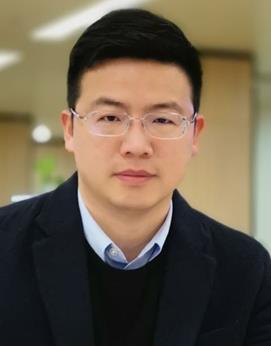 Yangjie Huang (黄扬杰)合作论文数School of Innovation and Entrepreneurship, Wenzhou Medical University1
 Sanbao Zhang (张三保)合作论文数Economics and Management School, Wuhan University1
 Qingshan Xu (胥青山)合作论文数Wuhan University1
 Yanyun Liu (刘延云)合作论文数School of Public Policy Management, Guangxi University1
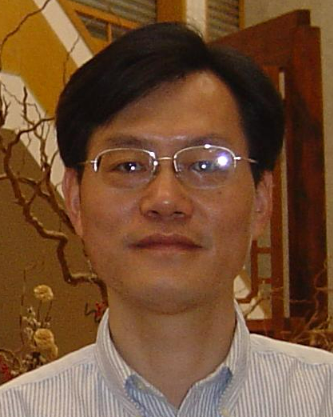 Jianmin Gu (顾建民)合作论文数College of Education, Zhejiang University1
 Shu Ding (丁澍)合作论文数School of Economics, Hefei University of Technology1Xi Yan (严希)合作论文数1
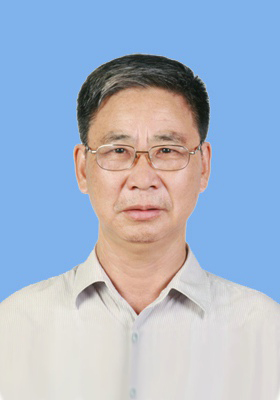 Baiqi Miao (缪柏其)合作论文数School of Management, University of Science and Technology of China1
 Zhaoxin Huang (黄兆信)合作论文数Jing Hengyi School of Education, Hangzhou Normal University1
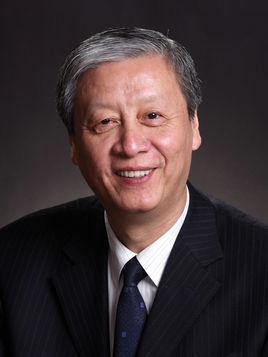 Binglin Zhong (钟秉林)合作论文数Faculty of Education, Beijing Normal University1




