With the rapid development of intelligent sensing and data storage technologies, power systems have accumulated vast amounts of time-series data characterized by strong nonlinearity and high noise levels. To address the limitations of traditional prediction models in handling complex noise interference, which results in insufficient modeling capability and reduced accuracy, this paper proposes a variational autoencoder predictor integrated with normalizing flows. First, a gated recurrent unit (GRU)-based recurrent autoencoder framework is constructed to dynamically extract temporal features and filter noise through its time-dependent modeling capability. Then, a planar flow layer is introduced at the encoder output, transforming latent variables into complex distribution spaces via invertible map-pings to enhance the model’s adaptability to non-Gaussian noise. Experimental results demonstrate that the proposed method outperforms conventional models in noise suppression and dynamic adaptation, achieving a 27.7
To address the issues of inconsistent sampling frequencies and high computational cost in forecasting for multi-rate time series data, this paper proposes a crossfrequency fusion encoder-decoder (CFEN) for multi-rate time series forecasting. The encoder extracts and aligns features through a dynamic sliding window adapted to sampling frequencies and a cross-temporal attention mechanism, which quantifies the impact of time intervals. The decoder adopts an Euler discretization-based lightweight Liquid Neural Network to achieve efficient forecasting. Experiments on air pollutant datasets show that CFEN has an RMSE of 4.2317 and an $R^{2}$ of 0.9674, with operational efficiency outperforming baseline models such as interpolation and separate modeling, balancing forecasting accuracy and real-time performance.
Accurate pose estimation is essential for unmanned surface vehicles (USV) navigation and control, yet remains challenging due to sensor noise, high-dimensional variables, and dynamic data characteristics. Conventional Kalman filters are limited in handling colored noise and time-varying parameters, while existing machine learning methods suffer from inadequate temporal modelling, loss functions lacking dynamic constraints, and poor online adaptability. To address these issues, this paper proposes a robust pose estimation model that integrates an Echo State Network (ESN) into a Variational Autoencoder (VAE) framework, enhanced by an online optimization mechanism. The model employs an ESN as the VAE decoder to map the latent space to the dynamic evolution of pose variables. Furthermore, the loss function is innovatively refined by incorporating dynamic constraints of the ESN and an online training strategy that adjusts parameters based on the confidence of estimation residuals. Compared to the best-performing baseline, it reduces the mean absolute error by 28.5%, the root mean square error by 20.7%, and improves the signal-to-noise ratio by 7.3%. These outcomes indicate that the model can effectively identify and filter noise without relying on explicit physical modelling, thereby providing highly robust and accurate pose information for USV autonomy.
Multi-scale object detection in high-resolution remote sensing images faces multiple technical challenges, including missed detection of densely arranged targets, interference between features with scale variations, and insufficient recognition accuracy for small targets. This study proposes a progressive network optimization framework incorporating deformable convolutional networks to enhance deformation-aware feature representation. Furthermore, we construct a YOLOv7-bw single-stage detector that implements a dynamic gradient gain-weighted Intersection over Union (IoU) loss function, which effectively balances the optimization weights for anchor boxes of varying quality. Results show the proposed method outperforms mainstream detectors in mAP and F1-score, while achieving an optimal balance between model complexity and detection performance. This technical solution provides robust support for the intelligent interpretation of remote sensing imagery.
Accurate prediction of long-term vehicle trajectories is essential for enabling various intelligent transportation applications, including collision avoidance and traffic flow optimization. However, existing approaches often encounter difficulties in maintaining high prediction accuracy and computational efficiency, particularly when applied to large-scale vehicular networks. This study proposes a novel deep learning framework, termed VAE-IAF-PC, which integrates variational autoencoders (VAE), inverse autoregressive flows (IAF), and parallel computation (PC) techniques. The VAE component captures latent representations of complex trajectory patterns by optimizing the evidence lower bound, while the IAF module increases distributional flexibility through a series of invertible transformations. In addition, the PC design enables simultaneous processing of multiple data streams, significantly enhancing scalability and real-time performance. Experimental evaluations on urban-scale Global Positioning System(GPS) trajectory datasets demonstrate that the proposed model reduces prediction error RMSE by 91.67% compared to traditional Kalman filtering methods, and the deep learning-based baselines by 52.75%, with substantial improvements in both accuracy and computational throughput. These findings suggest that VAE-IAF-PC is a promising solution for large-scale trajectory prediction in Internet of Vehicles environments.
To address the challenge of missing value imputation in time series data, especially the complexities of non-stationary time series, this paper proposes a novel framework DMA-MD (DiagMasked Attention for Non-stationary Time Series Imputation). This method aims to enhance imputation accuracy and model robustness, adapting to various data distribution changes in real-world applications. Firstly, DMA-MD employs a diagonal masking attention mechanism to improve imputation capability. This ensures that the model does not directly use target time point data for prediction but relies on information from other time steps, enhancing robustness and accuracy. Additionally, a stabilization module increases the model's adaptability to different data distributions, effectively mitigating the impact of non-stationarity and accelerating the training process. Extensive experiments on multiple real-world datasets, including Air Quality and ETT, demonstrate that DMA-MD significantly outperforms state-of-the-art methods such as Transformer and RNN-based approaches in imputation accuracy. Furthermore, ablation studies confirm the effectiveness of each component, showcasing DMA-MD's superior performance in handling complex non-stationary time series with missing data.
The accurate prediction of Unmanned Surface Vehicle (USV) operational status is severely limited by multi-frequency, asynchronous sensor data, which introduces information distortion and complicates the modeling of variable couplings. To overcome this challenge, we propose MCL-Net, a frequency-aware fusion prediction model. MCL-Net integrates three key components: a Mixture-of-Experts (MoE) module for adaptive synchronization, a dual-branch (ConvGRU and Linformer) architecture for simultaneous local-global feature extraction, and a Bidirectional Cross-Attention (BCA) module for deep feature interaction. Extensive experiments on multi-scenario datasets demonstrate that MCL-Net significantly outperforms state-of-the-art models. This work presents a methodological end-to-end framework for USV operational forecasting, demonstrating the effectiveness of the proposed architecture in modeling asynchronous multi-frequency dependencies under controlled physical coupling conditions.
Accurate and reliable localization of mobile robots in complex indoor environments presents significant challenges for visual-inertial odometry (VIO) systems. To address the limitations of conventional approaches—including their dependency on precise calibration, susceptibility to dynamic disturbances, and inadequate cross-modal feature integration—this paper proposes a deep learning-enhanced adaptive VIO framework. Our solution, the CAT-SC-VIO algorithm, introduces three key innovations: (1) a self-calibrating sensor adaptation module, (2) dynamic scene robustness enhancement, and (3) a novel cross-modal feature fusion architecture. Comprehensive evaluations demonstrate that the proposed system achieves a 17.8
This study proposes an enhanced Kalman filtering algorithm that integrates sensor fault tolerance with a Send-on-Delta (SOD) event-triggered mechanism to address state estimation in complex systems subject to sensor faults and constrained communication resources. A system model incorporating sensor faults is established, and an upper bound for the error covariance matrix is theoretically derived, leading to optimized filter gain. The simulation results verify that the proposed algorithm significantly improves estimation accuracy compared to conventional Kalman filtering under simultaneous sensor faults and SOD-based communication, providing an efficient and reliable state estimation framework for practical applications.
Position estimation technology is a critical foundation for spatial cognition in intelligent systems. Conventional position estimation methods remain vulnerable to measurement errors and noise interference. At the same time, existing deep learning-based approaches demonstrate notable limitations in multi-source sensor data fusion, dynamic environment adaptation, and the optimization of computational complexity versus real-time performance. To address these challenges, this paper presents a novel position estimation framework based on a hybrid Informer-ESN architecture. The proposed model effectively integrates ESN's nonlinear mapping capabilities and short-term memory characteristics with the Informer network's superior temporal modeling and feature extraction capacities, thereby leveraging their complementary strengths for enhanced sequential data processing. This integrated approach demonstrates robust performance in handling complex nonlinear systems under specialized noise conditions. Experimental results indicate that our model achieves significant improvements in both estimation accuracy and robustness compared to conventional methods. Specifically, it enables more precise tracking of unmanned surface vehicles while maintaining consistent performance across varying operational sequences.
This paper focuses on the needs of automation professional talent cultivation in the context of the construction of new engineering disciplines, and takes the course “Freshman Engineering Experience” as the research object, and carries out a systematic exploration of teaching reform in response to the problems of insufficient professional cognition and disconnection between theory and practice that exist in the current engineering education. By restructuring the curriculum system, innovating teaching methods and optimizing the practice platform, a progressive cultivation mode of “Cognition-Practice-Innovation” has been constructed. In curriculum design, the combination of professional guidance and engineering practice is emphasized, in teaching implementation, project-driven and teamwork are strengthened, and in practice, the combination of reality and industry-academia synergy is emphasized. Reform practice shows that the model effectively improves students' professional cognitive level and engineering practice ability, and provides useful reference for the cultivation of applied talents under the background of new engineering disciplines, and the ideas of curriculum construction and implementation path formed by the research have reference value for the teaching reform of engineering majors in similar institutions.
Missing value imputation in multivariate time series is a critical challenge in the field of data mining. Although Transformer-based methods excel in modeling long-range dependencies, their inherent point-wise attention mechanisms often lack explicit modeling of local inductive biases in time series, making it difficult to effectively capture local smoothness and evolutionary trends. Furthermore, existing feature embedding strategies struggle to fully decouple the internal temporal evolution of variables from complex cross-variable dependencies. To address these limitations, this paper proposes a novel dual-stage imputation framework named M-SAITS. This framework innovatively introduces a decoupled feature encoder based on large-kernel depthwise convolutions. By utilizing an extended effective receptive field, it explicitly enhances the model's perception of local trends. Additionally, it employs a grouped convolution structure to achieve decoupled modeling of intra-variable temporal patterns and inter-variable interaction features. On this basis, combined with a Diagonally-Masked Self-Attention mechanism, the framework physically blocks information leakage paths while achieving lossless global context aggregation. Relying on a "Preliminary Inference–Iterative Refinement" cascade strategy and a masked weighted joint optimization objective, the model achieves high-fidelity data reconstruction. Extensive experiments on multiple benchmark datasets, such as Electricity and Air Quality, demonstrate that this method significantly outperforms existing state-of-the-art models across multiple evaluation metrics. Notably, in high-dimensional electricity data imputation tasks, M-SAITS achieves substantial performance improvements over baseline models such as CSDI and Transformer, with the Mean Absolute Error significantly reduced (up to approximately 60% under low missing rates).
Traditional Chinese medicine (TCM) tongue diagnosis, while clinically valuable, faces standardization challenges due to subjective interpretation and inconsistent imaging protocols, compounded by the lack of large-scale, annotated datasets for AI development. To address this gap, we present the first specialized dataset for AI-driven TCM tongue diagnosis, comprising 6,719 high-quality images captured under standardized conditions and annotated with 20 pathological symptom categories (averaging 2.54 clinically validated labels per image, all verified by licensed TCM practitioners). The dataset supports multiple annotation formats (COCO, TXT, XML) for broad usability and has been benchmarked using nine deep learning models (YOLOv5/v7/v8 variants, SSD, and MobileNetV2) to demonstrate its utility for AI development. This resource provides a critical foundation for advancing reliable computational tools in TCM, bridging the data shortage that has hindered progress in the field, and facilitating the integration of AI into both research and clinical practice through standardized, high-quality diagnostic data.
Trajectory prediction in the Internet of Vehicles (IoV) is crucial for enhancing road safety and traffic efficiency; however, existing methods often fail to address the challenges of colored noise in GPS data and long-term dependency modeling. To overcome these limitations, this paper proposes AttSCNs, a probabilistic hybrid framework integrating stochastic configuration networks (SCNs) with an attention-based encoder to model trajectories while quantifying prediction uncertainty. The model leverages SCNs’ stochastic neurons for adaptive noise filtering, attention mechanisms for dependency learning, and Bayesian hyperparameter optimization to infer robust configurations as a posterior distribution. Experimental results on real-world GPS datasets (10,000+ urban/highway trajectories) demonstrate that AttSCNs significantly outperform conventional approaches, reducing RMSE by 36.51% compared to traditional SCNs and lowering MAE by 97.8% compared to Kalman filter baselines. Moreover, compared to the LSTM model, AttSCNs achieve a 52.5% reduction in RMSE and a 68.5% reduction in MAE, with real-time inference speed. These advancements position AttSCNs as a robust, noise-resistant solution for IoV applications, offering superior performance in autonomous driving and smart city systems.
Traditional motion models often cannot describe real-world motion systems accurately when using the Kalman filter (KF) for target tracking. This paper aims to achieve an adaptive estimation of motion states and proposes a KF coupled with neural networks (NNs). First, an adaptive estimation framework is proposed for motion state recognition and target tracking, which couples different NN models with the classical KF. Second, an adaptive NN filtering algorithm is introduced. This filter utilizes NNs to learn the motion patterns of the target and the total Gaussian probability density of the state sequence and performs iterative updates within the framework of the KF. Finally, simulation results on the KITTI dataset demonstrate the proposed filter's high estimation accuracy. Compared to traditional KFs, this filter achieves the prediction of target states through a data-driven approach, thereby avoiding issues related to fixed motion models and parameters during the filtering process.
This paper presents Mutual Feature Fusion Network (MFFNet), a novel cross-modal object detection framework that leverages infrared and visible light images to enhance detection accuracy. MFFNet employs a dual-stream backbone network based on YOLOv5 to extract features from both modalities independently. The proposed interassisted fusion block integrates within the network’s intermediate layers, facilitating complementary fusion of features by enabling mutual assistance between the two modalities. To address the issue of uneven sample difficulty, we introduce the generalized efficient intersection over union loss function, which adaptively adjusts weights to prioritize high-quality anchor boxes. Extensive experiments on two public datasets, M3FD and LLVIP, demonstrate that MFFNet achieves state-of-the-art performance in terms of detection accuracy and efficiency. By effectively exploiting the complementary strengths of infrared and visible light modalities, MFFNet significantly improves detection accuracy, especially for small objects and in challenging lighting conditions. The code for this study is available on GitHub: GitHub Repository .
The Tuned Liquid Damper (TLD) method offers a practical and cost-effective solution for seismic design. Accurate modeling of the TLD system’s dynamic behavior is crucial for optimizing its performance. In this study, the nonlinear dynamics of the TLD system are characterized using the Housner model, with parameters estimated via a nonlinear state estimation approach. To address challenges associated with model discretization and unknown noise processes, we introduce a Robust Extended Kalman Filter (REKF) that incrementally incorporates uncertainties to more accurately capture system dynamics. The proposed method is evaluated through real-time hybrid simulation, employing seismic input signals from the El Centro and Hachinohe ground motions. Comparative analyses indicate that the robust algorithm achieves superior parameter estimation relative to conventional methods, with estimated parameters closely aligning with reference values and resulting in minimal relative error. This work underscores the efficacy of robust algorithms in TLD vibration response analysis and presents a promising approach for dynamic modeling and seismic performance optimization.
This paper has presented an intelligent tongue image collection system for traditional Chinese medicine (TCM) diagnosis. On one hand, an improved lightweight detection network was proposed to identify the real-time images captured by the camera and store the qualified tongue images. On the other hand, the age and gender detection module was introduced to determine individual differences in the collected images, thereby providing additional information for subsequent diagnostic processes. Finally, the collected images and additional information can be stored in a specific format, contributing important data resources to the construction of high-quality tongue diagnosis datasets. Experimental results show that the proposed collection system is feasible and effective, capable of obtaining qualified tongue images through intelligent methods, and providing solid technical support for achieving intelligent tongue diagnosis in the future.
With the progressive advancement of remote sensing image technology, its application in the agricultural domain is becoming increasingly prevalent. Both cultivation and transportation processes can greatly benefit from utilizing remote sensing images to ensure adequate food supply. However, such images often exist in harsh environments with many gaps and dense distribution, which poses major challenges to traditional target detection methods. The frequent missed detections and inaccurate bounding boxes severely constrain the further analysis and application of remote sensing images within the agricultural sector. This study presents an enhanced version of the YOLO algorithm, specifically tailored to achieve high-efficiency detection of densely distributed small targets in remote sensing images. We replaced the convolutions with a convolution kernel size of 3 in the last two ELAN modules with DeformableConvNetsv2 so that the backbone can better extract various objects. The proposed detector introduces a Bi-level Routing Attention module to the pooled pyramid SPPCSPC network of YOLOv7, thereby intensifying the attention towards areas of target concentration and augmenting the network's capacity to extract features related to dense small targets through effective feature fusion. Additionally, our approach employs a dynamic non-monotonic WIoUv3 to ensure the loss function of the network, enabling the allocation of the most appropriate gradient gain strategy at each instant and enhancing the network's ability to focus on detecting targets accurately. Finally, through comparative experimentation on the DIOR remote sensing image dataset, our proposed YOLOv7-bw exhibits superior performance with higher mAP@0.5 and mAP@0.5: 0.95, achieving detection rates of 85.63% and 65.93%, surpassing those of the YOLOv7 detector by 1.93% and 2.03%, respectively, thus substantiating the effectiveness of our algorithmic approach.
The phenomenon of algal bloom seriously affects the function of the aquatic ecosystems, damages the landscape of urban river and lakes, and threatens the safety of water use. The introduction of a multi-attribute decision-making method avoids the shortcomings of traditional algal bloom management that relies on manual experience. Numerical transformations do not accurately and comprehensively represent expert decision-making information expressed in natural language. This paper presents a automatic decision-making for algal bloom management based on knowledge graph. A general framework of decision-making management is constructed for the algal bloom management process. Secondly, the expert decision-making knowledge graph is constructed and visualization is carried out using the Neo4j graph database. Then considering the small amount of data and the brief text structure of the expert decision-making information, the joint extraction of entities and relations model which Bert-GRU-Attention-CRF. Finally, real-time water quality data and expert decision-making recommendations are fused. The model proposed in this paper works better verified by experiments. Comparison with the water quality data and treatment inputs after the previous man-made selection of treatment options, and discussion among experts, show that the decision-making method is feasible and effective, and contributes to the sustainable treatment of algal blooms.
 Xue-bo Jin合作论文数Zhejiang Sci-Tech University, Zhejiang Sci.-Tech. University100
 Yu-Ting Bai (白玉廷)合作论文数78
 Jianlei Kong (孔建磊)合作论文数School of Computer and Artificial Intelligence, Beijing Technology and Business University76
 Xiaoyi Wang (王小艺)合作论文数School of Artificial Intelligence, Beijing Technology and Business University31
 Shenglun Yi合作论文数11
 Hui-Jun Ma合作论文数8
 Stefano Longo合作论文数Ctr Automot Engn & Technol, Cranfield Univ8
 Guido Herrmann合作论文数Department of Electrical and Electronic Engineering, School of Engineering, Faculty of Science and Engineering, The University of Manchester7
 Jiping Xu (许继平)合作论文数School of Computer and Artificial Intelligence, Beijing Technology and Business University6
 Phil Barber合作论文数6
 Binbin Wang合作论文数6Fa-Fa Wang合作论文数5Nian-Xiang Yang合作论文数5
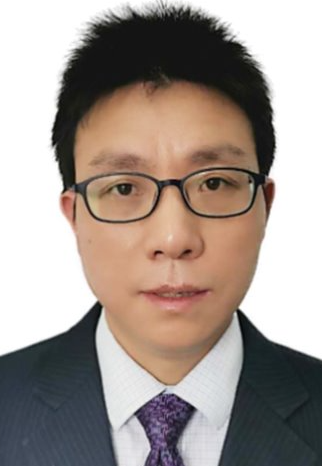 Zhenyun Tang (唐贞云)合作论文数Faculty of Architecture, Civil and Transportation Engineering, Beijing University of Technology5
 Zhiyao Zhao (赵峙尧)合作论文数4Yang-Yang Zheng合作论文数4Ai-Qiang Yang合作论文数4
 Wen-Jie Liu合作论文数4Xing-Hong Yu合作论文数4Jiashuai Zhang合作论文数4Shiyu Peng合作论文数4
 Jing Na (那靖)合作论文数Faculty of Mechanical and Electrical Engineering, Kunming University of Science and Technology;Faculty of Engineering, University of Bristol4
 Huiyan Zhang (张慧妍)合作论文数School of Computer and Information Engineering, Beijing Technology and Business University4m zuo合作论文数3Na Xiang合作论文数3Chao Dou合作论文数3Zhigang Shi合作论文数3Wen-Tao Gong合作论文数3Shi Yan合作论文数3Zhenni WANG (王珍妮)合作论文数3
 Prasun Chakrabarti合作论文数3Jie Jia (贾洁)合作论文数3
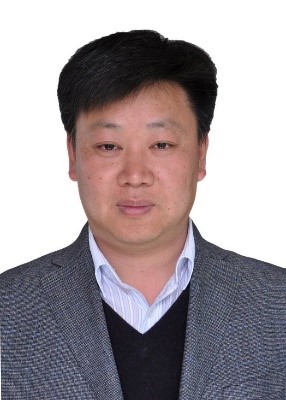 Min Zuo (左敏)合作论文数Beijing Technology and Business University3
 Li Wang (王力)合作论文数North China University of Technology3
 Baihai Zhang (张百海)合作论文数School of Automation, Beijing Institute of Technology3
 Bin Wang合作论文数2Zhong-Yao Wang合作论文数2fan ningjun合作论文数2Wei-Zhen Zheng合作论文数2Jianli Wang合作论文数2
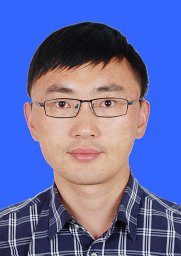 Guanbin Gao合作论文数Kunming Univ Sci & Technol, Fac Mech & Elect Engn, Kunming 650500, Yunnan, Peoples R China2Bei-bei Miao合作论文数2
 Guotian Yang (杨国田)合作论文数School of Control and Computer Engineering, North China Electric Power University2
 Qian Sun (孙茜)合作论文数School of Computer and Information Engineering, Beijing Technology and Business University2
 Wei Wei (魏伟)合作论文数School of Intelligent Engineering and Automation, Beijing University of Posts and Telecommunications2
 Junping Du (杜军平)合作论文数School of Computer Science, Beijing University of Posts and Telecommunications2M Donkers合作论文数1A Cela合作论文数1C. Ionete合作论文数1




