改造低温仓主要通过冬季机械通风、谷冷机降温等降低基础粮温;通过仓房隔热气密改造、拱顶自动排积热改造,减少高温季节外界传入仓内的热量;通过仓内空调制冷,在高温季节提供持续的冷源;通过多功能内环流系统、热皮环流系统,均衡粮堆水分预防局部发热、降低仓壁垂直热皮层温度;通过自动控制系统实现工艺运行自动化,在储粮全周期实现低温储粮的目标.对比分析影响储粮品质的仓温、粮温、水分及相同储粮周期内品质变化等综合因素,总结改造低温仓与传统房式仓房的优劣,得出改造低温仓在储存原粮方面比传统房式仓优越.
呕吐毒素又称脱氧雪腐镰刀菌烯醇(DON),化学名为3a 7a 15-三羟基草镰孢菌-9-烯-8-酮,属单端孢霉烯族化合物.玉米赤霉烯酮(ZEN)又称F-2毒素,化学名为6-(10-羟基-6氧基-1-碳烯基)β-雷琐酸-μ-内酯,是由玉米赤霉菌、禾谷镰刀菌(F.graminearum)、三线镰刀菌(F.tricinctum)及串珠镰刀菌等产生的一类真菌毒素.有研究显示,DON和ZEN广泛污染农作物、食品及饲料等植物性产品,这些毒素可以引起人类及动物的急性或慢性中毒,损害机体的肝脏、肾脏、神经组织、造血组织及皮肤组织等,并同时损害两个以上的器官和组织[1-2],每年因真菌毒素污染而造成的直接或间接损失达到数百亿美元[3].
选用不同水分梯度的稻谷、小麦和玉米样品,用不同型号的水分测试磨的不同档位进行粉碎处理,得到不同粉碎细度的样品,采用GB 5009.3-2016中的第一法直接干燥法测定其水分含量.结果表明:同一份样品在不同的粉碎细度下水分测定结果有差异,粉碎细度越高,水分含量越高,基本成正相关;A型水分磨的1~2档与B型水分磨的0档粉碎细度基本呈对应关系,测定结果基本一致.
研究了花生油、大豆油、芝麻油、大豆色拉油、花生色拉油食用油脂肪酸价的国标滴定法和双液相滴定法的不同,并作比较.向待测样品中加入乙醚:乙醇(2:1)混合液50 mL(国标法)或石油醚25 mL+75 mL50%乙醇混合溶液(双液相法),以酚酞为指示剂,以KOH为标准溶液滴定至下层溶液呈微红色,由于油脂的黄色色素不溶于水相,故在双液相法中不会干扰终点判断.试验结果表明:与国标法相比,双液相法的精密度和选择性更强,滴定终点的变化更加敏锐.
分别采用特制大容器和标准容重器测量标准仓粳稻谷数量,比较两种方法测算值与散存粳稻真实数量的差率,发现标准容重器测量法测得粳稻数量与真实数量的差率变化范围比特制大容器法更小,这表明散存粳稻谷的数量测算采用标准容重器法测量具有可行性.
以粳稻谷为研究对象,分别采用两种不同型号的精米机,探讨了压铊档位、碾磨时间、筛孔大小对稻谷出米率的影响.结果 表明:选用2.0mm筛孔得到的出米率比2.5mm筛孔高出约1%~3%;LTJM160型精米机选择碾磨时间50 s压铊档位1档、BLH-3500型精米机选择碾磨时间45 s压铊档住2档时,2台精米机出米率结果存在一致性且检验结果相对稳定.
我国玉米产量位居世界第二,仅次于美国[1].同时,玉米也是我国四大粮食储备品种之一.在玉米的质量指标中不完善粒率是一项非常重要的非定等指标,根据GB 1353-2009[2]规定不完善粒指标对应五个不同等级,1、2、3、4、5等玉米中不完善粒分别不能高于4%、6%、8%、10%、15%,特别是中央储备玉米需达到3等,即不完善粒率不能高于8.0%,而在不完善粒中破碎粒是其重要的组成部分,占比高.由此可见,玉米破碎率是反映玉米品质的一项重要指标.因此,准确检测破碎率,控制好破碎粒率是粮食质量把关的重要环节.
[Objective] The volatile components of different indica rice varieties from Hunan province were investigated and compared to explore the possibility that using volatile compounds as indicators for characterization and differentiation of varieties, also for providing a reference for rice storage, processing and quality control.[Method] The head space-solid phase microextraction method was used to extract the volatile components from twelve varieties of indica rice and the extracted volatile substances were analyzed by gas chromatography-mass spectrometry method. The principal component analysis was adopted to analyze their flavors.[Result] A total of 265 volatile components were detected, 125 kinds of substances were screened according to the quality of not less than 80, including 56 kinds of hydrocarbons, 12 kinds of alcohols, 13 kinds of aldehydes, 14 kinds of ketones, 19 kinds of eaters, and 11 kinds of heterocylic compounds. The average percentage contribution of alkanes, olefin, aromatic hydrocarbons, alcohols, aldehydes, ketones, eaters and heterocylic compounds to the total were 26.907%, 8.417%, 7.308%, 5.810%, 9.628%, 18.626%, 13.926% and 6.819%, respectively. The coefficient of variation was 19.98%, 38.22%, 34.67%, 41.12%, 28.57%, 38.81%, 20.13% and 34.33%, respectively. High levels of 6, 10, 14-trimethyl-2-pentadecanone were detected in all species. Some varieties have unique substances, and Kauri-15-ene only existed in Zhuliangyou 819 and Zaoyou, Tezao has a special bisabolene. Isophytol, tetrahydrofurfuryl lavender alcohol and citronellol existed only in Zhuliangyou819, Tezao and Zaoyou respectively. Only Zaoxian87 contained high levels of dihydroxyacetophenone. Benzoicacid ester of silicon occurred only in Zaoyou, chloroformate n-nonyl ester was only detected in Zhongzao 39, and chloroformate n-octyl phthalate was detected only in Zhuliangyou 819 and Zaoxain 51-4. The results of principal component analysis showed that olefin, alkanes, aldehydes and heterocylic substances were the main influencing factors. The contribution rate was 35.878%, 19.267%, 18.727% and 13.596%, respectively, and the cumulative contribution rate was 87.467%. Samples (Xiangai45, Xiangzao32, Zaoxian87, Zaoxian89, Zaoxian51-4, Zhuliangyou 819, Tezao, Zhongzao39, Zaoyou) were distinguished except Zhuliangyou402, Tanliangyou83 and Zaoxian24 according to olefin. Zaoxian 87, Zaoxian89 and Zaoxian51-4 could be identified by alkanes. Zhuliangyou 819 and Zaoixan 51-4 were distinguished through aldehydes. Zaoxian 51-4 and Zaoxian 24 were identified in accordance with heterocyclic substance.[Conclusion] There are significant differences in volatile compositions and concentrations among 12 varieties of indica rice. Principal component analysis can identify specific substances and distinct paddy varieties.
The fresh garlic oil is used as raw material to determine the suitable extracting condition by ethanol extraction solvent.The retention of volatile aroma components is used as the index to evaluate the quality of garlic oil and investigate the effect of different extraction conditions(ethanol concentration,solid-liquid ratio,extraction time and extraction temperature) on the extraction efficiency.The volatile compounds in garlic oil are determined by Needle Trap and solid-phase microextraction(SPME) coupled with gas chromatography-mass spectrometry(GC-MS).The suitability of using Needle Trap-GC-MS for volatile aroma components is investigated.It's found that choose the ethanol concentration of 85 %,solid-liquid ratio of 1 ∶ 8,extracting for 4 hours at 60 ℃ can obtain the best quality of garlic oil.Using SPME-GC-MS can identify 26 kinds of components,and Needle Trap-GC-MS can identify 36 kinds of components.The type and relative content of representative flavor substances analyzed by Needle Trap-GC-MS are more than that by SPME.This result indicates that the dynamic Needle Trap technique has certain advantages in adsorption compared with solid-phase microextraction and it can also be used to analyze the aroma components.
选取生姜作为原材料,通过超临界CO2萃取法得到生姜精油,采用气质联用(GC-MS)技术对样品中挥发性成分进行测定,并运用主成分分析法(PCA)分析姜油样品中特征挥发性物质.研究结果表明:超临界CO2萃取的姜油样品中GC-MS共检测出68种挥发性物质,主要包括烯烃类34种、酮/酚类7种、醛类5种、酸酯类14种、醇类8种,主成分分析法(PCA)分析得出5种特征挥发性物质:姜烯、姜黄烯、姜酮、6-姜酚、β-倍半水芹烯,其贡献率大小依次为姜烯>姜黄烯>6-姜酚>姜酮>β-倍半水芹烯.
The volatile compounds in ginger were extracted by two methods,using gas chromatography-mass spectrometry( GC-MS) to analyze the extracted volatile substances of the samples. And principal component analysis( PCA) was adopted to investigate their flavors and compare their differences.According to the analysis by GC-MS,83 peaks were seperated by supercritical CO 2 extraction and 51 peaks seperated by ethanol extraction,the mainly were six categories volatile compounds,including olefins,ketones / phenols,acid esters,aldehydes,alcohols,and alkanes,in which olefins and ketone / phenols made a significant contribution,and the cumulative contribution rate was 95.544%.The sensory quality of the ginger oil by supercritical CO 2 extraction was better than by ethanol extraction,and the relative content of volatile substances was also significantly higher than ethanol extraction method,which provided a reference for future development and utilization of ginger oil.
 Huashan Yuan (袁华山)合作论文数6Qingyan Hu (胡庆燕)合作论文数5Pingdong Wang (王平东)合作论文数4Qing Deng (邓庆)合作论文数4
 He Rong合作论文数3
 Xingrong Ju (鞠兴荣)合作论文数College of Food Science & Engineering of NUFE3
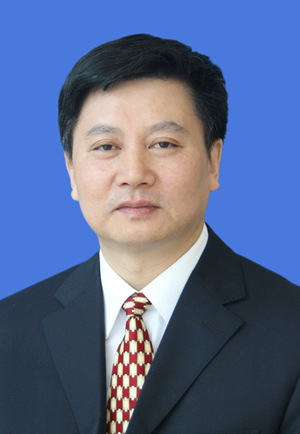 Jian Yuan (袁建)合作论文数College of Food Science & Engineering, Nanjing University of Finance & Economics3Jialiang Song (宋加良)合作论文数2Can Pan (潘璨)合作论文数1Shangbing Chen (陈尚兵)合作论文数1Hai-yan HE (何海艳)合作论文数1Yang NI (倪阳)合作论文数1WanJun Hu (胡婉君)合作论文数1Yan Fan (樊艳)合作论文数1HuiPing Yang (杨慧萍)合作论文数1Bing Liu (刘兵)合作论文数1
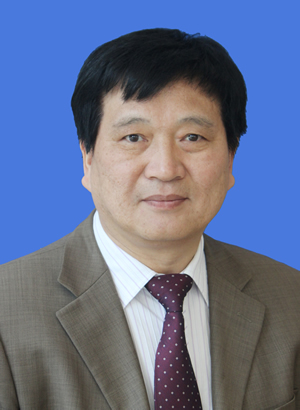 Wei Song (宋伟)合作论文数College of Food Science & Engineering of Nanjing University of Finance and Economics1Huanchong Hu (胡寰翀)合作论文数1




