In response to the limitations of few-shot point cloud semantic segmentation, including weak local geometric representation, insufficient utilization of global contextual information, and vulnerability of features to noise interference, we propose a few-shot point cloud segmentation network that combines multi-dimensional perception and frequency-domain enhancement. First, we establish a multi-dimensional perception mechanism by designing a Geometry Awareness Module (GAM) that models local geometric manifolds through multi-scale positional encoding and explicit neighborhood difference modeling. Second, a Global Perception Module (GPM) is introduced, utilizing multi-scale adaptive pooling to capture long-range contextual dependencies. This enables feature refinement that spans from local fine-grained structures to the global scene context. Finally, we construct a Frequency Domain Module (FDM) that utilizes the Fourier transform to disentangle the amplitude spectrum from the phase spectrum and adopts an adaptive spectral enhancement strategy to suppress unstable feature perturbations and enhance boundary-sensitive responses, thereby alleviating the limitations of purely spatial-domain feature representation and enabling complementary learning between spatial-domain and frequency-domain features. Experimental results show that the proposed method achieves competitive performance on the S3DIS and ScanNet benchmarks, with mIoU scores of 50.01
While diffusion models have demonstrated remarkable potential in generative tasks, their application to discriminative visual perception remains challenging due to high computational costs, heavy reliance on ground-truth (GT) image-text pairs, and nondeterministic outputs. To address these limitations, we propose MF-VPD, a novel vision perception diffusion model based on multimodal feature fusion (MFF). First, to overcome the scarcity of labeled image-text pairs, we introduce a training data generator that leverages BLIP to synthesize descriptive captions. Second, we design an MFF module that integrates contrastive language-image pretraining (CLIP)-based textual embeddings with Vision Transformer (ViT)-based visual features using a state-space model (SSM) strategy. This integration ensures that the diffusion backbone receives comprehensive, complementary guidance, mitigating the inadequacy of unimodal text prompts. Furthermore, we propose a lightweight visual perception adapter (VPA) to fine-tune the network while keeping the backbone frozen. Extensive experiments demonstrate MF-VPD's superiority across depth estimation, semantic segmentation, and salient object detection. Notably, MF-VPD achieves an 85.17% mean intersection over union (mIoU) on Cityscapes and a 0.959 S-measure on DUTS while reducing error metrics by 6%-8% on NYU Depth V2 and KITTI. Crucially, compared to the VPD baseline, our adapter strategy reduces model parameters by 76.7% and accelerates inference speed by approximately 48% on depth estimation tasks. The code will be made available at https://github.com/zhx441/MF-VPD/
To reduce redundant information, common light field depth estimation methods often use horizontal, vertical, and diagonal sub-aperture image branches as inputs. However, existing methods ignore the relationships between these branches and fail to effectively fusion features from different branches. This paper proposes a light field depth estimation network base on multi-branch fusion by exploring the relationships between sub-aperture images and between branches. We designed a spatial pyramid fusion module based on spatial pyramid pooling and channel attention mechanisms for feature extraction. This module effectively integrates contextual information and promotes feature fusion. For occluded regions, we designed dual fusion strategy within and between branches. The intra-branch fusion module focuses on occlusion conditions in each view, selecting advantageous views for local fusion. The inter-branch fusion module evaluates the overall contribution of each branch to the network, selecting branches with minimal occlusion and rich textures for global fusion. Finally, a residual parallel aggregation module is employed to aggregate the cost volume, enhancing the network's ability to handle details and edges while reducing parameter and inference time. Experiments on the newHCI dataset show that our method achieves optimal or sub-optimal results with low computational cost and small model size. In terms of MSE, BP(0.03) and BP(0.07) in most scenes, outperforming other advanced methods overall. The proposed network effectively fusion features between branches, eliminates redundant information, improves depth estimation accuracy, and preserves edge and detail information.
In order to solve the problems of poor scalability, low generality and high computational cost of the traditional method using single object CNN model, and optimize the performance of multi-objective method. In this paper, a single-stage network architecture for multi-objective 6D attitude estimation is proposed, and a multi-branch feature extraction decoder is designed to capture and aggregate detailed features effectively. This paper proposes a feature optimization and screening module, which filters input features to extract multi-scale features. Combining the above two, a new feature pyramid structure is designed to improve the overall performance of the network and improve the pose estimation effect of occlusion. The experiments are carried out on synthetic data set LINEMOD and Occluded LINEMOD. The results show that the proposed method has achieved significant improvement in the processing of blocked object scenes. Compared with the most advanced methods such as PyraPose, SD-Pose and CASAPose, the proposed method has increased the ADD/S-Recall index by 43. 1 degrees o, 16. 1 degrees o and 12 degrees o, respectively. It performed better when the number of targets is small, increasing performance by 17 degrees o when the number of targets is 4. The ablation experiment further verifies the effectiveness of each module. By introducing multi-branch feature extraction decoder, feature optimization and screening module, and feature pyramid structure, the proposed single- stage multi-objective network architecture can process any number of targets by training only one network, and can perform 6D pose estimation better under the condition of synthetic data. Experimental results verify the effectiveness of the proposed method.
In complex hand-object interaction scenarios, hand pose estimation often suffers from accuracy degradation due to occlusion interference and feature coupling issues. This paper proposes a hand feature enhancement network model based on feature decoupling and cross-modal fusion. The core components include a Hand-Independent Extraction Module (HIEM) and an attention-guided feature fusion mechanism. First, HIEM employs a hierarchical feature enhancement strategy and a lightweight activation function to decouple the hand and object feature extraction processes, significantly reducing the loss of hand details. Second, the cross-modal fusion module incorporates object features as auxiliary cues and utilizes an attention mechanism to dynamically focus on critical hand-object interaction regions, such as grasp points and occlusion boundaries, optimizing the feature space representation. Finally, the processed features are fed into the hand decoder, ultimately generating the 3D hand pose model. Experiments conducted on the HO3D and DEX-YCB datasets demonstrate that the proposed method significantly improves hand pose estimation accuracy in occlusion scenarios. It effectively alleviates the localization bias caused by feature competition between the hand and object in traditional methods. Compared to existing approaches, this model exhibits superior performance in both pose estimation accuracy and robustness.
Since multi-person pose estimation in crowded scenes still suffers from problems such as small detection targets, resulting in low pose estimation accuracy, we propose a correction algorithm for multi-person pose estimation based on the improved YOLOv5. Firstly, in the backbone network of YOLOv5, the Jumping Attention Mechanism module is incorporated to help the networks find the region of interest in the images; Secondly, in the neck network, the joint use of the Jump Attention Mechanism module and the Transformer encoder allows the network to acquire global information and contextual information. Finally, the key point object information obtained from the network prediction is used to correct the pose object information to get the final multi-person pose estimation results. The experimental results show that the method in this paper improves AP50 by 2.2% and AP75 by 3.3% over YOLOv5 on the COCO dataset, which verifies the accuracy and robustness of the approach in this paper.
Objective In recent years,the use of neural networks for stereo matching tasks has become a major topic in the field of computer vision.Stereo matching is a classic and computationally intensive task in computer vision.It is commonly used in various advanced visual processing applications such as 3D reconstruction,autonomous driving,and augmented reality.Given a pair of distortion-corrected stereo images,the goal of stereo matching is to match corresponding pixels along the epipolar lines and compute the horizontal disparity,also known as disparity.In recent years,many researchers have explored deep learning-based stereo matching methods,which achieving promising results.Convolutional neural net-works are often used to construct feature extractors for stereo matching.Although convolution-based feature extractors have yielded significant improvements in performance,neural networks are still constrained by the fundamental operation unit of"convolution".By definition,convolution is a linear operator with a limited receptive field.Achieving sufficiently broad contextual representation requires stacking layers of convolutions in deep architectures.This limitation becomes particu-larly pronounced in stereo matching tasks.In stereo matching tasks,captured stereo image pairs inevitably contain large areas of weak texture.Substantial computational resources are required to obtain comprehensive global feature representa-tions through repeated convolutional layer stacking.We build a dense feature extraction Transformer for the stereo match-ing tasks,which incorporates Transformer and convolution blocks,to address the abovementioned issue.Method In the context of stereo matching tasks,FET exhibits three key advantages.First,by addressing high-resolution stereo image pairs,the inclusion of a pyramid pooling window within the Transformer block allows us to maintain linear computational complexity while obtaining a sufficiently broad context representation.This way addresses the issue of feature scarcity caused by local weak textures.Second,we utilize convolution and transposed convolution blocks for implementing subsam-pling and upsampling overlapping patch embeddings,which ensures that all points nearby features are captured as compre-hensively as possible to facilitate fine-grained matching.Third,we experiment with employing a skip-query strategy for fea-ture fusion between the encoder and decoder to efficiently transmit information.Finally,we incorporate the attention-based pixel matching strategy of stereo Transformer(STTR)to realize a purely Transformer-based architecture.This strategy trun-cates the summation of matching probabilities within fixed regions to output more reasonable occlusion confidence values.Result In the experimental section,we implemented our model using the PyTorch framework and trained it on an NVIDIA GTX 3090.We employed mixed precision during the training process to reduce GPU memory consumption and improve training speed.However,training a pure Transformer architecture in mixed precision proved to be unstable.The model experienced loss divergence errors after only a few iterations.We modified the order of computation for attention scores to suppress related overflows for addressing this issue.We also restructured the attention calculation method based on the additivity invariance of the softmax operation.Ablation experiments were conducted on the Scene Flow dataset.Results show that the proposed network achieves an absolute pixel distance of 0.33,an outlier pixel ratio of 0.92%,and a 98%overlap prediction intersection over union.Additional comparative experiments were conducted on the KITTI-2015 dataset to validate the effectiveness of the model in real-world driving scenarios.In these experiments,the proposed method achieved an average outlier percentage of 1.78,which outperformed mainstream methods such as STTR.Moreover,in tests on the KITTI-2015,MPI-Sintel,and Middlebury-2014 datasets,the proposed model demonstrated strong generaliza-tion capabilities.Subsequently,considering the limited definition of weak texture levels in currently available public data-sets,we employed a clustering approach to filter images from the Scene Flow test dataset.Each pixel in the images was treated as a sample,with RGB values serving as the feature dimensions.This clustering process resulted in quantifying the number of different pixel categories within each image,which provided a measure of the texture strength or weakness in the images.The images were then categorized into"difficult","moderate",and"easy"cases based on the number of clusters.Through comparative analysis,our approach consistently outperformed existing methods across the three sample catego-ries,with a particularly notable improvement observed in the"difficult"case category.Conclusion For the stereo matching task,we propose a feature extractor based on the Transformer architecture.First,we transplant the architecture of the encoder and decoder of the Transformer into the feature extractor,which effectively combines the inductive bias of convolu-tions with the global modeling capabilities of the Transformer.In addition,the Transformer-based feature extractor can cap-ture a broader range of contextual representations,which partially alleviates region ambiguity issues caused by local weak textures.Furthermore,we introduce a skip-query strategy between the encoder and decoder to achieve efficient information transfer,which mitigates semantic discrepancies between them.We also design a spatial pooling window strategy to reduce the significant computational burden resulting from overlapping block embeddings,which keeps the attention computation of the model within linear complexity.Experimental results demonstrate a significant improvement in weak texture region prediction,occluded region prediction,and domain generalization when compared with relevant methods.
The Transformer architecture is now widely used due to its superior parallel computing and global modelling capabilities. In this paper, We build a dense F eature E xtraction T ransformer (FET) for stereo matching tasks, incorporating Transformer and convolution blocks. In stereo matching tasks, FET has three advantages: 1) For stereo image pairs with high resolution, Transformer blocks joined with Spatial pyramidal pooling windows can obtain a wide range of contextual representations while maintaining linear computational complexity; 2) We use convolution and transposed convolution blocks to respectively implement overlapping patch embedding, which allows features to capture enough proximity information to facilitate fine-grained matching. 3) FET creatively utilizes the jump-query strategy to apply the transformer encoder and decoder structures to feature extraction tasks simultaneously. Furthermore, to obtain an architecture more thoroughly based on Transformer, we use STTR's (Li et al., 2021) attention-based pixel-matching strategy. Our model obtained 0.32 end-point error and 0.89% 3-px error on the Scene Flow benchmark (30.95% point and 29.36% point absolute improvement compared to STTR). On the KITTI 2015 benchmark, our model obtained 1.80 D1-bg in Estimated pixels (1.57 points of error reduction compared to STTR).
Objective Video matting is one of the most commonly used operations in visual image processing.It aims to separate a certain part of an image from the original image into a separate layer and further apply it to specific scenes for later video synthesis.In recent years,real-time portrait matting that uses neural networks has become a research hotspot in the field of computer vision.Existing related networks cannot meet real-time requirements when processing high-resolution video.Moreover,the matting results at the edges of high-resolution image targets still have blurry issues.To solve these problems,several recently proposed methods that use various auxiliary information to guide high-resolution image for mask estimation have demonstrated good performance.However,many methods cannot perfectly learn information about the edges and details of portraits.Therefore,this study proposes a high-rcsolution video real-time portrait matting network com-bined with background images.Method A double-layer network composed of a base network and a refinement network is presented.To achieve a lightweight network,high-resolution feature maps are first downsampled at sampling rate D.In the base network,the multi-scale features of video frames are extracted by the encoder module,and these features are fused by the pyramid pooling module,because the input of the cyclic decoder network is beneficial for the cyclic decoder to learn the multi-scale features of video frames.In the cyclic decoder,a residual gated recurrent unit(GRU)is used to aggregate the time information between consecutive video frames.The masked map,foreground residual map,and hidden feature map are generated.A residual structure is used to reduce model parameters and improve the real-time performance of the net-work.In the residual GRU,the time information of the video is fully utilized to promote the construction of the masked map of the video frame sequence based on time information.To improve the real-time matting performance of high-resolution images,the high-resolution information guidance module designed in the refinement network,and the initial high-resolution video frames and low-resolution predicted features(masked map,foreground residual map,and hidden feature map)are used as input to pass the high-resolution information guidance module,generating high-quality portrait matting results by guiding low-resolution images with high-resolution image information.In the high-resolution information guid-ance module,the combination of covariance means filtering,variance means filtering,and pointwise convolution process-ing can effectively extract the matting quality of the detailed areas of character contours in a high-resolution video frame.Under the synergistic effects of the benchmark and refinement networks,the designed network cannot only fully extract multi-scale information from low-resolution video frames,but can also more fully learn the edge information of portraits in high-resolution video frames.This condition is conducive to more accurate prediction of masked maps and foreground images in the network structure and can also improve the generalization ability of the matting network at multiple resolu-tions.In addition,the high-resolution image downsampling scheme,lightweight pyramid pooling module,and residual link structure designed in the network further reduce the number of network parameters,improving the real-time perfor-mance of the network.Result We use PyTorch to implement our network on NVIDIA GTX 1080Ti GPU with 11 GB RAM.Batch size is 1,and the optimizer used is Adam.This study trains the benchmark network on three datasets in sequence:the Video240K SD dataset,with an input frame sequence of 15.After 8 epochs of training,the fine network is trained on the Video240K HD dataset for 1 epoch.To improve the robustness of the model in processing high-resolution videos,the refinement network was further trained on the Human2K dataset,with a downsampling rate D of 0.25 and an input frame sequence of 2 for 50 epochs of training.Compared with related network models in recent years,the experimental results show that the proposed method is superior to other methods on the Video240K SD dataset and the Human2K dataset.On the Video240K SD dataset,26.1%,50.6%,56.9%,and 39.5%of the evaluation indicators(sum of absolute difference(SAD),mean squared error(MSE),gradient error(Grad),and connectivity error(Coon))were optimized,respectively.In particular,on the high-resolution Human2K dataset,the proposed method is significantly superior to other state-of-the-art methods,optimizing the evaluation indicators(SAD,MSE,Grad,and Coon)by 18.8%,39.2%,40.7%,and 20.9%,respectively.Simultaneously achieving the lowest network complexity at 4 K resolution(28.78 GMac).The run-ning speed of processing low-resolution video(512 × 288 pixels)can reach 49 frame/s,and the running speed of process-ing medium-resolution video(1 024 × 576 pixels)can reach 42.4 frame/s.In particular,the running speed of processing 4 K resolution video can reach 26 frame/s,while the running speed of processing HD-resolution video can reach 43 frame/s on NVIDIA GTX 1080Ti GPU.This value is significantly improved compared with other state-of-the-art methods.Conclu-sion The network model proposed in this study can better complete the real-time matting task of high-resolution portraits.The pyramid pooling module in the benchmark network effectively extracts and integrates multi-scale information of video frames,while the residual GRU module significantly aggregates continuous inter-frame time information.The high-resolution information guidance module captures high-resolution information in images and guides low-resolution images to learn high-resolution information.The improved network effectively enhances the matting information of high-resolution human-oriented edges.The experiments on the high-resolution dataset Human2K show that the proposed network is more effective in predicting high-resolution montage maps.It has high real-time processing speed and can provide better support for advanced applications,such as film and television,short video social networking,and online conference.
In order to reduce the cost of manual operation, this paper proposed a fully convolutional neural network model for 6DoF pose and size estimation of targets with small data sets for 6DoF pose and size estimation that required collecting and labeling a large amount of data to train neural networks.Firstly, it combined the attention mechanism with the feature pyramid to extract the region of interest through the region suggestion network, and the region was input into the parallel fusion full convolution network to obtain the mask map.Secondly, it enriched the feature information after each convolution by adding jump connections, which were fused and classified to obtain the predicted normalization coordinate space map.Finally, it obtained the 6DoF pose and size of the target by 3D point cloud registration between the obtained mask image and the normalization coordinate space image.Experiments show that compared with PVN3D method, this method improves the accuracy by about 2.6% and GPVPose method by about 1% in small data sets.
目的 基于单幅RGB图像的手势姿态估计受手势复杂性、手指特征局部自相似性及遮挡问题的影响,导致手势姿态估计准确率低。为此,提出一种面向单目视觉手势姿态估计的多尺度特征融合网络。方法 1)采用ResNet50(50-layer residual network)模块从RGB图像提取不同分辨率特征图,通过通道变换模块显式地学习特征通道间的依赖关系,增强重要的特征通道信息,弱化次要的特征通道信息。2)在全局回归模块中,通过设计节点间的连接方式融合不同分辨率特征图,以便充分利用图像的细节与整体信息。采用局部优化模块继续提取更深层的特征信息,获得手部关节点的高斯热图,以此修正遮挡等原因造成部分关节点回归不准确的问题。3)计算经通道变换模块处理后的最小特征图,通过全局池化和多层感知机处理该特征图以获得手势类别和右手相对于左手的深度。4)综合以上结果获得最终的手势姿态。结果 采用InterHand2.6M和RHD(rendered handpose dataset)数据集训练多尺度特征融合网络,评估指标中根节点的平均误差和关节点的平均误差,均低于同类方法,且在一些复杂和遮挡的场景下鲁棒性更高。在InterHand2.6M数据集上,与InterNet方法相比,本文方法的交互手关节点的平均误差降低5.8%,单手关节点的平均误差降低8.3%,根节点的平均误差降低5.1%。从RHD数据集的测试结果看,与同类方法相比,本文方法在手部关节点的平均误差上获得最小值。结论 本文提出的多尺度特征融合网络能够更准确地预测手部关节点位置,适用于复杂手势或遮挡条件下的手势姿态估计(本文方法代码网址:https://github. com/cornersInHeart/hand-pose-esitmation. git)。
Aiming at the problems of unclear target contour segmentation and poor granularity in existing optical flow estimation methods,an optical flow estimation via fusing sequence image intensity correlation information is proposed. First,The coding features and contextual features of the images are extracted by the feature encoder and the global encoder,respectively,and the feature sizes are reduced by downsampling processing. Then,before constructing 4D correlation volume,the input two consecutive frames of feature maps are divided into regions to calculate dense visual similarity in the form of strong and weak correlation to build a more refined 4D correlation volume. Finally, in the iterative update stage, the residual convolution filter and the fine-grained module are proposed to be applied to process the correlation volume and optical flow transmission, respectively, which allows to retain more local small displacement information before fusing the correlation volume information and optical flow information. In comparison with other methods on the KITTI-2015 and MPI-Sintel,the optical flow estimation evaluation metric(Endpoint error,EPE) is improved by 8. 2% and 6. 15%,respectively. The network model given in this paper can better improve the accuracy of optical flow estimation and effectively solve the problems of the optical flow prediction field being over smooth,lacking of fine granularity and ignoring of small object motion.
In this work, we propose a fast convergence track net, or FC-TrackNet, based on a synthetic data-driven approach to maintaining long-term 6D pose tracking. Comparison experiments are performed on two different datasets, The results demonstrate that our approach can achieve a consistent tracking frequency of 90.9 Hz as well as higher accuracy than the state-of-the art approaches.
基于深度学习的图象匹配技术已成为图象检索任务的研究热点,受不同局部区域高相似性描述子影响,误匹配问题降低了现有方法的检索精度,为此提出一种面向图象检索的热力特征描述子构造与匹配方法。首先,通过语义分割网络获得每个卷积层的可视化特征图,针对最后一个卷积层具有更强空间信息和语义信息的特点,利用梯度得分获得特征图中每个通道的权重,通过线性融合的方式,在通道维度上加权求和并归一化,利用双线性插值获得最终的热力图。其次,采用深度学习方法获得图象深度特征描述子,利用语义分割网络所获得的类别信息和热力值信息构造多维度复合热力特征描述子,给出针对这类特征描述子的KD树结构。最后,基于该结构结合Best Bin First(BBF)和随机抽样一致算法实现特征匹配。在Oxford5K和Paris6K数据集上进行实验,实验结果表明,与Deep Local Features(DELF)和D2-Net算法相比,本文方法在查准率及时间效率上都有所提高,与Fine-tuning CNN、DAME WEB等方法相比检索精度提高近2%。本文方法能够更好地提高图象检索效率和精度,实验结果验证了本文方法的有效性。
Abstract This paper proposes a rigid body 6D attitude estimation method based on a reusable prediction network. Method: First, two independent feature encoders extract the feature information matrix from taking the RGB-D image at the current time and the target rendering model at a previous time. Second, The above two characteristic information matrices are fused and introduced into the multiplexing prediction network, and the prediction rotation matrix is obtained by decoupling the feature information fusion matrix. Finally, by decoupling the fused matrix, the rotation and translation matrices are obtained. Additionally, a channel weight allocation module in conjunction with a residual network is added to improve the accuracy of real-time attitude estimation. Conclusions: Training the reusable prediction network with the YCBInEOAT dataset, the network can converge faster. In addition, the mean distance values and symmetric mean distance values in the evaluation metrics are greater than those obtained using the se(3)-TrackNet method, with a 7.29% increase in mean distance values and a 13.78% increase in symmetric mean distance values.
目的 使用单幅RGB图像引导稀疏激光雷达(light detection and ranging,LiDAR)点云构建稠密深度图已逐渐成为研究热点,然而现有方法在构建场景深度信息时,目标边缘处的深度依然存在模糊的问题,影响3维重建与摄影测量的准确性.为此,本文提出一种基于多阶段指导网络的稠密深度图构建方法.方法 多阶段指导网络由指导信息引导路径和RGB信息引导路径构成.在指导信息引导路径上,通过ERF(efficient residual factorized)网络融合稀疏激光雷达点云和RGB数据提取前期指导信息,采用指导信息处理模块融合稀疏深度和前期指导信息,并将融合后的信息通过双线性插值的方式构建出表面法线,将多模态信息融合指导模块提取的中期指导信息和表面法线信息输入到ERF网络中,提取可用于引导稀疏深度稠密化的后期指导信息,以此构建该路径上的稠密深度图;在RGB信息引导路径上,通过前期指导信息引导融合稀疏深度与RGB信息,通过多模态信息融合指导模块获得该路径上的稠密深度图,采用精细化模块减少该稠密深度图中的误差信息.融合上述两条路径得到的结果,获得最终稠密深度图.结果 通过KITTI(Karlsruhe Institute of Technology and Toyota Technological Institute at Chicago)深度估计数据集训练多阶段指导网络,将测试数据结果提交到KITTI官方评估服务器,评估指标中,均方根误差值和反演深度的均方根误差分别为768.35和2.40,均低于对比方法,且本文方法在物体边缘和细节处的构建精度更高.结论 本文给出的多阶段指导网络可以更好地提高稠密深度图构建准确率,弥补激光雷达点云稀疏的缺陷,实验结果验证了本文方法的有效性.
Stellar map denoising and centroid positioning, which directly determine the post-positioning accuracy of star trackers, are key technologies in stellar map processing. Due to the influence of a complex starry sky background, there is often a large amount of noise in stellar maps, which makes it difficult to accurately locate the stellar centroid. A stellar map processing method based on dark channel denoising and continuous multiframe stellar map centroid positioning combined with centroid trajectory constraints is proposed. First, a dark channel noise template is used for denoising, and the single-point and multipoint noises in the denoising result are filtered. Second, in the process of stellar map positioning, if the maximum gray value of the stellar is not unique, it is constrained by the previous stellar positioning result, an adaptive window is established, and the gray-scale centroid weighting method is used to locate the centroid. Then, the star angular distance is used to analyze the precision of the centroid positioning. Finally, the jitter frequency of the satellite platform based on the continuous multiframe centroid positioning result is used to detect satellite attitude. The experimental results show that the performance of dark channel denoising, which can solve many strip noise and background noise problems in stellar maps, is better than that of the existing stellar map denoising method. The centroid positioning results improves the star angular distance by 18.85 arc sec compared with the Gaussian filter and by 8.03 arc sec compared with the global threshold segmentation method, significantly improving the accuracy of stellar map centroid positioning and laying a foundation for improving the star tracker positioning accuracy. A jitter frequency of 0.67 Hz was detected on the ZiYuan3 satellite platform based on the centroid positioning results. It enriches the jitter detection methods and provides a theoretical and technical basis for the design of future high-resolution ground observation remote sensing satellite platforms and geometric accuracy compensation. (C) The Authors. Published by SPIE under a Creative Commons Attribution 4.0 Unported License.
In this paper, we propose BRAFT, an improved deep network architecture based on the Recurrent All-Pairs Field Transforms (RAFT) for optical flow estimation. BRAFT extracts features for each pixel. According to the characteristics of optical flow, the dense visual similarity is calculated based on the strength-weakness correlation in blocks to establish a more precise 4D correlation volume. Using a single dataset for training, the proposed method achieves better results than the original RAFT. We consider the end-point-error as the performance measure. The results show that the proposed method is 1.7 $\%$ lower than RAFT on the KITTI 2015 benchmark, and 1.7 $\%$ lower than MPI Sintel (final). In addition, the errors in BRAFT are mostly small. Therefore, the proposed method is better for performing the edge extraction of moving objects.
 Weidong Song (宋伟东)合作论文数10
 Mingyuan Zhao合作论文数9
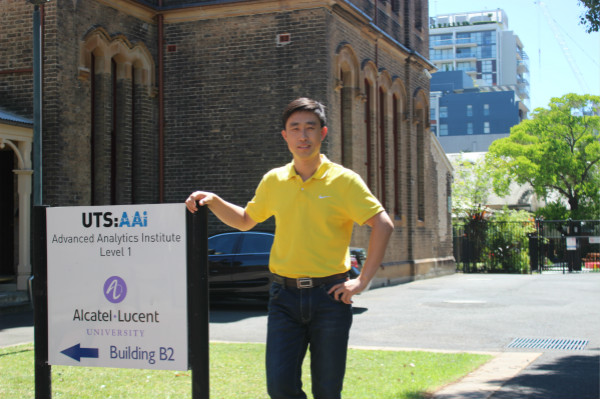 Xiangfu Meng (孟祥福)合作论文数College of Electronic and Information Engineering,Liaoning Technical University6
 Lu Meng合作论文数6Ninghua Yang (杨宁华)合作论文数5Si Wu合作论文数5Na DONG (董娜)合作论文数5Hong Zhu合作论文数4Jun Cao合作论文数Intel Corp, 4600 S Dobson Rd, Chandler, AZ 85248 USA4
 Ge Yu (于戈)合作论文数College of Computer Science and Engineering, Northeastern University4
 Jinzhu Yang (杨金柱)合作论文数School of Computer Science and Engineering, Northeastern University4Peng Cai合作论文数3Ningdan Zhu (朱宁丹)合作论文数3
 Guohui Jia合作论文数3SiHui Li (李思慧)合作论文数3XiaoLiang Tang (唐晓亮)合作论文数3
 Jingguang Sun (孙劲光)合作论文数Liaoning University of Engineering and Technology3Yifei Zhang合作论文数3zhiyang jin合作论文数2Tong An (安彤)合作论文数2Yuyang Li (李宇扬)合作论文数2
 Jinfeng Fang合作论文数2Liu Zeyang (刘泽洋)合作论文数2Hai TAN (谭海)合作论文数2Yuxiu Li (李玉秀)合作论文数2Hong ZHU (朱红)合作论文数2
 Xing Wang (王星)合作论文数School of Computer Science & Engineering, Linyi University2
 Xinming Tang (唐新明)合作论文数Wuhan University2Qian Wang合作论文数1zhenyu yan (闫振宇)合作论文数1Liu Yang合作论文数1Junfeng XIE (谢俊峰)合作论文数1Lin Sen合作论文数1Yanhuan TANG (唐延欢)合作论文数1Xue-Yue QI (齐雪月)合作论文数1
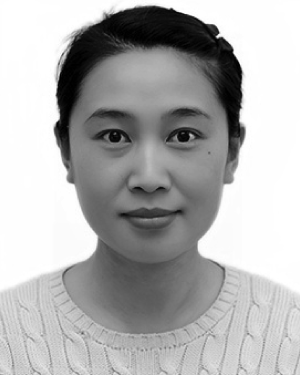 Jingxue Wang合作论文数1
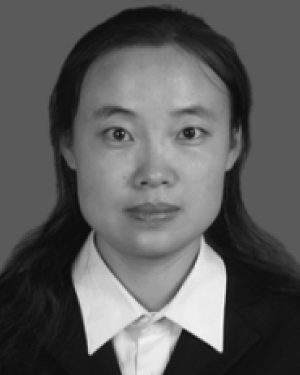 Xiaoyan Zhang合作论文数Liaoning Technical University(Liaoning Technical University),Fuxin,China1
 Fan Mo合作论文数1Yue MAO (毛月)合作论文数1
 Lin Gao合作论文数1HeZhang Wang (王和章)合作论文数1JiGuang Dai (戴激光)合作论文数1GuangTong Sun (孙广通)合作论文数1
 Xiaoming Gao (高晓明)合作论文数1XinChun Li (李新春)合作论文数1Shuo Chen (陈硕)合作论文数1
 Ying Liu (刘莹)合作论文数School of Advanced Manufacturing, Nanchang University1




