To address the challenges of edge compression, phase ambiguity, and phase jumps and discontinuities in phase unwrapping in traditional phase measurement deflectometry (PMD) for high-precision 3D measurement of large curvature mirror objects, a dual-frequency nonlinear fringe pattern and its phase extraction and compensation model are proposed. An adaptive mirror curvature distribution is achieved by designing a combination of radial fringes with a nonlinear change in density and tangential fringes with denser inward and sparser outward. High-precision phase measurement is achieved through high-frequency components, while the periodic ambiguity problem of high-frequency phase is solved by using low-frequency components. The experiment shows that the proposed method has an RMSE of 0.05558 μm for steep mirrors, which is 37.71% higher than that of the traditional method. The PV value is 0.41792 μm, which is 43.58% higher. This significantly improves the detection performance of the optical component.
Conventional calibration in phase measuring deflectometry (PMD) is typically performed through the reflected virtual image of the liquid crystal display (LCD). Under the limited depth of field (DOF) of the camera lens, this virtual image is defocused, which degrades reconstruction performance of the system. To address this problem, a structurally redesigned calibration framework is proposed. Instead of calibrating the LCD through its reflected virtual image, the LCD is directly captured under in-focus imaging so that feature extraction can be performed accurately during calibration. A transparent calibration board is introduced as an intermediate reference to establish the geometric relationship among multiple cameras, and a refraction model is incorporated to correct the geometric deviation caused by imaging the calibration pattern through the transparent medium. Based on the resulting geometric framework, the spatial correspondence between the LCD and the PMD camera used for fringe acquisition is determined. Experimental results show that the proposed method significantly tightens the reprojection residual distribution to the subpixel range, thereby improving both LCD calibration precision and PMD reconstruction accuracy. The reconstruction root-mean-square error (RMSE) is 0.113 μm and the peak-to-valley (PV) is 0.831 μm.
In phase measuring deflectometry (PMD), the fringe of the edge region becomes excessively dense due to compression when measuring highly curved object, hindering reliable phase extraction. Adjusting the fringe spacing via preset a global parameter can alleviate this issue but fails to account for local compression variations, without a precise quantitative calibration mechanism, often results in under- or over-compensation. To address edge fringe compression, this paper proposes an adaptive fringe PMD method. By leveraging the pixel-to-pixel correspondence between the camera and the LCD obtained through inverse ray tracing, an exact mathematical mapping is established from the ideal fringes at the camera to the adaptive fringes on the LCD. When these adaptive fringes are projected onto the convex mirror and recaptured by the camera, they are restored as ideal equal-period sinusoidal patterns, thereby eliminating edge fringe compression. Experimental results demonstrate that the proposed method effectively mitigates edge fringe compression, thereby significantly enhancing the measurement accuracy for the convex mirror.
The traditional phase shift measurement technique necessitates two orthogonally oriented fringe patterns to complete the phase measurement, which is time-consuming, and the phase modulation of the traditional fringe image exhibits only a gradient change in a single direction of the horizontal-vertical fringes, or a smooth gradient change in the tangential direction of the circular fringes. To enhance the measurement speed and improve the adaptability to large curvature measured specular surfaces, this paper proposes a phase measurement deflectometry (PMD) technique based on composite circular fringes. The composite circular fringes demonstrate a steeper slope in the phase change, enabling the acquisition of finer surface features under identical measurement conditions, effectively improving the detection sensitivity to small shape changes and enhancing the ability to discern fine details. To reduce the number of fringe projection images, a phase extraction algorithm based on the maximum contrast factor is proposed. The composite circular fringe technique halves the number of required projected fringe images, and only four fringe images are necessary to obtain the phase information of the object. The experimental results demonstrate that the root-mean-square error (RMSE) is 6.79 times higher and the peak-to-valley (PV) value is 8.93 times higher than that of the traditional fringe method in the horizontal-vertical directions. Compared with the traditional fringe method in the radial-tangential directions, the RMSE is improved by 26.04% and the PV value is improved by 28.28%.
Although the RGB channel requires fewer images for performing 3D measurement than the sinusoidal fringe phase-shift method, the coupling between the channels affect the measurement accuracy. Along these lines, a novel decoupling method was proposed, which was based on phase-shift calculation by encoding sinusoidal color fringe patterns. In our approach, every six sinusoidal fringes in the sinusoidal fringe phase-shift method are encoded into four sinusoidal color fringe patterns. These sinusoidal color fringes can replace six sinusoidal fringes without the effect of crosstalk. Compared with the traditional sinusoidal color fringe phase-shift method, a higher measurement accuracy was demonstrated. Moreover, there was no need for preprocessing and post-processing, and the calculation speed was faster.
In structured light 3D measurement, increasing the number of stripes can improve measurement accuracy but may lead to an increase in code word errors. Traditional methods determine the code word by projecting additional encoded stripes. However, this reduces the measurement speed. This paper proposes an improved segmented stair phase coding method that expands the code words and improves the measurement speed and accuracy. It quantifies the fringe amplitudes into four levels as codewords encoding strategy embedded into the phase coding pattern. Therefore, an additional set of phase coding information can be solved, thereby reducing the phase coding patterns of an additional set of projection images. In the process of recovering the absolute phase, this paper proposes a method for eliminating noise in the captured fringe patterns. At the same time, to address the issue of periodic misalignment between the wrapped phase and the fringe order, we adopted a self-correction method for fringe order jump errors based on shifted phase encoding, and we have improved this method. Therefore, this only need to project a set of phase-shifting sinusoidal patterns and a set of improved segmented stair phase coding patterns to complete the 3D measurement of high-frequency stripe images, which improves the measurement speed and accuracy. The experimental results verify the feasibility and effectiveness of the proposed method, the Root Mean Square Error(RMSE) is 0.047mm.
Remote sensing systems provide a great amount of useful data for various applications. To transfer these data via communication lines and/or to store them, compression is applied. Lossy compression techniques are used more often since a variable and quite large compression ratio can be attained. Meanwhile, introduced distortions usually result in reduction of probability of correct classification. Then, it is desired to establish connection between compressed image quality and classification characteristics. The latter also depend on a used coder and an applied classifier. In this paper, we study the influence of compression carried out by better portable graphics (BPG) coder applied to three-channel images where a trained support vector machine (SVM) classifier is employed. Several quality metrics describing image quality and parameters that deal with classification accuracy are used. We show that reduction of classification accuracy is almost negligible for small values of parameter Q that controls introduced losses and it starts to quickly increase for Q > 17. Dependences of classification accuracy on Q are individual and depend on image properties. Some dependencies have fluctuating character. The recommendations on Q setting are given.
Absolute phase retrieval is an important part of 3D measurement. The conventional phase-unwrapping algorithm requires the projection of extra patterns to retrieve the absolute phase, which reduces the measurement speed. Based on the theory of phase domain modulation, the phase is pre-modulated in the form of a specific code embedded into the phase shift method to reduce the number of projected images for improving the speed. To improve the number of codewords and for the accurate determination of the fringe order, the coding strategy of segmented quantization is adopted at the time of coding. When decoding, the original wrapped phase is obtained by solving the wrapped phase map based on the wrapped phase map with the corresponding fringe order for absolute phase retrieval. The experimental results reveal that this method requires only one set of phase-shift modes to realize absolute phase retrieval. This feature improves the measurement speed and simultaneously maintains an accuracy that is consistent with that of the phase-coding method.
A lot of modern remote sensing images are multichannel and, due to this as well as to high resolution, they occupy quite a large space. This causes problems in their transfer and storage and leads to the necessity to apply compression where lossy compression is mainly used. The compressed images can be then processed in different ways where classification is a typical operation for which trained neural networks are widely used. Classifier performance depends on many factors including what are the images employed in training. We have earlier shown that if compressed images are planned to be classified, it is worth using just compressed images for training. However, images used for training and employed in classification can be obtained by different compression techniques. Hence, in this paper, we analyze and compare the results of using the same and different coders for training and classified images. It is demonstrated that the difference in classification accuracy is not large if one uses the same coder compressed data for training and classification or if the compression techniques are different. The largest difference has been observed for the situations when one coder is DCT-based and the other coder is wavelet-based.
The object of the study is the process of lossy image compression. The subject of the study is the two-step approach to providing desired parameters (quality and compression ratio) for different coders. The goals of the study are to review advantages of the two-step approach to lossy compression, to analyze the reasons of drawbacks, and to put forward possible ways to get around these shortcomings. Methods used: linear approximation, numerical simulation, statistical analysis. Results obtained: 1) the considered approach main advantage is that, in most applications, it provides substantial improvement of accuracy of providing a desired value of a controlled compression parameter after the second step compared to the first step; 2) the approach is quite universal and can be applied for different coders and different parameters of lossy compression to be provided; 3) the main problems and limitations happen due to the use of linear approximation and essential difference in behavior of rate/distortion curves for images of different complexity; 4) there are ways to avoid the approach drawbacks that employ adaptation to image complexity and/or use certain restrictions at the second step. Conclusions: based on the results of the study, it is worth 1) considering more complex approximations of rate-distortion curves; 2) paying more attention to adequate and fast algorithms of characterizing image complexity before compression; 3) using quality metrics that have quasi-linear rate/distortion curves for a given coder.
In the existing binocular fringe projection methods, the continuous phase is commonly employed for performing 3D scene reconstruction. However, this method has phase ambiguity issues that require the addition of patterns or the utilization of embedded signals to be solved. However, this approach not only leads to the introduction of cumbersome steps but also fails to accurately reconstruct objects without obvious features. To effectively overcome these challenges, an active stereo 3D measurement method was proposed that eliminated the need for phase unwrapping. More specifically, the proposed method first applied binary processing to the wrapped phase map, followed by extracting phase order lines, and assigning symbolic labels to the phase intervals between them, accomplishing thus rough matching. Finally, based on the region block matching, the phase values were used to refine the disparity map. The proposed method was evaluated using a standard sphere with a diameter of 60 mm, and the root-mean-square error of the proposed method is 0.053 mm.
At present, deep learning plays a crucial role in structured light 3D reconstruction. Further, in the field of fringe projection profilometry, learning 3D features from fringes and performing 3D reconstruction are being studied by many researchers. This paper combines deep learning with binocular fringe projection, uses three channels to form a single-composite-color fringe pattern for three different frequencies as the input, and predicts the numerator and denominator required to solve the wrapped phase of the object. The wrapped phase is calculated using an arctangent function. The absolute phase is obtained by unwrapping the multi-frequency heterodyne method, and the absolute phase of the left and right cameras is matched to obtain a disparity map. The parameters obtained through camera calibration can restore the 3D shape of the object, which greatly reduces the number of fringes required; accuracy close to the phase of the training set is achieved. Finally, the experimental results demonstrate the feasibility of this approach.
To address the problems of fringe compression in optical mirror measurement, this article shows a method for phase measuring deflectometry (PMD) of spiral fringes in polar coordinates. This method modulates the phase in two linearly independent directions in polar coordinates. Furthermore, spiral stripes have the unique property of spiral arms increasing with radius. It can solve the fringe compression problem at the convex mirror's edge. Due to the periodicity of angles in polar coordinates, phase errors occur where the phase is zero. Therefore, this study studies a solution of extracting the wrapped phase boundary instead of the absolute phase boundary and dealing with the phase error points, effectively solving this problem. When the tangential and radial gradient data of the surface under test (SUT) were obtained, we used an accurate calculation for Zernike polynomial surface reconstruction in polar coordinates. This algorithm no longer uses the traditional Cartesian pixel arrangement to obtain the sampling points but reconstructs the horizontal and vertical pixels. The polar pixel matrix is used to obtain the fan pixel arrangement. On that basis, the geometric and numerical errors of traditional pixel arrangements can be avoided using Zernike polynomial surface reconstruction in polar coordinates. The experimental results demonstrate that the proposed method can improve measurement accuracy.
The number of fringes and phase unwrapping in fringe projection profilometry result in two key factors. The first is to avoid the problems of excessive fringe patterns, and the second is phase ambiguity. This paper presents a three-dimensional (3D) measurement method without phase unwrapping. This method benefits from the geometric constraints and does not require additional images. Meanwhile, epipolar rectification is performed to calibrate the rotation matrix relationship between the new plane of the dual camera and the plane of the projector. Subsequently, using depth constraints, the point pairs with incorrect 3D positions are effectively eliminated, and the initial parallax map is obtained by establishing epipolar lines of the left and right matching points in the projector domain, obtaining the intersection points, and setting up the threshold for filtering. Finally, a function combining the modulation intensity and phase is proposed to refine the parallax map such that the 3D result is insensitive to phase error. The standard step block and standard ball were used to verify the validity of the proposed method, and the experimental results showed that the root mean square error of the method was 0.052 mm.
A tendency to increase the number of acquired remote sensing images and to make their average size larger has been observed. To manage such data, compression is needed, and lossy compression is often preferable. Since lossy compression introduces distortions, this results in worse classification and object detection. Therefore, lossy compression must be controlled, i.e., the introduced distortions must be under a certain limit. The distortions and the limit can be characterized by different metrics (quantitative criteria). Here, we consider the case of using the HaarPSI metric, which has a very high correlation with visual quality and human attention (saliency map), for three-channel optical band images compressed by the better portable graphics (BPG) encoder, one of the best modern compression techniques. We analyze a two-step procedure of providing a desired visual quality and show its peculiarities for the modes 4:4:4, 4:2:2, and 4:2:0 of image compression. We show how the HaarPSI metric relates to other known metrics of image visual quality and thresholds of distortion visibility. It is demonstrated that the two-step procedure provides about three times better accuracy in providing the desired visual quality compared to the fixed setting of parameter Q that controls compression for the BPG encoder. The provided accuracy is close to the reachable limit determined by the integer value setting of the Q parameter. We also briefly analyze the influence of compression on the classification accuracy of real-life remote sensing data.
This paper presents an investigation into the visually lossless JPEG compression which provides maximum compression ratio applied before the resulting compressed image appears distorted. The research was conducted using two publicly available databases with the results of just noticeable difference tests. It has been shown that using visually lossless compression can save memory and communication resources by 80% compared to conventional JPEG compression approach with a fixed quality factor. Compared to JPEG lossless compression, this saves memory resources by about eight times. Also, it is shown that the mean gradient magnitude of the original uncompressed image can be used to predict the JPEG visually lossless compression ratio. The last part of the research provides comments on visually lossless quality prediction using a simple prediction approach based on only one feature of the original image with a comparison with the results of a deep learning approach.
The periodic misalignment of the wrapping phase and fringe order based on the phase-shift + coding method is known to occur easily, leading to jump errors in absolute phase recovery. This paper proposes a two-phase unwrapping method based on shifting-phase coding. This approach encodes the fringe order information and the wrapping phase into the four-step phase shift mode. It generates four composite fringe patterns to directly resolve the wrapping phase and fringe order, thus improving the measurement speed by reducing the number of fringe projections. The interleaved wrapping phases are then constructed by a sequence that changes the initial wrapping phase. The two-phase unwrapping becomes the absolute phase, so the phase error is avoided and the measurement accuracy is improved. The proposed strategy's effectiveness is proved by the comparison experiments of different methods. Similarly, the suggested method's reliability is verified by the measurement experiments of several discontinuous objects.
The identification of the remote sensing images with non-monotonic dependence of the rate-distortion curve to the parameter that controls compression (strange images) is addressed in this research. Twenty-two simple features are extracted from the publicly available dataset with remote sensing images, and these features are compared using correlation between features and strange image membership function, as well as the correlations between analyzed features. Obtained results show that gray level entropy provides highest correlation with strange image membership function.
 Vladimir Lukin合作论文数Department of Info-communication Technologies, National Aerospace University28
 Yanjun Fu (伏燕军)合作论文数Nanchang Hangkong University13
 Sergey Krivenko合作论文数8Guangyu Jiang合作论文数8
 Boban Bondzulic合作论文数6Sergii Kryvenko合作论文数5Min Yang合作论文数5Yubao Zhang合作论文数5Qin Zhang合作论文数5Wenjing Zhang合作论文数4
 Dimitrije M Bujakovic合作论文数Military Academy, University of Belgrade4Sergey S. Krivenko合作论文数3Irina Vasilyeva合作论文数3
 Yuancheng Qin (秦元成)合作论文数Nanchang Hangkong University3
 Sergey Abramov合作论文数3
 Zhongqi Hao合作论文数3Xia Hai合作论文数3Dan Zhou合作论文数3
 Oleg Ieremeiev合作论文数3
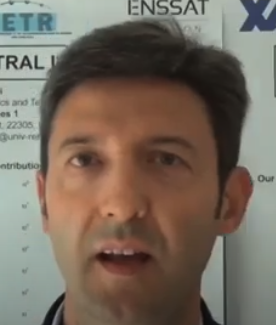 Benoit Vozel合作论文数Institute of Electronics and Telecommunications of Rennes, Engineering School of Applied Sciences and Technology, University of Rennes 13
 Krzysztof Okarma合作论文数Faculty of Electrical Engineering Chair of Signal Processing and Multimedia Engineering, Szczecin University of Technology3Yiliang Huang (黄奕亮)合作论文数2Dongfei Gong合作论文数2Kejun Zhong合作论文数2
 Liang Yang合作论文数2Wei Xiao合作论文数2
 G. A. Proskura合作论文数National Aerospace University2Zhenwei Zhang合作论文数2Ming-gang CHAI (柴明钢)合作论文数2Viktor Makarichev合作论文数2Chun Chang合作论文数2Pavlovic, B.合作论文数2S. Krivenko合作论文数1mykhailo semenovych babii合作论文数1Andrii Trystan合作论文数1Yuri Stepchenkov合作论文数1Pengfei Zuo (左鹏飞)合作论文数1Alexander Shkil合作论文数1Maksim Pavlenko合作论文数1Volodymyr Lukin合作论文数1Victoria Popenko合作论文数1Irina Lokotkova合作论文数1Yuri Rogdestvenski合作论文数1Anna Kononchenko合作论文数1Fumeng Ren合作论文数1Anastasiia Kiian合作论文数1Olga Matiushchenko合作论文数1
 Olha Melnyk合作论文数1
 Alexandr Kuznetsov合作论文数1




