Objective:To understand the macronutrient content and influencing factors of donated breast milk in breast milk bank.Methods:A total of 458 first-time breast milk donors and their donated breast milk from June 2016 to June 2018 in Shanghai were selected as research objects by the convenient sampling method to determine the macronutrient content in donated breast milk. Multiple linear regression was used to analyze the influencing factors of the macronutrient content of donated breast milk.Results:In macronutrient content of 458 donated breast milk, the protein content was (0.95±0.24) g/dl, fat content was (4.03±1.25) g/dl, sugar content was (7.44±0.38) g/dl, dry matter was (12.75±3.16) g/dl and energy content was (71.12±11.33) kcal/dl.The results of multiple linear regression analysis showed that the time of milk donation and infant gender were the influencing factors of protein content in donated breast milk ( P<0.05). The time of milk donation, mode of delivery and season of birth were the influencing factors of the sugar content in donated breast milk ( P<0.05). The time of milk donation was the influence factor of energy content in donated breast milk ( P<0.05) . Conclusions:The content of macronutrients in donated breast milk in this study is lower than the demand for macronutrients in premature infants. The macronutrient composition of donated breast milk varies greatly among individuals, which is related to the time of milk donation, the mode of delivery, the infant gender and birth season of the baby. Therefore, further research is needed on how to add breast milk additives to donated breast milk in the later stage for targeted reinforcement to meet the growth and development needs of premature infants.
Graft-versus-host disease (GvHD) is a severe complication following hematopoietic cell transplantation (HCT). The clinical manifestations of GvHD can affect multiple systems. Although gastrointestinal (GI) GvHD is common, GI obstruction complications are rare. Here, we present a case of GI-GvHD after HCT for acute myeloid leukemia (AML) in a young girl from China. The patient suffered from watery diarrhea, which progressed to bloody diarrhea 40 days after HCT. She experienced prolonged and repeated mucous or bloody stool after the withdrawal of cyclosporine and the gradual reduction in methylprednisolone. The plain abdominal radiography and computed tomographic (CT) scan showed apparent bowel wall thickening and intestinal stenosis 10 months after HCT. Finally, the patient underwent surgery to remove the small intestinal stenosis at the age of 26 months. The patient recovered with the help of appropriate medical therapies and nutritional support during hospitalization. She remained stable, and there was no recurrence of GI symptoms 16 months after the surgery. In summary, surgery may be an optimal treatment for GvHD patients with persistent bowel obstruction and failure of appropriate immunosuppressive therapies.
Children with short bowel syndrome(SBS)are at high risk for catheter-related bloodstream infection(CRBSI). They suffer from strikingly high rates of morbidity and mortality, due in part to their susceptibility to life-threatening microbial infections.This article reviews the latest research on the CRBSI in the SBS children, in order to find and prevent CRBSI as soon as possible.
Background: Pediatric short bowel syndrome (SBS) is a devastating clinical entity that is usually managed with parenteral nutrition (PN). Catheter-related bloodstream infection (CRBSI) is a serious complication of long-term PN. The aim of this study was to evaluate the incidence and risk factors of CRBSI in SBS children. Methods: Nineteen pediatric patients with SBS were retrospectively recruited from Shanghai Children’s Hospital between August 2015 and December 2019. Clinical data, including demographics, aetiology of SBS, site and type of catheters, duration of PN, comorbidities, and microbiological data regarding CRBSI, were collected and reviewed to assess the CRBSI incidence and associated risk factors. Results: A total of 57 catheter insertions for PN were administered in 19 SBS children. CRBSI was identified in 11 cases among 6 patients during a total catheter days of 1907. The rate of CRBSI was 5.8 per 1000 catheter days. The common manifestations of the SBS children with CRBSI were fever (6/11, 54.5%), lethargy (5/11, 45.4%), stagnation of weight (7/11, 63.6%), and increment of enterostomy fluid (7/11, 63.6%). Potential risk factors for CRBSI included an absence of ileocecal valve ( p =0.046), and long duration of PN ( p =0.019). The most common microorganism isolated from the blood cultures was Klebsiella pneumoniae (6/11, 54.55%). Conclusions: The rate of CRBSI was 5.8 per 1000 catheter days, and klebsiella pneumoniae was the most common isolated pathogen of CRBSI in the studied SBS children. An absence of ileocecal valve and long duration of PN were potential risk factors of CRBSI.
目的 探讨新生儿特发性含铁血黄素沉着症的诊断和治疗.方法 回顾分析1例新生儿特发性含铁血黄素沉着症患儿的临床资料,并复习相关文献.结果 女性患儿,胎儿期及出生时检查未见明显异常;生后4小时起出现皮肤黄染,并进行性加重,经换血及白蛋白输注等治疗未见改善.肝脏病理提示肝细胞弥漫性气球样变伴多核巨肝细胞转化,肝细胞内胆汁淤积伴毛细胆管扩张,胆栓形成,可见散在髓外造血灶,肝细胞内大量棕黄色颗粒沉着;普鲁士蓝染色显示为铁沉着.确诊为特发性含铁血黄素沉着症,随后加用N-乙酰半胱氨酸治疗,病情渐改善.结论 新生儿含铁血黄素沉着症是新生儿期表现为伴有肝外含铁血黄素沉积的重度肝病,肝脏病理检查见肝细胞内铁沉积为确诊金标准.
目的:对上海市首家母乳库运行两年的状况进行总结和分析.方法:对2016年6月至2018年5月上海市首家母乳库的捐奶情况、捐赠者特征以及捐赠母乳的临床应用数据进行整理、分析.结果:合格捐奶志愿者460名,年龄25~35岁381名,318名捐奶次数少于3次,捐奶次数大于10次者97名;足月分娩者429名,产后一月开始捐奶者451名;公司职员276名,公务员、医护人员和教师135名;具有本科以上学历者386名.母乳受捐296例,早产儿275例,个人受奶时间和受奶总量均存在差异.结论:我院母乳库发展迅速,运行良好,为满足日益增长的临床需求,捐奶量有待进一步提高.
 Yizhong Wang (王怡仲)合作论文数Shanghai Children's Hospital, School of Medicine, Shanghai Jiao Tong University5
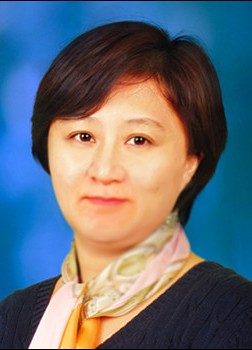 Ting Zhang (张婷)合作论文数Shanghai Children's Hospital, School of Medicine, Shanghai Jiao Tong University4
 Yongmei Xiao合作论文数3Dan Li合作论文数2Bingxin Jiang合作论文数1Xiaolu Li合作论文数1Licai Chen (陈立才)合作论文数1Dong Wei (魏东)合作论文数1
 Li X合作论文数1
 Zhibao Lv (吕志宝)合作论文数Shanghai Children's Hospital, School of Medicine, Shanghai Jiao Tong University1
 Jiangbin Liu (刘江滨)合作论文数Shanghai Children's Hospital, School of Medicine, Shanghai Jiao Tong University1
 Xiaohui Gong (龚小慧)合作论文数Shanghai Jiaotong University School of Medicine1
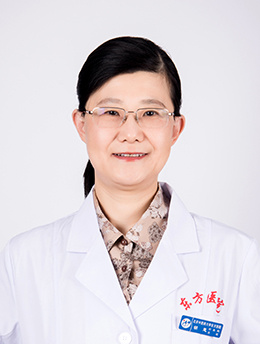 Hui Hu (胡慧)合作论文数Dongfang Hospital Beijing University of Chinese Medicine1




