Various models of tetraquark generation in the reaction K^+p→ T(us;s̅s̅)X are considered. The predictions for corresponding inclusive spectra were evaluated at the energies 32 and 250 GeV.
The SPASCHARM experiment is aimed at a systematic study of the nucleon spin structure and the spin dependence of the strong interaction of antimatter and matter with matter at energies up to 45 GeV. As part of the first stage of the experiment, the study of the spin properties of hadrons will take place in a beam of negatively charged hadrons on existing beamline 14 at the operating SPASCHARM setup at the U70 facility. At the second stage, the production of polarized beams of protons and antiprotons is envisaged in beamline 24A of the U-70 accelerator facility. A polarized antiproton beam will certainly become a unique beam in the world. It is planned to measure single-spin asymmetries in dozens of reactions, both on hydrogen and on various nuclei. At the SPASCHARM facility, it is also possible to measure the transverse polarization of hyperons and elements of the spin density matrix of vector mesons. The spin structure of the nucleon will be investigated in the study of quarkonium production to determine the contribution of gluons to the proton spin. The presence of two types of polarized beams and eight types of nonpolarized beams (π ± , K ± , p , p̅ , d , C ), in combination with a polarized target, expands the range of studies of polarization phenomena and enhances the uniqueness of the project.
Prospects of a further investigation of excited states of B-c mesons are discussed. Preliminary estimates of the relative yield of D-wave states of B-c mesons at the LHC are presented for the first time.
The cross sections of J/psi eta(c) and J/psi J/psi production in e(+)e(-) annihilation are calculated at a one-loop accuracy near Z-boson pole and at higher energies as well. Both intermediate bosons, gamma and Z, are included. It is found that at Z mass, the next-to-leading contribution increases the production cross sections by a factor of 3.5.
The cross section values of $J/\psi\ \eta_c$ and $J/\psi\ J/\psi$ production in $e^+e^-$ annihilation are estimated within one-loop approximation near $Z$ pole, as well as at higher energies. Both intermediate bosons, $\gamma$ and $Z$, are taken into account. It is shown that at $Z$ mass the NLO contribution increases the cross-section values by 3.5 times.
In this paper, production of charmonium state [Formula: see text] in exclusive [Formula: see text] decays is analyzed in the framework of both leading order Non-relativistic Quantum Chromodynamics (NRQCD) and light-cone (LC) expansion models. Analytical and numerical predictions for the branching fractions of these decays in both the approaches are given. The typical value of the branching fractions is [Formula: see text][Formula: see text][Formula: see text] and it turns out that the LC results are significantly larger than NRQCD ones (approximately two or four times increase depending on the quantum numbers of the final particles), so the effect of internal quark motion should be taken into account. Some rough estimates of color-octet contributions are presented and it is shown that these contributions could be comparable with color-singlet results.
The hadronic production of $D$-wave states of $\bar b c$ is studied. The relative yield of such states is estimated for kinematic conditions of LHC experiments.
The exclusive decays of the Higgs boson to BcBc and Bc⁎Bc⁎ pairs are studied. The hard parts of the decay amplitudes are estimated within the perturbative Standard Model up to one-loop corrections. The soft fusion of heavy quarks to the quarkonium is described in framework of the relativistic quark model.
The yields of excited states of doubly heavy baryons are estimated on the basis of the diquark-production model under the kinematic conditions of the LHC experiments. Prospects of their observations are discussed.
Exclusive decays of the $\Xi_{bc}^+$ with light mesons production, $\Xi_{bc}^+\to\Xi_{cc}^{++}\mathcal{R}$ are analyzed. In the framework of the factorization model the matrix elements of the considered reactions are written as a product of $\Xi_{bc}\to\Xi_{cc}W$ and $W\to\mathcal{R}$ transition amplitudes. As a result theoretical and experimental investigation of these decays allow us to test the physics of heavy and light quarks' sectors. Presented are the branching fractions of these reactions, as well as the distributions over the invariant mass of the light system and some other kinematical variables. Our calculations show that the probabilities of the considered reactions are high enough, so presented results could help with observation of yet unseen $\Xi_{bc}$ baryon.
В работе обсуждаются перспективы дальнейшего исследования возбужденных состояний $B_c$-мезонов. Впервые приводятся предварительные оценки относительного выхода $D$-волновых состояний $B_c$-мезонов на LHC.
theoretical physicist, Academician Semen Solomonovich Gershtein, whose research work has made a fundamental contribution to atomic physics, particle physics, and astrophysics. S S was born in Harbin (Manchuria) to a family of Soviet citizens. In 1936, he moved to Moscow together with his family. In 1937±1938, his parents were subjected to repression (in 1955±1956, they were completely rehabilitated). From the age of 8, S S was brought up by his grandmother A I Mendelevich, who worked as a medical assistant at a factory medical clinic. In 1946, S S finished secondary school with a gold medal and entered the Physical Faculty of Lomonosov Moscow State University (MSU). In 1951, he graduated from the university and was sent to work as a teacher at a secondary school in the village of Belousovo in the Kaluga region, although the advisor for his diploma work, Professor AAVlasov, had done his best to keep S S in the postgraduate course or to send him to a scientific institution. He worked three years in Belousovo. In spite of the fact that he worked over 40 hours a weak, it took him little more than a year to take the exams of the theoretical minimum with L D Landau. He was the last person whom L D Landau oversaw personally. After S S passed the theoretical minimum, L D Landau recommended him to Ya B Zeldovich who, according to a `special subject topic', was then engaged in the b-decay theory. Together with Ya B Zeldovich, S S considered the question of what changes in b-decay constants are due to the fact that a `bare' nucleon is surrounded by a pion `coat'. The authors did not limit themselves to the analysis of only the scalar (S) and tensor (T) versions of b-decay, which were considered at that time to be established experimentally, but also examined the vector (V) and axial-vector (A) versions. Using the results of the Ya B Zeldovich's previous work on pion b-decay, which is only possible in the vector version, the authors came to the conclusion that the constant of the b-decay vector version remains unchanged under strong nucleon±pion interaction. They were so amazed at the analogy that arose between weak and electromagnetic interactions that they decided to publish this result in a letter toZhETF, where they wrote: ``It is of no practical value, but is ofmethodical interest that in the case of the vector (V) version of interaction, one should expect the identity gF V g 0 F 0 V, i.e., equality of the value of the vector constant of Fermi interaction to its value for a `bare' nucleon referring to the interaction of charged particles with the electromagnetic field: in this case, the virtual processes happening with particles... do not lead to renormalization of the particle electric charge'' (ZhETF 29 698 (1955)). This was the first published paper by S S. Three years later, after the formulation of the VÿA theory of a universalweak interaction byRFeynman±MGellMann and R Marshak±E Sudarshan, this conclusion acquired fundamental significance. R Feynman and M GellMann rediscovered the result of S S andYaBZeldovich. They proceeded from the fact that the muon lifetime calculated using the constant of the vector interaction of neutron bdecay coincides to an accuracy of 2%with the experimentally measured one. They called the independence of the weak interaction vector constant of the nucleons' strong interaction the hypothesis of vector current conservation (VCC). To realize this hypothesis, they had to assume the existence of pion b-decay, considered earlier by Ya B Zeldovich on the basis of weak interaction universality and the compound structure of the isotopic pion triplet. According to R Feynman, he and M Gell-Mann had been unacquainted with the study by S S and Ya B Zeldovich. Later on, M Gell-Mann always referred to it as the priority publication. The fundamental law of natureÐ the vector current conservaUspekhi Fizicheskikh Nauk 189 (10) 1123 ± 1124 (2019) DOI: https://doi.org/10.3367/UFNr.2019.08.038653 Translated by M V Tsaplina PERSONALIA PACS number: 01.60.+q
The 2S B-c states observed by ATLAS, CMS and LHCb Collaborations are discussed. The observation perspectives of B-c*, 2P wave, 3P wave and D wave states of B-c at LHC experiments are estimated.
The yield of doubly charmed baryons with excited heavy diquark in S-wave and P-wave states has been estimated at LHC energies. The observation possibility of such baryons is discussed.
Status of the Bc meson excitatons search is presented in our work. We discuss the 2S Bc states first discovered by ATLAS and newly confirmed by CMS and LHCb collaborations. We review the observation prospects for the rest predicted states (B∗c, 2P wave, 3P wave and D wave) at LHC experiments. Cascade decays to the ground state as well as direct decays to the lepton pair are regarded for these states.
The theoretical analysis of production, lifetime, and decays of doubly heavy baryons is presented. The lifetime of Ξcc++ baryon recently measured by the LHCb Collaboration is used to estimate the lifetimes of other doubly heavy baryons. The production and the possibility of observation of Ξbc baryon at LHC are discussed.
finite size of a doubly heavy diquark yields a positive correction to baryon masses calculated in the local-diquark approximation. Upon evaluating this correction for the ground states of doubly charmed baryons, it became possible to obtain new predictions of importance for current searches of these baryons in LHCb experiments: \(m[\Xi _{cc}^{1/{2^{ + + }}}] \approx m[\Xi _{cc}^{1/{2^{ + + }}}]\) = 3615 ± 55 MeV and \(m[\Xi _{cc}^{3/{2^{ + + }}}] \approx m[\Xi _{cc}^{3/{2^{ + + }}}]\) 3747 ± 55 MeV
Last years the impressive volume of experimental data on multiple heavy quarks production were obtained by the experiments at LHC. The LHCb experiment has published studies of the Bc-meson production [1], of the double J/ψ-meson production [2], of the double open charm production, as well as the J/ψ production associated with open charm [3]. The LHCb study of Bc meson is completed by ATLAS, where the candidate to Bc(2S) state has been observed [4]. Also very interesting results on the double J/ψ production have been obtained by the CMS Collaboration [5]. It is worth, to note that the double J/ψ production at LHCb can be satisfactorily described within the standard NRQCD approach [6], as well within the kT factorization approach [7]. Contrary to this, for other processes of multiple heavy quark production NRQCD underestimates the cross section value by the order of magnitude. This could mean, that in addition to the single parton scattering (SPS), the double parton scattering (DPS) should be taken into account. According DPS, approach heavy quark pairs are produced independently in different partonic interactions inside the same colliding pair of protons. The simplest variant of this model lead to the following formula for the cross section:
The theoretical analysis of production, lifetime, and decays of doubly heavy baryons is presented. The lifetime of Xi(++)(cc) baryons recently measured by the LHCb Collaboration is used to estimate the lifetimes of other doubly heavy baryons. The production and the possibility of observation of Xi(bc) baryons at the LHC are discussed.
 Aleksandr Berezhnoy合作论文数Skobeltsyn Institute of Nuclear Physics, Lomonosov Moscow State University65
 A. V. Luchinsky合作论文数Institute for High Energy Physics Protvino60
 Valery V. Kiselev合作论文数Department of Theoretical Physics, Moscow Institute of Physics and Technology/Department of Theoretical Physics, Institute for High Energy Physics53
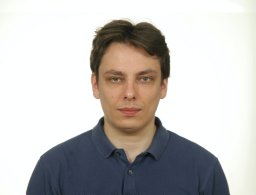 Stanislav Poslavsky合作论文数19
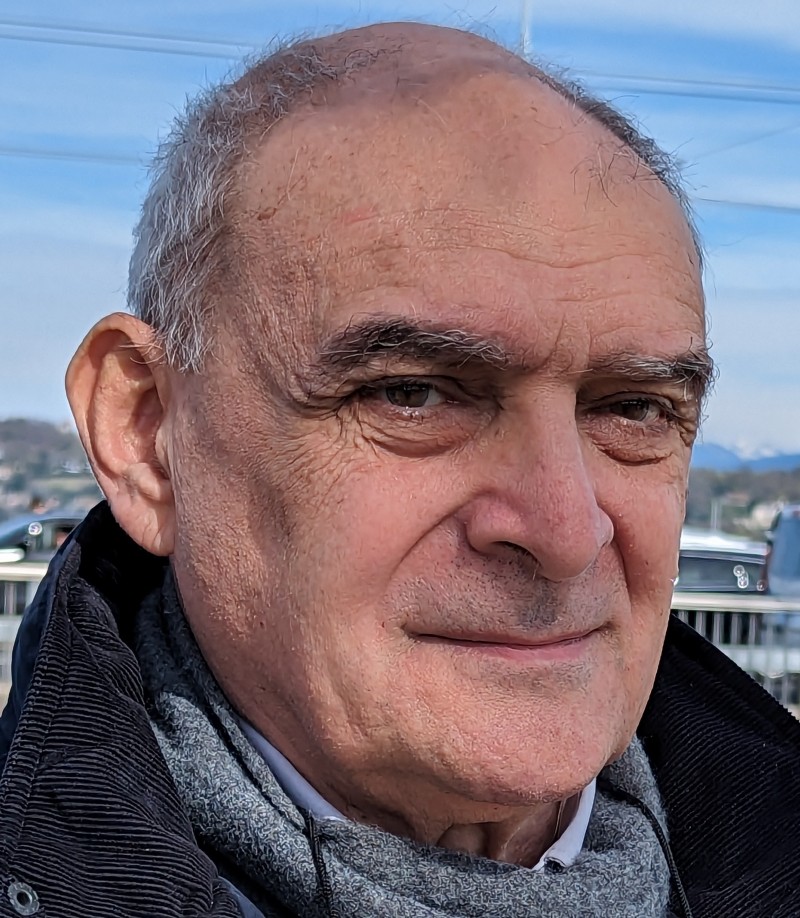 Vakhtang Kartvelishvili合作论文数Department of Physics, Lancaster University16M.V. Shevlyagin合作论文数16V. V. Braguta合作论文数Institute for High Energy Physics16
 Andrei I Onishchenko合作论文数Department of Physics and Astronomy;Wayne State University;Department of Physics and Astronomy, Wayne State University13SR SLABOSPITSKII合作论文数12Semen S. Gershtein合作论文数11I N Belov合作论文数10a n tolstenkov合作论文数9S. R. Slabospitsky合作论文数9a novoselov合作论文数8m n kobrinskii合作论文数8A. V. Tkabladze合作论文数7А.В. Бережной合作论文数6Op Yushchenko合作论文数4A. M. Zaitsev合作论文数4P Chliapnikov合作论文数4Vladimir V. Anisovich合作论文数4
 Vladimir D Samoylenko合作论文数4AV BATUNIN合作论文数3C. P. Ward合作论文数3Vm Shekhter合作论文数3AF Prudkoglyad合作论文数3Marco Bruschi合作论文数Istituto Nazionale di Fisica Nucleare, Sezione di Bologna;CERN3D. A. Morozov合作论文数3M. Piccinini合作论文数3A. N. Vasiliev合作论文数3Rinat Fakhrutdinov合作论文数Experimental Physics Department, Institute for High Energy Physics3L. V. Nogach合作论文数3
 Mauro Villa合作论文数Department of Physics and Astronomy "Augusto Righi", University of Bologna3A. Bertin合作论文数3
 Vladimir Saleev合作论文数3
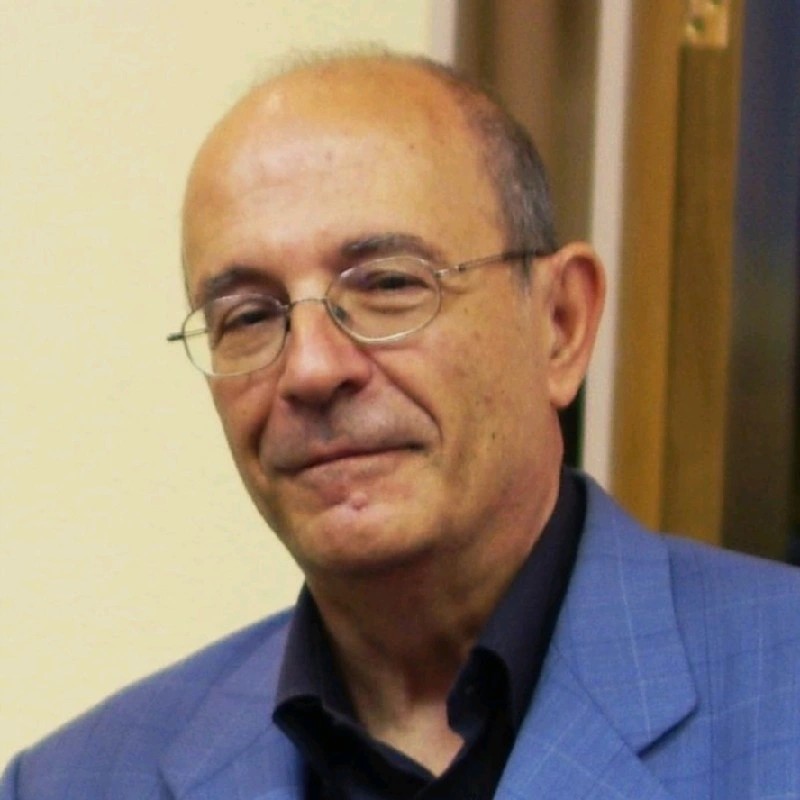 Giovanni Carboni合作论文数Università degli Studi di Roma Tor Vergata3
 V. V. Mochalov合作论文数3
 Vladimir Anatolievich Uvarov合作论文数3M. M. Soldatov合作论文数3V. I. Rykalin合作论文数3
 P. A. Semenov合作论文数3G. P. Pronko合作论文数3V. V. Kniazev合作论文数3A. V. Ryazantsev合作论文数3R. Spighi合作论文数2M. Sannino合作论文数2J. H. Lopes合作论文数2Kobrinsk.Mn合作论文数2




