The intensive land use for production (e.g., agriculture and livestock) has led to a reduction in native forests, including areas of high diversity like the Ecuadorian Choco region. Undoubtedly, these remaining forests represent retreat sites for wildlife, especially sensitive species such as amphibians and reptiles. We sampled the herpetofauna from two remnant forests in the western region of Ecuador, which are highly impacted by human activities. Our aim was to describe diversity and ecological preferences of the herpetofauna of these remnant forests. We used active visual search to detect animals in transects along different habitats and record the characteristics of perch sites. We present an updated inventory of amphibians and reptiles for both localities, including 23 species to Pedro Franco Davila Protected Forest and 35 species to Provincial Recreation Area Cerro De Hayas. We found significant overlap in habitat utilization between localities and a certain degree of habitat partition mainly at the microhabitat level; such segregation may allow coexistence of a representative number of species, hence the importance of protecting these forests surrounded by crops of livestock land.
The current study presents an up-to-date distribution denotating the expansion of the brown anole lizard (Anolis sagrei), an invasive species, in continental Ecuador.The brown anole represents a significant threat to biodiversity through displacement of native species, facilitated by its adaptability and dominance.Our sampling effort covering from 2018 to 2022 and iNaturalist reports between 2015 and 2023, to take into consideration citizens observations, revealed an expanded distribution across provinces along the Ecuadorian coast and one in the Amazon region.Notably, the brown anole's presence in urban areas of Guayas province, including Samborondon and Guayaquil, raises concerns about potential impacts on local ecosystems.The lizard's adaptability is evident in its ability to thrive in various habitats, including urban parks, gardens, and natural areas along riverbanks.Despite extensive surveys, no brown anoles were found in natural forests in the mainland, so until today no potential impacts on native species are expected; except for a reserve in a continental island where two brown anoles were already sighted.The study emphasizes the need for effective management responses, including identification, understanding expansion processes, and anticipating ecological impacts.Our study provides the baseline for the environmental authority to identify the areas were controlling the brown anole's spread if fundamental, particularly in priority conservation areas.
Las alteraciones del paisaje pueden afectar los ensambles de escarabajos donde las especies sensibles pueden desaparecer y las poblaciones de especies altamente adaptadas pueden aumentar. Se evaluó la diversidad de escarabajos en un bosque restaurado y tierras de cultivo del bosque seco tropical de Ecuador. Se realizó trampas de caída y recolección manual en tres sitios; dos sitios con tierras de cultivo y un sitio con remanente de bosque secundario. Se usaron cuatro tipos de cebo para atraer escarabajos que se alimentaban de diferentes recursos para lograr una evaluación preliminar adecuada del ensamble de escarabajos. Este estudio es la primera aproximación a la caracterización de la comunidad de coleópteros en el bosque seco tropical de Manabí. Reportamos 64 morfoespecies asociadas con tierras productivas y bosques fragmentados y destacamos la presencia de algunos géneros resilientes como Canthon, Canthidium, Deltochilum y Euspilotus que se han adaptado con éxito a ecosistemas perturbados; por otro lado, Phyllophaga y Diabrotica también fueron detectados principalmente en el paisaje de cultivos. En general, presentamos una línea de base de la composición de escarabajos en un bosque secundario y tierras de cultivo, y brindamos información relevante para una evaluación adicional del cambio de uso del suelo en la región.
We report the occurrence of Lithobates catesbeianus (Shaw, 1802), Bullfrog, in a protected semidecidu-ous forest in the city of Guayaquil, Guayas, Ecuador and in a nearby wildlife management center. Bosqueira Pro-tected Forest is an isolated spot of diversity surrounded by urbanization, quarries, and highways. We found a juvenile Bullfrog in a water canal on the edge of the protected forest, near a private housing complex, and several tadpoles in an artificial pond in a wildlife management center located near the reserve. This is the first sighting of the invasive L. catesbeianus in a native ecosystem in Guayaquil. We also report the this species from, three other provinces of Ecuador, based on observations in iNaturalist. These records reinforce the ability of L. catesbeianus to adapt easily to varied environmental conditions and to disturbed areas. The invasion of L. catesbeianus towards semideciduous forest represents a new threat to biodiversity, particularly the endemic fauna, due to predation or competition. In future studies, it will be important to fully evaluate the Bullfrog diet and population status to esti-mate its impact on remnant forests of Guayaquil.
Amphibian and reptile diversity from Isla Santay (Durán, Ecuador) has been underestimated due to the lack of monitoring throughout the island. Historically, this island has also been affected by anthropic landscape changes which limit the occurrence of certain species and favors the dispersion of opportunistic or more tolerant species. Such species dynamics tend to be more evident on islands, since their isolation limits species’ mobility. We present an updated checklist of the herpetofauna of Isla Santay Durán, Ecuador, and report for the first time the occurrence of two introduced species, Anolis sagrei Duméril & Bibron, 1837, Brown Anole, and Hemydactylus frenatus Duméril & Bibron, 1836.
Agroecosystems occupy a large portion of the Ecuadorian Choco; unfortunately, most modern agricultural practices involve the use of agrochemicals that damage local flora and fauna or displace them to remnant forests. The present study evaluates the herpetofauna diversity and community structure of the Ecuadorian Choco organic and non-organic agroecosystems by performing diurnal monitoring in linear transects in crops of two high-demand products, plantain and passion fruit. The results indicate that community composition changes due to seasonality and agroecosystem types independently. In the dry season, higher diversity was observed in organic crops than non-organic crops, while in the rainy season more species were observed in the organic and non-organic plantain crops than the passionfruit crops. The most abundant species in both seasons was Holcosus septemlineatus, suggesting that it is highly tolerant to disturbance. Further, niche overlap occurs among species found near the ground and in shady areas, since they compete for resources or establish prey-predator interactions. We conclude that several of the studied species can be used as indicators of environmentally favorable agricultural practices.
We describe a new species of Anolis lizard from the Pacific slopes of the Andes of southwestern Ecuador at elevations between 3721,000 m. The new species belongs to the Dactyloa clade and may be distinguished from other Anolis by size, external anatomy, mitochondrial DNA divergence, and dewlap color. Based on phylogenetic analyses of mitochondrial and nuclear DNA sequence data, we found that the new species is sister to A. fraseri in a clade composed primarily of large Dactyloid species. The new species is known from a protected area in southern Ecuador, Buenaventura Reserve, which suggests that at least some its populations are well protected.
It has been suggested that gymnophthalmids, like most semi-fossorial lacertoids, rely more in chemical cues to communicate, in comparison to other groups, like Iguanids, on which communication is mostly based on visual signaling. We present the first description of visual signaling in the Andean lizard Pholidobolusmontium (Gymnophthalmidae) and a complete ethogram based on ex situ observations (34 different types of behaviors including positions and simple movements). Through the design of conspecific stimulus experiments, we were able to recognize leg-waving as a visual signal, as it is only displayed in presence of conspecifics or in presence of a mirror and was one of first and most frequent displays in this context. We also detected other visual displays like neck-arching and tail-undulation which may also be relevant as visual signals. Based on our results, we propose that visual signaling is also possible in semi-fossorial lizards; however, further studies regarding chemical signal recognition and color detection are required to confirm our hypothesis.
We describe a new species of Anolis lizard from the Pacific slopes of the Andes of southwestern Ecuador at elevations between 372-1,000 m. The new species belongs to the Dactyloa clade and may be distinguished from other Anolis by size, external anatomy, mitochondrial DNA divergence, and dewlap color. Based on phylogenetic analyses of mitochondrial and nuclear DNA sequence data, we found that the new species is sister to A. fraseri in a clade composed primarily of large Dactyloid species. The new species is known from a protected area in southern Ecuador, Buenaventura Reserve, which suggests that at least some its populations are well protected.
To maintain a stable population, an introduced species must be capable of exploiting varied resources and adapting to environmental conditions different from its native range. The brown anole (Anolis sagrei), one of the most prolific invasive species worldwide, is well established in Ecuador—especially in urban environments throughout Guayaquil and Samborondón (Guayas province). In this research, we describe the feeding habits of male and female brown anoles collected from six different sites: a regenerated wetland ecosystem and five city gardens. We dissected stomach contents in order to record the number and type of prey items, each classified to the lowest identifiable taxonomic category. Our results show that A. sagrei consumes a variety of prey items; Hymenoptera (mainly ants) represented the highest percentage of total gut contents from all sites. In addition, we found that A. sagrei also feeds on insects belonging to the families Cicadidae, Miridae, Scarabeidae, Chrysomelidae and Nitidulidae, all of which are considered to be agricultural pests. As such, we predict that A. sagrei could be an ideal model for biological control studies in urban environments throughout Guayas and perhaps beyond.
The Ecuadorian coast ecosystems are considered fragile due to anthropic activities, such as livestock production and agriculture, which are important economically. In this study, we document the herpetofauna of Engabao, in Playas Canton, Ecuador, and extend the distribution range of one species of frog. We performed day and night sampling, including transect surveys and visual encounters. Ten species of amphibians and reptiles were recorded. Included among these species the Threatened Ceratophrys stolzmanni (Steindachner, 1882). Engabao is an area intended for livestock production.
Parasites can cause internal damages in the host, or even its death. Diptera larvae, for instance, cause myasis in vertebrates; sometimes the damages caused can induce behavioural modifications. Here, we sampled a population of Anolis parvauritus from Rio Canande Reserve in Ecuador and report a new case of infestation by Chrysomia in a South America Anolis lizard. In this work, we sample several lizards of Anolis parvauritus and detected one infested individual. We observed courtship and rival display differences between health and infested lizards. We also collected and identified the parasitic larvae. One anole lizard was parasited by nine third instar larvae of Chrysomya sp. The lizard had a live infection on the lateral abdomen region, damaging the liver, the stomach, the ventral muscles and generally the intraperitoneal organs. In terms of behaviour, the infested individual did not react to the presence of other individuals, showing very little movements with no attempt to scape; unlike healthy lizards, which displayed instantly during behavioural interactions. We suggest that wounds-scars and skin damage provide opportunities for Chrysomya species, which are considered an opportunistic invader, to infest the Anolis lizards. We recommend further observations to understand the interaction between Crhysomia and Anolis parvauritus and predict the effect of parasitism in lizards’ populations and behaviour.
La entomología forense utiliza la presencia, abundancia y colonización de artrópodos en un cadáver para brindar evidencia durante una investigación criminal. Esta investigación representa el primer trabajo sobre la evaluación de entomofauna relacionada a cadáveres en la provincia de Guayas y consistió en la captura e identificación de dípteros asociados a cadáveres de cobayos, Cavia porcellus, en dos localidades dentro de la ciudad de Guayaquil. Se utilizaron trampas Van Someren Rydon modificadas para la captura de moscas y se registró temperatura y pluviosidad en cada colecta. Se colectó 4114 individuos, pertenecientes a cuatro familias, 18 géneros y 29 especies. La localidad Monte Sinaí presentó un mayor número de especies de dipteros asociados al cadáver de cobayo, las especies más dominantes durante el trabajo fueron Chrysomya albiceps y Musca doméstica, las cuáles podrían servir como indicadores en la estimación del IPM. Se encontró especies restringidas a cada localidad, así, por ejemplo, Mesembrinella bellardiana está únicamente en el sendero Canoa, mientras que Ophyra aenescens y Atherigona orientalis se encontraron exclusivamente en Monte Sinaí, lo cual les otorga relevancia para la investigación forense en casos de traslados de cadáveres.
We describe two new species of Anolis lizard that are sympatric on the Amazonian slopes of the Andes of southern Ecuador at elevations between 1440 and 1970m. The new species may be distinguished from other Anolis by external anatomy, mitochondrial divergence and dewlap colour. We estimate the phylogenetic positions of the new species using Bayesian analysis of DNA sequence data including all species of Dactyloa-clade Anolis for which DNA data are available. Anolis hyacintogularis sp. nov. is sister to Anolis calimae, whereas Anolis lososi sp. nov. is sister to Anolis williamsmittermeierorum, herein reported for Ecuador for the first time. Individuals of both new species were collected within a protected area in southern Ecuador, Podocarpus National Park, which suggests that at least some populations of these species are well protected.www.zoobank.org/urn:lsid:zoobank.org:pub:E55FA804-E3FD-4412-8FEB-5234E29E272D
We report the first record of the invasive Brown Anole, Anolis sagrei Duméril & Bibron, 1837, in South America based on nine specimens from Samborondón, Guayas province, Ecuador. We also present some information related to the current distribution in Ecuador, and its possible impacts on native lizard species.
We report the first record of the invasive Brown Anole, Anolis sagrei Dumeril & Bibron, 1837, in South America based on nine specimens from Samborondon, Guayas province, Ecuador. We also present some information related to the current distribution in Ecuador, and its possible impacts on native lizard species.
Foam nests have evolved independently in several amphibian groups as an adaptive response to prevent predation and desiccation in dry environments. Nests are normally laid on ponds, or in underground galleries, humid forest leaf litter or terrestrial bromeliads. They are built when males or females beat a foam precursor associated with the egg masses extruded by the female. The spawning process requires the synchronic actions of the mating pair to obtain a hemispheric nest that protects the offspring. Herein, we describe the spawning behaviour of Engystomops pustulatus based on videos from 13 nesting couples from the lowlands of western Ecuador. Three variables were measured as indicators of male effort: duration of mixing events, duration of resting periods, and number of kicks per mixing event. We consider that not only male physical effort but also female behaviour influences nest structure. We suggest that nest building requires prolonged and intense physical activity by the male as well as the female's steady position during spawning and female's oviposition site selection. Nest building has two phases. In the first phase, the duration of resting periods, the duration of mixing events, and the number of kicks increase and are highly variable. During the second phase the three variables stabilise until the end. The volume of the nest increased mainly during the second phase. In four nesting events we observed kicking movements by the female. To our knowledge, this is the first time that female kicking has been observed in leptodactylid frogs. The function of this behaviour is unknown but our observations suggest that it may be triggered by insufficient male effort. Traditionally, female mate choice in Engystomops has been explained under models of indirect benefits exclusively. We argue that the prolonged male activity during nesting could influence female fitness directly. This will allow the operation of sexual selection via direct benefits.
We report the first record of the invasive Brown Anole, Anolis sagrei Duméril & Bibron, 1837, in South America based on nine specimens from Samborondón, Guayas province, Ecuador. We also present some information related to the current distribution in Ecuador, and its possible impacts on native lizard species.
The use of sexually selected characters in inter- and intra-sexual interactions has long been of interest to evolutionary biologists. Recently, a distinction between sexually selected traits as ornaments versus weapons has been advanced. We investigated the behaviour of an enigmatic lizard with a prominent sexually dimorphic trait in an effort to describe whether the trait was the product of sexual selection and further whether it functioned as a weapon or an ornament. The subject of our study was the Ecuadorian proboscis anole (Anolis proboscis), a slow-moving cryptic species endemic to the north-western slopes of the Andes in Ecuador. Males, but not females, of this species bear a rostral appendage that has been described as an exaggerated trait resulting from sexual selection. However, a thorough description of the use of the rostral appendage in social interactions is lacking. Here, we describe social interactions of this species during 11 male–female courtships and mating interactions, as well as three male–male agonistic interactions. We describe four types of displays by males, many involving the rostral appendage. We found that the rostral appendage is used as an ornament in social displays but not as a weapon in combat. We also show that, unlike other lizards with rostral appendages, male A. proboscis hatch with this structure already developed.
 Fernando Ayala合作论文数10
 Keyko Cruz-Garcia合作论文数7
 Santiago R. Ron合作论文数Museo de Zoologia, Pontifical Catholic University of Ecuador;Escuela de Ciencias Biologicas, Pontificia Universidad Catolica del Ecuador6
 Omar Torres-Carvajal合作论文数Natural History Museum;Biodiversity Research Center;,;Department of Ecology and Evolutionary Biology;University of Kansas;Biodiversity Research Center, University of Kansas6Stefania Cuadrado合作论文数5
 Luis Amador合作论文数Instituto de Ciencias Ambientales y Evolutivas, Universidad Austral de Chile3
 Martha Natalia Molina-Moreira合作论文数3
 Mario H. Yanez-Munoz合作论文数2
 Taryn Anabelly Ghia合作论文数2
 Jaime Antonio Salas合作论文数Juan Tanca Marengo sin um & Raul Gomez Lince, Univ Guayaquil2Steven Poe合作论文数2Kim L. Hoke合作论文数Section of Integrative Biology;University of Texas at Austin;Section of Integrative Biology, University of Texas at Austin2Juan P. Ramirez合作论文数1Andrew J. Crawford合作论文数1
 Natalia Friol合作论文数1Angela M. Mendoza-Henao合作论文数1Walter Hoedl合作论文数1Angela M. Suarez-Mayorga合作论文数1Alvaro Torres-Dominguez合作论文数1Andrea Varela-Jaramillo合作论文数1Michelle Abadie合作论文数1Adriana Herrera-Montes合作论文数1Sebastian Valverde合作论文数1Barbara Franco-Orozco合作论文数1Paula A. Trillo合作论文数1Lina M. Valencia合作论文数1
 Daniela Vergara合作论文数1
 Rosane Garcia Collevatti合作论文数1Yeny R. Lopez-Perilla合作论文数1martha l silvavelasco合作论文数1
 Maria Alejandra Pinto合作论文数1Talía Waldron合作论文数1
 Camila Gomez合作论文数1María Alejandra Meneses-Giorgi合作论文数1Onil Ballestas合作论文数1
 Martha Patricia Rincon Diaz合作论文数Consejo Nacl Invest Cient & Tecn CONICET, Ctr Estudio Sistemas Marinos CESIMAR1
 Maria Jose Salica合作论文数Inst Ecorreg Andinas INECOA, Univ Nacl Jujuy1Maria Soledad Gaston合作论文数1
 Suelen S. Alves Saccol合作论文数1
 Brendan J. Pinto合作论文数1Ramón H. Zambrano合作论文数1
 Claudia A. Medina Uribe合作论文数Inst Invest Recursos Biol Alexander von Humboldt1
 Sandra P. Galeano合作论文数Inst Invest Recursos Biol Alexander von Humboldt1
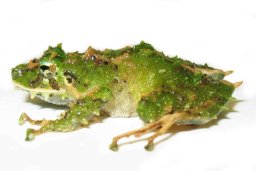 Gustavo A. Gonzalez-Duran合作论文数Lab Anfibios, Univ Nacl Colombia1Camilla Spengler Waltrick合作论文数1
 Valentina Gómez-Bahamón合作论文数Dept Biol Sci, Univ Illinois1
 Laura N. Céspedes合作论文数Comm Evolutionary Biol, Univ Chicago1Evelyn Valdez-Ward合作论文数1
 Mileidy Betancourth合作论文数Departamento de Ciencias Biologicas, Universidad de los Andes1




